
What the job covers
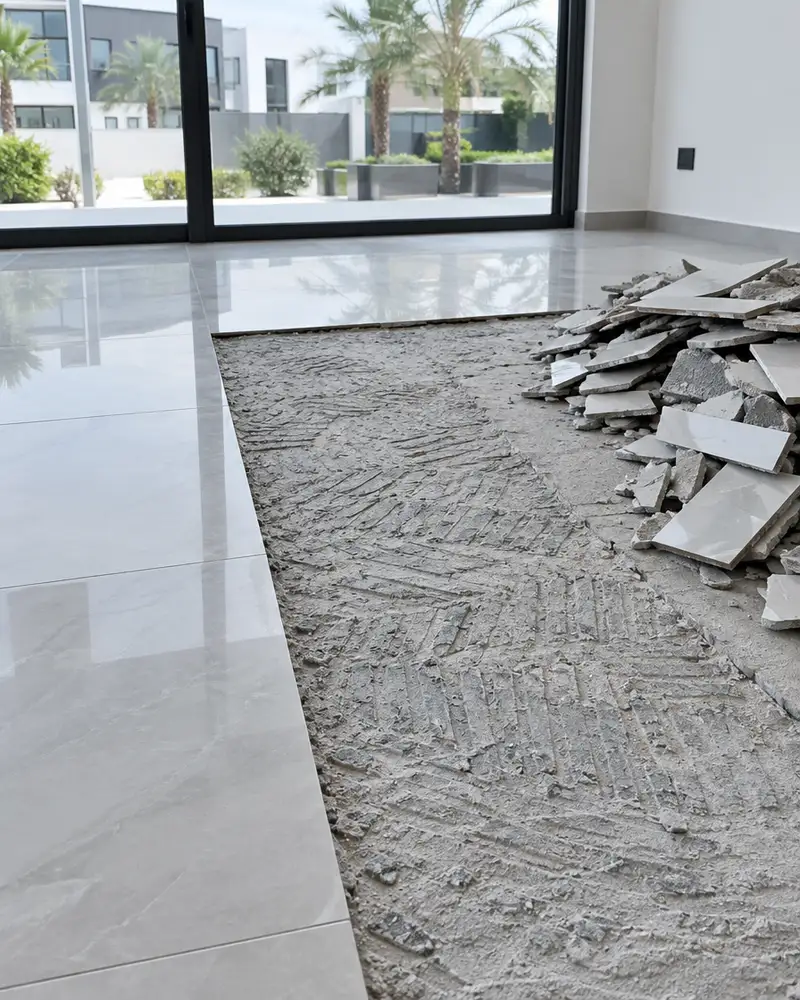
Assessing the existing tile bed, preparing the surface, and fixing new tiles solid and flat.

Existing tile check
Tap-testing the old tiles to locate hollow or loose areas before starting.
Surface preparation
Degreasing and abrading the glazed surface so adhesive bonds reliably.

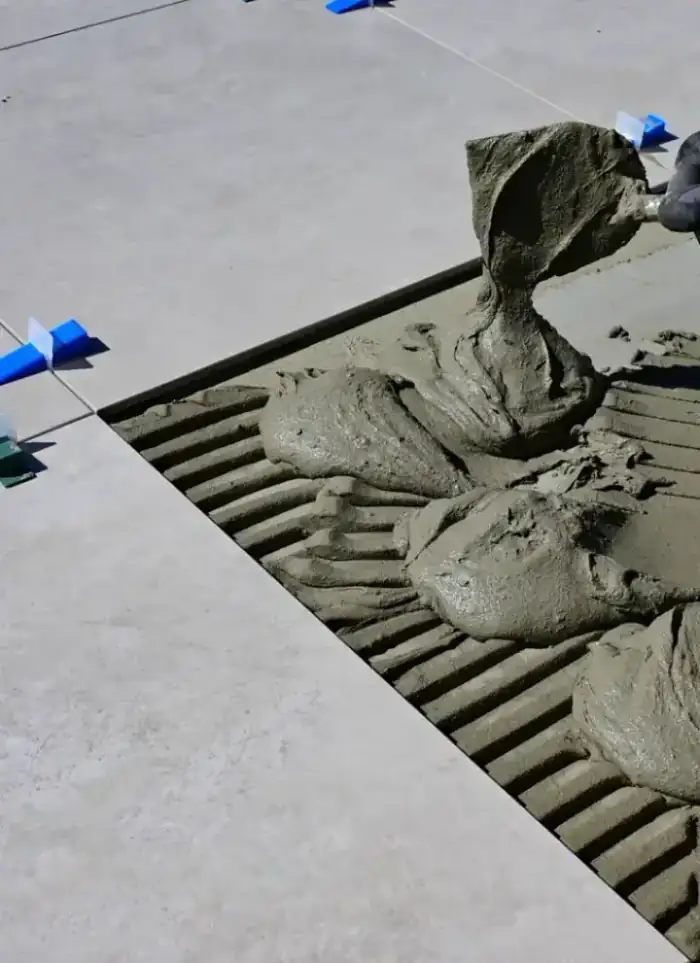
High-bond adhesive
Applying a flexible adhesive rated for bonding over an existing ceramic layer.

Levelling and alignment
Using tile levelling clips to keep the new surface flat across the field.
Expansion joints
Leaving perimeter gaps and sealing them with flexible filler suited to Kuwait's heat.

Grouting and clean-up
Grouting joints with a humidity-suited type and cleaning the surface before handover.
Signs this is the right approach
Faded and crazed glaze
The old glaze is dull and shows hairline crazing but the tiles are still firmly bonded.
Renovation without disruption
You want updated floors in an occupied apartment or villa without demolition dust and noise.
Old but solidly bonded tiles
Tapping reveals a solid ring across most of the floor, confirming a stable base for new tiles.
Limited floor-height budget
Door clearance or entrance threshold height leaves no room for a full demolish-and-relay sequence.
Before you call us
Tap-test the old tiles
Knock with a coin across the surface; a hollow sound means lifted areas that must be removed first.
Measure the actual area
Record room dimensions in square metres so quantities and pricing are accurate from the first call.
Choose the new tile type
Decide between ceramic and porcelain and the tile format because weight affects adhesive choice.
Count existing tile layers
Check at door thresholds whether one or two tile layers already exist, as this affects final floor height.
More in ceramic & porcelain tiling.
What goes wrong with most finishing.
The finish is what you see every day, and its mistakes do not hide. These three are the most common.
 01
01A rushed finish
The finish is what you live with every day. Rushing it shows in every corner.
 02
02Four contractors for one finish
Tiling, gypsum, paint and aluminium crews who never talk to each other.
 03
03After-care that never comes
Once you have the keys, it is hard to find anyone to come back and fix what shows up.
The solution?
Full finishing, and maintenance after it, from one licensed company.
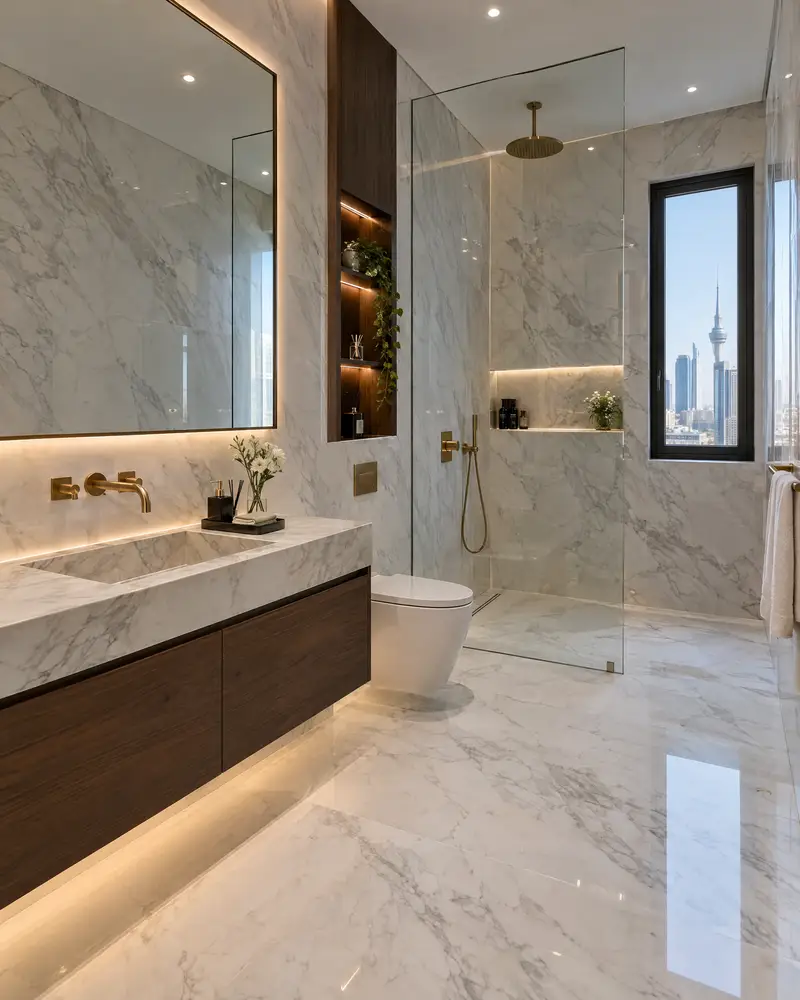
A rushed finishTurnkey finishing
Marble, tiling, gypsum and paint from one company.
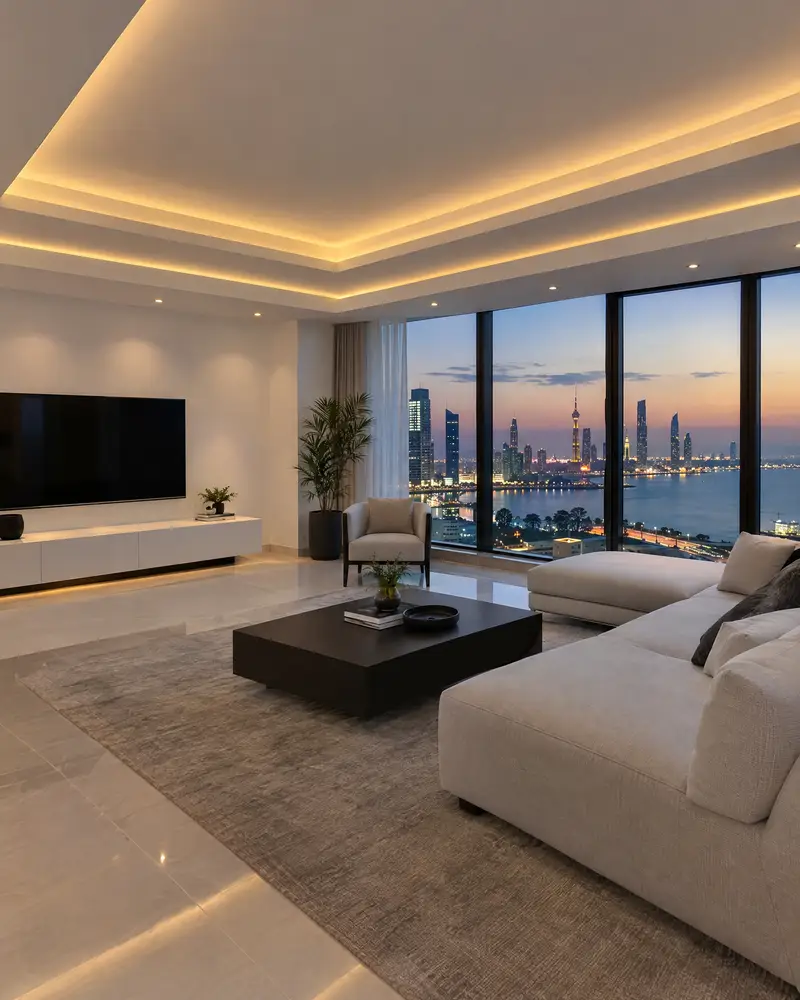
Four contractors for one finishOne company for every trade
No gaps between the tiler, the gypsum crew and the painter.
After-care that never comesRegular maintenance after handover
And finishing on instalments if you need it.
How it works.
First contact
Call or WhatsApp us with the area description and location.
Site inspection
We visit to measure, tap-test tiles, and assess existing layer condition.
Quotation and approval
We submit a detailed quote covering materials, labour, and any removal zones.
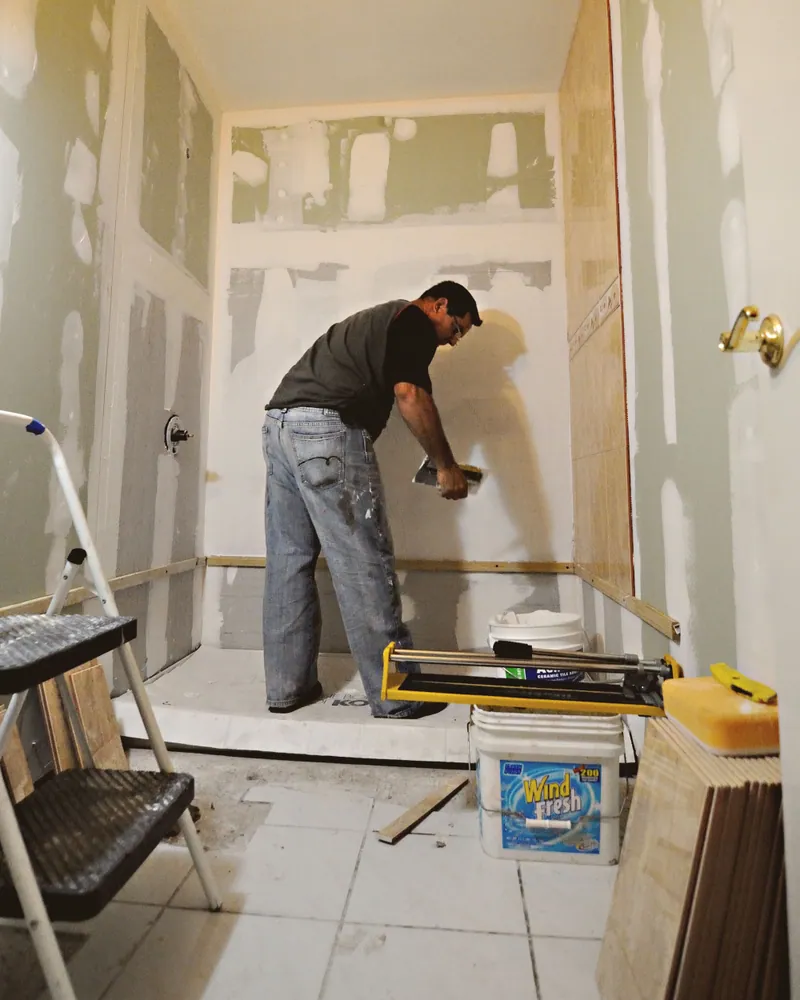
Preparation and fixing
Surface abraded, adhesive applied, tiles fixed with levelling clips and expansion joints.
Grouting and handover
Joints grouted, surface cleaned, and area handed over after adhesive cure period.
What sets the price.
No fixed rate applies; the quote depends on these factors assessed on site.
Get a quoteTotal area
The square metre count of the area to be covered drives the base cost.
New tile size and weight
Large-format and heavy porcelain tiles require stronger adhesive and more fixing effort.
Hollow tile proportion
More hollow areas needing prior removal before overlay increases preparation cost.
Existing surface condition
An uneven or cracked surface needs additional treatment before adhesive can be applied.
Grout type required
Epoxy grout in wet zones costs more than standard cementitious grout in dry areas.
Why one contractor beats four.
Every extra contractor means another schedule and another excuse. With us, one company answers for all of it.
Turnkey
Shell and finishing with one company, from footings to keys.
Pay in instalments
Construction and finishing on instalments. Ask us for the details.
Engineering supervision
Architectural drawings and engineering supervision on site.
After handover
Maintenance contracts and a 24-hour emergency plumber.
A licensed Kuwaiti company for building construction, finishing, renovation and infrastructure works.
What our clients say.
See all reviews on GoogleExcellent
Taha Saad
Google review
Excellent
Ali Nadi
Google review
Tile-over-tile installation in Kuwait. We work across all six governorates of Kuwait: Capital, Hawalli, Farwaniya, Mubarak Al-Kabeer, Ahmadi, Jahra.
Official references: Kuwait Fire Force (safety requirements in finishing work)
Questions, answered.
Call nowAre all types of old tiles suitable for tiling over?
No. The existing tiles must be solidly bonded with no significant hollow areas. Cracked or loose tiles are removed first. Multiple existing layers may create a floor-height problem and need assessment before a decision is made.
How does the glazed surface of old ceramic affect adhesive bonding?
A glazed surface is non-porous and reduces adhesion with standard adhesive. Abrading the surface and using an adhesive formulated for low-porosity substrates overcomes this problem.
Can tile-over-tile be used in bathrooms and wet areas?
It is possible on floors when old tiles are solid and there is no active leak beneath. If dampness or a water leak is present, the cause must be diagnosed and repaired before any new fixing begins.
Does the floor level rise noticeably after tile-over-tile installation?
Yes, the floor rises by the thickness of the new tile plus the adhesive bed. Door clearances and entrance thresholds should be checked before work begins to confirm they can accommodate the added height.
Does tile-over-tile work on walls as well as floors?
It can be applied to walls provided the old tiles are fully bonded and the combined weight of layers does not exceed what the wall fixing can safely carry. A site assessment determines whether it is practical.
Licensed and registered in Kuwait.
Check us before you sign. This is our licence number and what it covers.
Find us on Google Maps