
Tiling work we carry out
Ceramic and porcelain tiling indoors and outdoors, across all Kuwait governorates.

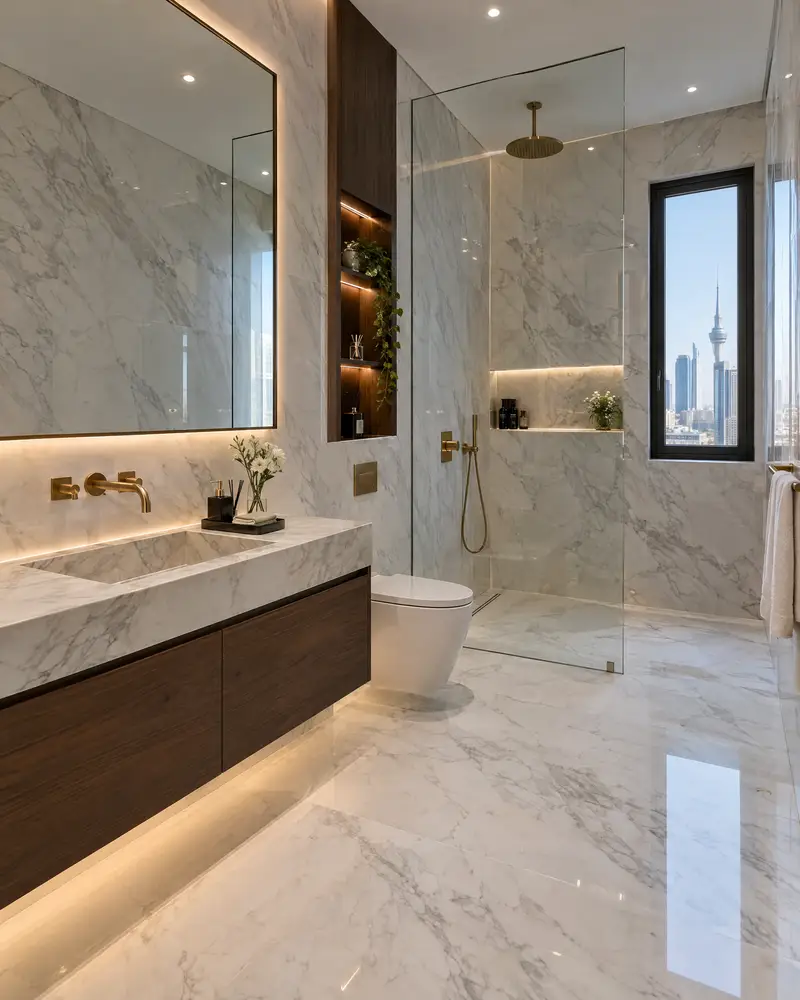
Bathroom tiling
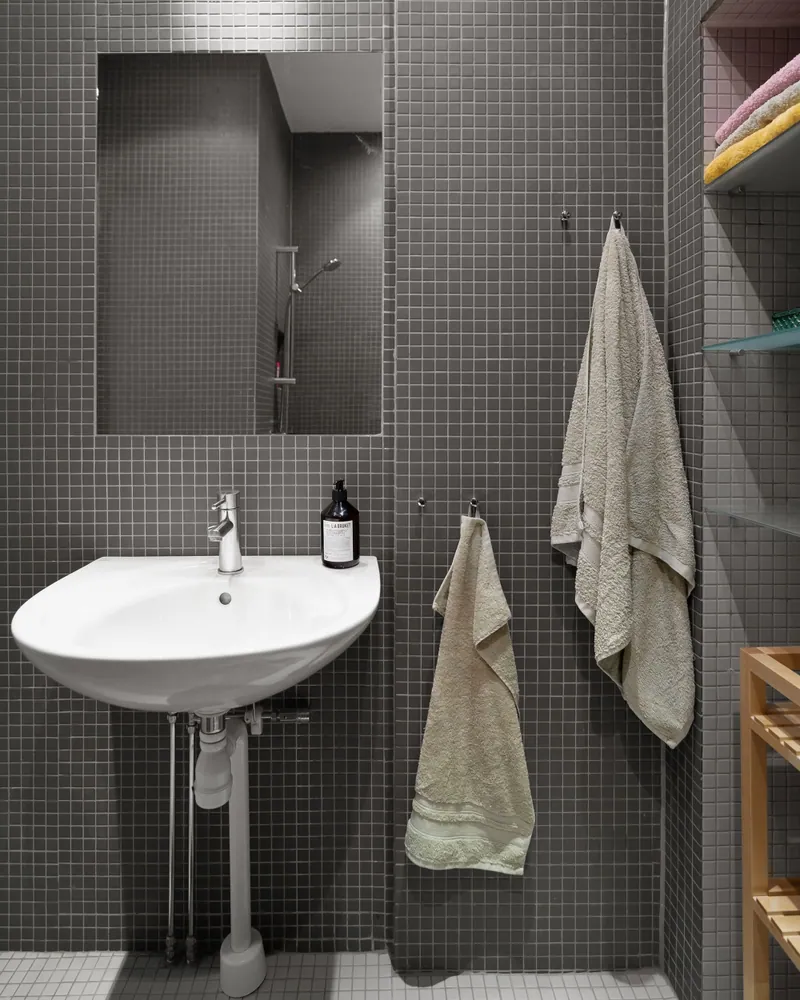
Floors and walls with waterproofing membrane applied first.
Wall porcelain tiling
Large-format panels fixed plumb and level on interior walls.

Floor tiling
Ceramic or porcelain on a level screed with durable grouting.

Kitchen tiling
Floors and splash walls with grout suited to grease and moisture.

Outdoor tiling
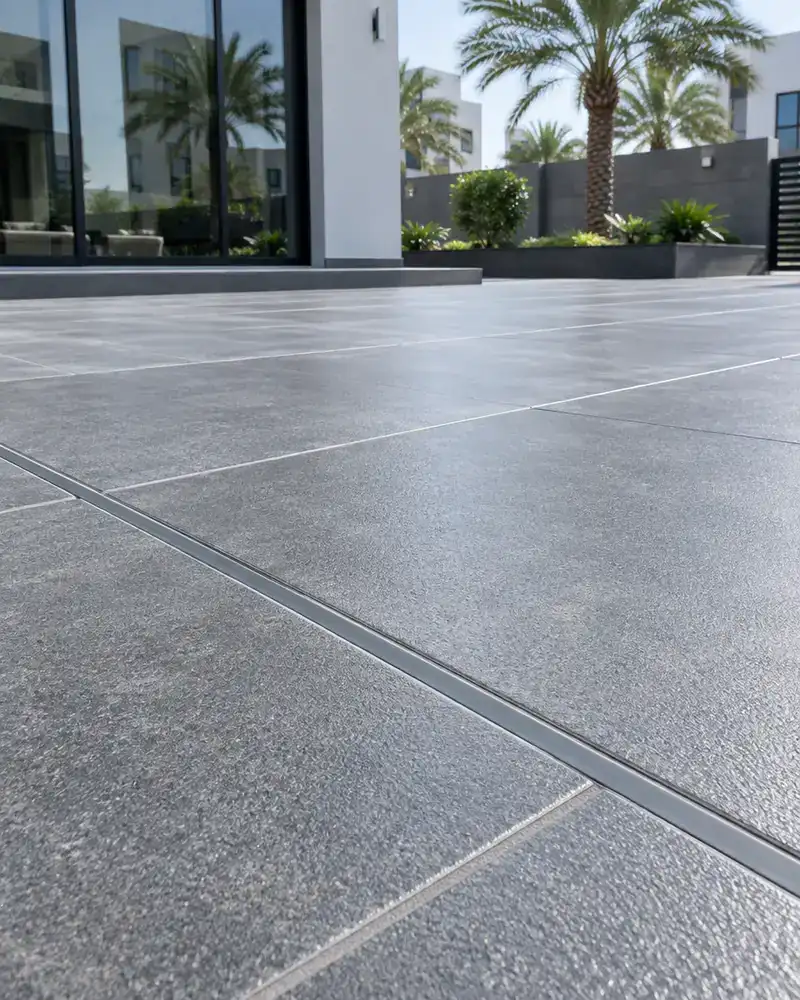
Anti-slip porcelain for courtyards, entrances and exposed decks.

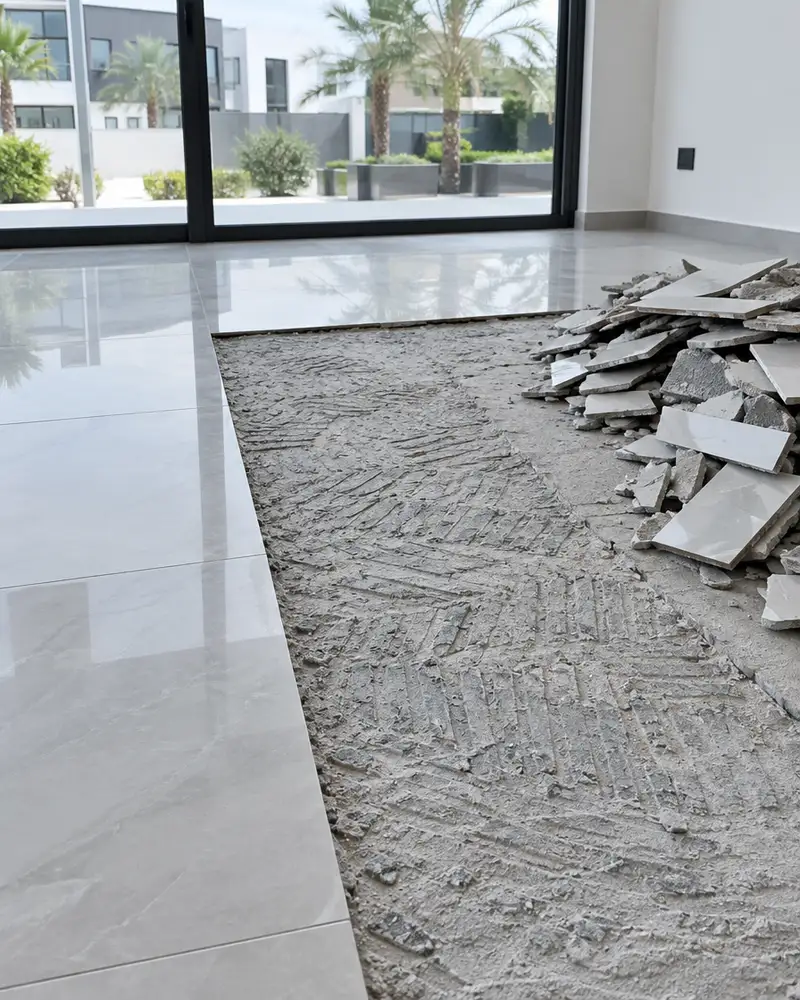
Tile-over-tile installation
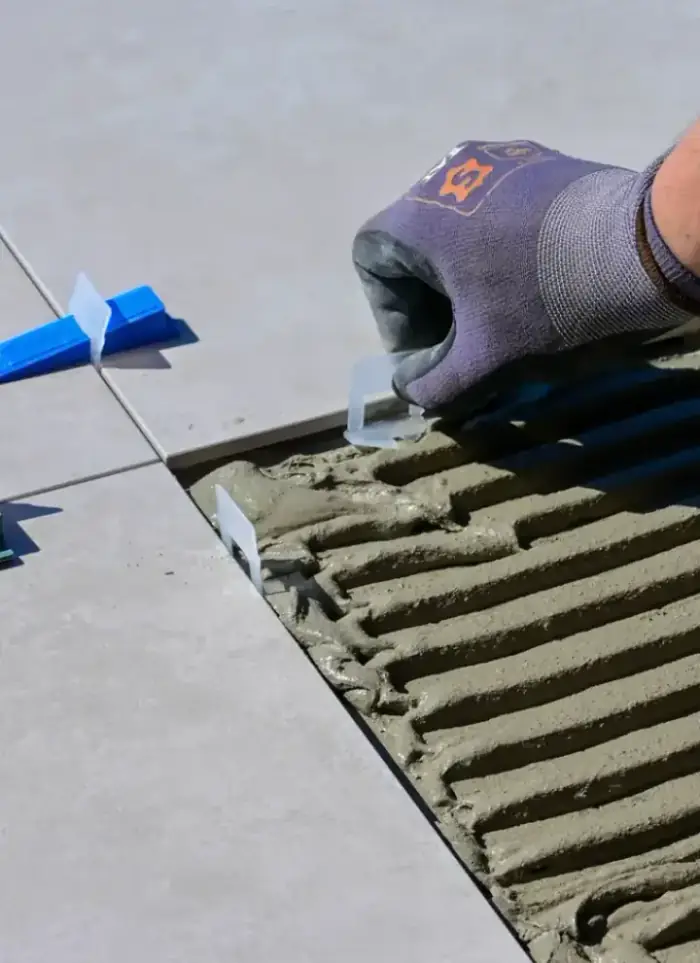
New tiles bonded over existing sound tiles, avoiding full demolition.
Mistakes that ruin a tiling job
Skipping substrate levelling
An uneven screed causes tiles to rock, crack at edges and sound hollow underfoot.
Standard grout in wet zones
Cement grout in bathrooms absorbs water, cracks and lets moisture reach the wall behind.
Omitting expansion joints
Kuwait's heat expands large-format tiles; without joints the field buckles and lifts.
Tiling before waterproofing
Tiling a bathroom or roof without a membrane traps moisture behind and under the tiles.
Before you call us
Measure the actual area
Note the square metres of every space to be tiled so the quote is accurate.
Decide on tile type
Choose between ceramic and porcelain, and decide on size and surface finish per area.
Check the existing floor
Tap the current floor; a hollow sound means the old tiles need removing before new work.
Clarify waterproofing status
Let us know whether bathrooms or outdoor areas already have a waterproofing layer or not.
Inside ceramic & porcelain tiling.
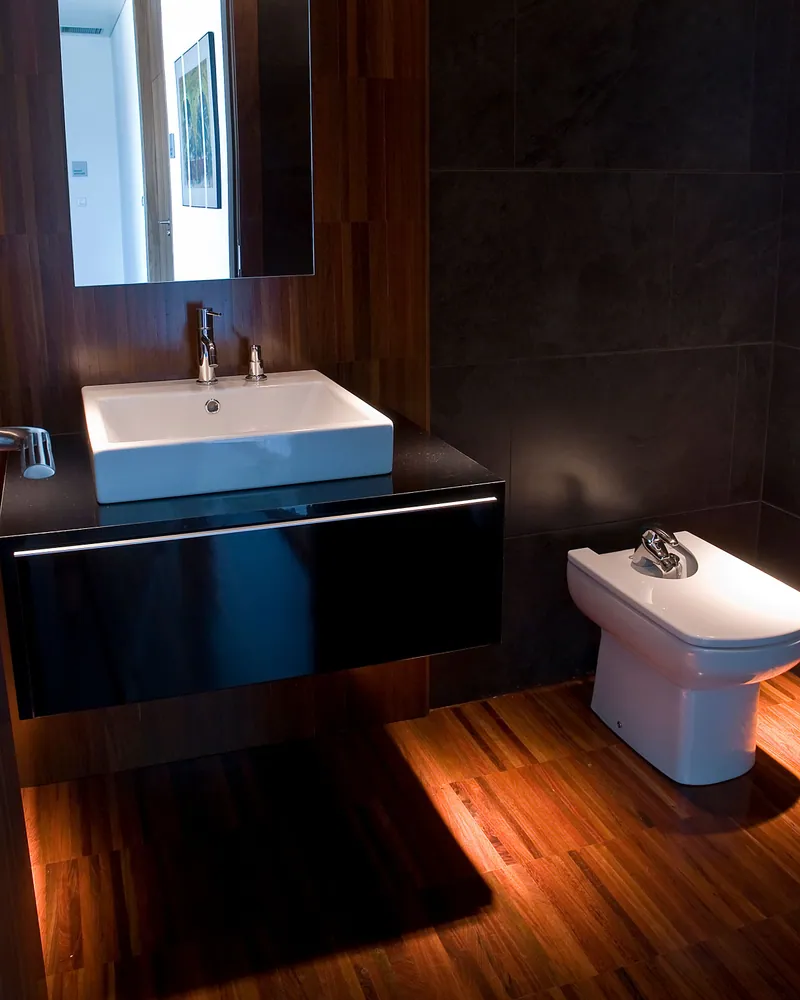
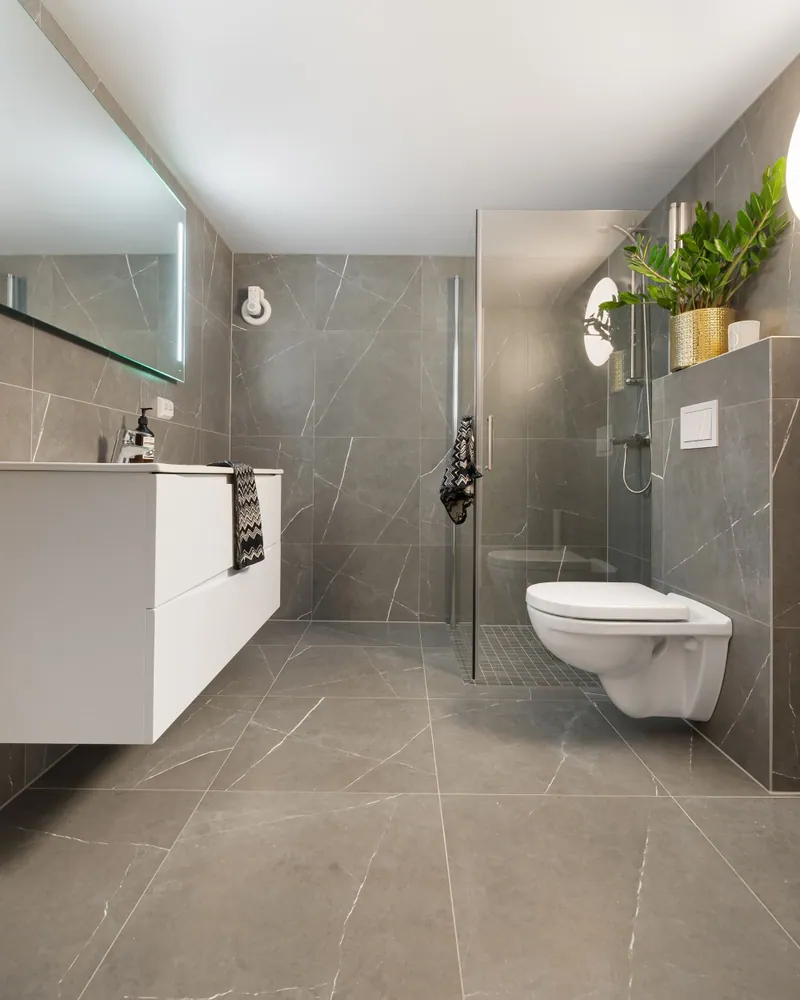
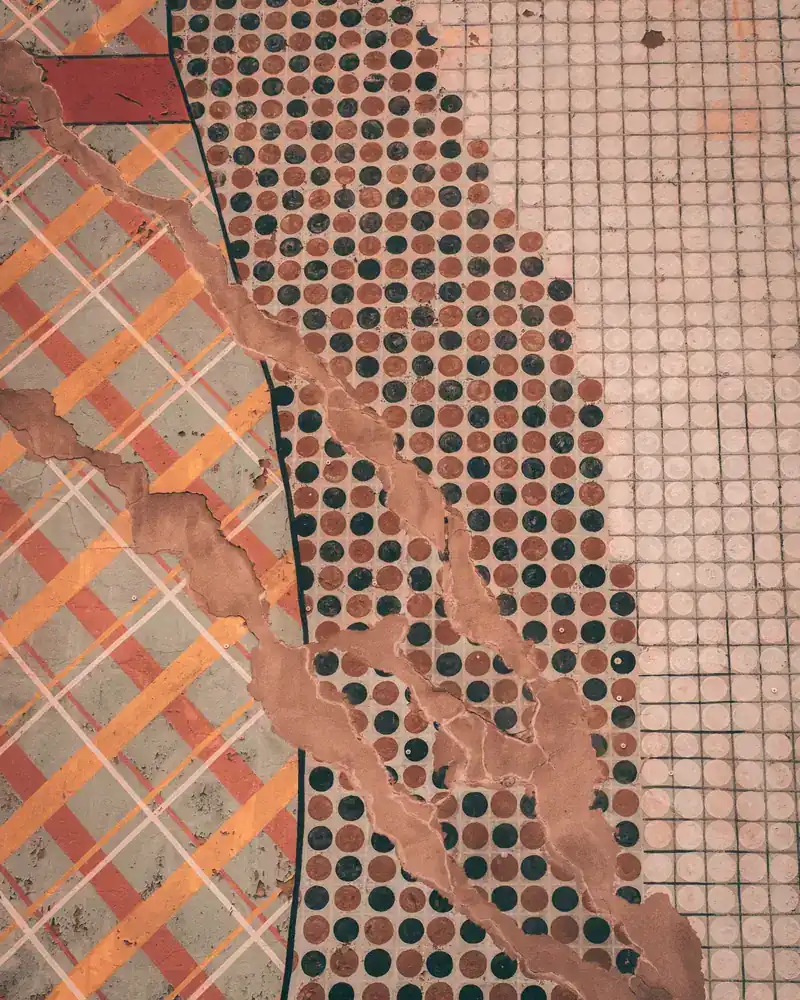
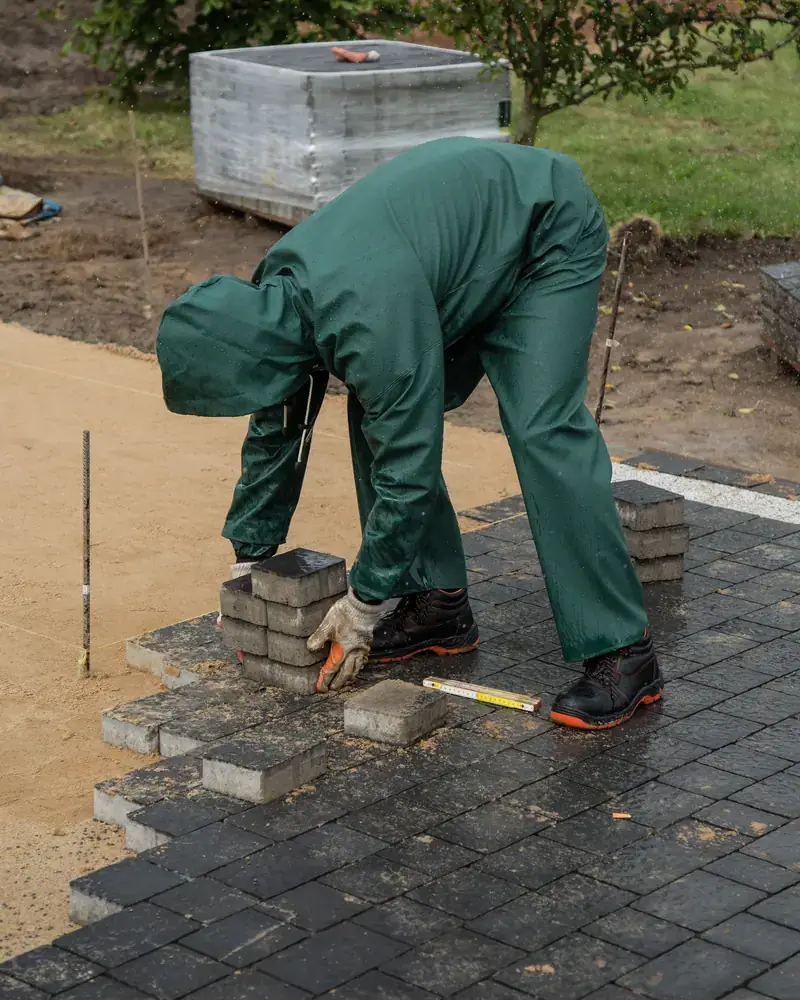
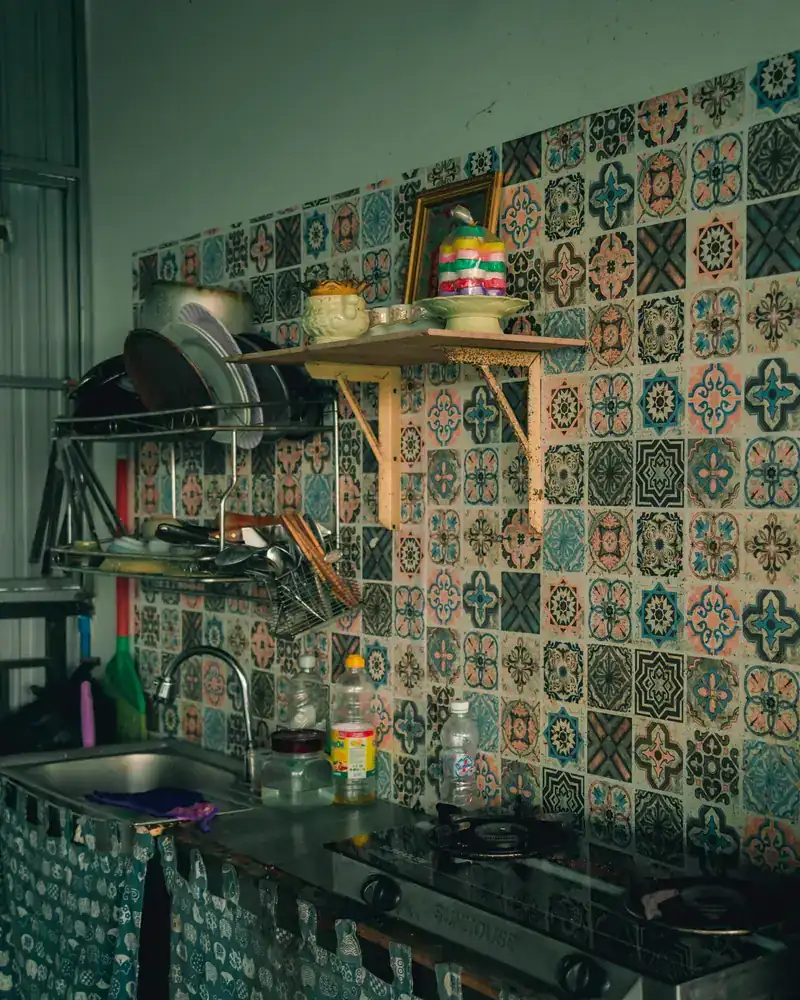
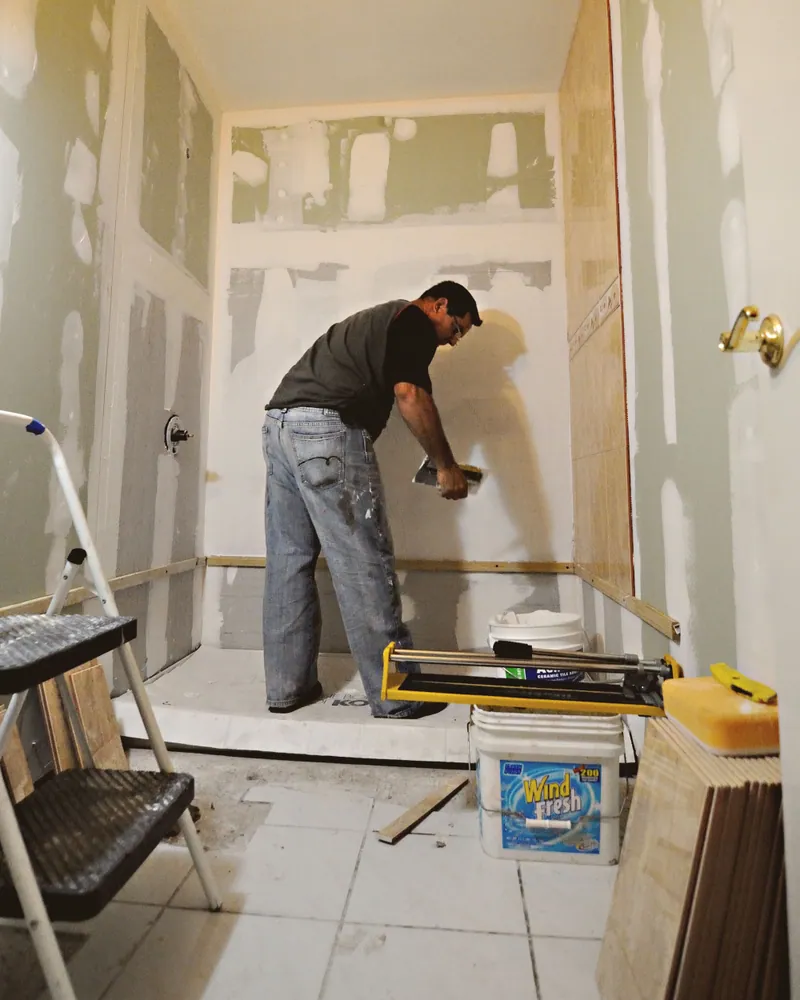
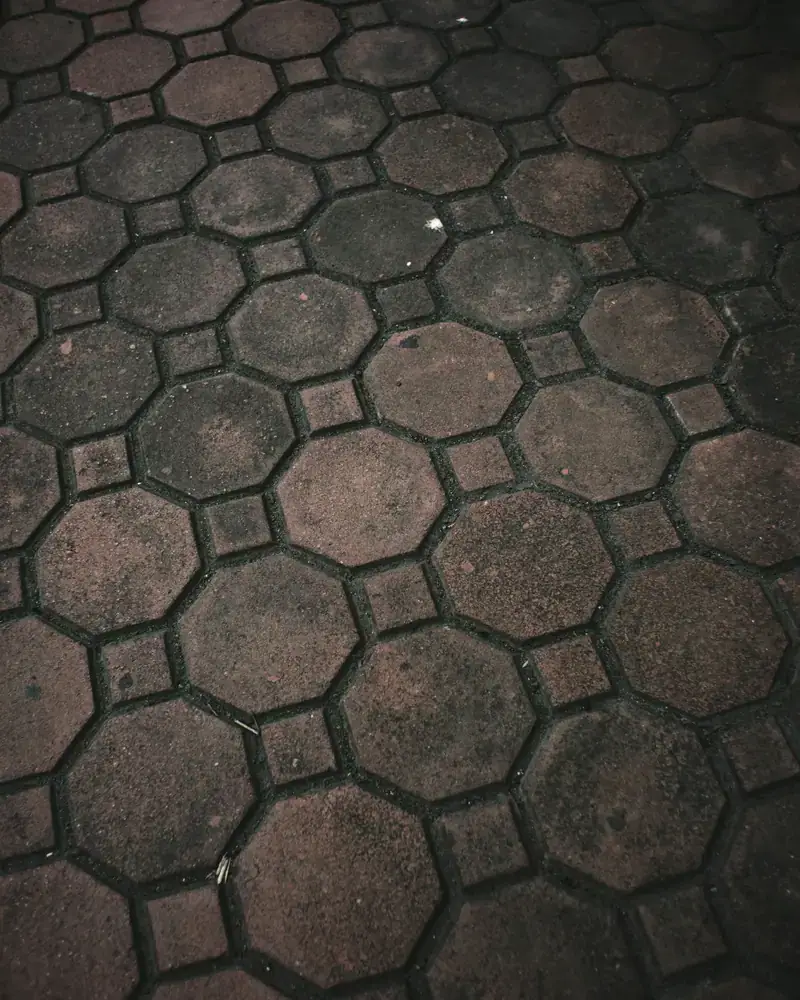
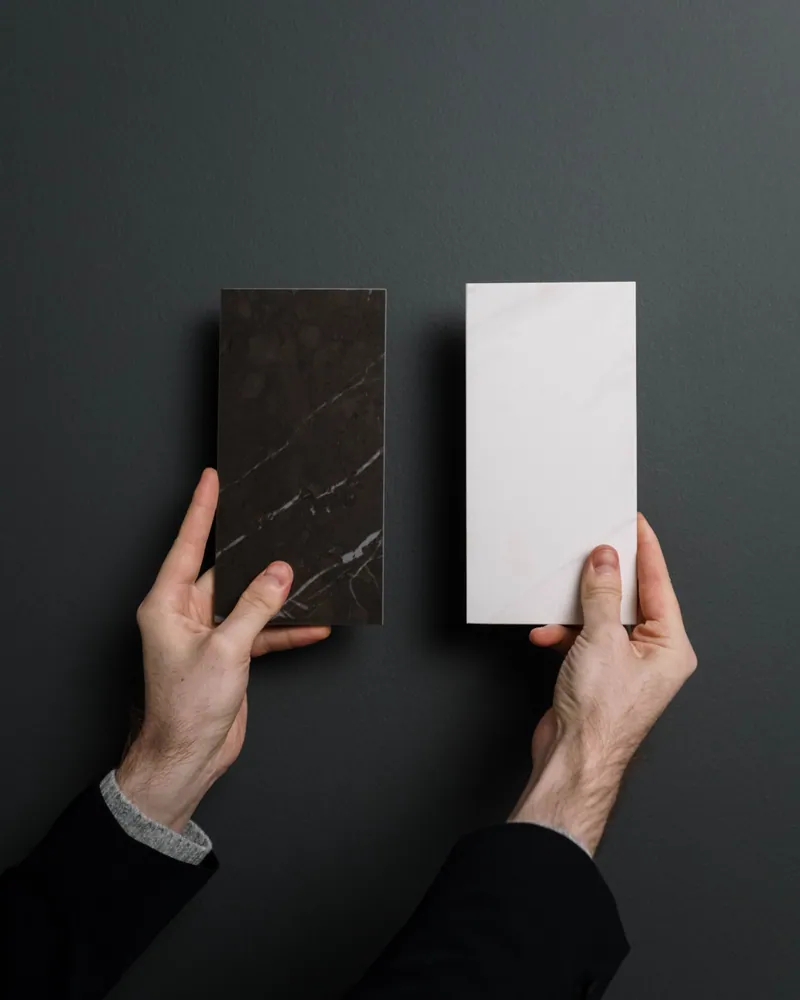
How tiling is done right in Kuwait
Every good tiling job starts with reading the substrate, not opening the boxes. Kuwait's intense heat puts ceramic and porcelain under daily thermal stress, so the screed must be flat and clean, with expansion joints cut into large continuous fields before any adhesive is spread. In bathrooms and exposed outdoor areas, a waterproofing membrane is applied to the floor and the lower wall band before any tile is set. That membrane layer is what prevents moisture from migrating behind the tiles and weakening the adhesive bed over time.
Choosing the right tile for each location is as much a technical decision as a visual one. High-density anti-slip porcelain suited to an outdoor courtyard behaves differently from the wall ceramic in a bathroom, and large-format slabs need a flexible adhesive rather than standard mortar to handle minor deflection. Along Kuwait's coastal areas, salt-laden humidity attacks cement grout at junctions, which is why epoxy grout is used at critical joints. For tile-over-tile work, the existing floor is checked for hollow spots first, because any unsupported section underneath will transfer the same failure to the new layer.
Grouting and finishing is where a careful job separates itself from a careless one. Joints are packed fully so no voids remain, and excess grout is cleaned off the tile face before it hardens to prevent permanent staining. At floor-to-wall junctions and internal corners, flexible silicone replaces rigid grout because those points move slightly with the structure. Before handover, a straight-edge and level check confirms the finished field is true, and any lippage between adjacent tiles is identified and corrected while the adhesive is still accessible.
What goes wrong with most finishing.
The finish is what you see every day, and its mistakes do not hide. These three are the most common.
 01
01A rushed finish
The finish is what you live with every day. Rushing it shows in every corner.
 02
02Four contractors for one finish
Tiling, gypsum, paint and aluminium crews who never talk to each other.
 03
03After-care that never comes
Once you have the keys, it is hard to find anyone to come back and fix what shows up.
The solution?
Full finishing, and maintenance after it, from one licensed company.
A rushed finishTurnkey finishing
Marble, tiling, gypsum and paint from one company.

Four contractors for one finishOne company for every trade
No gaps between the tiler, the gypsum crew and the painter.
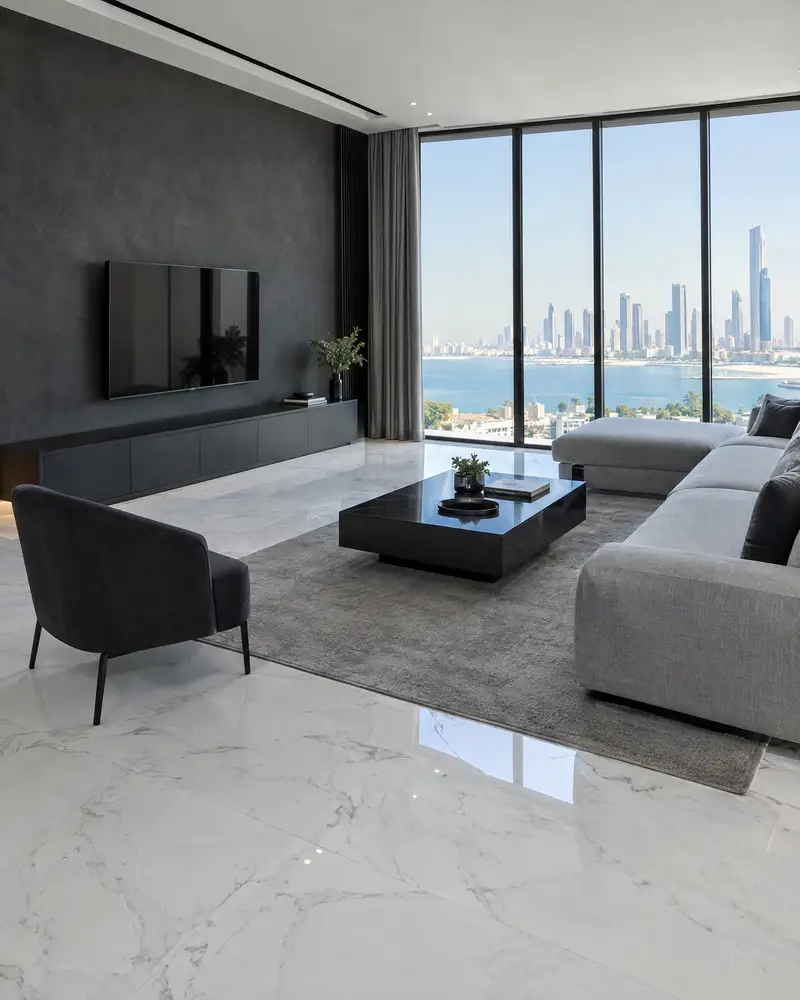
After-care that never comesRegular maintenance after handover
And finishing on instalments if you need it.
How it works.
Contact us
Call or WhatsApp us to describe your spaces and requirements.
Site visit
We inspect the substrate, waterproofing status and measure each area.
Quotation
We provide an itemised quote covering materials and labour.
Execution
Substrate prep, waterproofing if needed, then tiling and grouting.
Check and handover
We check level, grout fill and surface finish before clean handover.
What sets the price.
No fixed rate applies; these factors shape every tiling quote we give.
Get a quoteTotal tiling area
Total square metres of floor and wall to be tiled drives the base cost.
Tile type and format
Large-format porcelain needs costlier adhesive and longer installation time.
Removal of old tiles
Breaking and clearing old tiles adds cost separate from laying new work.
Waterproofing requirement
Applying a membrane in bathrooms or outdoor zones raises the overall cost.
Pattern and cut complexity
Diagonal layouts and custom cuts increase labour time and tile waste.
Why one contractor beats four.
Every extra contractor means another schedule and another excuse. With us, one company answers for all of it.
Turnkey
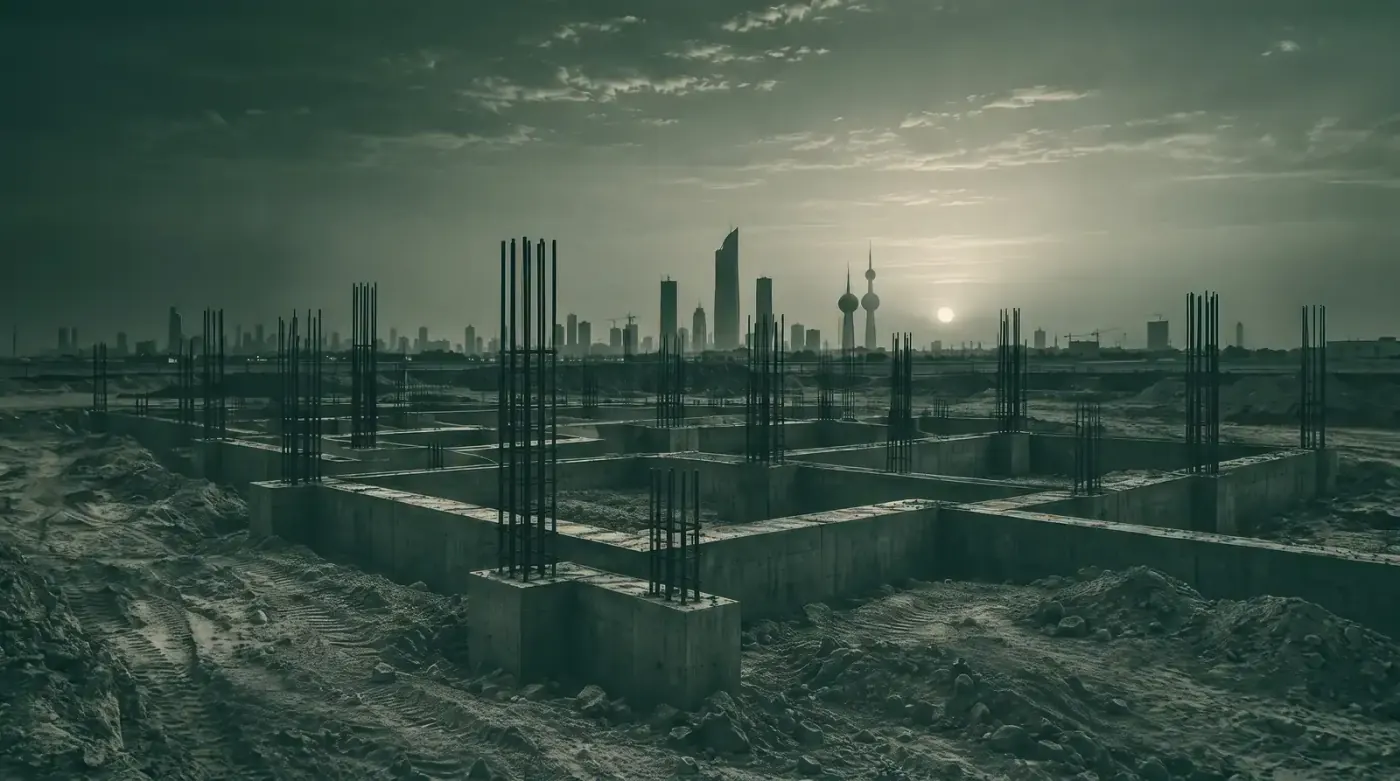
Shell and finishing with one company, from footings to keys.
Pay in instalments
Construction and finishing on instalments. Ask us for the details.
Engineering supervision
Architectural drawings and engineering supervision on site.
After handover
Maintenance contracts and a 24-hour emergency plumber.
A licensed Kuwaiti company for building construction, finishing, renovation and infrastructure works.
What our clients say.
See all reviews on GoogleExcellent
Taha Saad
Google review
Excellent
Ali Nadi
Google review
Ceramic & porcelain tiling in Kuwait. We work across all six governorates of Kuwait: Capital, Hawalli, Farwaniya, Mubarak Al-Kabeer, Ahmadi, Jahra.
Official references: Kuwait Fire Force (safety requirements in finishing work)
Questions, answered.
Call nowCan new tiles be laid over old ones without breaking them out first?
Yes, provided the existing tiles are fully bonded with no hollow sections. We tap-test before starting; any loose areas are removed because they would undermine the new adhesive bed. The raised floor level at door thresholds must also be accounted for before work begins.
Why does tapping the floor reveal hollow spots shortly after tiling?
The most common cause is incomplete adhesive coverage on the back of the tile when it was set. Air voids behind the tile reduce bond strength and make the tile vulnerable to cracking under load or from thermal movement.
Is outdoor porcelain different from what is used indoors?
Yes. Outdoor porcelain is denser, has lower water absorption and carries an anti-slip surface texture. Polished indoor porcelain is not suitable outside because it becomes slippery when wet and is not rated for the freeze-thaw or intense heat cycles of exposed areas.
How wide should joints be between large-format tiles?
The right joint width depends on tile size and location. Too narrow a joint cannot absorb thermal expansion and leads to buckling; too wide looks unfinished. We confirm the correct spacing after the site visit and once the tile format is agreed.
Can an outdoor courtyard be tiled during Kuwait's summer?
Yes, with the right precautions. Adhesive should not be applied to a surface that is too hot from direct sun, as rapid drying prevents proper bonding. We schedule outdoor work in the early morning and use an extended open-time adhesive rated for high substrate temperatures.
Does your service cover supplying the tiles or is it installation only?
We handle the full installation including adhesive, grout, silicone and labour. The tiles themselves can be supplied by us or sourced by you; both options are available and are specified clearly in the quote.
Licensed and registered in Kuwait.
Check us before you sign. This is our licence number and what it covers.
Find us on Google Maps