
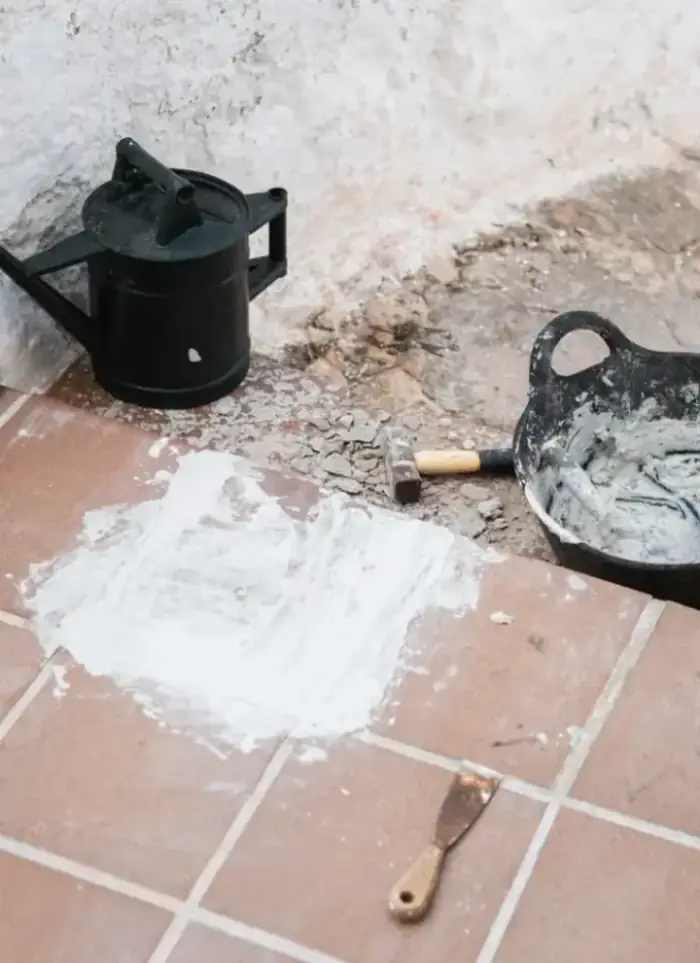
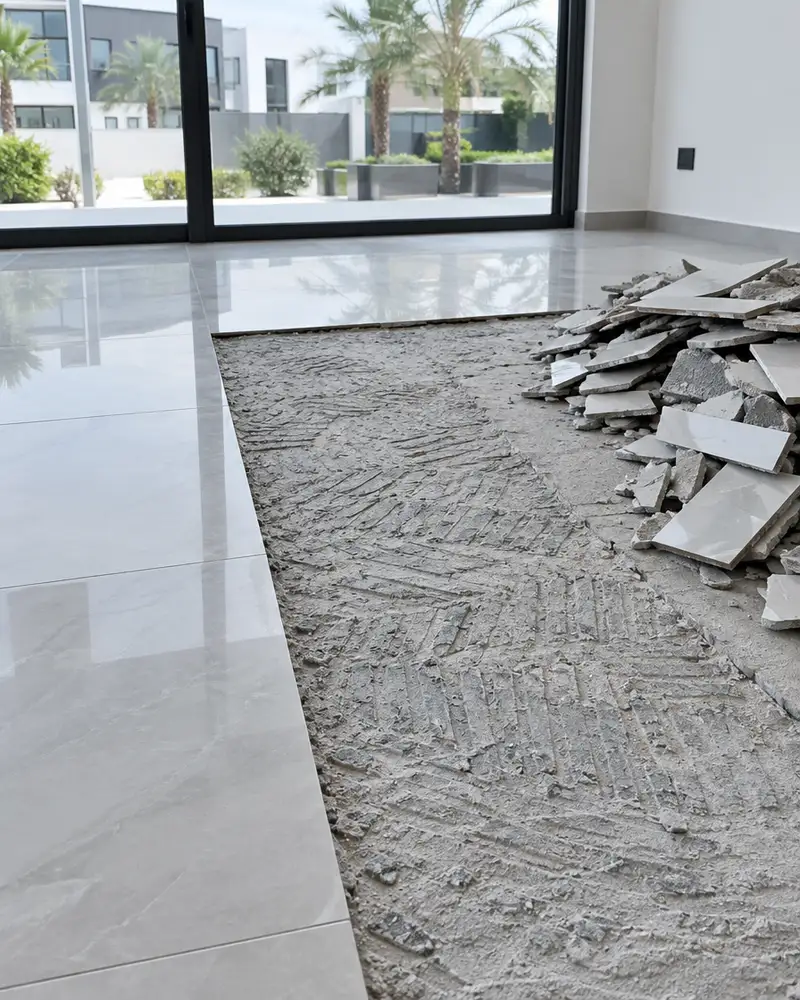
What tile removal covers
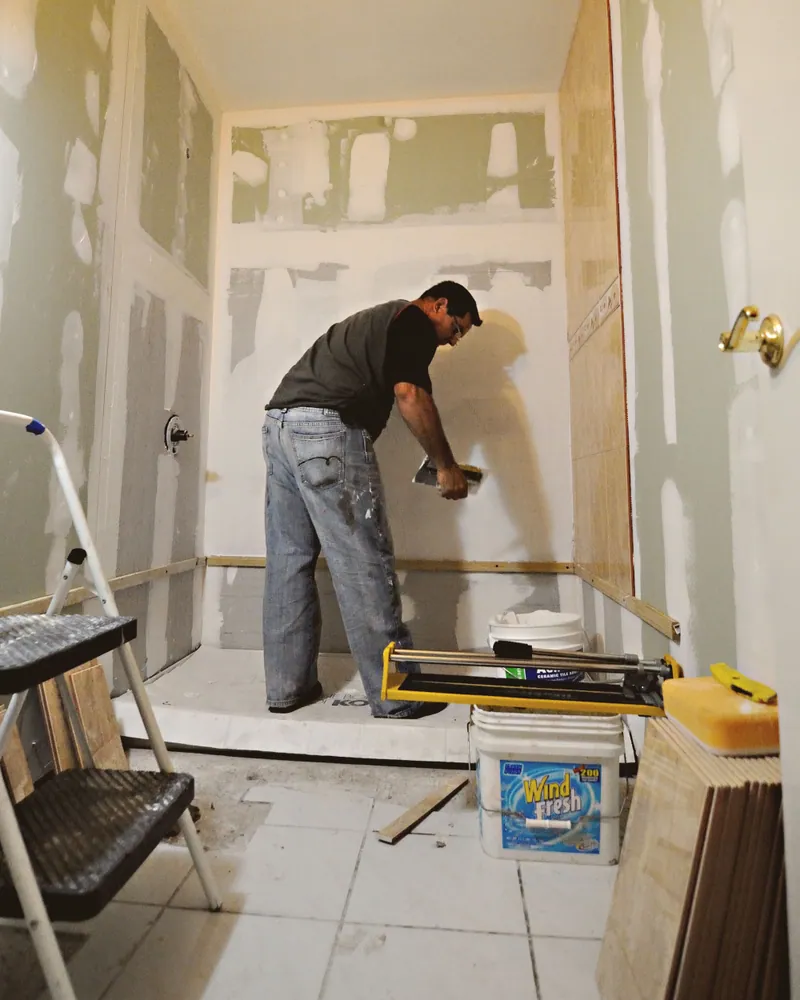
Controlled breaking and full debris clearance from floor to wall base, leaving a clean substrate.
Broken tile lifting
Removing cracked or raised tiles without damaging adjacent walls or surfaces.
Adhesive bed removal
Scraping off old adhesive beds to leave a flat, bondable concrete surface.
Wall tile removal
Stripping wall ceramic and porcelain while preserving the plaster or block face.

Substrate inspection
Checking the slab or plaster after removal for cracks, hollows or moisture.

Debris clearance
Collecting and removing all broken tile debris from site on a daily basis.
Ready-base handover
Handing over a clean, level surface ready for the new tiling team to proceed.
Signs your tiles need removing
Hollow sound when tapped
A tile that has lost its adhesive bond sounds hollow and cannot be fixed by grouting alone.
Lifting tile edges
Raised tile edges are a trip hazard and indicate adhesive failure beneath the surface.
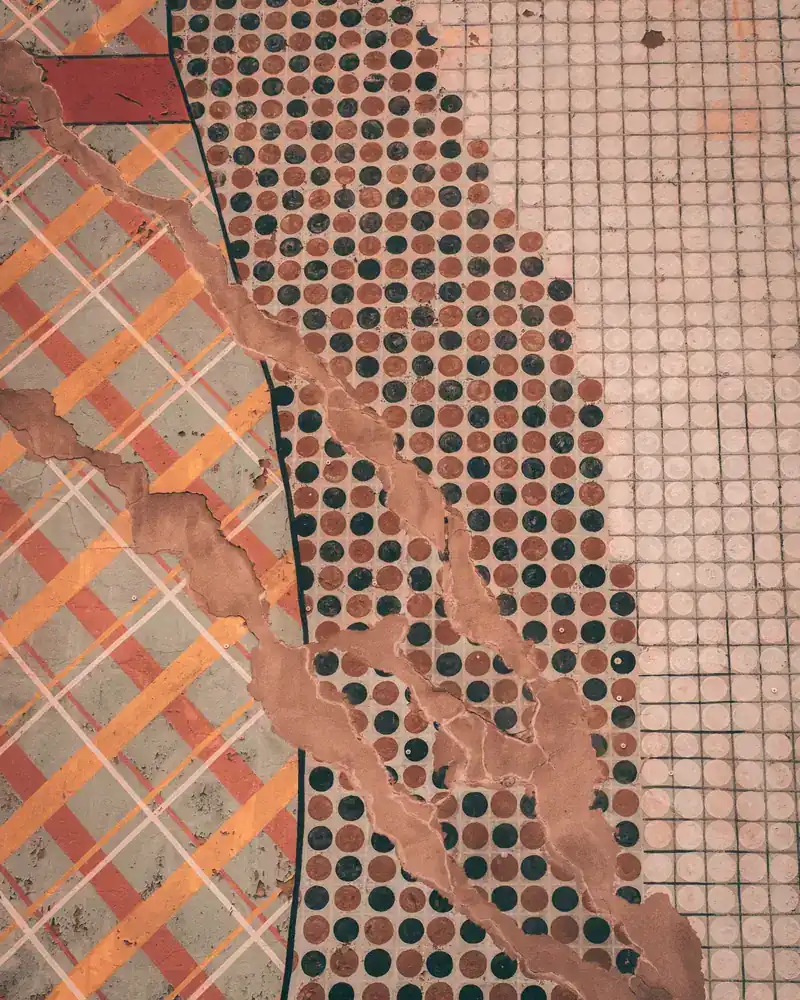
Cracks running across tiles
Cracks crossing the tile body cannot be filled with sealant and will let moisture through over time.
Moisture showing under tiles
Dark patches or blistering in bathroom areas signal waterproofing failure that requires full tile removal to repair.
Before you call
Mark out the removal area
Measure the actual area in square metres because the quote is based directly on it.
Count the tile layers
If tiles were previously laid over an older layer, removal is deeper and takes more effort.
Identify the substrate type
Concrete slab, wall plaster or gypsum board each requires different removal tools and care levels.
Know what runs beneath the tiles
Shallow buried water pipes or electrical conduits below the slab must be identified before breaking starts.
More in ceramic & porcelain tiling.
What goes wrong with most finishing.
The finish is what you see every day, and its mistakes do not hide. These three are the most common.
 01
01A rushed finish
The finish is what you live with every day. Rushing it shows in every corner.
 02
02Four contractors for one finish
Tiling, gypsum, paint and aluminium crews who never talk to each other.
 03
03After-care that never comes
Once you have the keys, it is hard to find anyone to come back and fix what shows up.
The solution?
Full finishing, and maintenance after it, from one licensed company.
A rushed finishTurnkey finishing
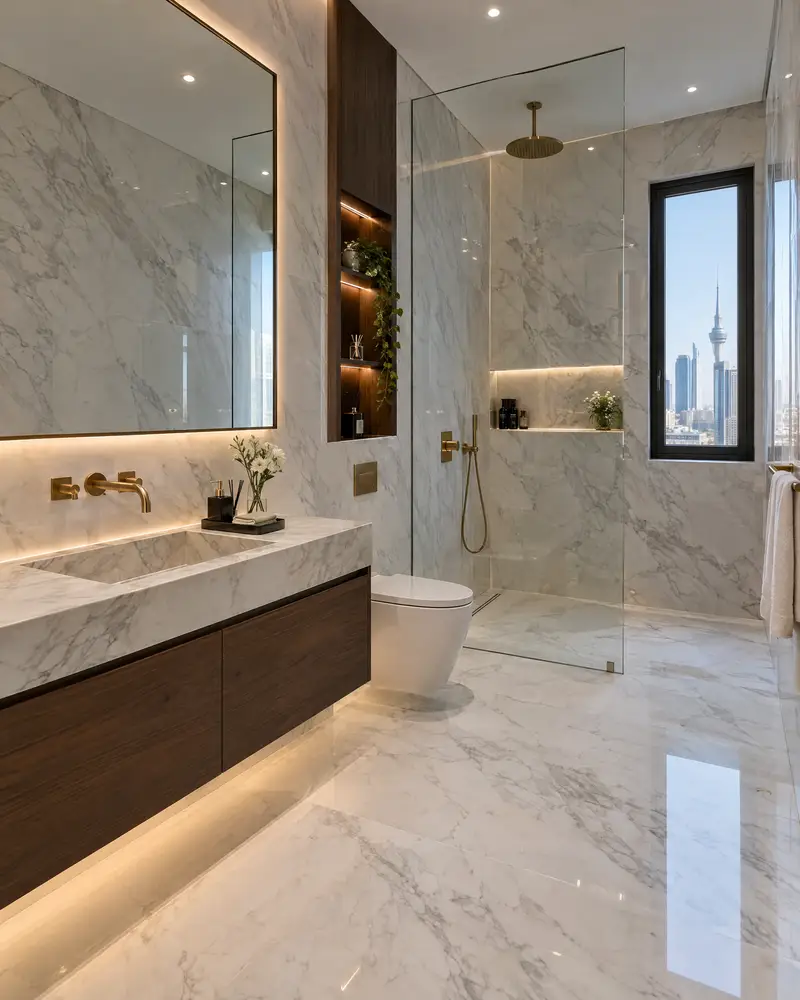
Marble, tiling, gypsum and paint from one company.

Four contractors for one finishOne company for every trade
No gaps between the tiler, the gypsum crew and the painter.

After-care that never comesRegular maintenance after handover
And finishing on instalments if you need it.
How it works.
Call or whatsApp
Describe the area, tile type and reason for removal to arrange a site visit.
Site assessment
We measure the area and check tile layers and substrate condition on site.
Quotation
A clear quote covering removal and full debris clearance is provided.
Removal works
Tiles are broken, adhesive scraped off, and debris removed without damaging the base.
Substrate handover
The clean, inspected surface is handed over ready for new tile installation.
What sets the price.
No fixed rate applies because these combined factors determine the actual removal cost for each job.
Get a quoteTotal area
Square metres to be removed are the primary driver of the overall cost.
Number of tile layers
Two or more layers require significantly more labour and time than a single layer.
Adhesive type used
Old epoxy adhesive is far harder to scrape away than standard cement-based bedding.
Substrate condition after removal
A damaged or uneven substrate needs extra levelling work before new tiles can be fixed.
Site access difficulty
Upper floors without a lift increase debris removal time and affect the overall cost.
Why one contractor beats four.
Every extra contractor means another schedule and another excuse. With us, one company answers for all of it.
Turnkey
Shell and finishing with one company, from footings to keys.
Pay in instalments
Construction and finishing on instalments. Ask us for the details.
Engineering supervision
Architectural drawings and engineering supervision on site.
After handover
Maintenance contracts and a 24-hour emergency plumber.
A licensed Kuwaiti company for building construction, finishing, renovation and infrastructure works.
What our clients say.
See all reviews on GoogleExcellent
Taha Saad
Google review
Excellent
Ali Nadi
Google review
Tile removal in Kuwait. We work across all six governorates of Kuwait: Capital, Hawalli, Farwaniya, Mubarak Al-Kabeer, Ahmadi, Jahra.
Official references: Kuwait Fire Force (safety requirements in finishing work)
Questions, answered.
Call nowCan only a section of tiles be removed rather than the whole room?
Yes, but stopping at a defined line requires cutting cleanly along a grout joint rather than breaking the boundary tile. If the same batch is still available the result is fine; if the tile has been discontinued matching the colour may be difficult.
Does tile removal always damage the concrete slab underneath?
Not necessarily. Correct tools and controlled technique preserve the slab surface in most cases. Damage occurs when wrong tools or excess force are used, particularly where old adhesive has bonded very hard to the concrete.
Is there a practical difference between removing ceramic tiles and removing porcelain tiles?
Porcelain is harder and tends to fracture into larger pieces, which can make lifting easier. Ceramic shatters into smaller shards faster. The bigger variable is the adhesive type and bond strength beneath the tile, not the tile material itself.
How is dust controlled during tile removal inside an occupied or partly occupied building?
The work zone is sealed off with protective sheeting, tools with integrated dust extraction are used where possible, and the site is swept daily. Dust cannot be eliminated entirely but it can be confined to a tight zone.
Must furniture and appliances be cleared before tile removal begins?
Yes, the area must be fully cleared. Removal generates vibration and debris that can damage anything left in place. Furniture also blocks access to corners and edges, which increases labour time and cost.
Licensed and registered in Kuwait.
Check us before you sign. This is our licence number and what it covers.
Find us on Google Maps