
What floor tiling covers
Substrate preparation through final clean-up using materials suited to Kuwait's climate

Substrate levelling
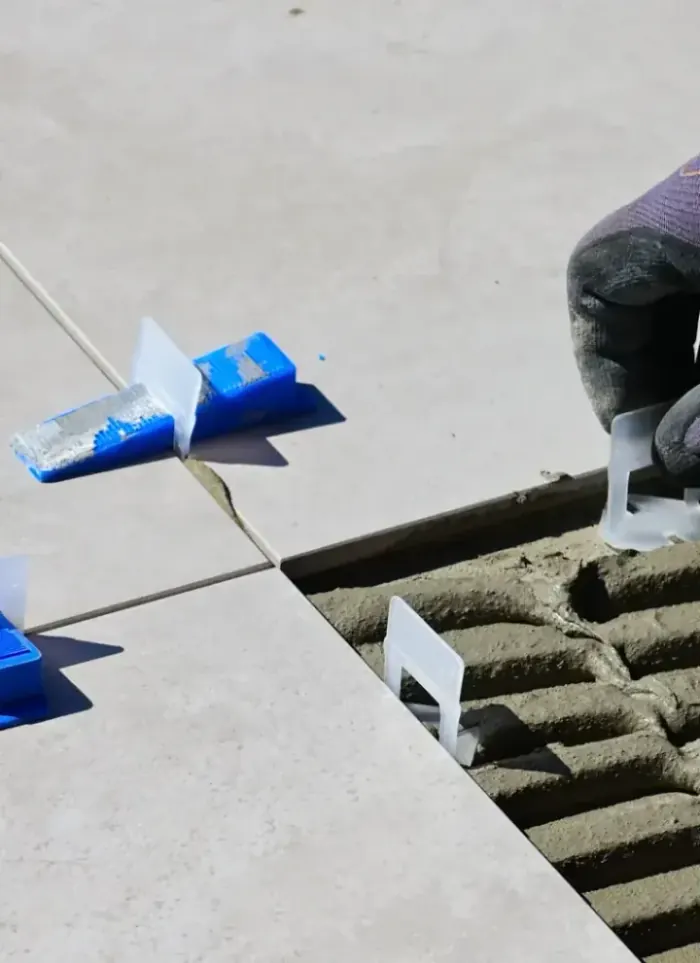
Self-levelling compound applied to eliminate voids under tiles

Adhesive selection
Flexible high-bond adhesive rated for thermal expansion in hot climates

Expansion joints
Flexible joints at thresholds and perimeters to absorb heat expansion

Tile fixing
Full back-buttering and uniform trowel coverage for each tile

Grouting and finishing
Uniform grout joints with moisture-resistant grout and final polish

Tap-test and handover
Every tile tapped to confirm no hollow spots before handover
Signs your floor tiling needs attention
Hollow sound underfoot
A tile that rings hollow when walked on has lost contact with the substrate below
Cracked grout lines
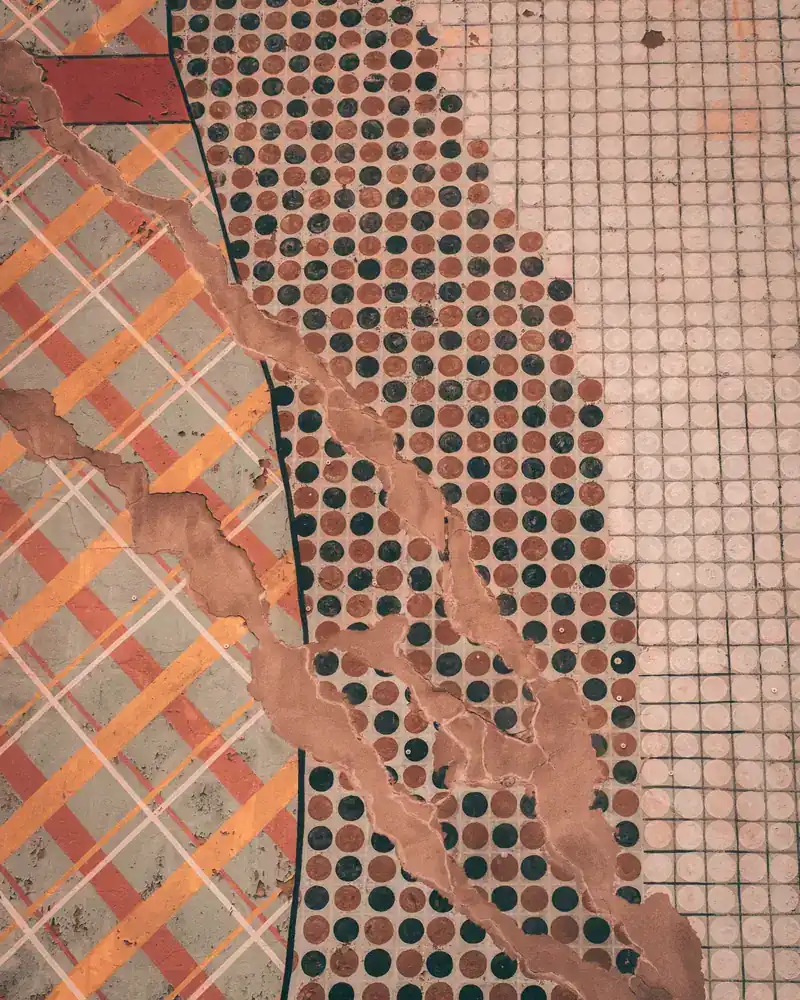
Cracked grout running in straight lines points to missing expansion joints or weak adhesive
Raised edges or cracked tiles
A tile edge that rides above its neighbour or cracks across the face needs immediate re-laying
Visible unevenness across the floor
Noticeable level difference between adjacent tiles is a trip hazard and signals a poor substrate
Mistakes that ruin a floor tiling job
Partial back coverage
Applying adhesive only at corners leaves voids that crack tiles under daily foot traffic
Starting from the wrong point
Laying from the wall instead of the room centre results in irregular cut pieces at all edges
Walking on tiles too early
Loading the floor before the adhesive cures shifts tiles out of level and breaks the bond
Rigid grout at doorway thresholds
Filling doorway joints with hard grout instead of flexible sealant causes lifting in Kuwait's summer heat
More in ceramic & porcelain tiling.
What goes wrong with most finishing.
The finish is what you see every day, and its mistakes do not hide. These three are the most common.
 01
01A rushed finish
The finish is what you live with every day. Rushing it shows in every corner.
 02
02Four contractors for one finish
Tiling, gypsum, paint and aluminium crews who never talk to each other.
 03
03After-care that never comes
Once you have the keys, it is hard to find anyone to come back and fix what shows up.
The solution?
Full finishing, and maintenance after it, from one licensed company.
A rushed finishTurnkey finishing
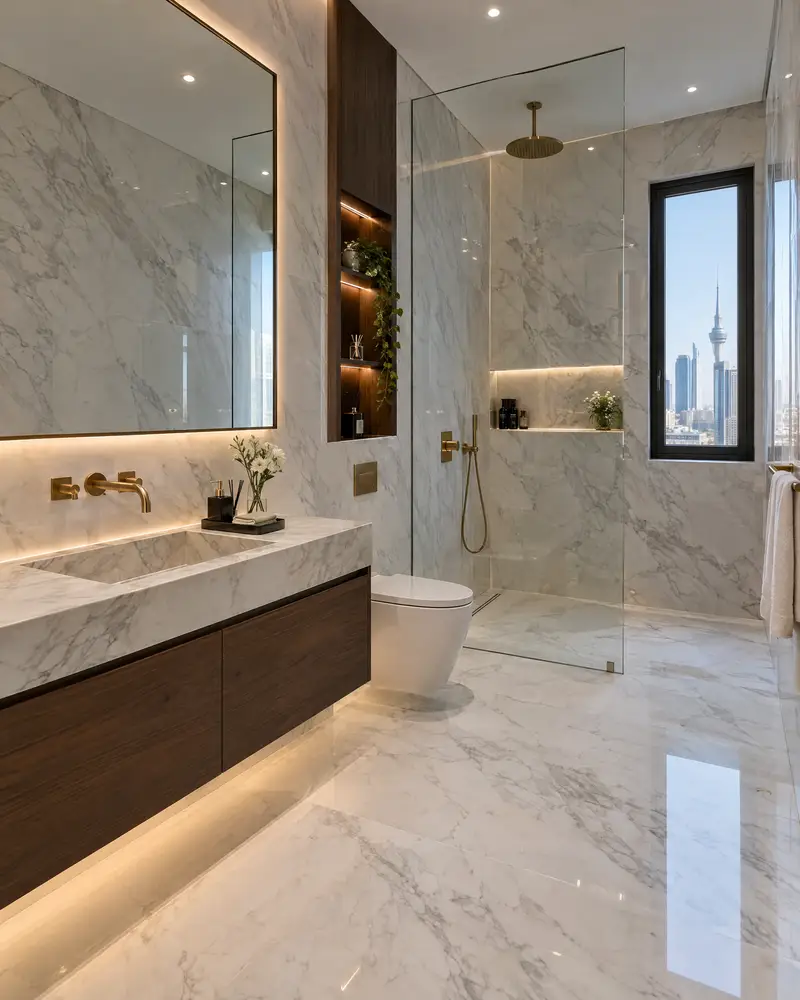
Marble, tiling, gypsum and paint from one company.

Four contractors for one finishOne company for every trade
No gaps between the tiler, the gypsum crew and the painter.
After-care that never comesRegular maintenance after handover
And finishing on instalments if you need it.
How it works.
First contact
Call or WhatsApp us to describe the area and tile type you need
Site visit and measurement
We visit to measure the floor and assess substrate condition and levelling needs
Quotation and material confirmation
A detailed quote is provided covering tile type, layout pattern and grout choice
Execution
Substrate levelled, tiles fixed with expansion joints and grouted to plan
Final check and handover
Full tap-test to detect hollow tiles, final clean and formal handover
What sets the price.
No fixed price list applies; these factors determine what the job actually costs
Get a quoteTotal floor area
Actual square metres is the primary driver of labour and material cost
Tile type and format
Large-format porcelain demands more skill and longer fixing time than standard ceramic
Substrate condition
An uneven or cracked slab requires levelling or patching work before any tile is laid
Old tile removal
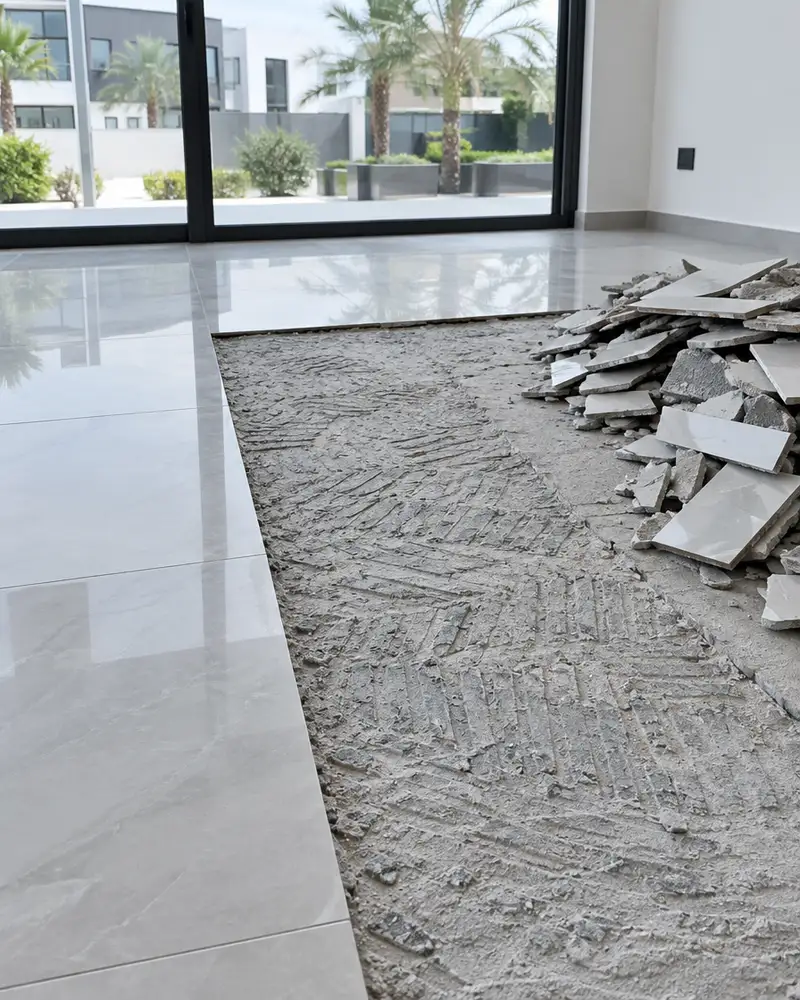
Breaking out and removing an existing floor adds notable labour and disposal cost
Layout pattern and cutting
Diagonal or herringbone patterns increase tile wastage and extend installation time
Why one contractor beats four.
Every extra contractor means another schedule and another excuse. With us, one company answers for all of it.
Turnkey
Shell and finishing with one company, from footings to keys.
Pay in instalments
Construction and finishing on instalments. Ask us for the details.
Engineering supervision
Architectural drawings and engineering supervision on site.
After handover
Maintenance contracts and a 24-hour emergency plumber.
A licensed Kuwaiti company for building construction, finishing, renovation and infrastructure works.
What our clients say.
See all reviews on GoogleExcellent
Taha Saad
Google review
Excellent
Ali Nadi
Google review
Floor tiling in Kuwait. We work across all six governorates of Kuwait: Capital, Hawalli, Farwaniya, Mubarak Al-Kabeer, Ahmadi, Jahra.
Official references: Kuwait Fire Force (safety requirements in finishing work)
Questions, answered.
Call nowCan new floor tiles be laid directly over old tiles in entrance halls and living areas?
It is possible if the old floor is fully bonded, level and free of hollow areas. Any loose or hollow tiles must be removed first. The finished floor level will rise by the combined thickness of the new tile and adhesive, which affects door clearance and thresholds.
Why do some floor tiles lift in summer even when they were laid recently?
Lifting in summer almost always means expansion joints were skipped or undersized. Porcelain expands with heat and if it has nowhere to go it buckles upward. Using hard grout at doorway thresholds instead of a flexible sealant makes the problem worse.
What is the practical difference between ceramic and porcelain for a living room floor?
Porcelain is denser and far less porous than ceramic, making it more durable under heavy living room traffic. It is heavier, harder to cut and needs a stronger adhesive. Ceramic suits lower-traffic rooms and comes at a lower cost.
How much of the back of a porcelain tile should actually be covered with adhesive?
Coverage should reach at least 95 percent of the tile back, which requires combing adhesive on both the floor and the tile back. Voids left by partial coverage concentrate stress and cause tiles to crack under normal daily load.
Should floor tiles be laid before or after gypsum ceilings and painting?
The standard sequence in Kuwaiti projects is to complete gypsum ceilings and electrical first-fix, then lay floor tiles, then paint. This protects the finished floor from paint splash and allows skirting and threshold profiles to be fitted cleanly.

Licensed and registered in Kuwait.
Check us before you sign. This is our licence number and what it covers.
Find us on Google Maps