
What the service covers
Substrate work, tile fixing, grouting and edge sealing across all kitchen zones.
Surface preparation
Levelling floors and walls, repairing cracks before any tile is fixed.
Floor tile fixing
Tiles bedded in suitable adhesive with correct expansion joints throughout.

Wall tile fixing
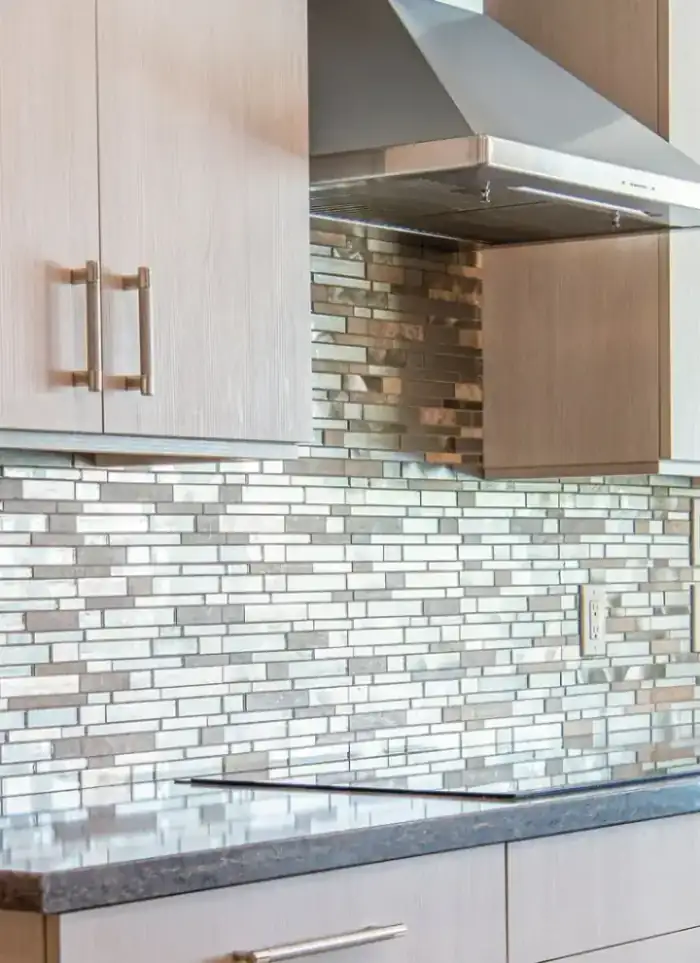
Back-buttered wall tiles prevent hollow voids behind splash and cooking zones.
Hob and sink surrounds
Heat-resistant adhesive and epoxy grout used behind hob and around sink.
Edges and corners
Aluminium trim profiles and flexible silicone at all internal and external corners.

Clean-up and final check
Grout haze removal and tap-test inspection of every fixed tile.
Signs your kitchen tiling needs attention
Hollow sound when tapped
A tile that rings hollow has lost its bond and will crack or lift soon.
Moisture under base cabinets
Hidden dampness under base units often traces back to open floor grout joints.
Cracked grout at the hob
Recurring grout cracks behind the hob point to an adhesive not rated for heat.
Lifting tiles near the sink
Tiles lifting around the sink follow repeated water ingress through unsealed joints.
Common mistakes in kitchen tiling work
Wrong adhesive behind the hob
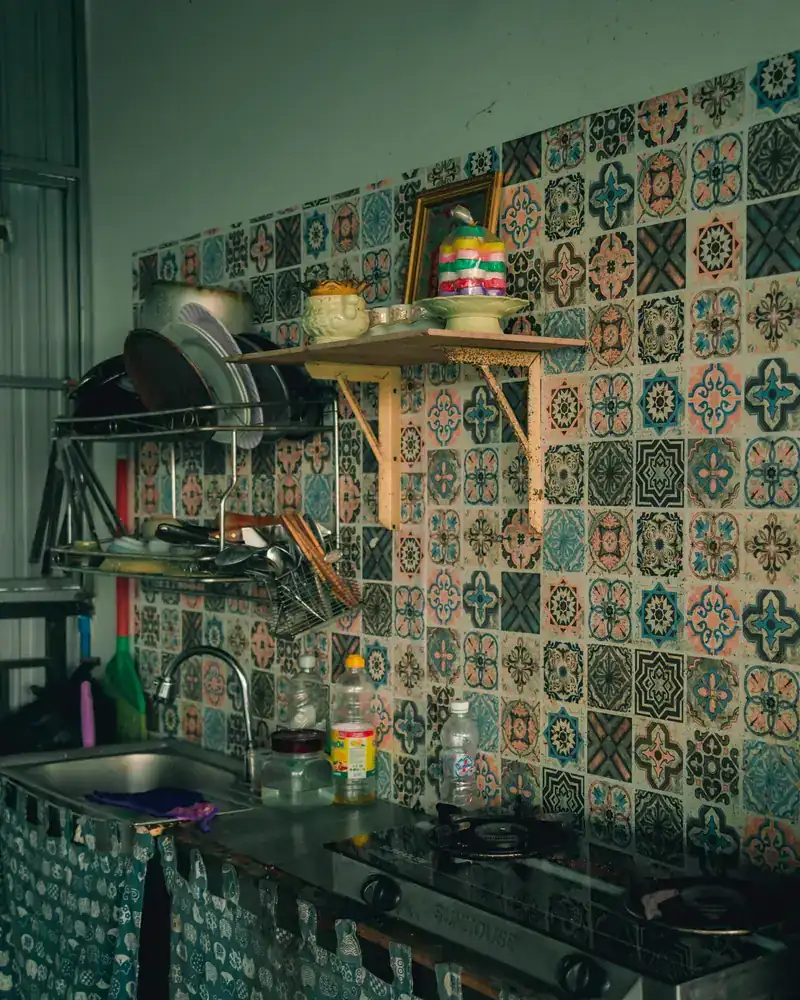
Standard adhesive behind a gas hob softens with heat cycles and tiles detach.
Skipping back-buttering
Fixing tiles without back-buttering leaves voids that trap moisture and break the bond.
Standard grout around the sink
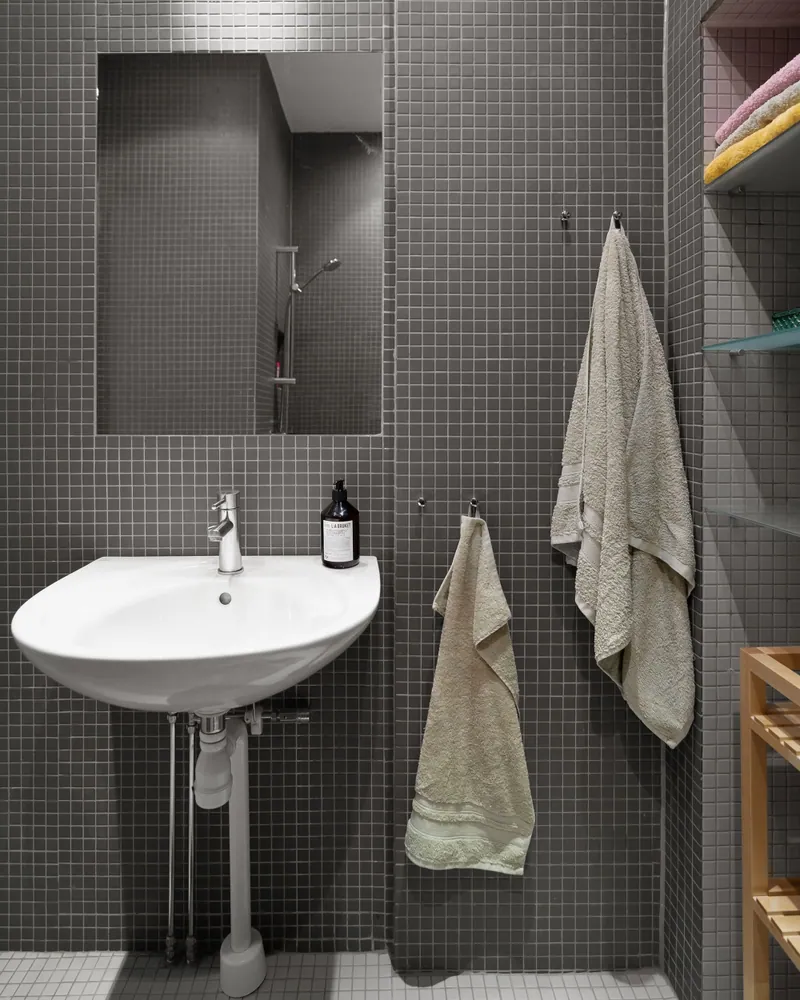
Cement grout around a sink absorbs splashes, crumbles and allows water behind tiles.
No expansion joints on the floor
Kitchen floors without expansion joints crack under cabinet loads and temperature swings.
More in ceramic & porcelain tiling.
What goes wrong with most finishing.
The finish is what you see every day, and its mistakes do not hide. These three are the most common.
 01
01A rushed finish
The finish is what you live with every day. Rushing it shows in every corner.
 02
02Four contractors for one finish
Tiling, gypsum, paint and aluminium crews who never talk to each other.
 03
03After-care that never comes
Once you have the keys, it is hard to find anyone to come back and fix what shows up.
The solution?
Full finishing, and maintenance after it, from one licensed company.
A rushed finishTurnkey finishing
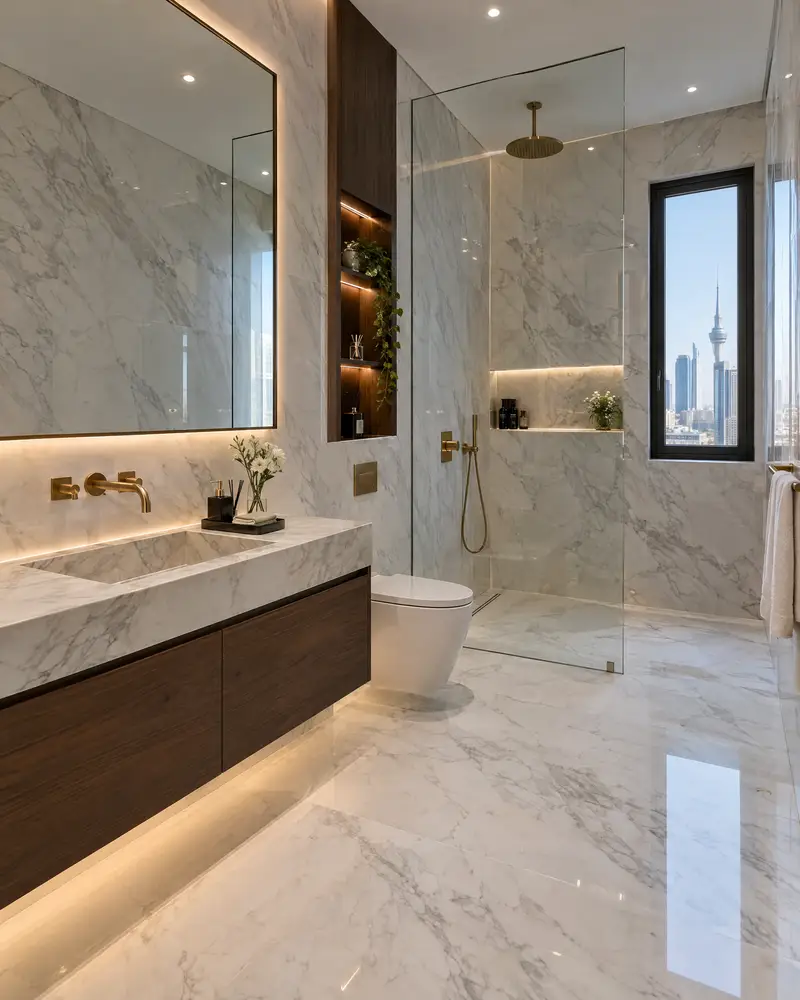
Marble, tiling, gypsum and paint from one company.

Four contractors for one finishOne company for every trade
No gaps between the tiler, the gypsum crew and the painter.

After-care that never comesRegular maintenance after handover
And finishing on instalments if you need it.
How it works.
Call or whatsApp
Contact us to book an on-site kitchen visit at your convenience.
Site measure and check
We measure floor and walls and inspect the existing surface condition.
Quotation and agreement
A detailed quote covers materials, labour and the agreed work sequence.
Prep and tile fixing
Substrate levelling, then tile fixing, grouting and edge sealing.
Inspection and handover
Full tap-test and visual check, then handover after final clean-up.
What sets the price.
No fixed rate applies because these factors shape the final quote for each kitchen.
Get a quoteTotal kitchen area
Combined floor and wall area sets material quantities and labour hours.
Old tile removal
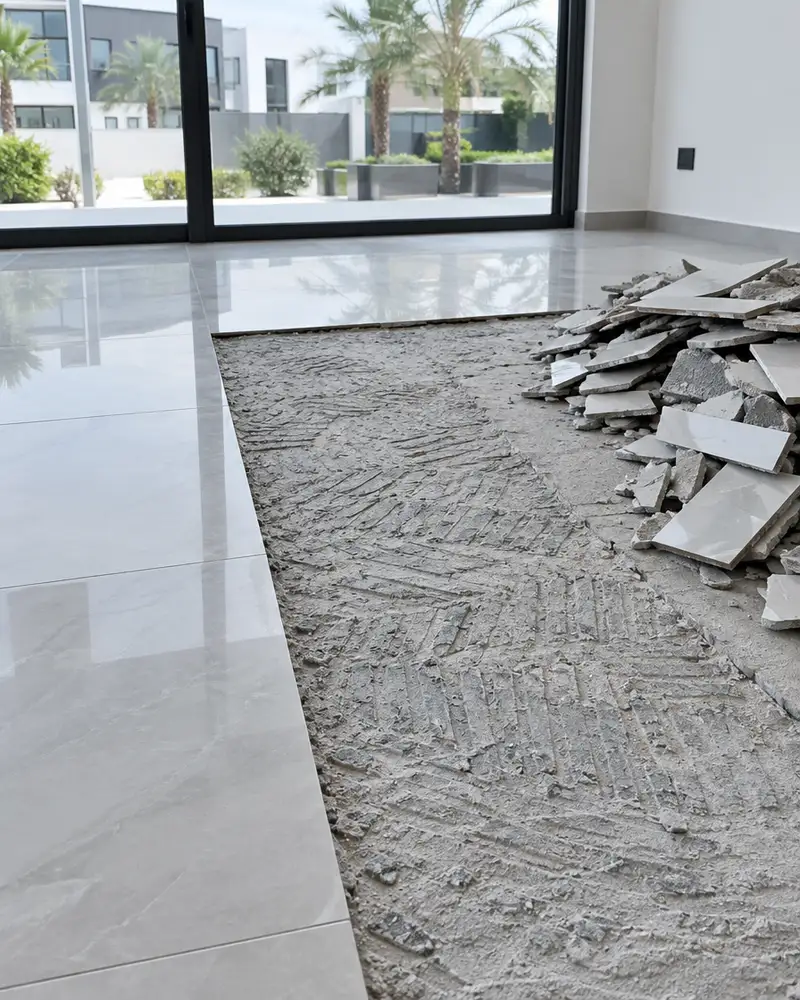
Removing existing tiles and repairing the substrate adds cost before new fixing starts.
Tile type and size
Large formats and polished porcelain require more precision and longer fixing time.
Grout and sealant type
Epoxy grout costs more than cement grout but is needed in wet and heat zones.
Substrate condition
Uneven walls or floors need a levelling compound applied before tile work begins.
Why one contractor beats four.
Every extra contractor means another schedule and another excuse. With us, one company answers for all of it.
Turnkey
Shell and finishing with one company, from footings to keys.
Pay in instalments
Construction and finishing on instalments. Ask us for the details.
Engineering supervision
Architectural drawings and engineering supervision on site.
After handover
Maintenance contracts and a 24-hour emergency plumber.
A licensed Kuwaiti company for building construction, finishing, renovation and infrastructure works.
What our clients say.
See all reviews on GoogleExcellent
Taha Saad
Google review
Excellent
Ali Nadi
Google review
Kitchen tiling in Kuwait. We work across all six governorates of Kuwait: Capital, Hawalli, Farwaniya, Mubarak Al-Kabeer, Ahmadi, Jahra.
Official references: Kuwait Fire Force (safety requirements in finishing work)
Questions, answered.
Call nowCan kitchen tiles be laid directly over the existing ones without removing them?
It is possible in limited cases when the old tiles are fully bonded and the floor is level. Any hollow or lifted tile requires full removal first, since fixing over a weak base leads to early failure.
What is the practical difference between wall and floor ceramic for a kitchen?
Wall ceramic is lighter and smoother because it bears no foot load. Floor tiles carry a slip-resistance and load rating. Using wall tiles on a kitchen floor causes cracking or dangerous slipping.
How can grout joints stay clean in a heavily used kitchen?
Epoxy grout absorbs far less grease than cement grout and wipes clean more easily. Regular cleaning with a mild solution and avoiding abrasive brushes keeps grout joints looking fresh longer.
Does a kitchen floor need a waterproofing layer before tiling?
Not to the same level as bathrooms, but the zone under the sink and around water-connected appliances benefits from a light waterproofing layer to protect the substrate from any unexpected leak.
Can kitchen floor tiles be replaced without removing the base cabinets?
Full tile replacement usually requires lifting base cabinets because the old tiles run beneath them. Tiling only the exposed area leaves a level difference and weakens the tile bond at cabinet edges.

Licensed and registered in Kuwait.
Check us before you sign. This is our licence number and what it covers.
Find us on Google Maps