
What the work covers
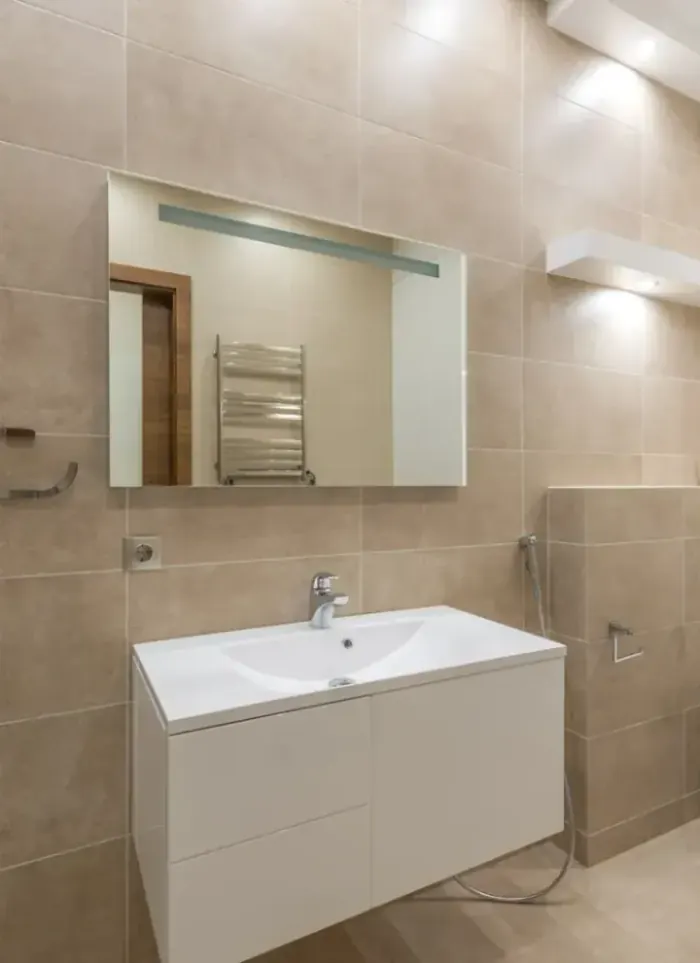
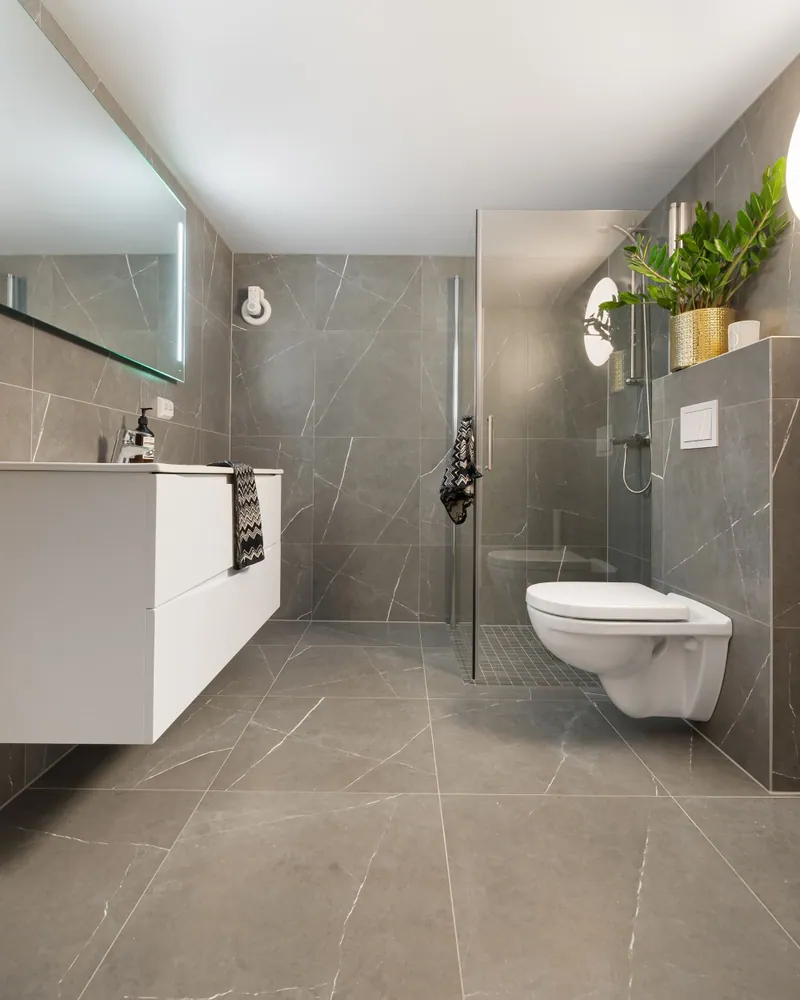
Substrate checking through tile fixing, grouting and final inspection on every wall
Substrate preparation
Cleaning, levelling and priming the wall before any tile goes up

Tile fixing
Full-bed adhesive and back-buttering to eliminate hollow spots

Levelling and alignment
Laser level and tile levelling clips for a perfectly flat surface
Grouting and expansion
Epoxy grout in wet zones, flexible silicone at all internal corners

Edge and trim finishing
Precise cuts around sockets and openings with neat aluminium trim profiles
Post-fix inspection
Tap-test across every tile to confirm full adhesion before handover
Materials and methods used
High-bond flexible adhesive
Resists Kuwait's thermal cycling so large porcelain slabs do not debond over time
Back-buttering technique
Applying adhesive to the tile back raises contact coverage and prevents hollow voids
Epoxy grout for wet zones
Non-porous mix resists coastal salt and humidity and will not stain or absorb water
Laser level and levelling clips
Combines laser reference lines with mechanical clips to keep large formats perfectly plumb
Common mistakes with wall porcelain tiling
Skipping back-buttering
Partial coverage leaves air pockets that cause tiles to crack or fall in Kuwait's heat
Starting from an unplumb corner
An out-of-plumb start corner accumulates error across every row up the wall
Rigid grout at internal corners
Walls move with temperature; hard grout at corners cracks within a short time
Overly thick adhesive bed
Thick beds shrink as they cure, pulling tiles away from the wall surface
More in ceramic & porcelain tiling.
What goes wrong with most finishing.
The finish is what you see every day, and its mistakes do not hide. These three are the most common.
 01
01A rushed finish
The finish is what you live with every day. Rushing it shows in every corner.
 02
02Four contractors for one finish
Tiling, gypsum, paint and aluminium crews who never talk to each other.
 03
03After-care that never comes
Once you have the keys, it is hard to find anyone to come back and fix what shows up.
The solution?
Full finishing, and maintenance after it, from one licensed company.
A rushed finishTurnkey finishing
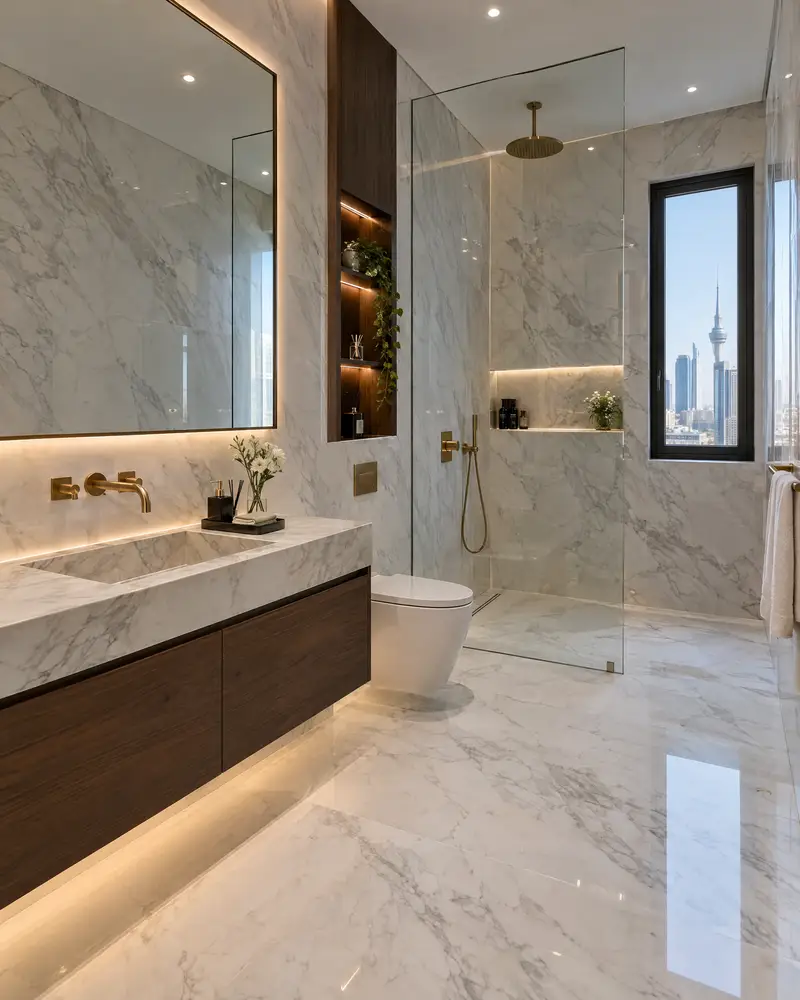
Marble, tiling, gypsum and paint from one company.

Four contractors for one finishOne company for every trade
No gaps between the tiler, the gypsum crew and the painter.
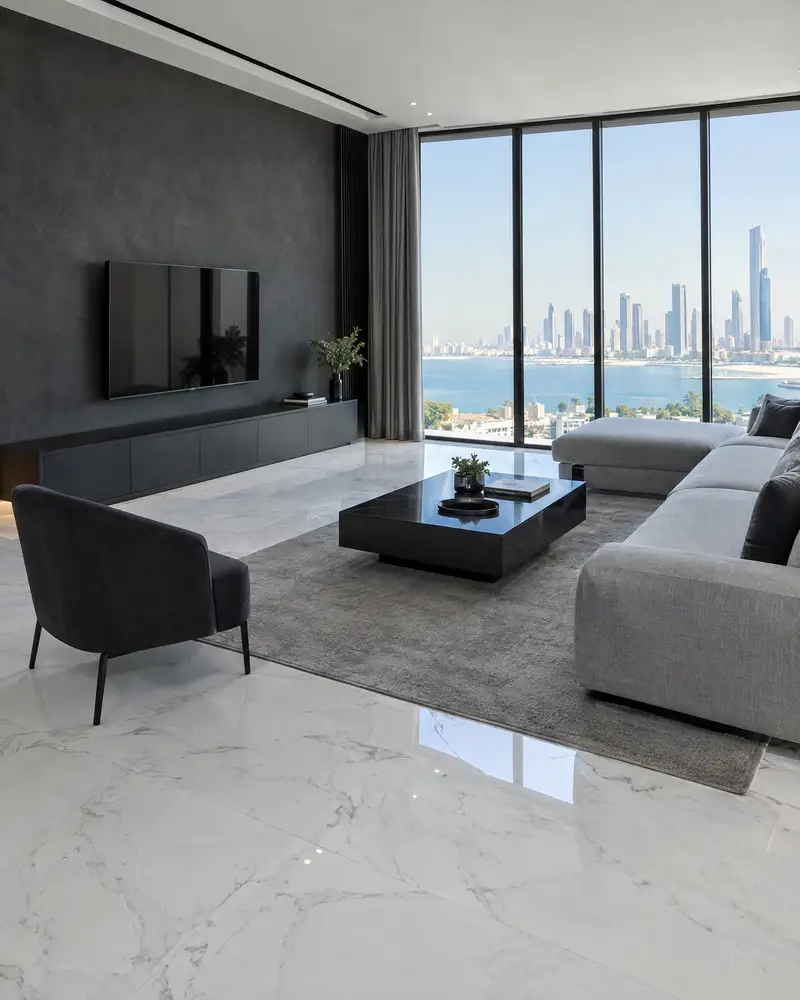
After-care that never comesRegular maintenance after handover
And finishing on instalments if you need it.
How it works.
Contact and site visit
Call or WhatsApp us to arrange a wall inspection at your property
Assessment and quote
We measure, check substrate condition and provide a detailed written quote
Material selection
Confirm tile choice, grout type and trim profiles before work begins
Preparation and fixing
Level substrate, fix tiles full-bed, then grout and seal all joints
Inspection and handover
Full tap-test, final clean and handover once every tile passes inspection
What sets the price.
No fixed rate applies; these factors together determine the quote for wall porcelain tiling
Get a quoteTotal wall area
The total square meterage to be tiled is the primary cost driver
Tile size and cut complexity
Large-format slabs require specialist cutting equipment and more skilled labour
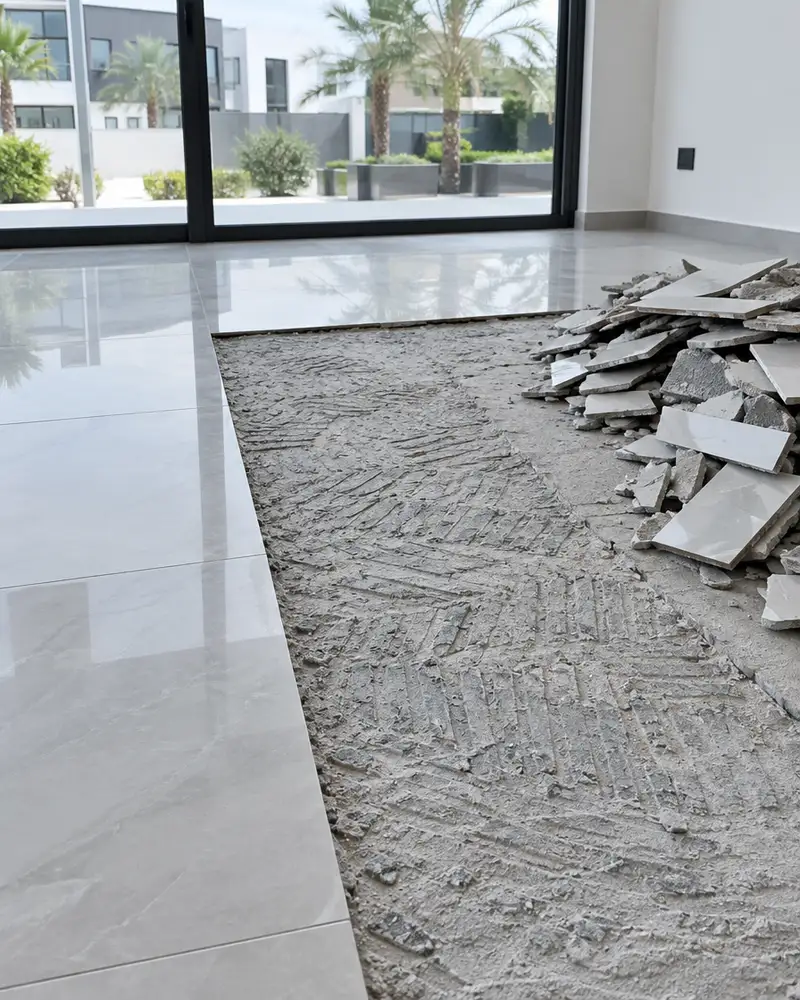
Old cladding removal
Stripping existing tiles or heavy paint adds time and cost before fixing starts
Wall surface condition
Uneven or cracked walls need patching or a render coat before tiling
Grout type required
Epoxy grout costs more than cementitious but is necessary in wet or humid areas
Why one contractor beats four.
Every extra contractor means another schedule and another excuse. With us, one company answers for all of it.
Turnkey
Shell and finishing with one company, from footings to keys.
Pay in instalments
Construction and finishing on instalments. Ask us for the details.
Engineering supervision
Architectural drawings and engineering supervision on site.
After handover
Maintenance contracts and a 24-hour emergency plumber.
A licensed Kuwaiti company for building construction, finishing, renovation and infrastructure works.
What our clients say.
See all reviews on GoogleExcellent
Taha Saad
Google review
Excellent
Ali Nadi
Google review
Wall porcelain tiling in Kuwait. We work across all six governorates of Kuwait: Capital, Hawalli, Farwaniya, Mubarak Al-Kabeer, Ahmadi, Jahra.
Official references: Kuwait Fire Force (safety requirements in finishing work)
Questions, answered.
Call nowCan wall porcelain tiles be fixed directly over existing paint?
It is not recommended. Most paints do not give adequate adhesion for tile adhesive, and tiles can delaminate later. The paint should be removed or treated with a suitable bonding primer before fixing begins.
What is the practical difference between wall and floor porcelain in Kuwaiti projects?
Wall porcelain is typically thinner and lighter. Adhesive must resist gravity pull rather than foot traffic loads, and finishes are usually polished since slip resistance is not required on a vertical surface.
Why do hollow spots appear behind wall tiles in Kuwait after a short time?
The main cause is missing back-buttering or using an adhesive not rated for high thermal movement. Kuwait's heat accelerates debonding of unsuitable adhesive, leaving air voids that produce a hollow sound when tapped.
Do kitchen walls behind the hob need a special type of porcelain tile?
Full-body porcelain is preferred behind the hob as it handles sudden heat and grease better. The adhesive and grout used in that zone should also be rated for higher temperatures than standard bathroom products.
Can large-format porcelain panels be fixed to walls without temporary support?
Large slabs are heavy and need a temporary ledger or prop while the adhesive cures. Without support the panel slides under its own weight before the adhesive sets, compromising the bond across the full back.
Licensed and registered in Kuwait.
Check us before you sign. This is our licence number and what it covers.
Find us on Google Maps