
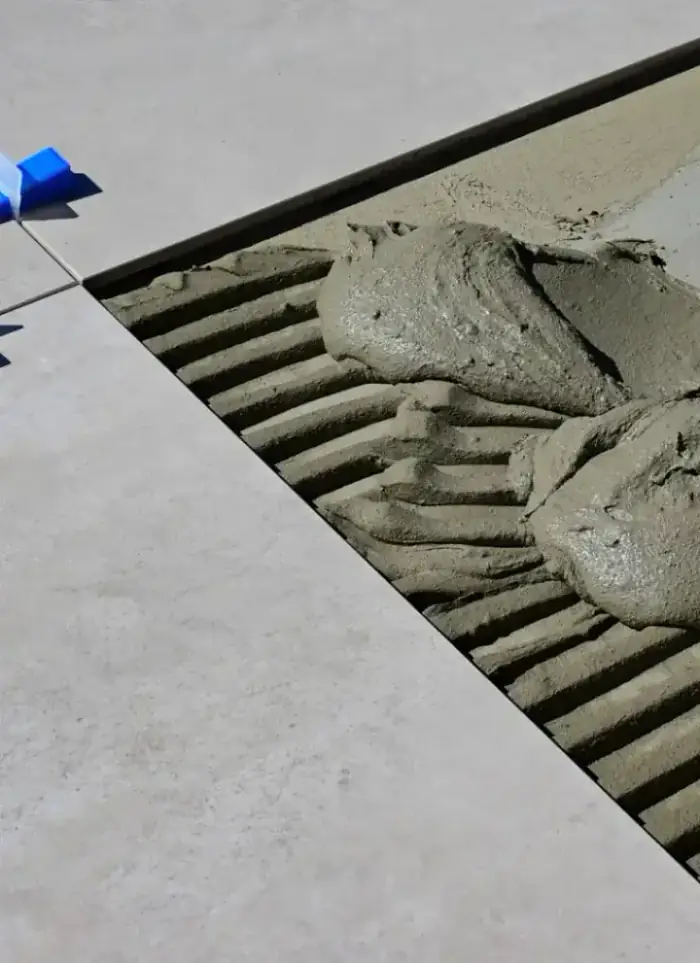
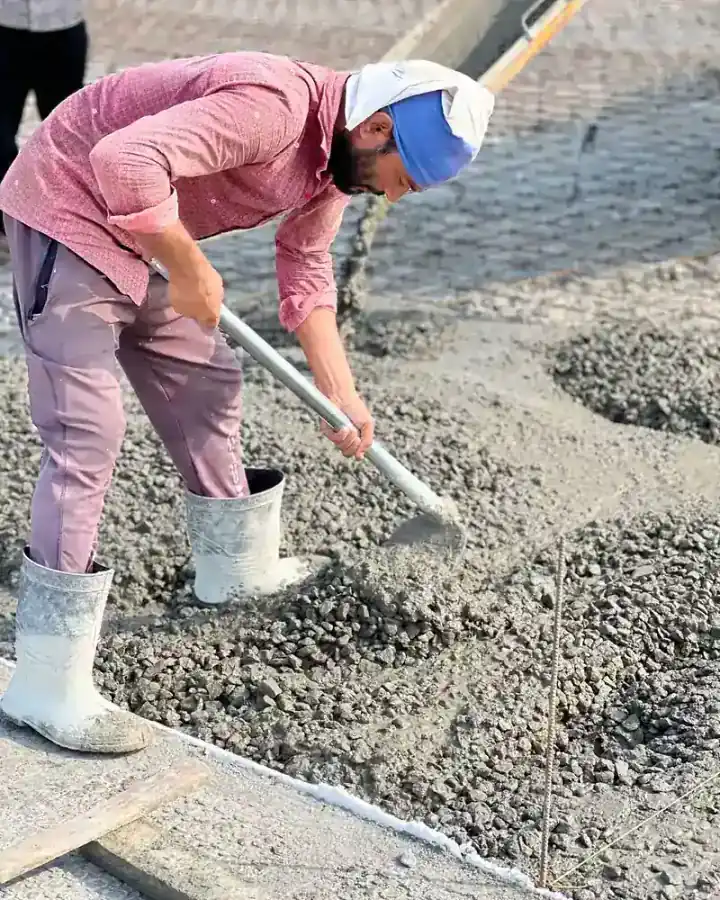
What screed work covers
Screed for floors and surfaces at any stage of construction or renovation

Ground-floor screed
Level bed over the ground slab before floor finishing is laid

Upper-floor screed
Consistent-thickness screed over suspended slabs on each storey
Falls and levelling screed
Creating precise falls toward drains in bathrooms, kitchens and roofs
Wet-area screed
Moisture-tolerant screed shaped to accommodate drainage gradients

Post-demolition screed
Re-levelling floors after partial demolition or strip-out of old finishes

Extension and annex screed
Levelling annex floors to match the finished level of the existing building
Signs you need screed work
Cracked or lifted tiles
Tiles cracking or lifting at edges signal an uneven or crumbling screed layer beneath them
Hollow sound underfoot
A hollow ring when tapping on tiles means the screed has debonded from the concrete slab below
Visible floor unevenness
Noticeable slopes or bumps across the floor reveal screed that was poorly laid from the start
Water pooling on the floor
Water collecting in spots instead of draining toward the floor trap points to a wrong screed fall
Before you call, check these points
Measure the area
Calculate the total square metres of each room or zone needing screed
Slab condition
Check the surface is free from oil, dust and sharp protrusions before the team arrives
Target screed thickness
Know the required thickness or the level difference between the existing surface and the finished floor level
Embedded pipes or drains
Mark positions of buried drain pipes and conduits so they are not covered or damaged during pouring
More in rebar & concrete pouring.
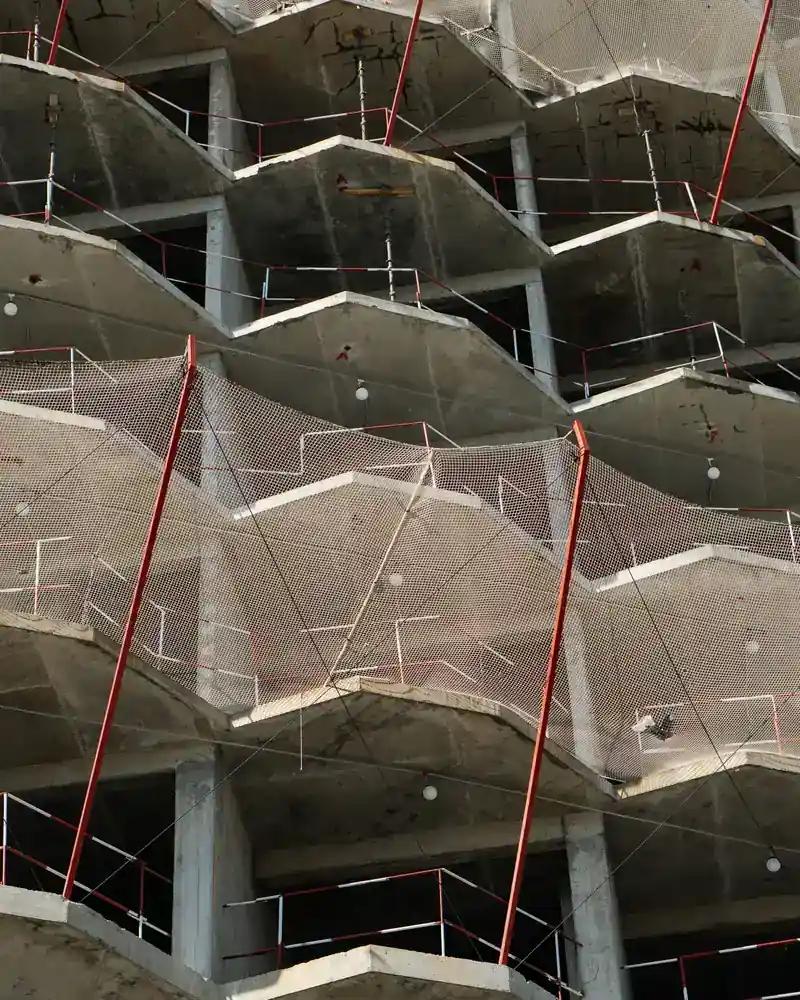
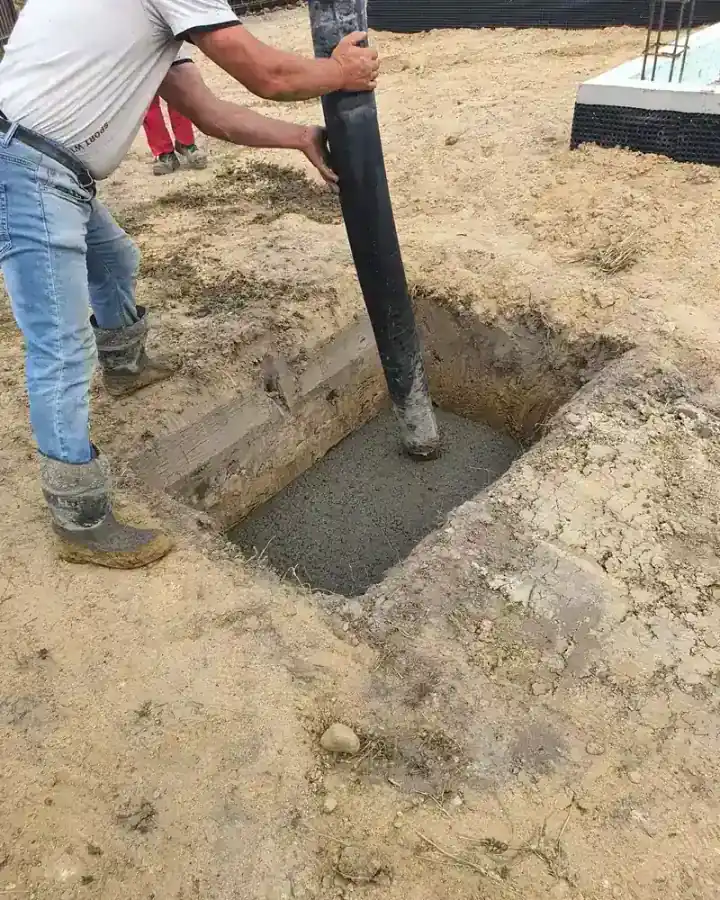

What goes wrong on most builds.
Most problems are built in early and found late. These three cost the most to fix.
 01
01Shortcuts under the finish
Concrete and steel disappear under the finish, so a shortcut there stays hidden until it cracks.
 02
02Mistakes behind the wall
A water or drain mistake found after the finish means breaking new tile.
 03
03A rushed finish
The finish is what you live with every day. Rushing it shows in every corner.
The solution?
One licensed company for the structure, the pipes and the finish.
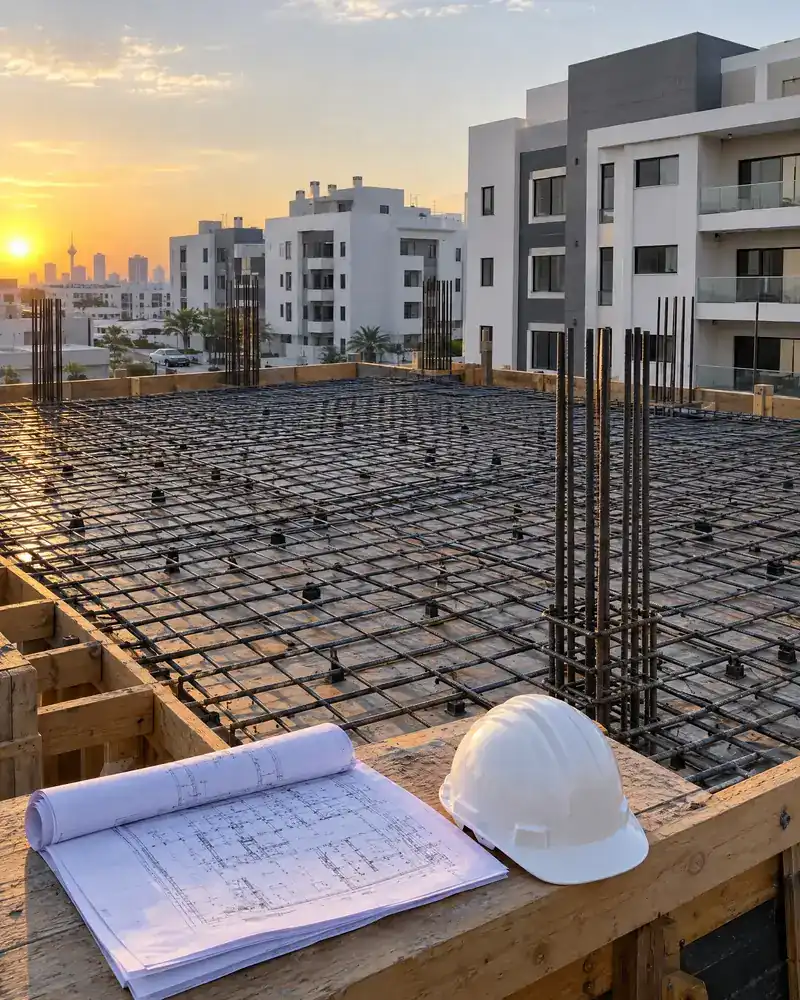
Shortcuts under the finishEngineering supervision on site
The structure is followed before it is covered.
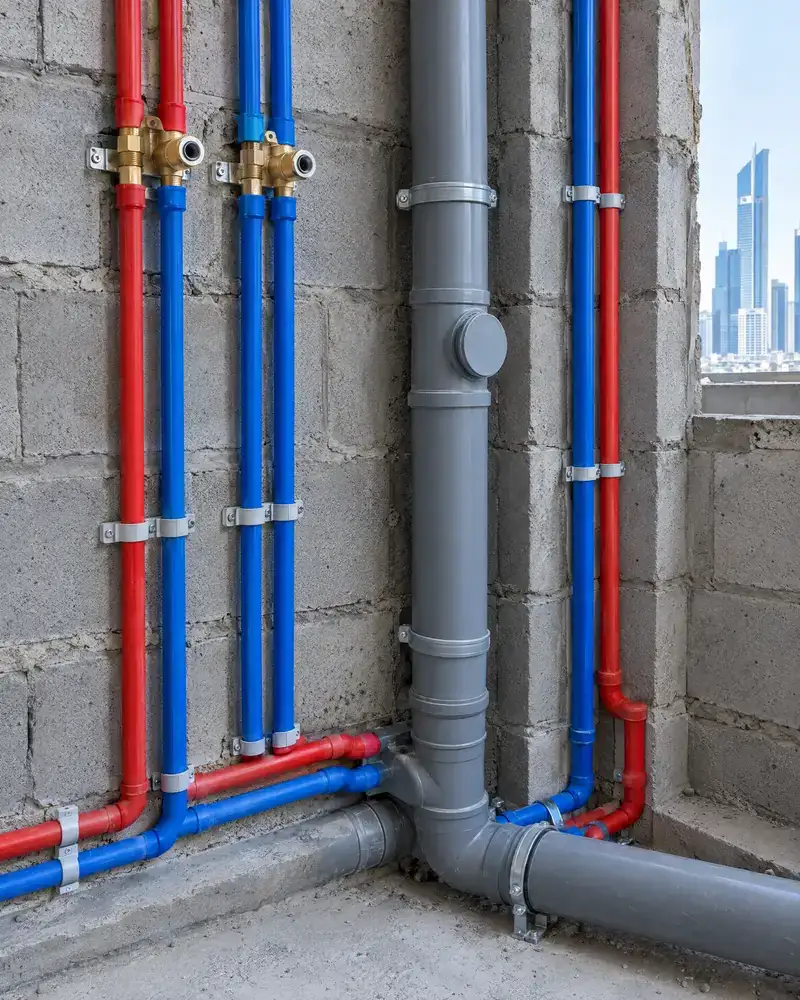
Mistakes behind the wallPlumbing by the same company
Laid before the walls close.

A rushed finishFinishing, and maintenance after
The same company finishes and maintains.
How it works.
First contact
Call or WhatsApp us describing the floor area and the work needed
Site inspection
Team visits to measure the area, assess the surface and confirm thickness
Quote and approval
You receive a detailed quote and we start once you approve it
Preparation and pouring
Surface cleaned, screed poured and levelled with required falls achieved
Curing and handover
Layer is wetted and covered to prevent cracking then handed over ready for finishing
What sets the price.
A site visit is needed before quoting because multiple factors shape the final cost of screed work
Get a quoteTotal floor area
Larger areas lower the relative cost per square metre of screed
Screed layer thickness
Greater thickness means more mix and longer effort to spread and level
Existing surface condition
An uneven or contaminated base needs extra preparation before pouring
Drainage falls required
Laying screed with precise falls toward multiple drains takes more time and skill
Site access conditions
Upper floors or tight spaces raise the cost of moving mix and levelling tools
Why one contractor beats four.
Every extra contractor means another schedule and another excuse. With us, one company answers for all of it.
Turnkey
Shell and finishing with one company, from footings to keys.
Pay in instalments
Construction and finishing on instalments. Ask us for the details.
Engineering supervision
Architectural drawings and engineering supervision on site.
After handover
Maintenance contracts and a 24-hour emergency plumber.
A licensed Kuwaiti company for building construction, finishing, renovation and infrastructure works.
What our clients say.
See all reviews on GoogleExcellent
Taha Saad
Google review
Excellent
Ali Nadi
Google review
Screed pouring in Kuwait. We work across all six governorates of Kuwait: Capital, Hawalli, Farwaniya, Mubarak Al-Kabeer, Ahmadi, Jahra.
Official references: Kuwait Municipality (building permits and plans)
Questions, answered.
Call nowCan screed be poured over old screed without removing it first?
It depends on the condition of the existing screed. If it is solid, fully bonded and not hollow, new screed can be poured over it after thorough cleaning. If it is loose or debonded, removal is necessary because laying over a weak layer leads to early failure.
Why does screed crack faster in Kuwait than in cooler climates?
Extreme heat dries the surface layer rapidly before the interior has set properly, causing early cracking. Covering and wetting the screed immediately after pouring controls the drying rate and reduces shrinkage cracking.
What is the minimum acceptable screed thickness to avoid break-up?
Minimum thickness depends on the screed type and the substrate beneath it. A layer that is too thin lacks the strength to carry finishing loads and breaks up early. The team confirms the right thickness after inspecting the site.
Is screed always needed before tiling, or can tiles be laid directly on the concrete slab?
A concrete slab is rarely level enough for tiles to be laid directly on it. Screed corrects level variations and provides a uniform surface that maintains consistent adhesive thickness and long-term tile stability.
When can tiles be laid on screed after it has been poured?
Screed must reach sufficient hardness and dryness before any finish is laid on it. Starting too early causes surface indentation and later tile cracking. The team confirms readiness based on the thickness and site conditions.
Licensed and registered in Kuwait.
Check us before you sign. This is our licence number and what it covers.
Find us on Google Maps