
What we spray
Shotcrete suits any surface that cannot be cast with conventional pour and formwork methods.

Excavation retaining walls
Stabilising excavation faces and stopping soil collapse in high-groundwater coastal sites.

Existing foundation strengthening
Adding a sprayed layer over exposed or deteriorated footings to restore load capacity.
Basement wall lining
Forming a dense pressure-resistant lining on basement walls against groundwater ingress.

Deteriorated concrete repair
Filling voids and spalled sections in columns and beams with compacted sprayed layers.

Curved surfaces and domes
Covering curved architectural forms that standard timber or steel formwork cannot follow.

Pools and water tanks
Forming pool shells and tank walls with dense, low-permeability sprayed concrete.
Signs you need shotcrete
Concrete peeling off columns
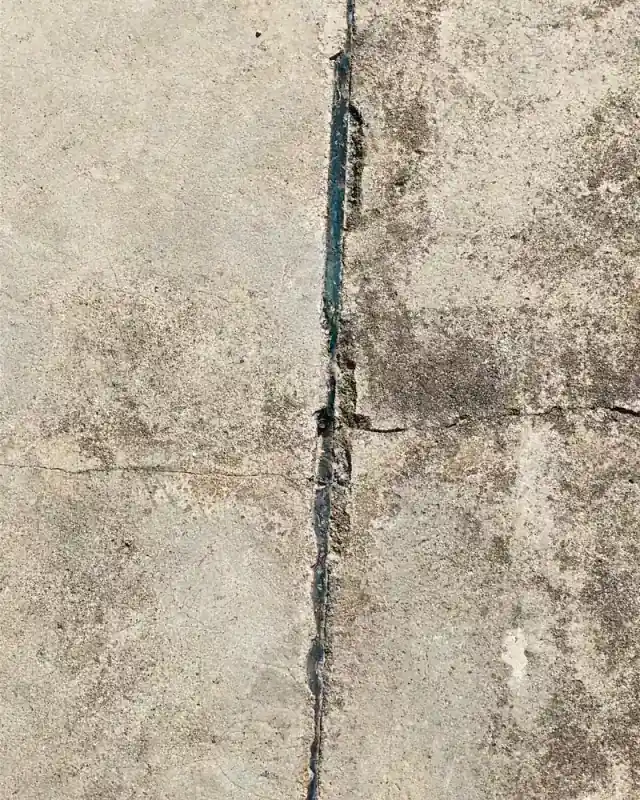
Layers breaking away from column faces expose rusting rebar that sprayed concrete fills under pressure.
Excavation face moving inward
A bulging or leaning excavation wall signals soil pressure that needs immediate sprayed stabilisation.
Water seeping through basement wall
Persistent dampness or trickling on basement walls means groundwater pressure calling for a sprayed lining.
Hollow sound when tapped
A hollow ring when tapping beams or soffits reveals internal voids that shotcrete fills and bonds.
Before you call, prepare these
Know the target surface
Clarify whether the work is on a retaining wall, column, basement or pool to allow accurate quantity assessment.
Approximate surface area
A rough area measurement helps size the concrete pump, hose length and nozzle equipment needed.
Rebar condition and cover
For existing structures, note whether rebar is exposed or corroded so the surface preparation scope is clear.
Hose and nozzle access
Check there is a route wide enough for the hose and compressor unit to reach the target area.
More in rebar & concrete pouring.
What goes wrong on most builds.
Most problems are built in early and found late. These three cost the most to fix.
 01
01Shortcuts under the finish
Concrete and steel disappear under the finish, so a shortcut there stays hidden until it cracks.
 02
02Mistakes behind the wall
A water or drain mistake found after the finish means breaking new tile.
 03
03A rushed finish
The finish is what you live with every day. Rushing it shows in every corner.
The solution?
One licensed company for the structure, the pipes and the finish.
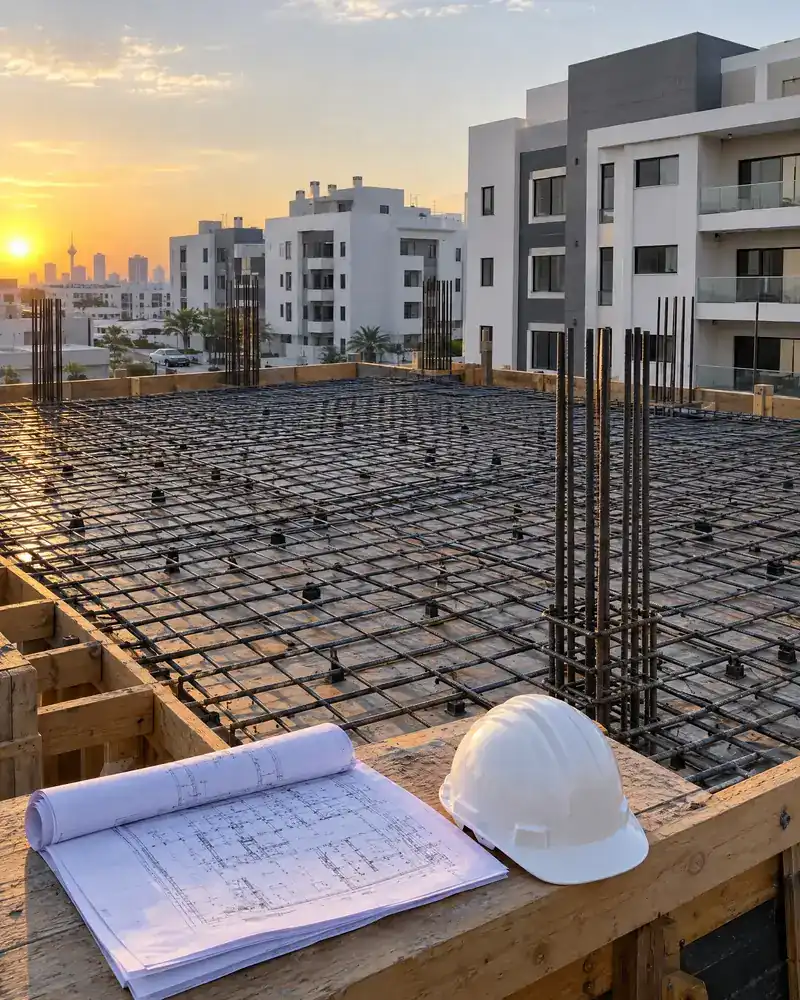
Shortcuts under the finishEngineering supervision on site
The structure is followed before it is covered.
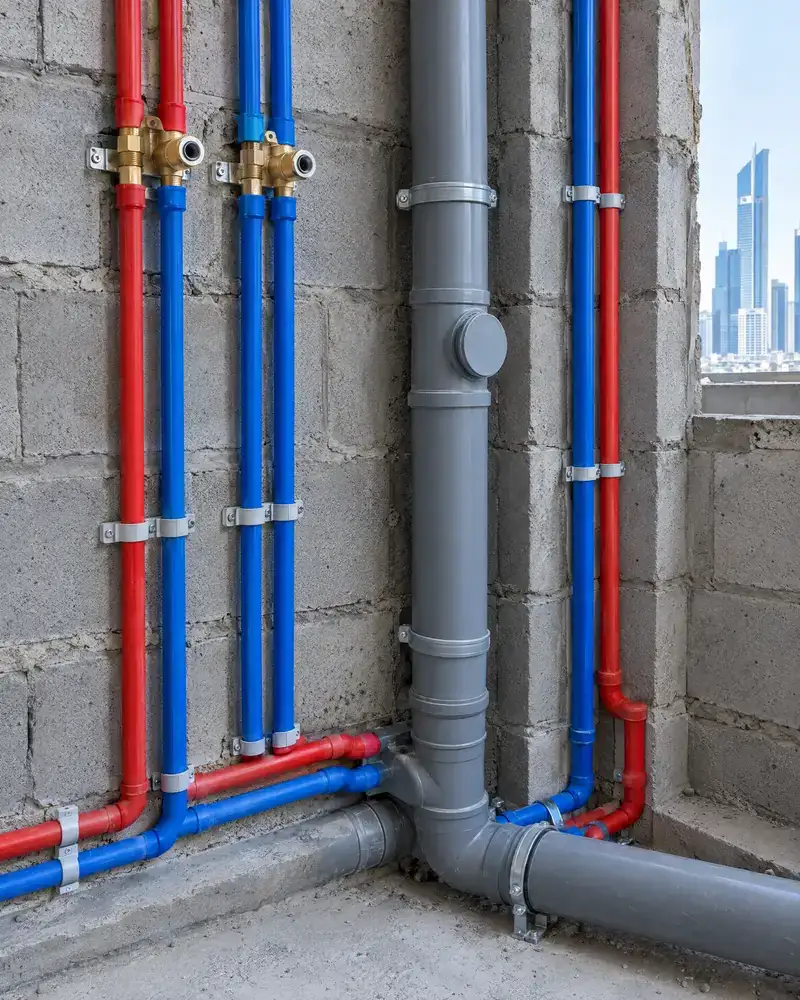
Mistakes behind the wallPlumbing by the same company
Laid before the walls close.
A rushed finishFinishing, and maintenance after
The same company finishes and maintains.
How it works.
First contact
Call or WhatsApp us describing the surface type, location and visible problem.
Site visit
Our engineer inspects the surface, measures area and checks rebar condition.
Surface preparation
Spalled sections cut back, rebar cleaned and surface high-pressure washed before spraying.
Shotcrete application
Concrete is sprayed in successive passes to build up the specified layer thickness.
Curing and handover
The sprayed layer is kept moist under cover until full strength gain before handover.
What sets the price.
Several factors tied to surface type, required thickness and site conditions shape the final quote.
Get a quoteSurface area to spray
Total area to be covered is the primary driver of overall cost.
Required layer thickness
Structural retention layers need greater thickness than shallow repair coats, raising concrete volume.
Surface and rebar preparation
Rust removal, spall cutting and pressure washing affect labour hours and overall cost.
Concrete mix specification
High-strength mixes or sulphate-resistant admixtures for saline soil sites increase material cost.
Site access difficulty
Confined spaces or deep basement access extend hose runs and increase operating time and cost.
Why one contractor beats four.
Every extra contractor means another schedule and another excuse. With us, one company answers for all of it.
Turnkey
Shell and finishing with one company, from footings to keys.
Pay in instalments
Construction and finishing on instalments. Ask us for the details.
Engineering supervision
Architectural drawings and engineering supervision on site.
After handover
Maintenance contracts and a 24-hour emergency plumber.
A licensed Kuwaiti company for building construction, finishing, renovation and infrastructure works.
What our clients say.
See all reviews on GoogleExcellent
Taha Saad
Google review
Excellent
Ali Nadi
Google review
Shotcrete in Kuwait. We work across all six governorates of Kuwait: Capital, Hawalli, Farwaniya, Mubarak Al-Kabeer, Ahmadi, Jahra.
Official references: Kuwait Municipality (building permits and plans)
Questions, answered.
Call nowWhat makes shotcrete different from concrete poured into formwork?
Poured concrete fills an enclosed mould, while shotcrete is pneumatically propelled directly onto the surface and compacts on impact without any formwork. That makes it practical for curved profiles and open excavation faces where enclosing a mould is not possible.
Can a shotcrete lining stop groundwater coming through an old basement wall?
After cleaning and cutting back deteriorated sections, a dense low-permeability sprayed layer is applied. The high-impact compaction closes pores and resists the groundwater pressure common in Kuwait's coastal areas.
How do you ensure the sprayed layer bonds properly to the existing surface?
Preparation is key. All loose concrete and rust are removed and the substrate is pressure-washed to a sound surface. Spraying is timed to avoid peak heat so the material bonds before surface moisture evaporates.
Can shotcrete be used to build an entirely new swimming pool shell?
Many pool shells are built this way. Rebar is tied to shape, then shotcrete is sprayed in layers to form walls and floor at uniform thickness, which suits curved and freeform pool designs that standard formwork cannot achieve.
Does shotcrete spraying cause noise or vibration that affects adjacent structures?
The compressor and nozzle produce operational noise but shotcrete does not generate the structural vibration associated with breaking or driving work. Neighbouring walls and slabs are not affected at the vibration level.
Licensed and registered in Kuwait.
Check us before you sign. This is our licence number and what it covers.
Find us on Google Maps