
What column pouring covers
structural columns poured at every level, from ground floor to roof

Ground-floor columns
First-level columns above the foundation with sulphate-resistant specification
Upper-floor columns
Repeated floor columns with starter bars projecting for the next slab

Extension and annex columns
New columns tied into an existing structural frame for annexes or extensions

Additional-floor columns
Columns for a new storey added above an existing villa after structural assessment

Basement columns
Below-grade columns with waterproofing protection against high groundwater

Pour supervision
On-site supervision of pour, vibration and curing to verify specification compliance
Materials and methods for column pouring
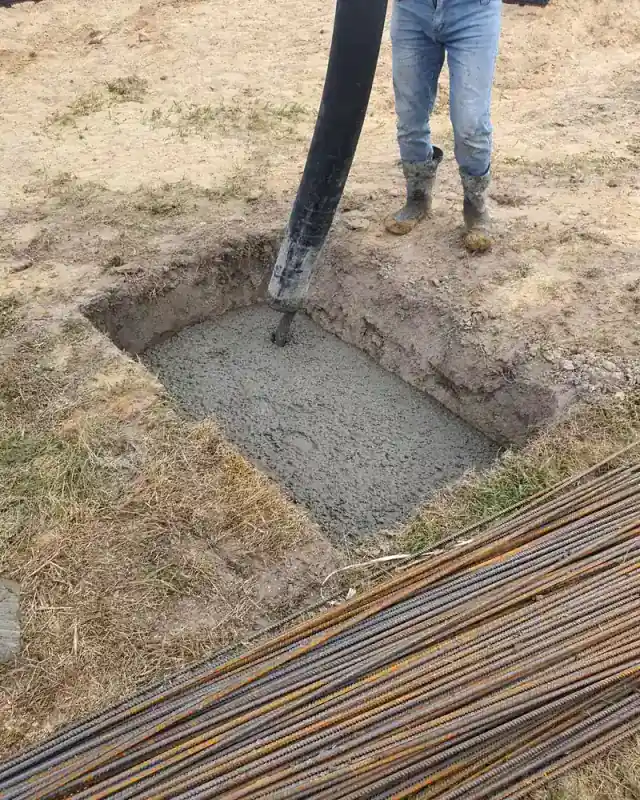
Sulphate-resistant concrete mix
Resists salts in Kuwait's coastal soil and prevents internal deterioration of columns
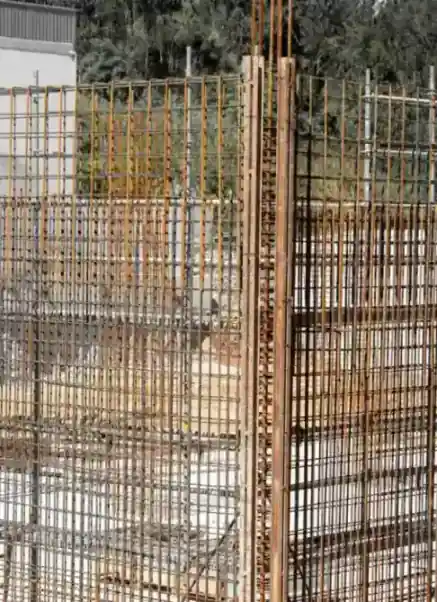
Tied rebar cage with stirrups
Vertical bars and evenly spaced stirrups prevent buckling and splitting under load
Plastic cover spacers
Hold the exact concrete cover over rebar, blocking the rust that causes spalling
Internal vibrator and wet curing
Vibrator removes air voids; water curing stops early cracking in Kuwait's summer heat
Before you call us
Approved structural drawings
Column dimensions, rebar sizes and concrete grade must be set in approved drawings
Column positions marked on site
Pre-marked positions help size the concrete order and place the pump correctly
Soil investigation report
Soil type and groundwater depth set the concrete specification and waterproofing need
Pump and mixer truck access
Confirm the mixer truck and concrete pump can reach each column position on site
More in rebar & concrete pouring.


What goes wrong on most builds.
Most problems are built in early and found late. These three cost the most to fix.
 01
01Shortcuts under the finish
Concrete and steel disappear under the finish, so a shortcut there stays hidden until it cracks.
 02
02Mistakes behind the wall
A water or drain mistake found after the finish means breaking new tile.
 03
03A rushed finish
The finish is what you live with every day. Rushing it shows in every corner.
The solution?
One licensed company for the structure, the pipes and the finish.

Shortcuts under the finishEngineering supervision on site
The structure is followed before it is covered.
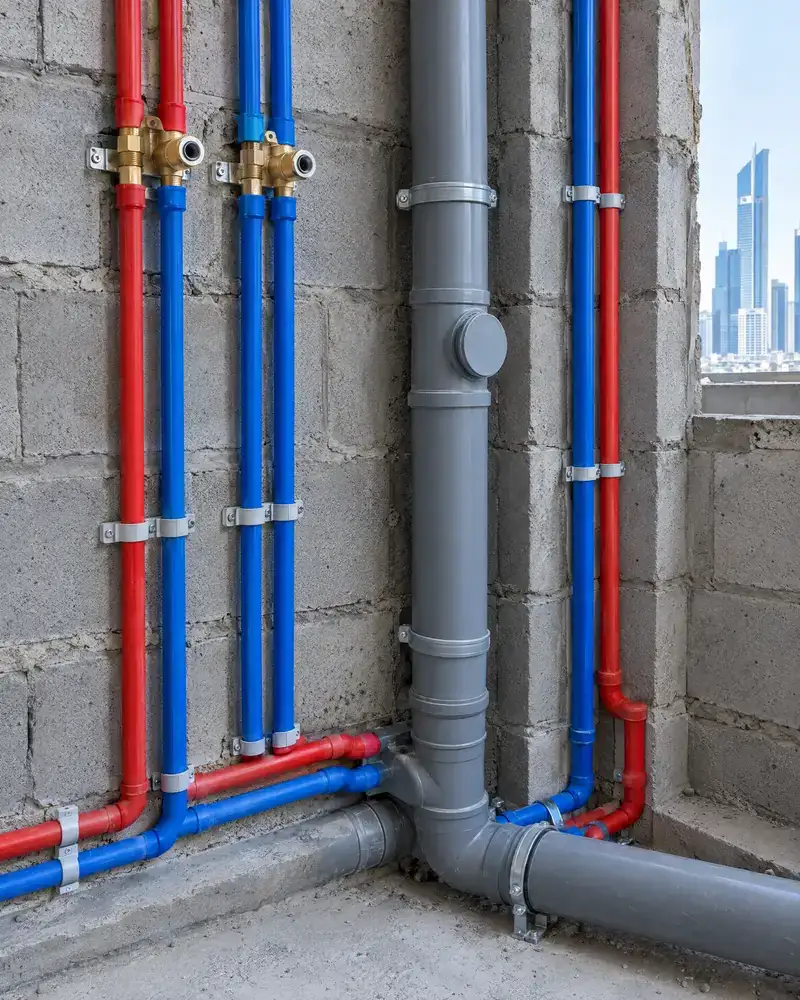
Mistakes behind the wallPlumbing by the same company
Laid before the walls close.

A rushed finishFinishing, and maintenance after
The same company finishes and maintains.
How it works.
First contact
Call or WhatsApp with column count, level and project location
Drawing review
We review approved structural drawings and confirm concrete and rebar specification
Rebar cage assembly
Cage assembled with stirrups and spacers then set in the correct position
Pour and vibrate
Concrete poured early in summer heat and vibrated to remove all air voids
Curing and handover
Columns wet-cured and covered, then handed over with specification documentation
What sets the price.
cost factors tied to column size, mix specification and site conditions shape every quote
Get a quoteColumn count and size
Total concrete and rebar volume follows the number and full dimensions of columns
Concrete grade specified
Coastal sites need a higher-grade sulphate-resistant mix than inland locations
Rebar cage complexity
Dense stirrups or non-rectangular cage shapes require more assembly time and labour
Equipment access to site
Narrow access or high-level columns affect pumping method and equipment cost
Pour level and floor height
Upper-floor and basement columns increase pump requirements and working time
Why one contractor beats four.
Every extra contractor means another schedule and another excuse. With us, one company answers for all of it.
Turnkey
Shell and finishing with one company, from footings to keys.
Pay in instalments
Construction and finishing on instalments. Ask us for the details.
Engineering supervision
Architectural drawings and engineering supervision on site.
After handover
Maintenance contracts and a 24-hour emergency plumber.
A licensed Kuwaiti company for building construction, finishing, renovation and infrastructure works.
What our clients say.
See all reviews on GoogleExcellent
Taha Saad
Google review
Excellent
Ali Nadi
Google review
Column pouring in Kuwait. We work across all six governorates of Kuwait: Capital, Hawalli, Farwaniya, Mubarak Al-Kabeer, Ahmadi, Jahra.
Official references: Kuwait Municipality (building permits and plans)
Questions, answered.
Call nowWhy does the concrete specification change for columns near Kuwait's coastal areas?
Coastal soil contains sulphates and chlorides that attack ordinary concrete and corrode the rebar cage. A sulphate-resistant mix closes the pore structure and protects the steel from within, significantly extending column life.
Can new columns be connected to an existing concrete frame?
Yes. Existing concrete is chased and dowel bars are fixed with structural adhesive to create a mechanical bond, then the new column is poured against the prepared face. The existing frame must be assessed first.
What happens if columns are poured at peak summer temperature?
Extreme heat accelerates moisture loss before hydration completes, causing early surface and structural cracking. Scheduling the pour in the early morning hours and covering columns immediately after stripping prevents this.
Why do rust stains appear on concrete columns after only a few years?
Thin or uneven concrete cover over the rebar lets moisture and salt reach the steel. Using calibrated plastic spacers and the correct mix specification during the original pour is the only reliable prevention.
Can a column be poured where a mixer truck cannot reach?
A concrete pump can deliver the mix over a long distance, and in very tight spaces a skip and crane or manual buckets are used. The right method is confirmed during the site visit before the pour is scheduled.

Licensed and registered in Kuwait.
Check us before you sign. This is our licence number and what it covers.
Find us on Google Maps