
What the service covers
Reinforced concrete stairs poured inside or outside, at any floor level of a building.

Interior stairs
Main internal stairs connecting ground and upper floors in villas.
Exterior stairs
Entrance and exit stairs exposed to weather and heavy foot use.

Annex and extension stairs
Stairs for roof annexes or side extensions tied to the existing frame.

Added-floor stairs
New stair run poured when an extra storey is added to an existing villa.

Basement stairs
Below-grade stairs with moisture-resistant concrete and sealed soffit.

Pour supervision and finish
On-site supervision of the pour and smooth surface finish ready for tiling.
Signs you need stair pouring
No stairs yet on site
The structural frame is complete but no stair run has been designed or cast yet.
Existing stair feels loose
Treads move or creak underfoot, pointing to poor connection with the structural slab.
Cracks across the treads
Horizontal cracks at tread noses caused by inadequate rebar cover or undersized steel.
New floor with no access
An added storey or roof annex is structurally complete but has no stair access yet.
Common mistakes in stair pouring
Wrong riser or tread size
Unequal risers or treads cause constant tripping and are hard to fix after setting.
Thin rebar cover
Cover below the specified depth exposes rebar to corrosion and causes tread-edge spalling.
Pouring in midday heat
Pouring at Kuwait's peak daytime temperature dries the surface too fast and forms cracks.
Skipping water curing
No wet curing after the pour leaves the concrete weak under foot traffic and wear.
More in rebar & concrete pouring.

What goes wrong on most builds.
Most problems are built in early and found late. These three cost the most to fix.
 01
01Shortcuts under the finish
Concrete and steel disappear under the finish, so a shortcut there stays hidden until it cracks.
 02
02Mistakes behind the wall
A water or drain mistake found after the finish means breaking new tile.
 03
03A rushed finish
The finish is what you live with every day. Rushing it shows in every corner.
The solution?
One licensed company for the structure, the pipes and the finish.

Shortcuts under the finishEngineering supervision on site
The structure is followed before it is covered.
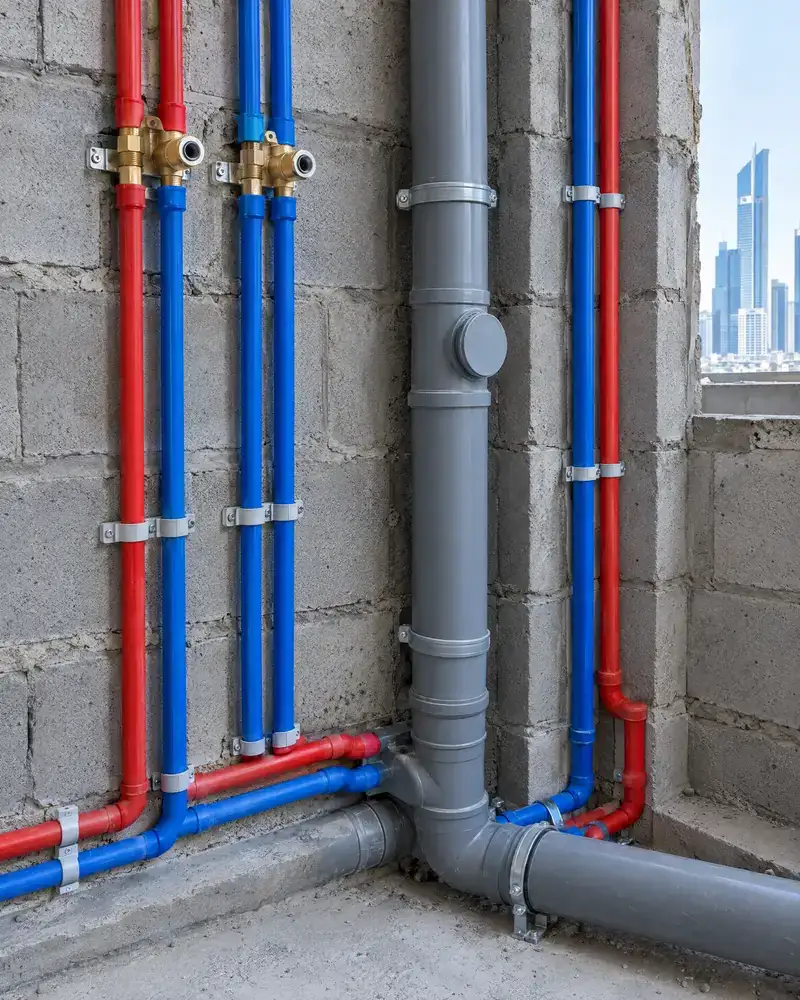
Mistakes behind the wallPlumbing by the same company
Laid before the walls close.

A rushed finishFinishing, and maintenance after
The same company finishes and maintains.
How it works.
Call or whatsApp
Contact us to describe the stair location, floor height and any drawings you have.
Site visit and measurement
We visit to measure rise, width and verify the structural drawings are approved.
Quote and agreement
We submit a detailed quote covering concrete, rebar, formwork and supervision.
Rebar and pour
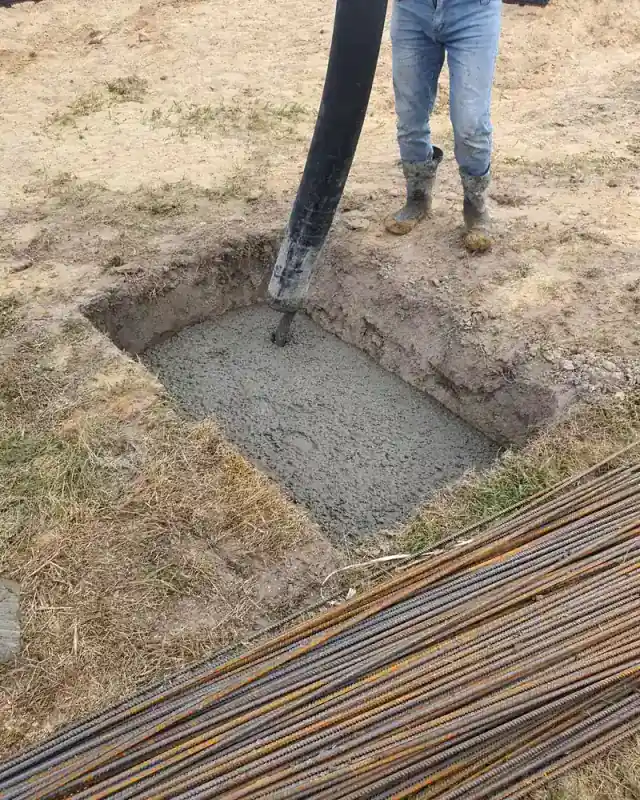
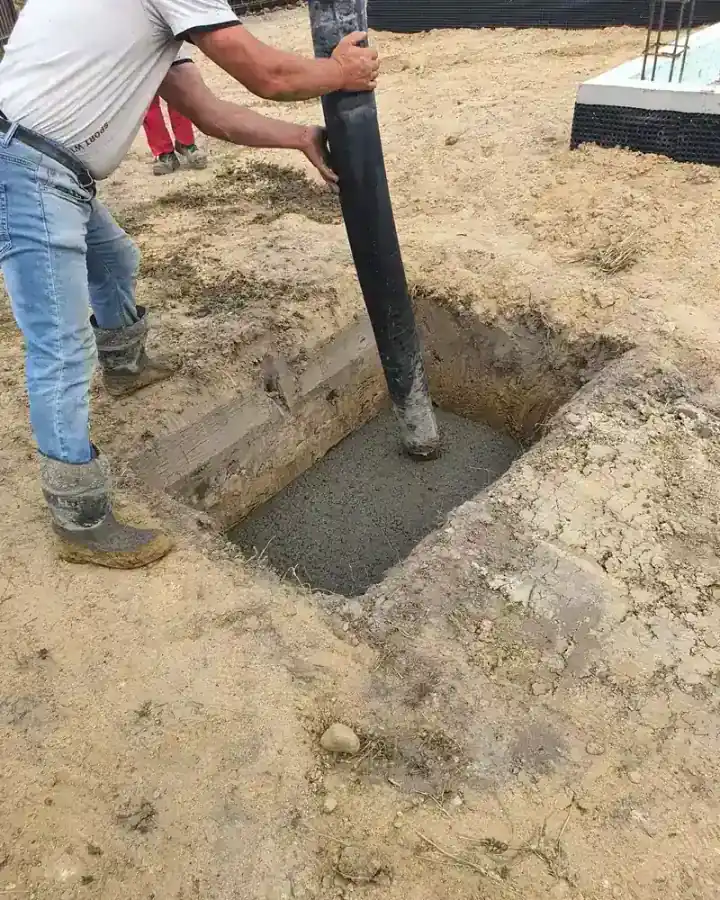
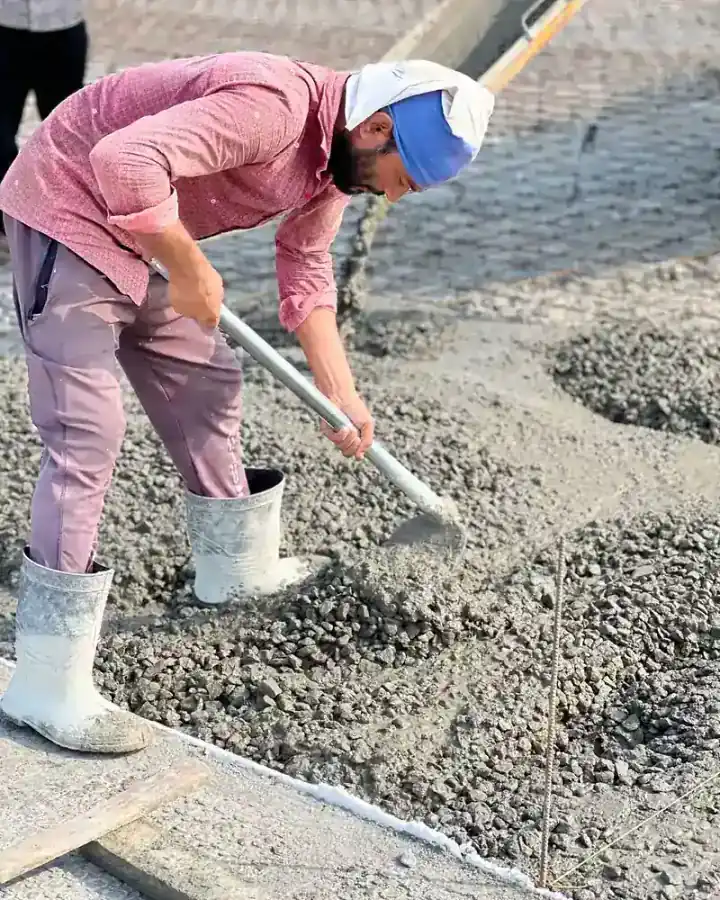
Formwork and rebar cage are set, then concrete is poured in the cool early morning.
Curing and handover
We wet-cure the stairs and hand over with a smooth surface ready for finishing.
What sets the price.
Several stair-specific and site factors shape the quote; no fixed rate applies across projects.
Get a quoteStep count and floor height
More steps and greater storey height raise the concrete and rebar volume needed.
Stair width
A wider stair demands larger formwork and a greater volume of concrete and steel.
Stair shape and geometry
A straight run is quicker and cheaper than a curved or return-flight stair.
Concrete grade specified
Sulphate-resistant or waterproofed mix for basement stairs costs more than standard grade.
Equipment access to site
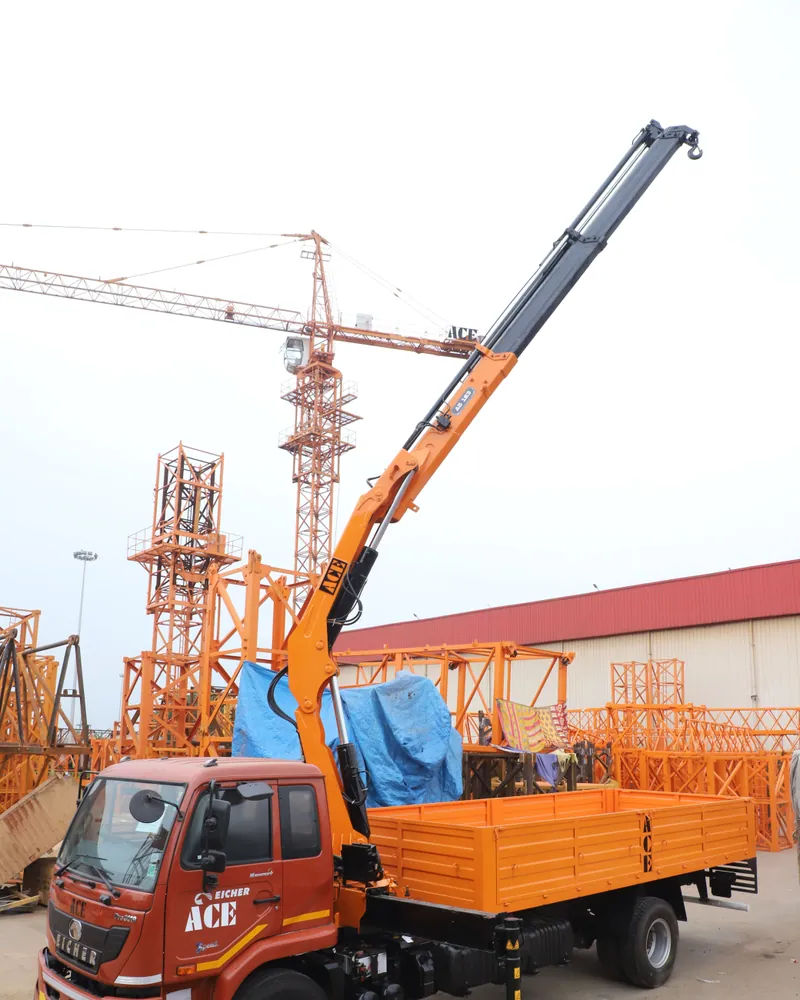
A tight plot or upper-floor location may require a concrete pump or extra handling.
Why one contractor beats four.
Every extra contractor means another schedule and another excuse. With us, one company answers for all of it.
Turnkey
Shell and finishing with one company, from footings to keys.
Pay in instalments
Construction and finishing on instalments. Ask us for the details.
Engineering supervision
Architectural drawings and engineering supervision on site.
After handover
Maintenance contracts and a 24-hour emergency plumber.
A licensed Kuwaiti company for building construction, finishing, renovation and infrastructure works.
What our clients say.
See all reviews on GoogleExcellent
Taha Saad
Google review
Excellent
Ali Nadi
Google review
Concrete stair pouring in Kuwait. We work across all six governorates of Kuwait: Capital, Hawalli, Farwaniya, Mubarak Al-Kabeer, Ahmadi, Jahra.
Official references: Kuwait Municipality (building permits and plans)
Questions, answered.
Call nowDo concrete stairs need approved structural drawings before pouring?
Yes, structural drawings define tread and riser dimensions, rebar diameter and required cover. Pouring without approved drawings often leads to sizing errors or understrength steel that cannot easily be corrected after the concrete sets.
How long should you wait before walking on a newly poured concrete stair?
No load should be placed on the stairs until curing is complete and the concrete reaches its design strength. Walking on stairs too early is one of the leading causes of tread-edge cracking.
Can a new concrete stair be poured connected to an existing structural frame?
Yes, connection dowels are drilled and epoxy-grouted into the existing slab or wall to tie the new stair securely. Correct dowel depth and spacing are critical for proper load transfer.
What is the difference between a cantilevered stair and a stair poured on filled ground?
A structural stair is fully supported by the concrete frame; one poured over fill relies partly on the ground below. Relying solely on fill in Kuwait is risky because poorly compacted fill can settle and crack the stair slab.
Does an exterior location change the concrete specification for stairs?
Yes, exterior stairs face Kuwait's intense sun, humidity and seasonal rain, so they require greater concrete cover and extended curing to achieve a surface that resists wear and surface carbonation.

Licensed and registered in Kuwait.
Check us before you sign. This is our licence number and what it covers.
Find us on Google Maps