
What the service covers
Supply and drainage points in bathrooms and kitchens, from wall chase to final test.

Hot and cold supply runs
PPR pipe runs with thermal insulation to every outlet point.
Drainage line installation
uPVC drain runs laid to correct fall toward the main stack.
Breaking and reinstatement
Opening walls and floors, then restoring finishes after pipe runs.

Wet-area waterproofing
Waterproof membrane under shower and basin areas before tiling.
Isolation valve fitting
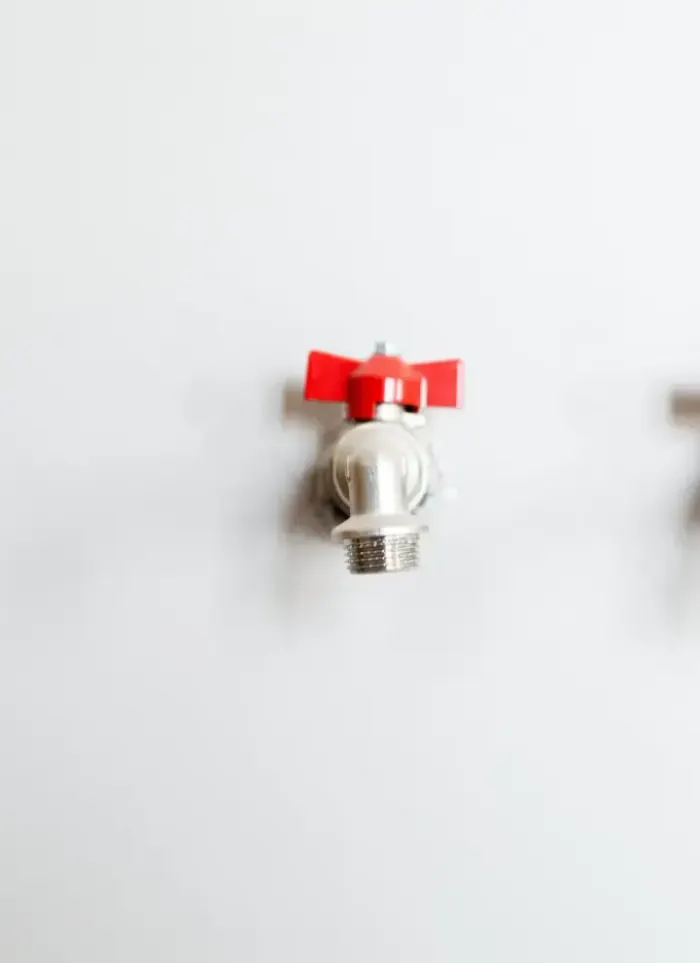
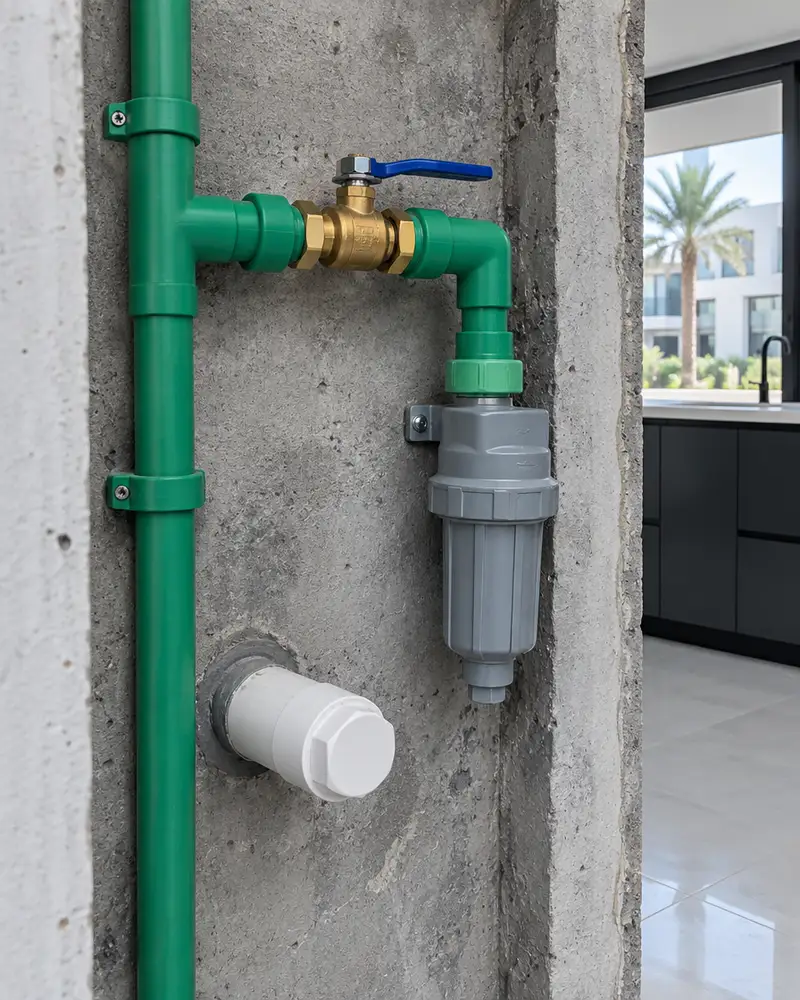
Individual isolation valve per bathroom and kitchen for easy maintenance.
Pressure test and handover
Full pressure test on supply lines before walls are closed.
Materials and methods used
Heat-fused PPR pipe
Thermal fusion creates a joint as strong as the pipe itself, resisting hot water and network pressure without leaking.
uPVC drain pipe and solvent cement
Lightweight and resistant to grease and cleaning chemicals common in Kuwaiti kitchen drain lines.
Scale strainer and reducer
Protects mixers and traps from heavy calcium deposits caused by Kuwait's hard mineral-rich water supply.
Wet-area waterproof membrane
Applied under shower floor tiles and around the base perimeter to block moisture migrating into the wall structure.
Mistakes that cause real problems
Drain laid without adequate fall
Water pools inside the pipe, grease accumulates and blockages return quickly after every clearing.
Skipping the pressure test
Leaks appear only after walls are closed, forcing costly tile removal and re-plastering later.
Omitting the shower membrane
Moisture migrates behind tiles and shows as damp stains on adjoining walls after prolonged use.
Joining PPR to galvanised iron directly
Galvanic corrosion attacks the joint over time and causes a hidden leak inside the finished wall.
More in plumbing & installations.
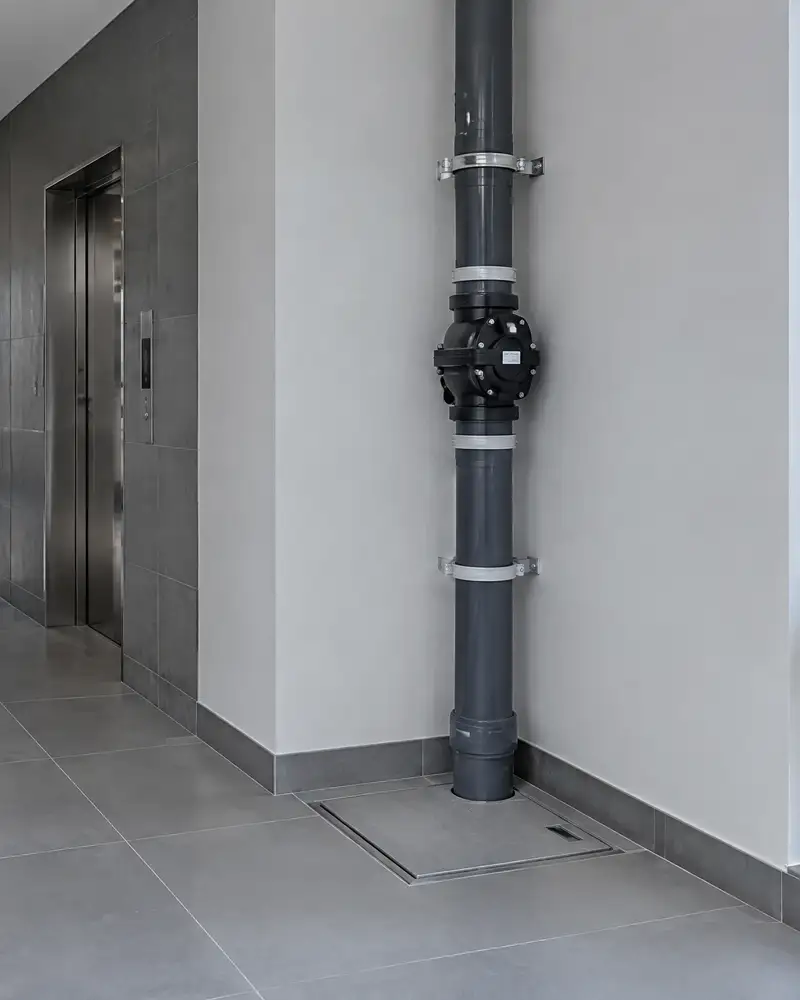 01Plumber / sanitary technician (24h)
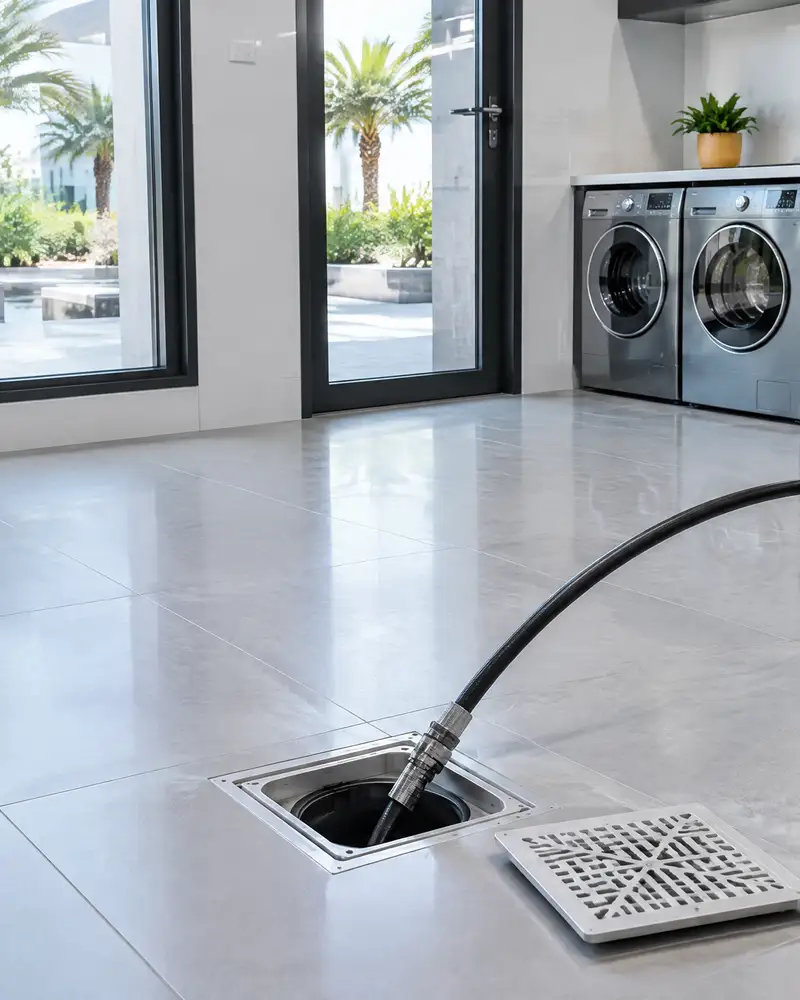 02Drain unclogging
 03Central water-heater installation
 04Water pump install & service
 05Water leak detection
 06Tank waterproofing & cleaning
 07Central gas lines
 08Water pipe runs
 09Sanitary fixture installation
 10Cesspit suction
 11First-fix plumbing, new houses
 12Plumbing maintenance contracts
 13Water tank installation
 14Plumbing installations
 15Sewage contractor
 16Storm-water drainage
 17Municipal sewer connection
- All plumbing & installation services
How bathroom and kitchen plumbing is done properly
Work begins by mapping every supply and drain route before any wall is opened, marking isolation-valve positions and stack drop points. In older houses the existing pipe material is identified first, because connecting PPR to remaining galvanised iron requires proper transition fittings. In new builds, pipes are run before plastering, which reduces future intervention and gives cleaner chase lines throughout.
Once the pipes are in place, supply lines are pressure-tested and drain falls are checked before any chase is closed. The shower area and the toilet base need a dedicated waterproof membrane, since any shortcut here produces damp patches on adjoining walls after months of use. A separate isolation valve for each bathroom or kitchen unit lets any point be shut off without interrupting the rest of the building.
Kuwait's summer heat accelerates pipe expansion, and the hard water supply deposits scale in mixers and traps quickly. Fitting a scale strainer at the inlet of each bathroom and kitchen unit extends the life of fixtures noticeably. For materials, higher heat-rated PPR is chosen for hot supply lines and uPVC for drainage. After handover, a basic as-run sketch of pipe routes is provided so future maintenance or leak tracing becomes straightforward.
What goes wrong with most plumbing.
Plumbing problems start hidden and end with breaking tiles. These three cost the most.
 01
01Pipes laid in a rush
Pipework rushed before the walls close stays hidden until it starts to leak.
 02
02Leaks you cannot see
A slow leak behind tiles shows up as damp, stains and a higher water bill.
 03
03Nobody answers in an emergency
A burst pipe at night cannot wait for a contractor who has moved on.
The solution?
Pipework, leak detection and maintenance from one licensed company.
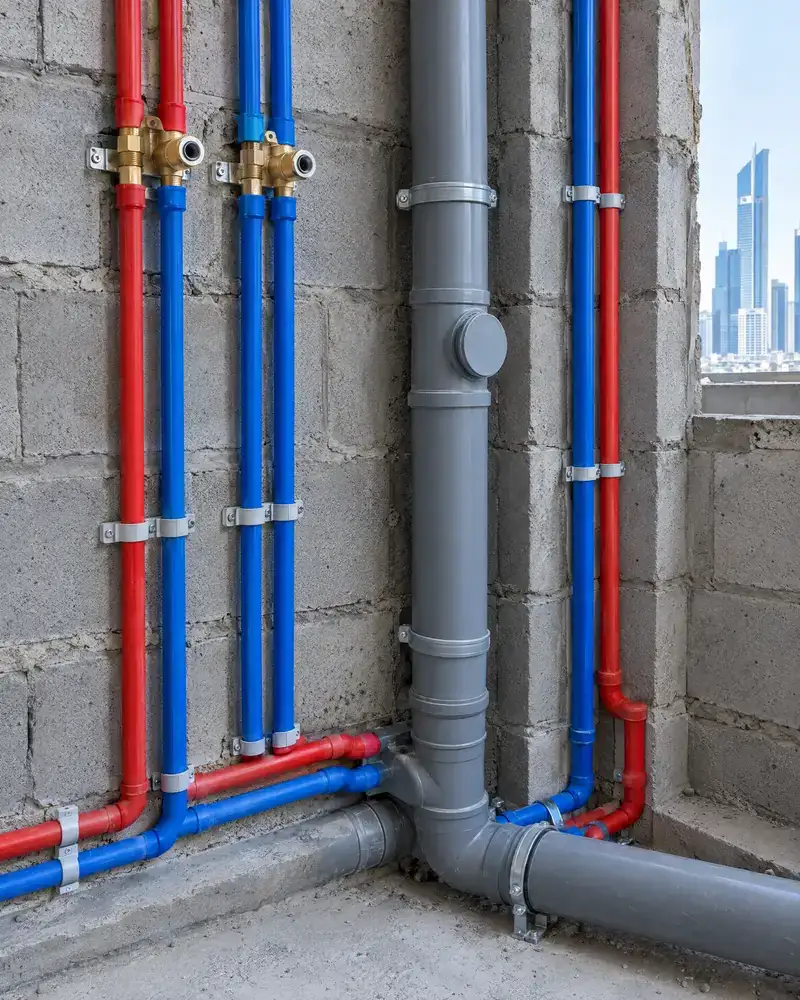
Pipes laid in a rushFirst-fix plumbing by the builder
Laid as part of the build, before the walls close.
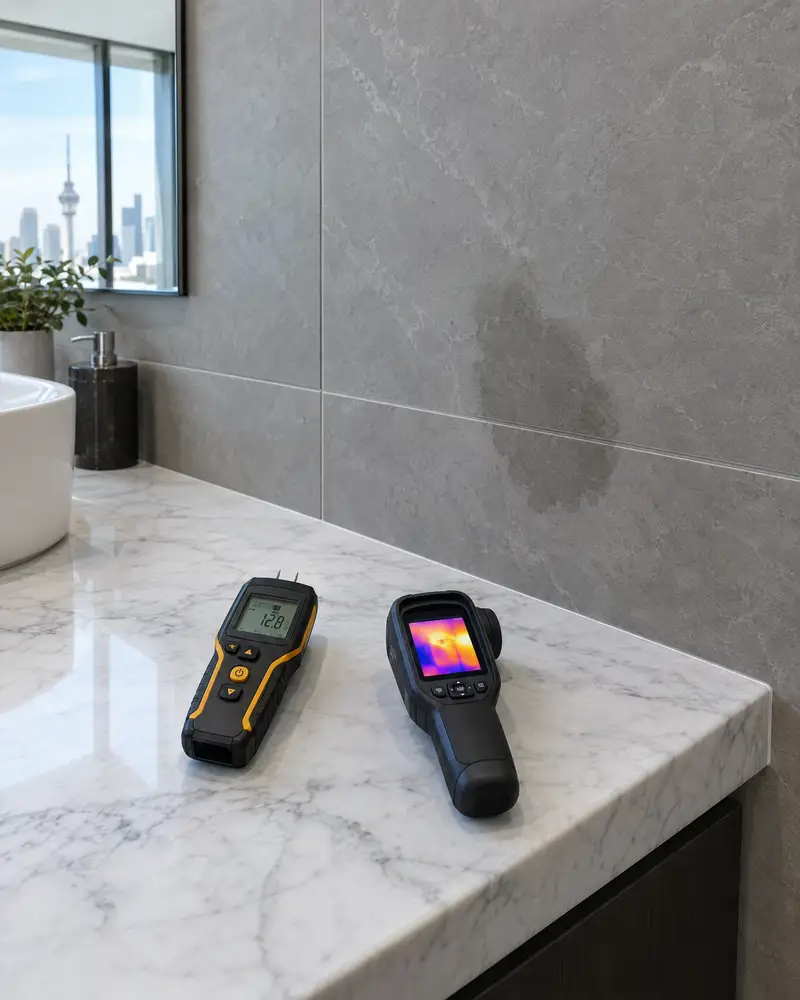
Leaks you cannot seeWater leak detection
We find the source first.
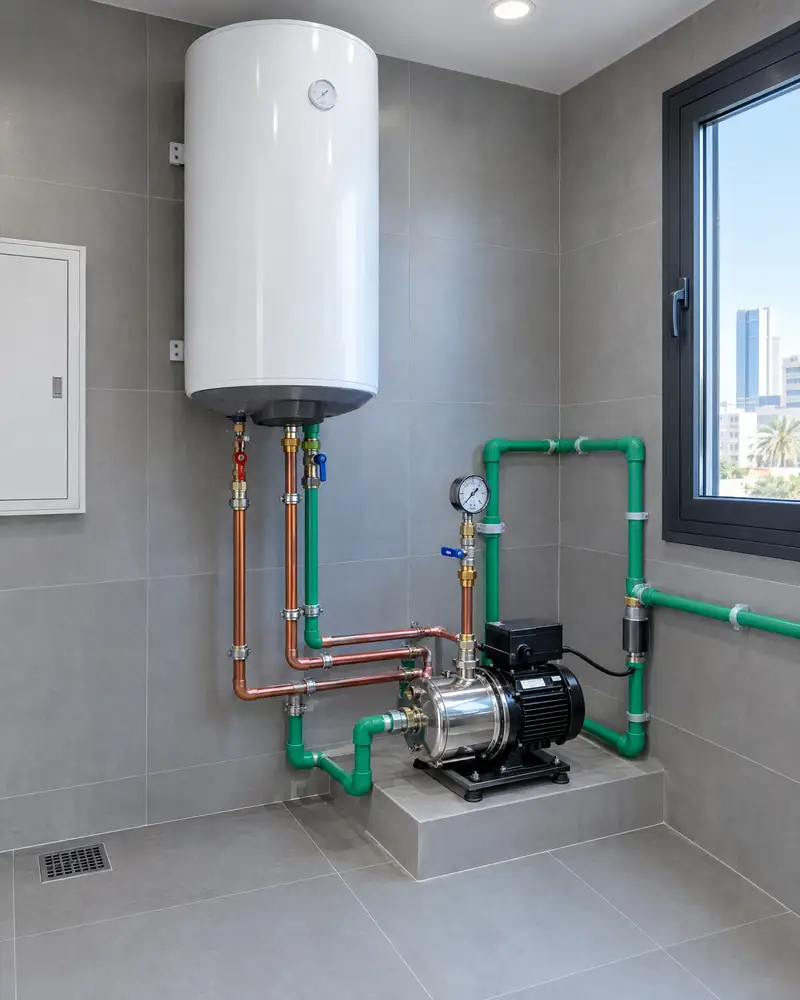
Nobody answers in an emergency24-hour emergency plumber
Plus regular maintenance contracts after handover.
How it works.
First contact
Call or WhatsApp us with a brief description of the work needed.
Site survey
We visit to map pipe routes, check existing pipes and confirm materials.
Quotation
A detailed quote covering pipes, fittings and reinstatement works is provided.
Installation and testing
Pipes are run, pressure-tested and drain falls confirmed before closing walls.
Handover and reinstatement
Walls are restored and a basic pipe-route sketch is handed to the owner.
What sets the price.
Pricing depends on practical factors that vary between one bathroom or kitchen and the next.
Get a quoteNumber and type of points
Each additional supply or drain point adds material and labour cost.
Breaking and reinstatement scope
Cutting into finished tiling and restoring it adds significant cost over bare-wall work.
Pipe run length
Distance from the riser or supply main to each outlet affects pipe quantity.
Existing pipework condition
Corroded or undersized existing pipes may need full replacement rather than partial repair.
Waterproofing and insulation needs
Wet areas require a waterproof membrane applied before tiling, added to the base pipe cost.
Why one contractor beats four.
Every extra contractor means another schedule and another excuse. With us, one company answers for all of it.
Turnkey
Shell and finishing with one company, from footings to keys.
Pay in instalments
Construction and finishing on instalments. Ask us for the details.
Engineering supervision
Architectural drawings and engineering supervision on site.
After handover
Maintenance contracts and a 24-hour emergency plumber.
A licensed Kuwaiti company for building construction, finishing, renovation and infrastructure works.
What our clients say.
See all reviews on GoogleExcellent
Taha Saad
Google review
Excellent
Ali Nadi
Google review
Bathroom & kitchen plumbing in Kuwait. We work across all six governorates of Kuwait: Capital, Hawalli, Farwaniya, Mubarak Al-Kabeer, Ahmadi, Jahra.
Official references: Ministry of Electricity and Water (water and drainage connections)
Questions, answered.
Call nowCan new pipes be run in a finished bathroom without breaking all the tiles?
In most cases routes can be mapped accurately so only the minimum area is opened. The extent of breaking depends on where existing pipes sit and where the new outlet points must land.
Why do scale deposits build up around mixer taps so quickly?
Kuwait's supply water carries high levels of calcium and magnesium. When water evaporates around a tap base the minerals remain as white scale. Fitting a scale strainer at the bathroom inlet slows this build-up considerably.
What is the difference between plumbing a bathroom in a new build and in a renovation?
In a new build pipes are run before plastering, giving clean access and straightforward routes. In a renovation, finished walls must be opened and later restored, which increases labour cost and requires coordinating the finishing trades.
Is a shower area membrane necessary or does the tiling itself provide enough protection?
Tiles and grout alone are not a complete moisture barrier. Without a membrane under the shower floor, water seeps into the wall structure and shows as damp patches on the adjoining surface after prolonged use.
Can a dishwasher drain and supply outlet be added to an existing kitchen?
Yes, a supply and drain point for a dishwasher can be added with limited wall or cabinet opening beneath the sink. The drain branch must reach the uPVC waste line at a proper fall to avoid odour and blockage.
Why is a pressure test done before the walls are closed?
The test reveals any joint leak while all connections are still visible and accessible. Discovering a leak after plastering means breaking the wall open again, which adds cost and disruption. Testing first saves both.
Licensed and registered in Kuwait.
Check us before you sign. This is our licence number and what it covers.
Find us on Google Maps