
What the service covers
Gas line works from main entry to every burner point in homes and commercial kitchens

Central gas first-fix
Main gas runs concealed in walls before plastering and finishing
Restaurant gas lines
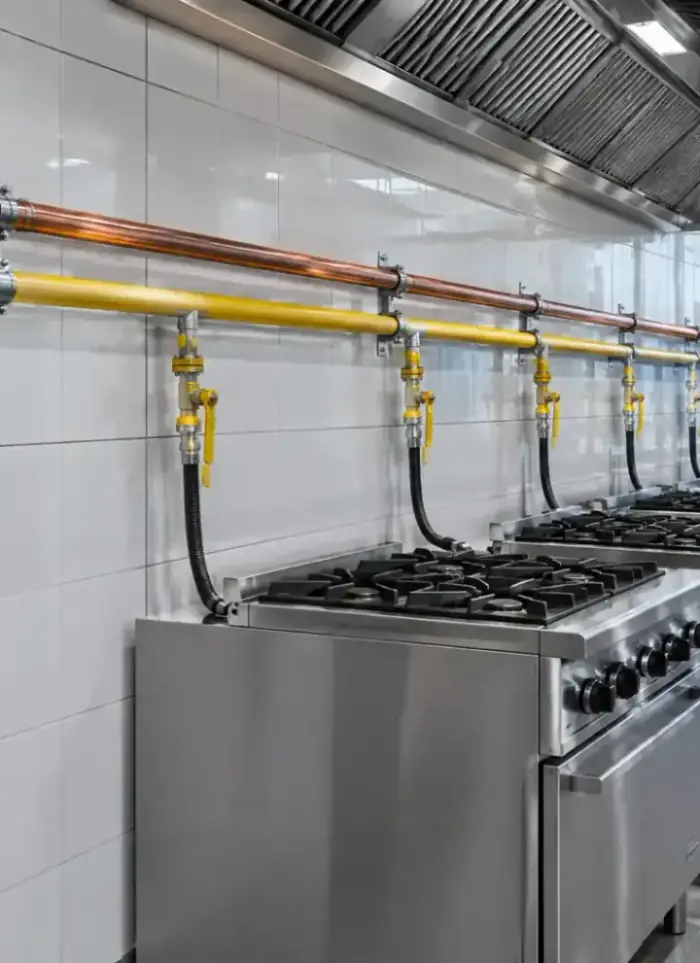
High-capacity lines sized for commercial kitchen burner loads

Appliance connection points
Isolated stub-outs for each appliance: cooker, heater, generator
Pressure testing
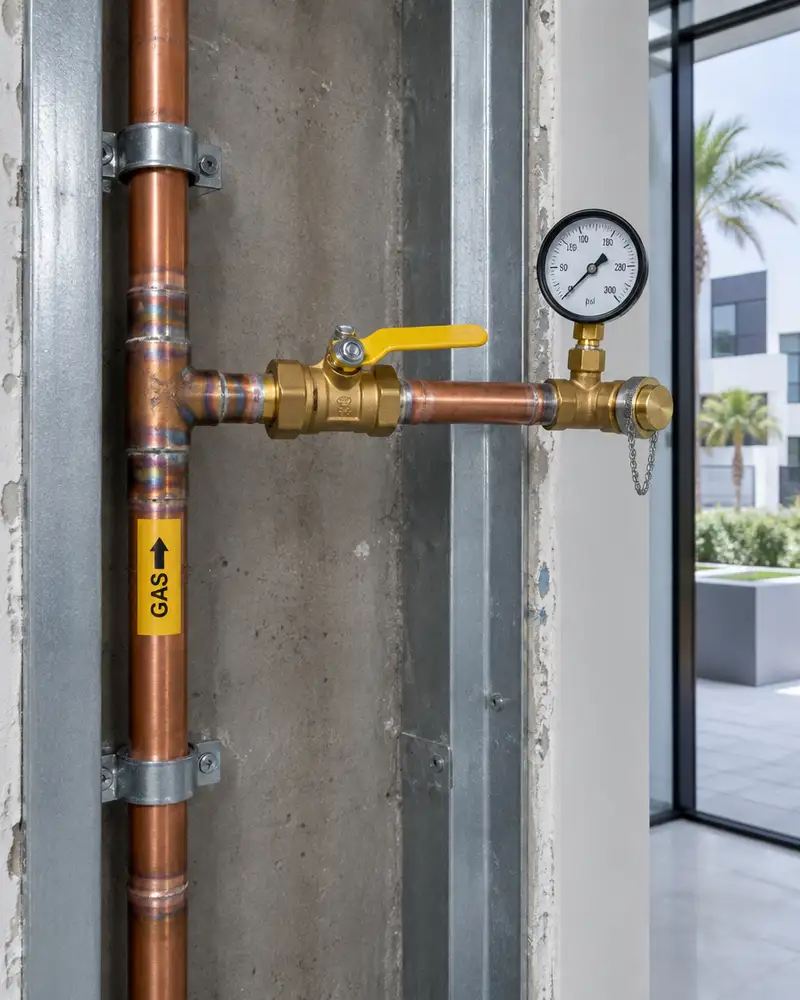
Air-pressure test across the full network before gas is admitted

Isolation valves
Shut-off valves fitted at each branch and at the building entry point
As-built drawings
Actual pipe routes recorded for future maintenance or modification
Signs your gas line needs attention
Faint gas smell
A faint sulphur smell near a wall or meter signals a concealed joint leak
Weak or uneven burner flame
A fluctuating or yellow flame points to low pressure from an undersized pipe run
Kitchen or restaurant expansion
Adding a burner or oven requires recalculating pipe size and running new branches
New build with no gas first-fix
Houses under construction need gas runs placed before floor screeds and wall plaster
Materials and methods used
Copper pipe
Corrosion-resistant and cleanly brazed, preferred for internal and commercial runs
Galvanised steel pipe
Handles high working pressure on main supply lines in large buildings and restaurants
Silver-alloy brazing
Silver brazing on copper joints gives a gas-tight seal that withstands vibration and heat
Air-pressure leak test
Compressed air is held at test pressure on a gauge to reveal any leak before commissioning
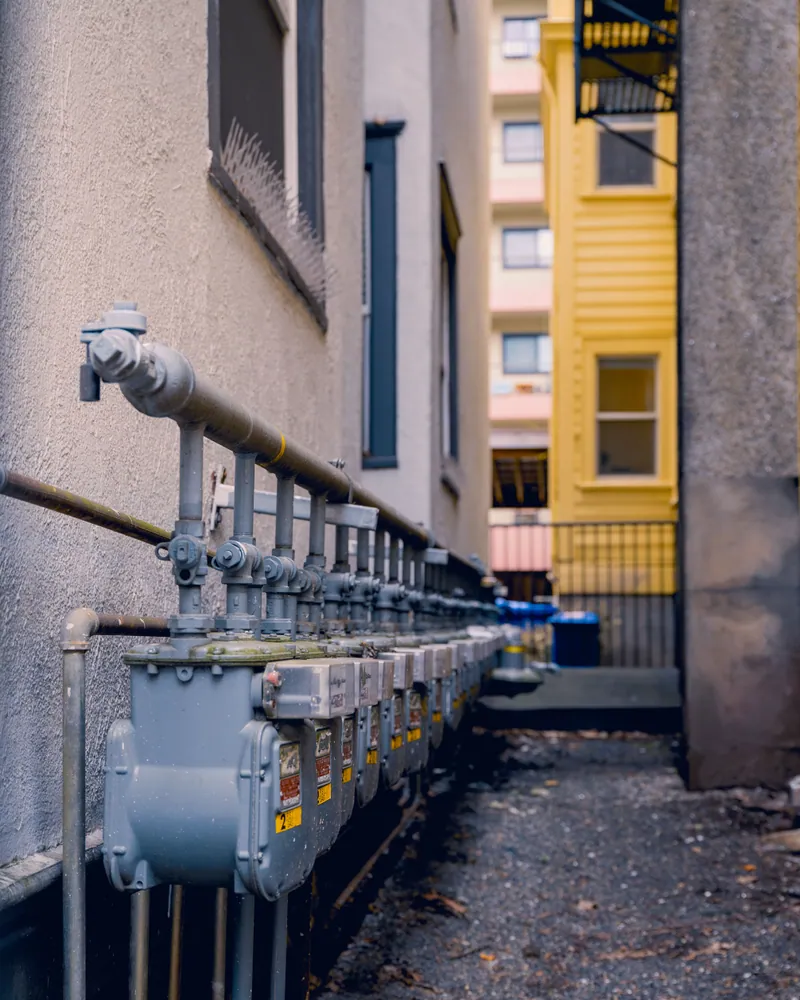
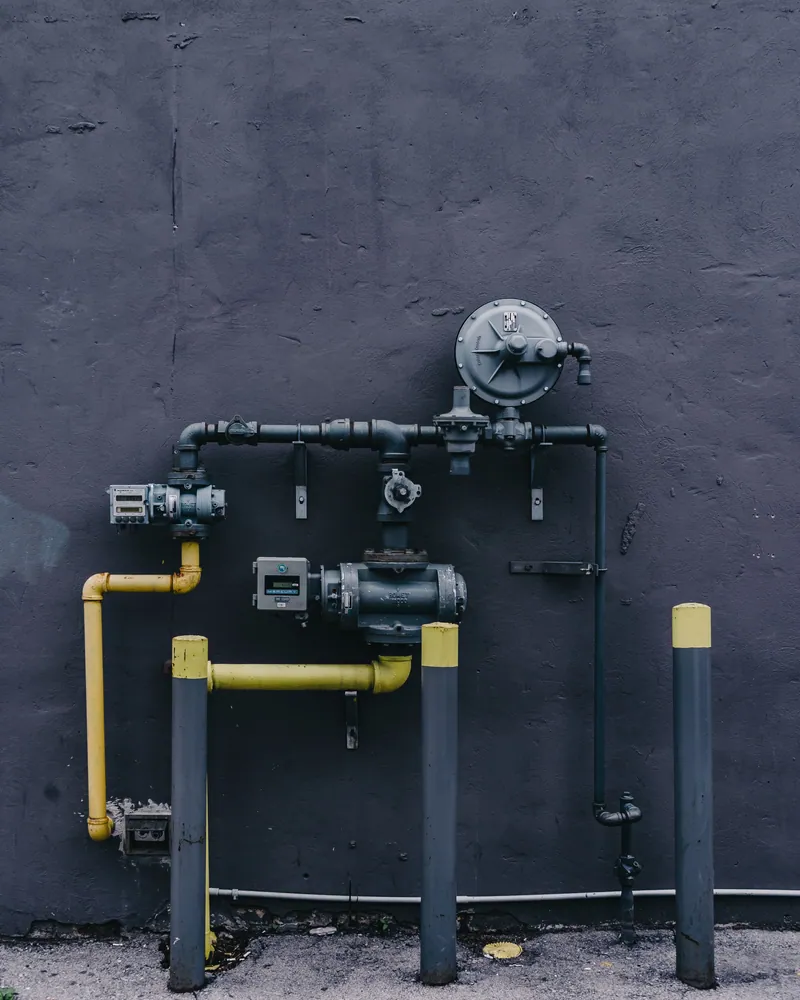
Inside central gas lines.
How central gas lines are done right in Kuwait
The work starts with a load calculation: how many use points, what type of appliance at each, and where the main entry lands. From that calculation the engineer specifies the diameter of the main run and each branch. Choosing an undersized pipe is the most common mistake in residential work, and it shows immediately when two burners run together and the flame drops.
In new houses the gas first-fix is carried out alongside the structural works, before screeds and plaster. That is the only window to conceal pipes cleanly inside wall chases and floor ducts. In existing buildings or restaurants the pipes are surface-run and clamped at regular intervals, routed deliberately away from electrical conduits, heat sources and any confined space where gas could accumulate undetected.
Before any gas is admitted, the whole network is sealed and pressurised with air while the gauge is watched for any drop. If pressure holds steady across the full test period, the line passes. Isolation valves are then fitted at the building entry and at every branch, and as-built drawings are handed to the owner so that a future modification or fault trace does not require opening walls blindly.
What goes wrong with most plumbing.
Plumbing problems start hidden and end with breaking tiles. These three cost the most.
 01
01Pipes laid in a rush
Pipework rushed before the walls close stays hidden until it starts to leak.
 02
02Leaks you cannot see
A slow leak behind tiles shows up as damp, stains and a higher water bill.
 03
03Nobody answers in an emergency
A burst pipe at night cannot wait for a contractor who has moved on.
The solution?
Pipework, leak detection and maintenance from one licensed company.
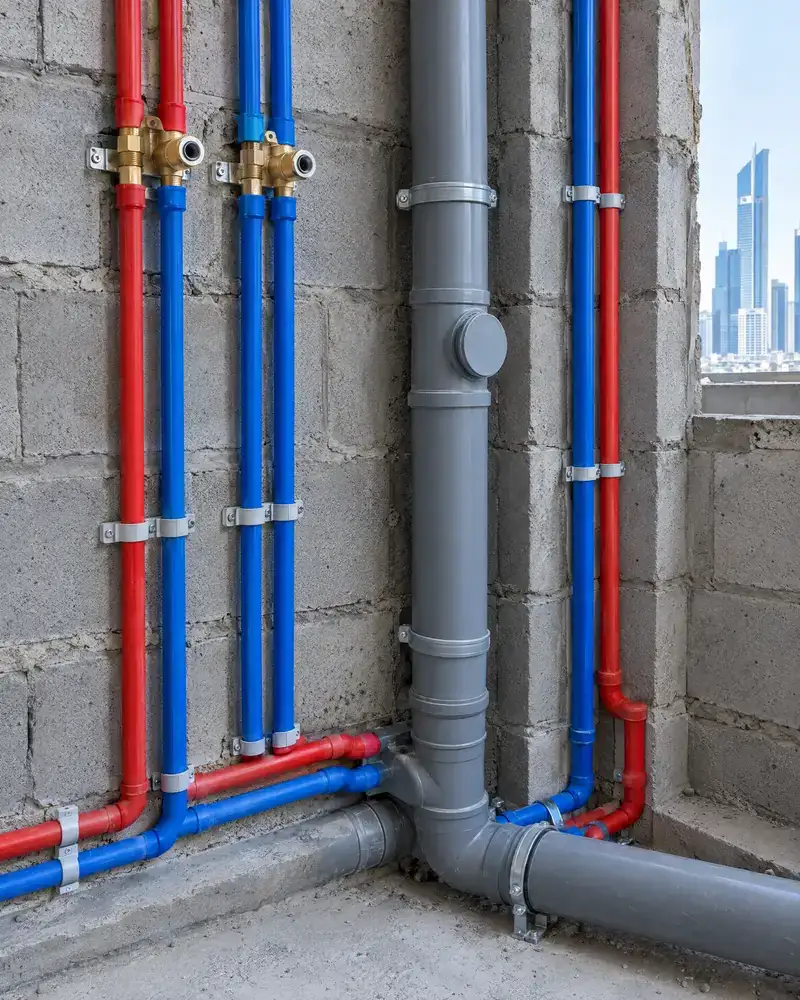
Pipes laid in a rushFirst-fix plumbing by the builder
Laid as part of the build, before the walls close.
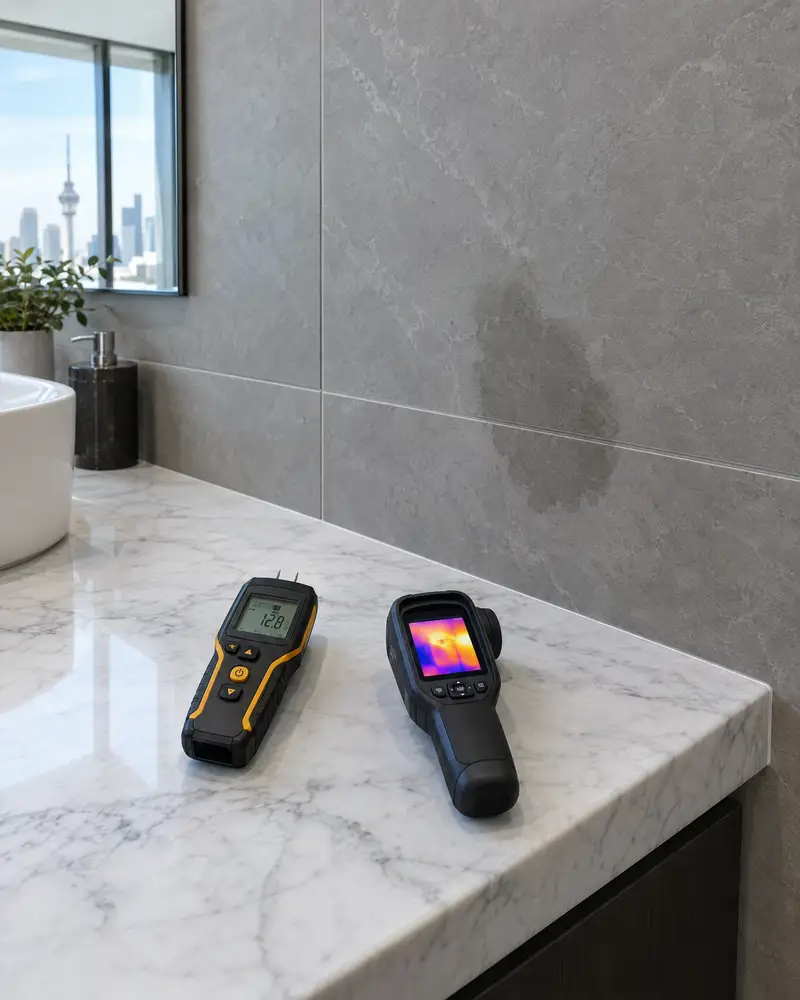
Leaks you cannot seeWater leak detection
We find the source first.
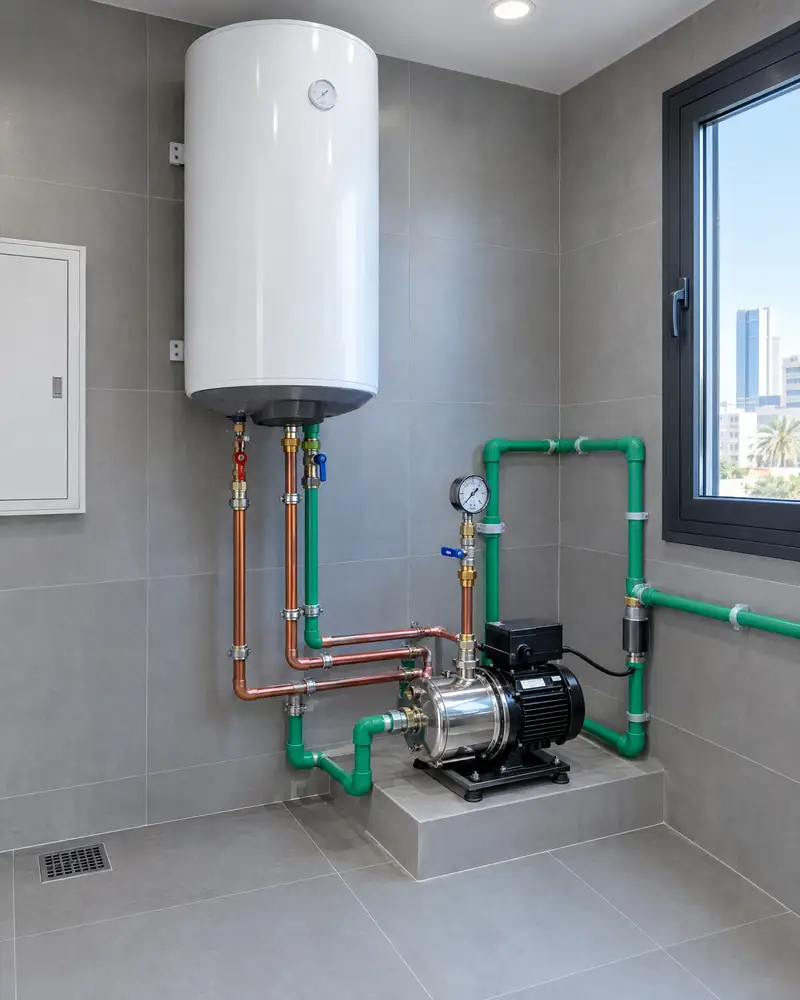
Nobody answers in an emergency24-hour emergency plumber
Plus regular maintenance contracts after handover.
How it works.
First contact
Call or WhatsApp us to describe the project and book a site visit
Site survey
We measure routes, calculate loads and specify correct pipe sizes
Quotation
A detailed quote covering materials, quantities and all work items
Installation
Pipes, joints and valves installed according to the approved layout
Test and handover
Air-pressure test passed, handover protocol signed, as-built drawings delivered
What sets the price.
Gas line costs vary across projects and these factors shape every quote
Get a quoteNumber of use points
Each appliance point adds a branch, valve and dedicated connection
Main run length
Distance from meter to furthest point affects both quantity and pipe size
Surface or concealed routing
Pipes hidden in walls need chasing and reinstatement, adding to the cost
Building type
Restaurant lines use larger diameters and heavier fittings than residential runs
Reinstatement works
Restoring tiles and plaster in an occupied building carries an extra cost
Why one contractor beats four.
Every extra contractor means another schedule and another excuse. With us, one company answers for all of it.
Turnkey
Shell and finishing with one company, from footings to keys.
Pay in instalments
Construction and finishing on instalments. Ask us for the details.
Engineering supervision
Architectural drawings and engineering supervision on site.
After handover
Maintenance contracts and a 24-hour emergency plumber.
A licensed Kuwaiti company for building construction, finishing, renovation and infrastructure works.
What our clients say.
See all reviews on GoogleExcellent
Taha Saad
Google review
Excellent
Ali Nadi
Google review
Central gas lines in Kuwait. We work across all six governorates of Kuwait: Capital, Hawalli, Farwaniya, Mubarak Al-Kabeer, Ahmadi, Jahra.
Official references: Ministry of Electricity and Water (water and drainage connections)
Questions, answered.
Call nowCan gas lines be run in an existing house without full wall demolition?
Yes. Pipes can run in narrow chases or surface-fixed with proper clamps. Surface routing is the faster, lower-cost option in occupied buildings and still allows clean, safe installation.
What is the difference between a residential and a restaurant gas line?
Restaurant lines carry much higher loads, so they need larger diameters, heavier-duty valves and routing that accounts for ventilation and fire safety. Undersizing causes pressure drops at peak kitchen hours.
Why test with air before connecting the gas supply?
Compressed air reveals any joint leak without any ignition risk. If the gauge holds steady throughout the test period, the network is confirmed safe before gas is ever admitted.
Is it better to run gas lines during the first-fix stage or after finishing?
First-fix is the right stage. Walls are open and floors are not yet screeded, so pipes can be concealed cleanly. Running gas lines after finishing means breaking tiled surfaces and replastering.
How can I tell whether an old gas line is still safe to use?
Aged joints and corroded steel pipe are not visible to the eye. The only reliable check is a pressure test carried out by a qualified technician who can pinpoint any section that fails.
Does the service include drawings of the installed pipe routes?
Yes. After installation is complete, as-built drawings showing actual pipe routes and valve locations are handed over. These are essential for any future modification or fault diagnosis.
Licensed and registered in Kuwait.
Check us before you sign. This is our licence number and what it covers.
Find us on Google Maps