
What the service covers
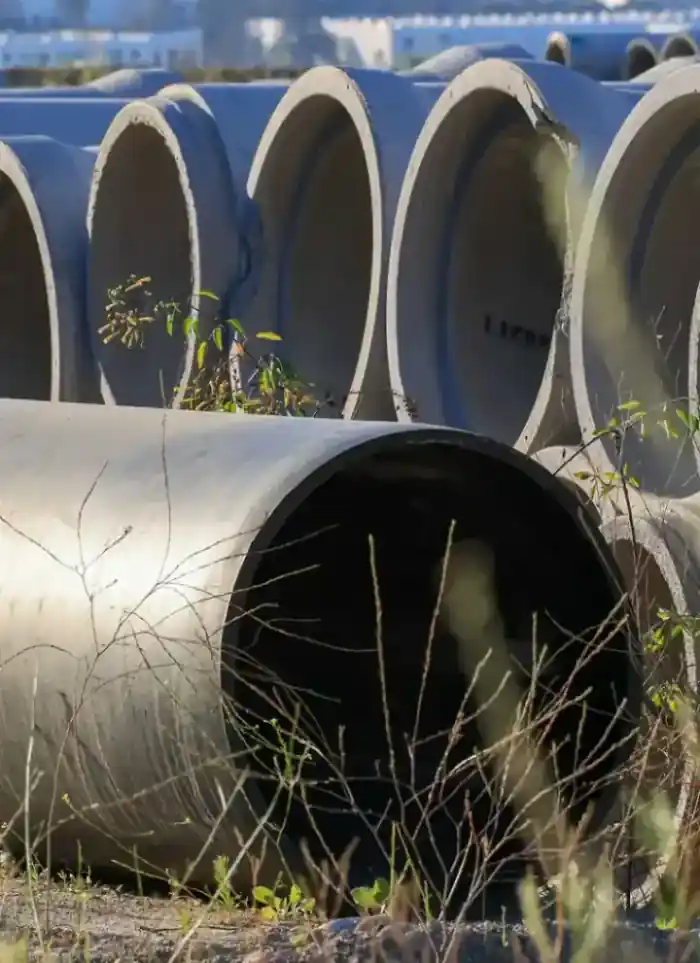
Sewer network installation from internal drain points through buried runs to the public network.
Sewer network installation
Buried uPVC pipe runs at correct gradient from building to public network.
Inspection chambers
Concrete or precast chambers at every junction and change of direction.
Excavation and backfill
Trench digging, sand bedding and compacted backfill after testing.
Public network tie-in
Sealed and approved entry into the nearest municipal inspection manhole.
Flow and pressure test
Full network flow test confirming gradient and zero leakage before closing.
Surface reinstatement
Paving or tiling restoration over excavated areas after work is complete.
Mistakes that cause sewer networks to fail
Insufficient pipe fall
Too shallow a gradient lets solids settle inside the pipe and causes repeated blockages.
Backfilling before testing
Covering trenches before a flow test hides joint leaks and forces costly future excavation.
Unsealed chamber entries
Pipes entering chambers without hydraulic mortar collars allow soil and groundwater ingress.
Omitting vent stacks
No vent pipes create air locks that siphon trap water and let foul odours into the building.
Before you call: what to have ready
Building drawings
Have site drawings that show the location of nearby municipal inspection manholes.
Nearest manhole location
Identify the nearest public sewer manhole and confirm access is not obstructed.
Current build stage
Clarify whether the building is under construction or fully finished, as methods differ.
Internal drain outlet count
Count all internal drain points from bathrooms, kitchens and laundry to size the network.
Inside sewage contractor.
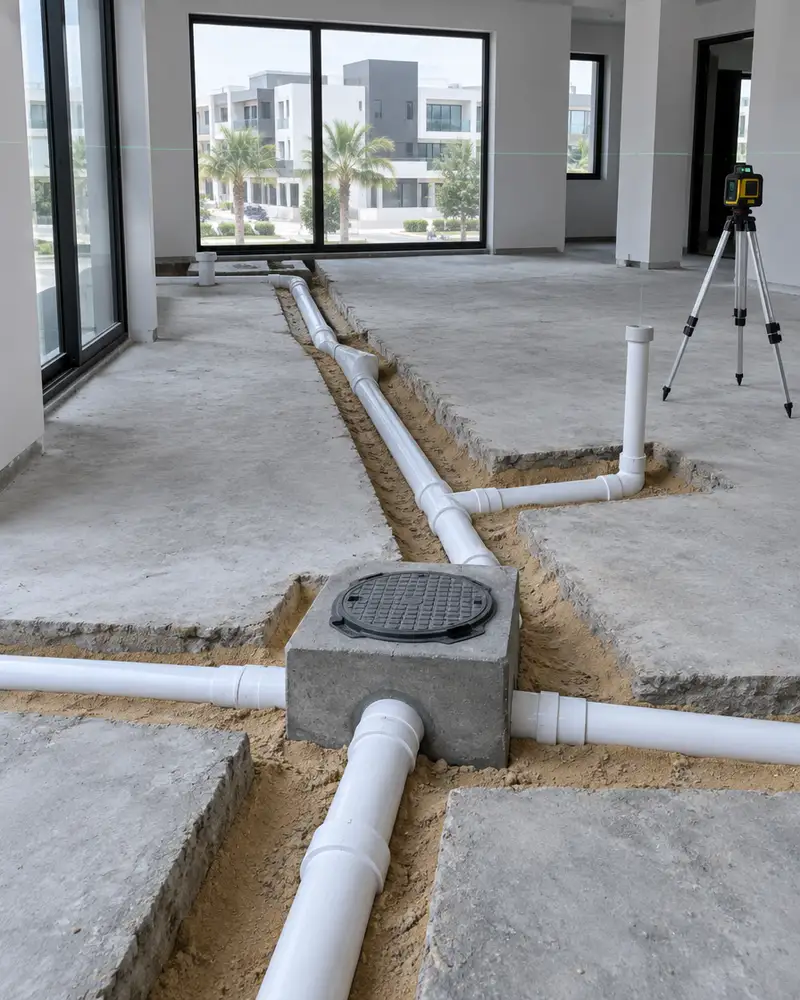
How a sewer network is built right in Kuwait
Work starts with a site survey to locate the nearest municipal inspection manhole and measure its invert level. The network route is then designed to maintain a continuous fall from every internal drain outlet to the tie-in point. Solvent-cemented uPVC pipes are laid on a clean sand bed inside the trench so the line holds its gradient after backfill. In Kuwait's variable ground conditions, precise trimming of the trench bottom prevents the pipe from rocking and losing its designed fall once buried.
Inspection chambers are built at every junction and direction change using cast concrete or precast units, with each pipe entry sealed by a hydraulic mortar collar to stop soil and groundwater infiltration. Chamber tops are set to match the finished ground level while keeping removable access covers flush. Once all runs are complete, a flow test from every drain outlet checks that no section retains water or leaks before any trench is permanently closed.
The public network tie-in requires entering the municipal manhole at the correct invert angle with a sealed hydraulic mortar collar around the penetration. After testing, the trench is backfilled in layers with compaction at each lift to prevent future settlement, then surface finishes are restored. Vent stacks connected to the network run to open air to equalise pressure and preserve the trap seal at every sanitary fixture, keeping foul odours permanently outside the building.
What goes wrong with most plumbing.
Plumbing problems start hidden and end with breaking tiles. These three cost the most.
 01
01Pipes laid in a rush
Pipework rushed before the walls close stays hidden until it starts to leak.
 02
02Leaks you cannot see
A slow leak behind tiles shows up as damp, stains and a higher water bill.
 03
03Nobody answers in an emergency
A burst pipe at night cannot wait for a contractor who has moved on.
The solution?
Pipework, leak detection and maintenance from one licensed company.
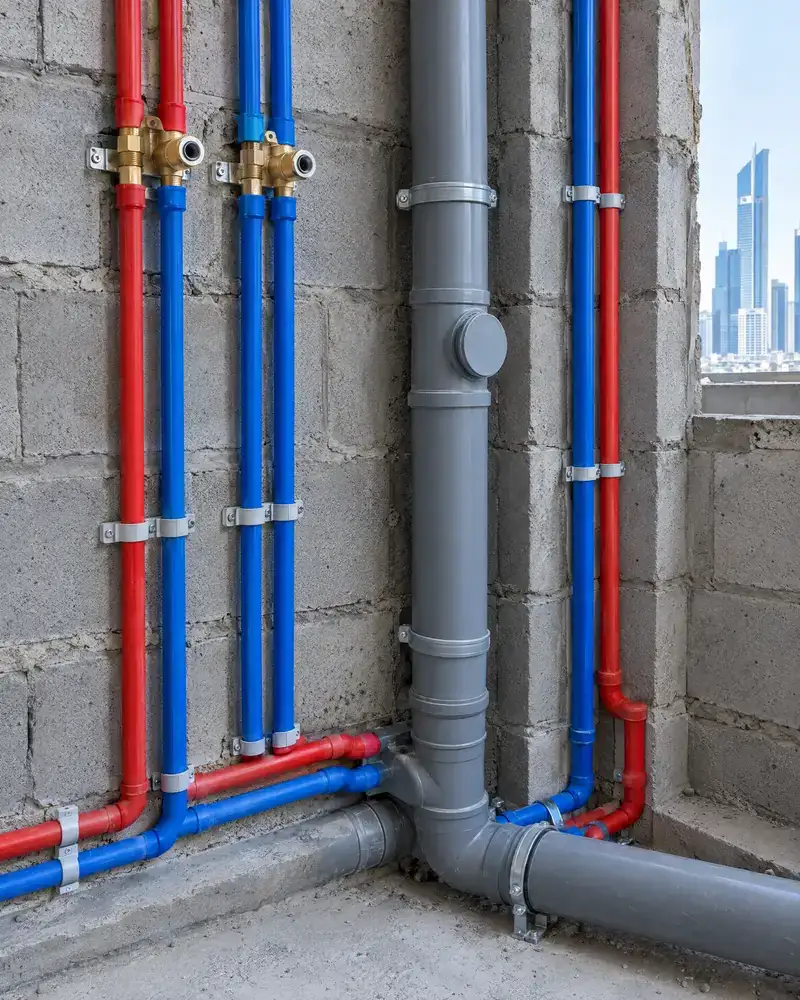
Pipes laid in a rushFirst-fix plumbing by the builder
Laid as part of the build, before the walls close.
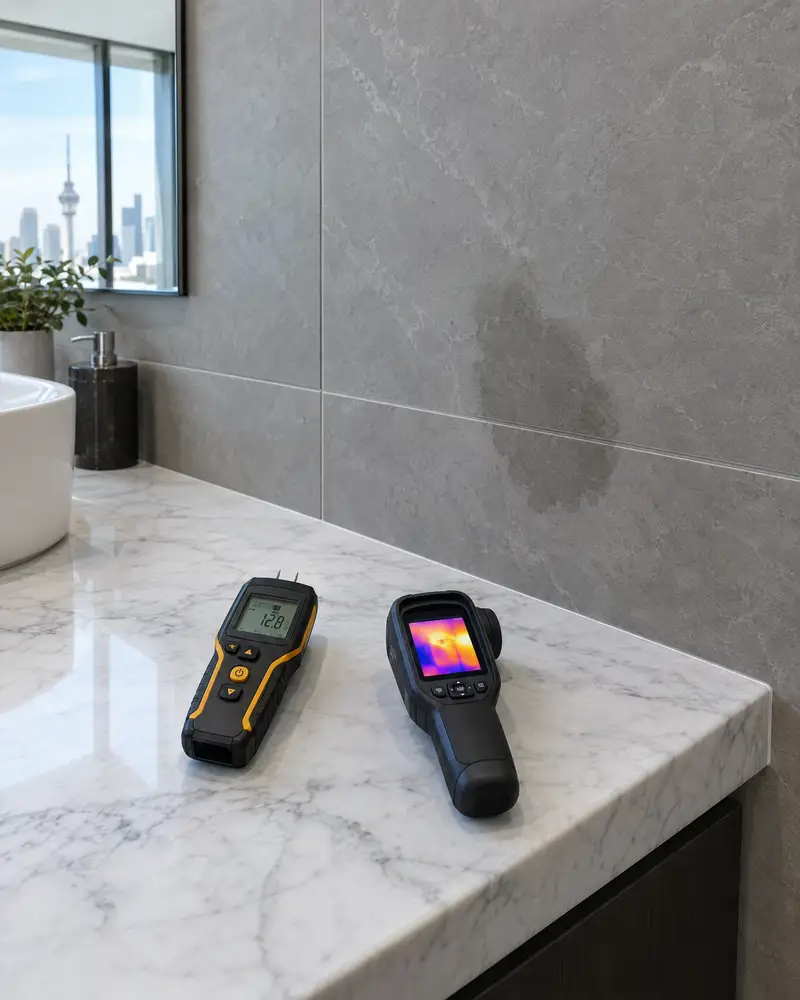
Leaks you cannot seeWater leak detection
We find the source first.
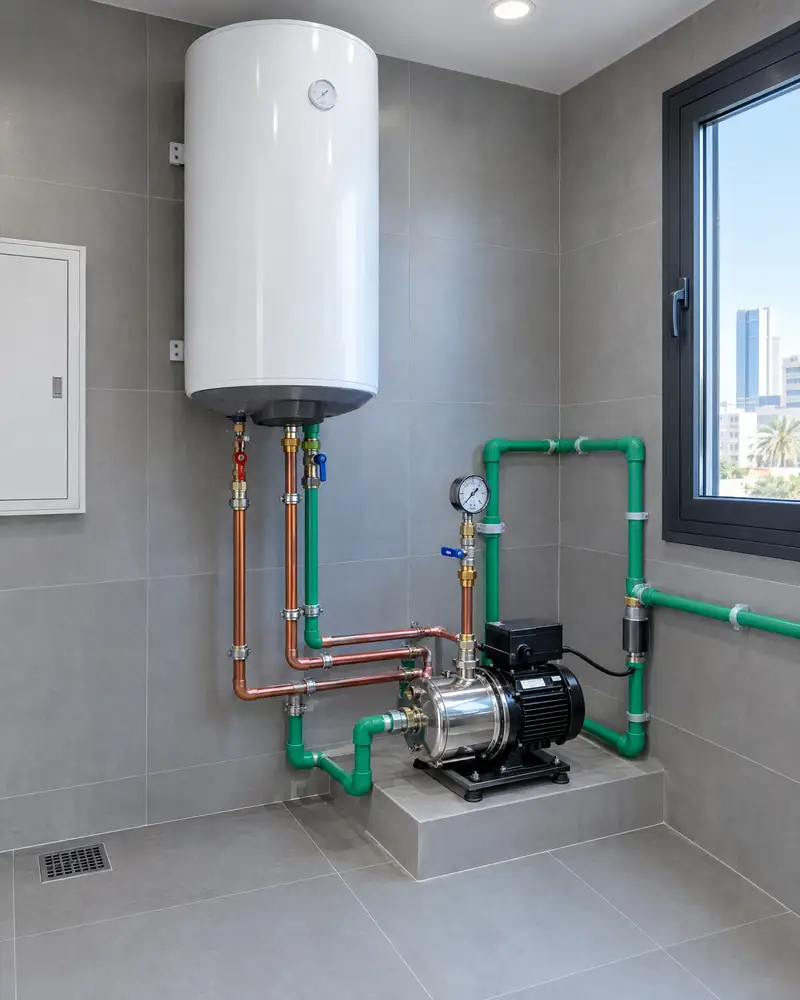
Nobody answers in an emergency24-hour emergency plumber
Plus regular maintenance contracts after handover.
How it works.
Contact and survey
Call or WhatsApp to schedule a site survey visit.
Network design
Plot the pipe route, set gradients and confirm chamber locations.
Excavation and pipe laying
Dig trenches, lay sand bed, run uPVC pipes and build chambers.
Testing and tie-in
Run flow test then make the sealed tie-in to the municipal manhole.
Backfill and reinstatement
Layer and compact backfill then restore all surface finishes.
What sets the price.
No fixed price list applies; the final quote depends on these specific site factors.
Get a quoteTotal run length
Greater distance from drain outlets to the municipal manhole increases cost directly.
Excavation depth and ground type
Hard ground or deep trenches require heavier machinery and extend working time.
Inspection chamber count
Each additional chamber needs individual construction, pipe entry sealing and level setting.
Reinstatement works
Restoring paving or tiling above the trench adds cost depending on finish type.
Existing building condition
Fully finished buildings require opening existing surfaces, raising civils costs.
Why one contractor beats four.
Every extra contractor means another schedule and another excuse. With us, one company answers for all of it.
Turnkey
Shell and finishing with one company, from footings to keys.
Pay in instalments
Construction and finishing on instalments. Ask us for the details.
Engineering supervision
Architectural drawings and engineering supervision on site.
After handover
Maintenance contracts and a 24-hour emergency plumber.
A licensed Kuwaiti company for building construction, finishing, renovation and infrastructure works.
What our clients say.
See all reviews on GoogleExcellent
Taha Saad
Google review
Excellent
Ali Nadi
Google review
Sewage contractor in Kuwait. We work across all six governorates of Kuwait: Capital, Hawalli, Farwaniya, Mubarak Al-Kabeer, Ahmadi, Jahra.
Official references: Ministry of Electricity and Water (water and drainage connections)
Questions, answered.
Call nowDoes a sewer network installation require municipal approval before work starts?
Connecting to the public network typically requires coordination with the relevant authority before any municipal manhole is opened. Completing this step before excavation avoids delays and potential penalties.
What is the difference between a sanitary sewer pipe and a storm-drain pipe?
Sanitary sewer pipes carry waste water from toilets and fixtures to the dedicated public foul network. Storm-drain pipes handle rainwater runoff to separate outlets. Mixing the two systems is a code violation and creates serious hygiene hazards.
Why do gurgling sounds or foul smells appear after a new sewer network is installed?
Gurgling and odours usually signal that vent stacks are missing or undersized, causing negative pressure that siphons trap water when drains are used. Adding adequately sized vent pipes connected to the network and terminated outdoors resolves this.
How can I verify the buried network has been laid at the correct gradient?
A flow test pours a measured volume of water from each drain outlet before the trench is closed. Clean unobstructed flow confirms the gradient is correct. An internal CCTV camera inspection provides additional confirmation of the line profile.
Can a sewer network be installed in a fully finished building?
Yes, but the work requires opening exterior finishes along the trench route and sometimes internal finishes to alter drain outlets. The route is planned carefully to minimise the area disturbed and to preserve as much of the existing finish as possible.
Why does a newly installed sewer network block quickly in some cases?
The most common cause is insufficient pipe gradient allowing solids to settle inside the run, or an undersized pipe diameter relative to the number of drain outlets connected. Correct design and a thorough flow test before backfill prevent this from occurring.
Licensed and registered in Kuwait.
Check us before you sign. This is our licence number and what it covers.
Find us on Google Maps