
What the service covers
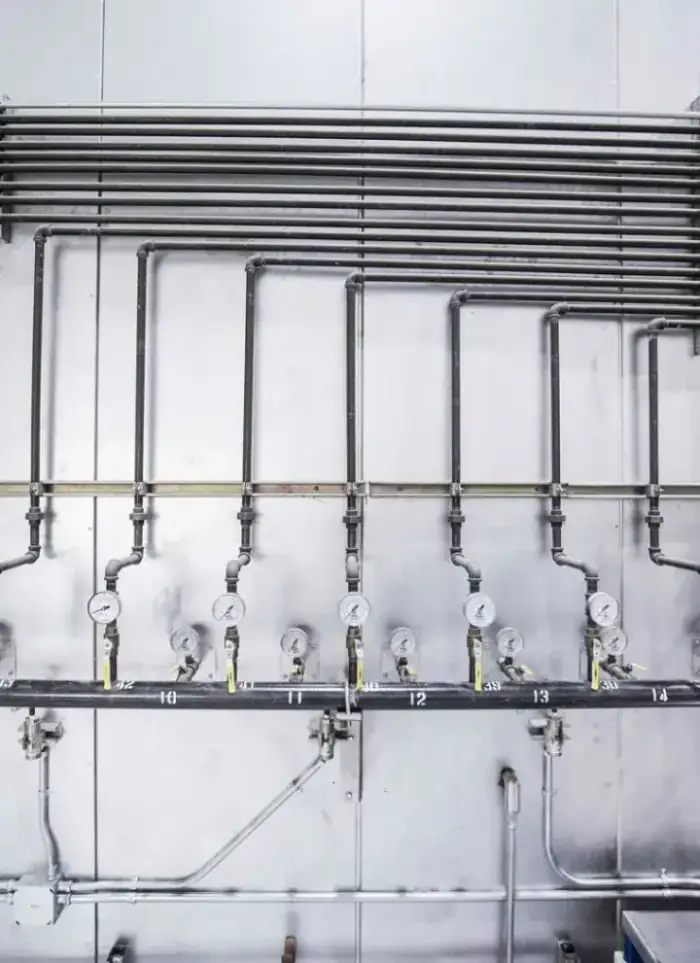
Full PEX supply runs from the meter to every fixture point, tested and insulated.

PEX pipe runs
Cold and hot supply lines run in flexible crosslinked polyethylene pipe.

Manifold distribution
Central manifold feeds each fixture point with independent isolation.
Pipe insulation
Closed-cell foam sleeve fitted to all hot runs and exposed sections.
Pressure testing
Hydraulic pressure check across the full run before walls are plastered.
Reducers and strainers
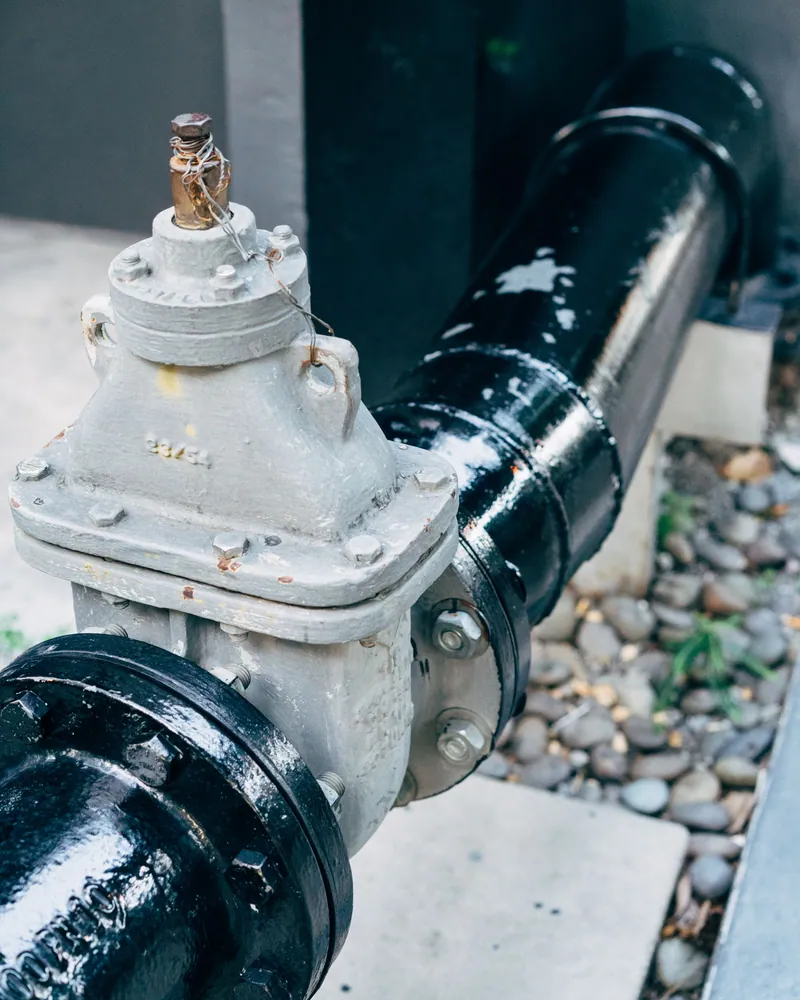
Pressure reducer and inline strainer installed to protect fittings from scale.
Reinstatement works
Wall chases filled and plastered flush after the pipe run is complete.
Mistakes that shorten a PEX run's life
Too tight a bend radius
Forcing a sharp bend creates a stress point that cracks under repeated thermal cycling.
Skipping the manifold
Daisy-chaining outlets makes isolating a single fixture impossible without cutting the whole supply.
Leaving hot lines bare
Bare hot-water PEX loses heat rapidly and expands and contracts, causing ticking noise inside walls.
Under-crimped connections
An under-crimped ring looks secure at first but weeps slowly behind the finished tile.
Before you call: what to have ready
Fixture-point layout
Know the number and positions of all cold and hot outlet points you need.
Existing pipe condition
Clarify whether the run replaces old galvanised pipe or is a completely new installation.
Wall access availability
Check whether walls are tiled or plastered only, as this affects the breaking cost.
Current water pressure
Note any floors with weak pressure; pipe diameter and reducer sizing depend on this.
Inside plumbing installations.
How a proper PEX installation is carried out
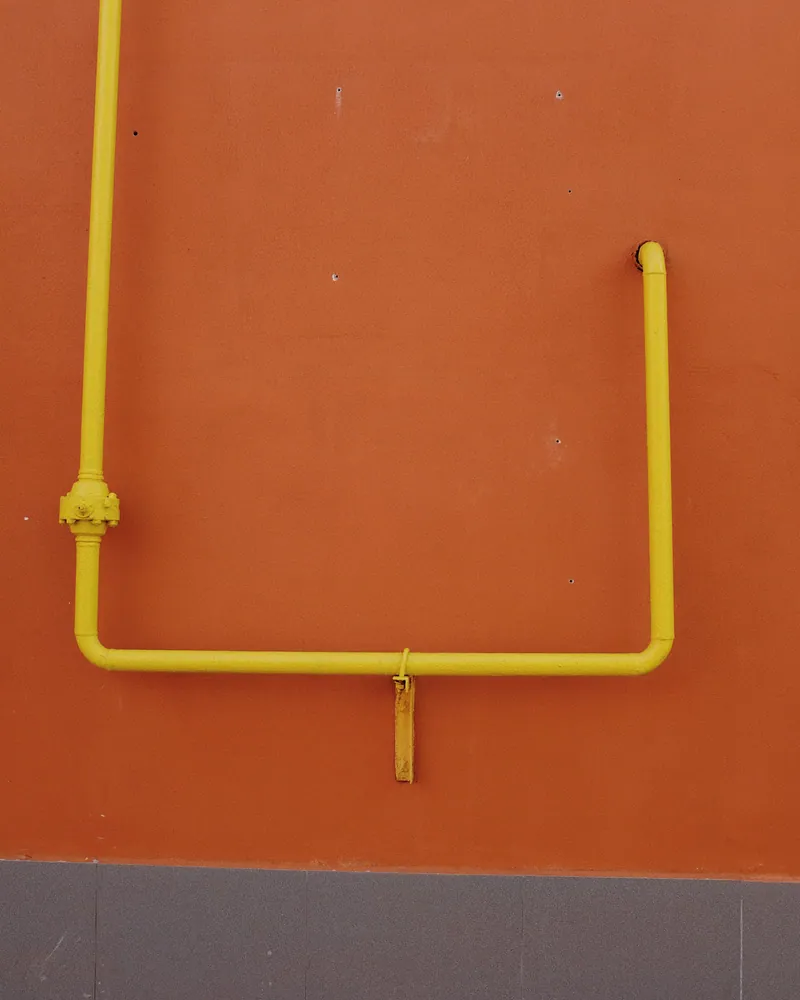
A PEX installation begins with mapping pipe routes before any wall is cut. A central manifold layout suits Kuwaiti buildings well because it lets any single outlet be isolated without interrupting supply elsewhere in the building. Chases are cut to the right width, leaving room for thermal expansion, and pipes are clipped with supports that allow longitudinal movement, which Kuwait's high ambient temperatures make essential for avoiding stress on joints and fittings.
PEX connections are made with crimped rings or expansion fittings, both requiring a calibrated crimping or expansion tool to produce a reliable joint. Once all runs are complete, a full hydraulic pressure test is carried out before a single chase is plastered over, because finding a failed joint after tiling means breaking the wall again. Hot-water lines receive a closed-cell insulation sleeve that limits heat loss and reduces the ticking sound caused by repeated expansion and contraction.
Kuwait's mineral-heavy water makes a scale reducer and strainer at the building inlet a worthwhile addition to any PEX system, protecting fittings and mixers from early blockage. Chases are filled and the surface is finished to match the existing wall only after the pressure test passes. The owner is given a record drawing of all concealed pipe routes so that future drilling for shelves or renovation work does not accidentally damage a hidden run.
What goes wrong with most plumbing.
Plumbing problems start hidden and end with breaking tiles. These three cost the most.
 01
01Pipes laid in a rush
Pipework rushed before the walls close stays hidden until it starts to leak.
 02
02Leaks you cannot see
A slow leak behind tiles shows up as damp, stains and a higher water bill.
 03
03Nobody answers in an emergency
A burst pipe at night cannot wait for a contractor who has moved on.
The solution?
Pipework, leak detection and maintenance from one licensed company.
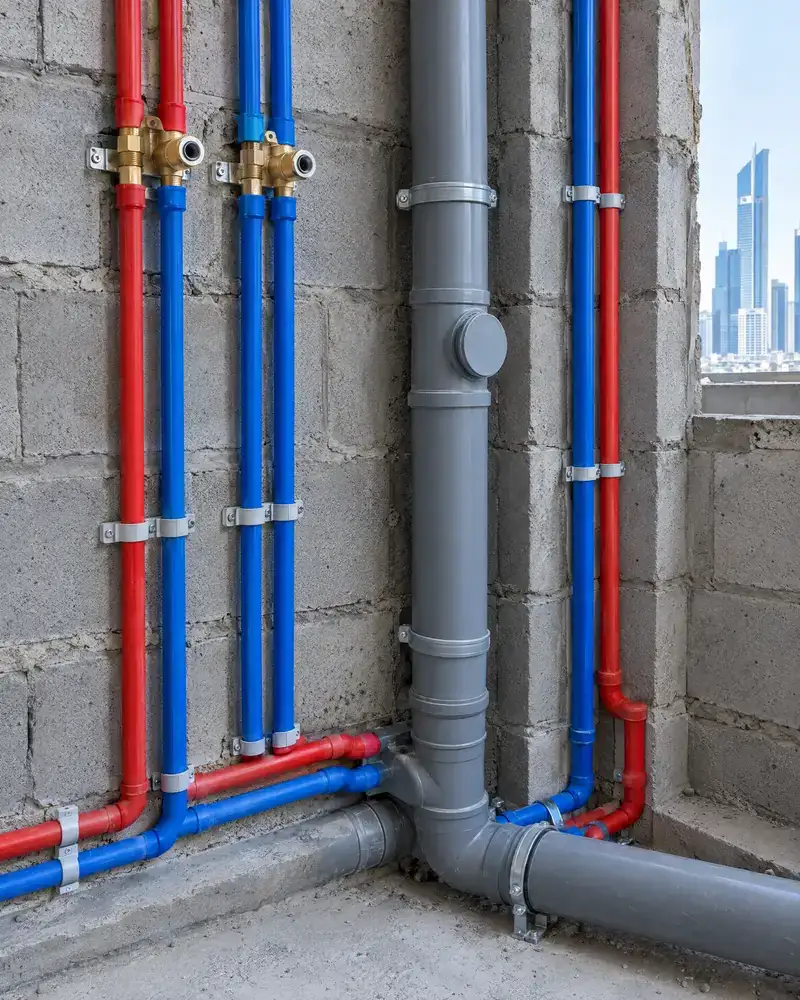
Pipes laid in a rushFirst-fix plumbing by the builder
Laid as part of the build, before the walls close.
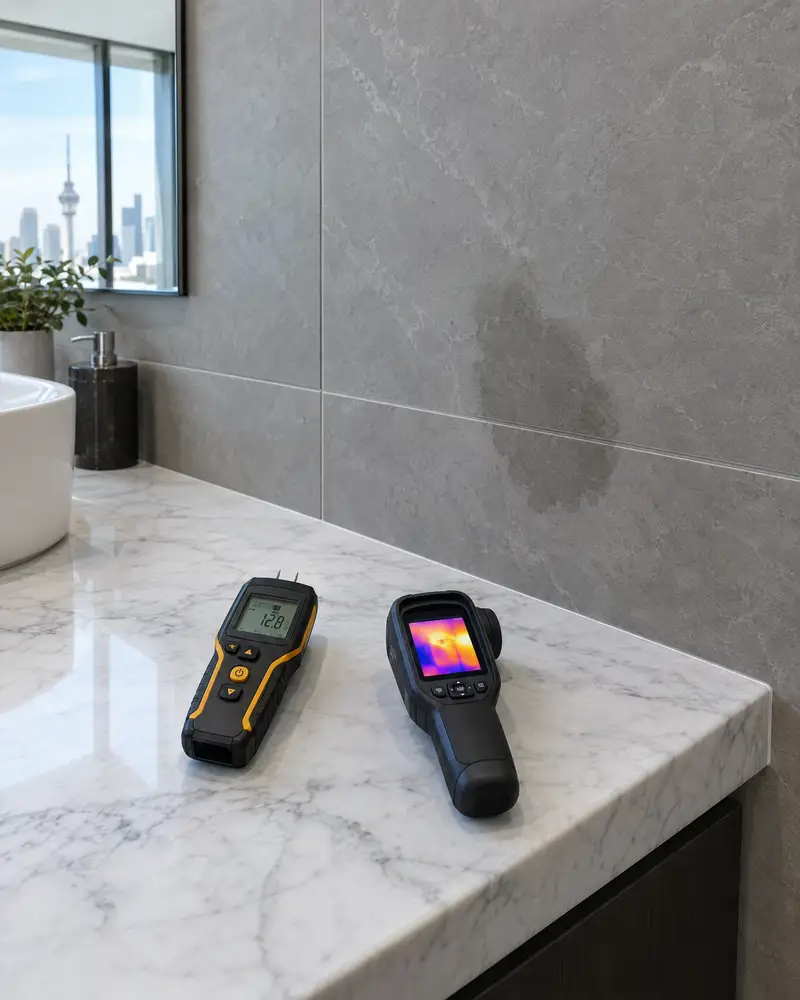
Leaks you cannot seeWater leak detection
We find the source first.
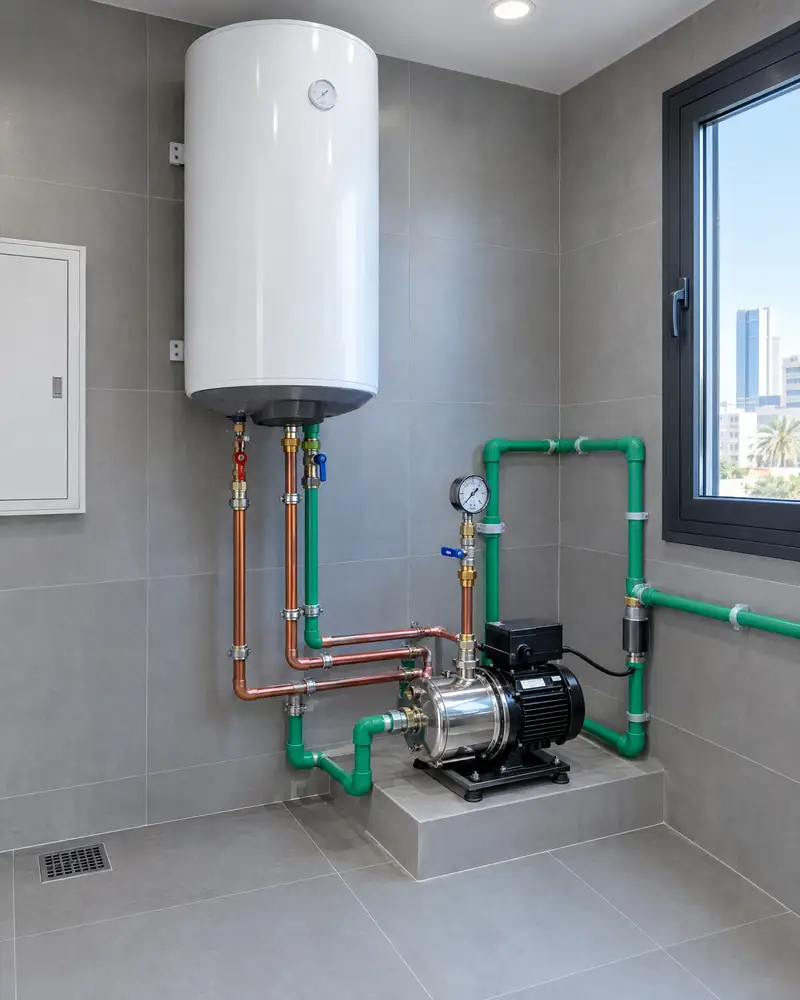
Nobody answers in an emergency24-hour emergency plumber
Plus regular maintenance contracts after handover.
How it works.
First contact
Call or WhatsApp to describe the scope and location of the required run.
Site survey
Technician visits to map pipe routes and confirm all outlet positions.
Quote and approval
Detailed quote covering pipe, fittings, insulation and reinstatement is submitted.
Installation and test
Pipes are run, insulated and then hydraulically pressure-tested before plastering.
Close-up and handover
Chases are plastered and concealed pipe route drawings are handed to the owner.
What sets the price.
Quote figures vary by run length, wall condition, outlet count and whether old pipe removal is needed.
Get a quoteTotal run length
Longer runs need more pipe, fittings and insulation material throughout.
Breaking and reinstatement
Tiled walls cost more to break and reinstate than plain plastered surfaces.
Number of outlet points
Each additional outlet point requires fittings and an individual isolation valve.
Old pipe removal
Extracting buried galvanised iron pipe adds significant labour to the total cost.
Manifold system
A multi-port manifold costs more upfront than a daisy-chain layout but performs better.
Why one contractor beats four.
Every extra contractor means another schedule and another excuse. With us, one company answers for all of it.
Turnkey
Shell and finishing with one company, from footings to keys.
Pay in instalments
Construction and finishing on instalments. Ask us for the details.
Engineering supervision
Architectural drawings and engineering supervision on site.
After handover
Maintenance contracts and a 24-hour emergency plumber.
A licensed Kuwaiti company for building construction, finishing, renovation and infrastructure works.
What our clients say.
See all reviews on GoogleExcellent
Taha Saad
Google review
Excellent
Ali Nadi
Google review
Plumbing installations in Kuwait. We work across all six governorates of Kuwait: Capital, Hawalli, Farwaniya, Mubarak Al-Kabeer, Ahmadi, Jahra.
Official references: Ministry of Electricity and Water (water and drainage connections)
Questions, answered.
Call nowWhat is the difference between PEX and PPR pipe for internal runs?
PEX is flexible and connects with crimped or push fittings needing no heat, making it well suited to long runs with many bends. PPR uses heat fusion and suits straighter routes. Both handle Kuwait's hard water well, but PEX is easier to route through finished walls with less breaking.
Can PEX be run in a finished house without breaking all the tiles?
PEX's flexibility often allows a run to be threaded through a narrow chase or ceiling void with targeted breaking rather than full tile removal. The extent of disruption depends on the existing wall layout and how far the new outlet points are from the manifold.
Why is a strainer and pressure reducer recommended with a PEX installation in Kuwait?
Kuwait's mineral-heavy supply leaves scale deposits that restrict flow through fittings and mixers. A pressure reducer protects crimped connections from pressure surges that can loosen them over time, and a strainer stops fine sand particles from reaching and damaging mixer cartridges.
How is a hidden PEX pipe leak located behind finished tiles?
Acoustic detection equipment picks up the sound of escaping water through the wall surface without breaking tiles. Thermal imaging can also show moisture zones behind finished surfaces. Once the source is pinpointed, only the small area directly over the fault needs to be opened.
Can new PEX runs connect to an existing galvanised iron pipe network?
Transition fittings are available to join PEX directly to threaded galvanised iron pipe. However, if the existing iron pipe is heavily corroded or scaled inside, a full replacement is advisable because partial connection to a degraded network leads to persistent pressure and leakage problems downstream.
Does the service include a drawing of the concealed pipe routes after completion?
Yes, a record drawing showing every concealed PEX route, the manifold location and all outlet points is prepared and handed over on completion. This drawing is essential for any future drilling or renovation work so that hidden pipes are not accidentally punctured.
Licensed and registered in Kuwait.
Check us before you sign. This is our licence number and what it covers.
Find us on Google Maps