

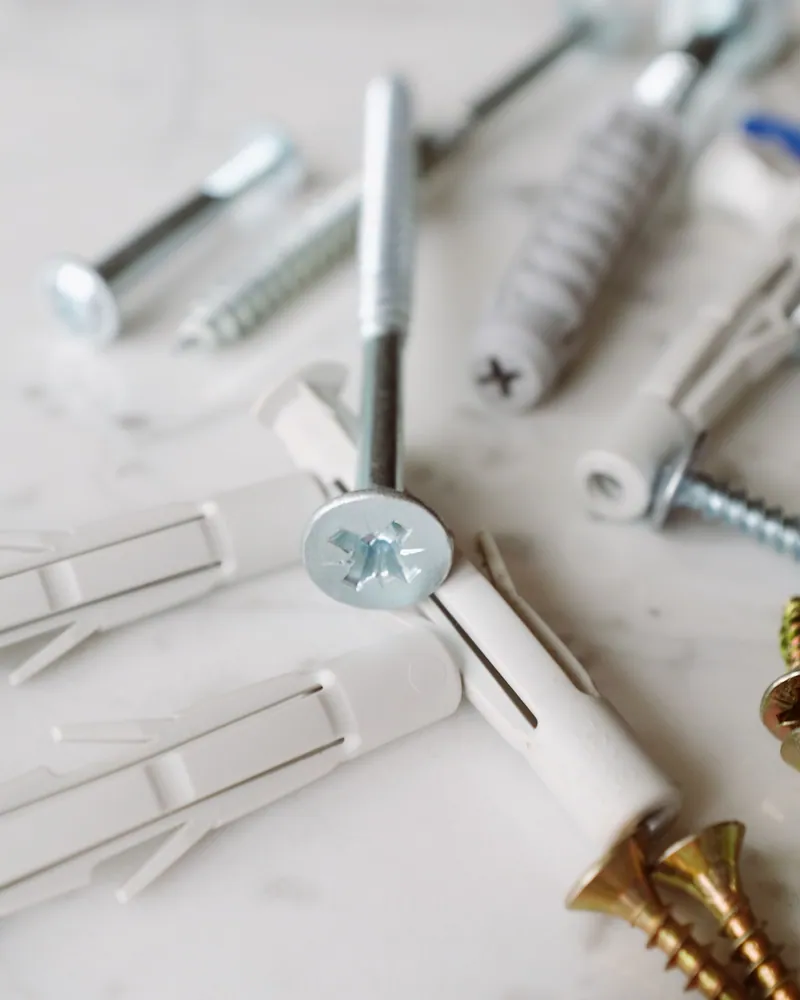
What the work covers
Anchor layout through drilling, bracket fitting, slab hanging, jointing and final seal.
Site survey
Measure surfaces, assess substrate strength and mark anchor positions.
Substrate preparation
Clean and level the wall so anchor loads distribute evenly.
Drilling and anchor fitting
Drill anchor holes in stone and fix stainless steel brackets to structure.

Slab hanging
Hang each marble slab on brackets, level and align every panel.
Expansion joints
Insert flexible joint filler between slabs to absorb Kuwait's thermal movement.
Sealing and handover
Seal all joints, clean stone faces and inspect every panel before handover.
Signs the fixing method matters here
Panel leaning or pushing out
A slab that has shifted out from the wall face shows adhesive mortar has let go.
Hollow tap on a large slab
Tapping a large bonded slab and hearing a hollow ring means contact behind it has failed.
Heavy slabs at height
Slabs over 20 mm thick or fixed above head height need mechanical anchors, not adhesive alone.
Rust staining at joints
Brown rust streaks running down from facade joints point to corroded uncoated anchor hardware inside.
What to sort out before you call
Approximate surface area
Measure length and height of each surface so material and anchor quantities can be estimated.
Intended slab thickness
Slab thickness determines anchor type and the drilling depth needed into the stone.
Type of backing structure
Concrete, block or steel backing each needs a different anchor design and bolt specification.
Access to the facade
Knowing if scaffolding or a lift platform is needed speeds up the quotation visit considerably.
More in marble & granite.
What goes wrong with most finishing.
The finish is what you see every day, and its mistakes do not hide. These three are the most common.
 01
01A rushed finish
The finish is what you live with every day. Rushing it shows in every corner.
 02
02Four contractors for one finish
Tiling, gypsum, paint and aluminium crews who never talk to each other.
 03
03After-care that never comes
Once you have the keys, it is hard to find anyone to come back and fix what shows up.
The solution?
Full finishing, and maintenance after it, from one licensed company.
A rushed finishTurnkey finishing
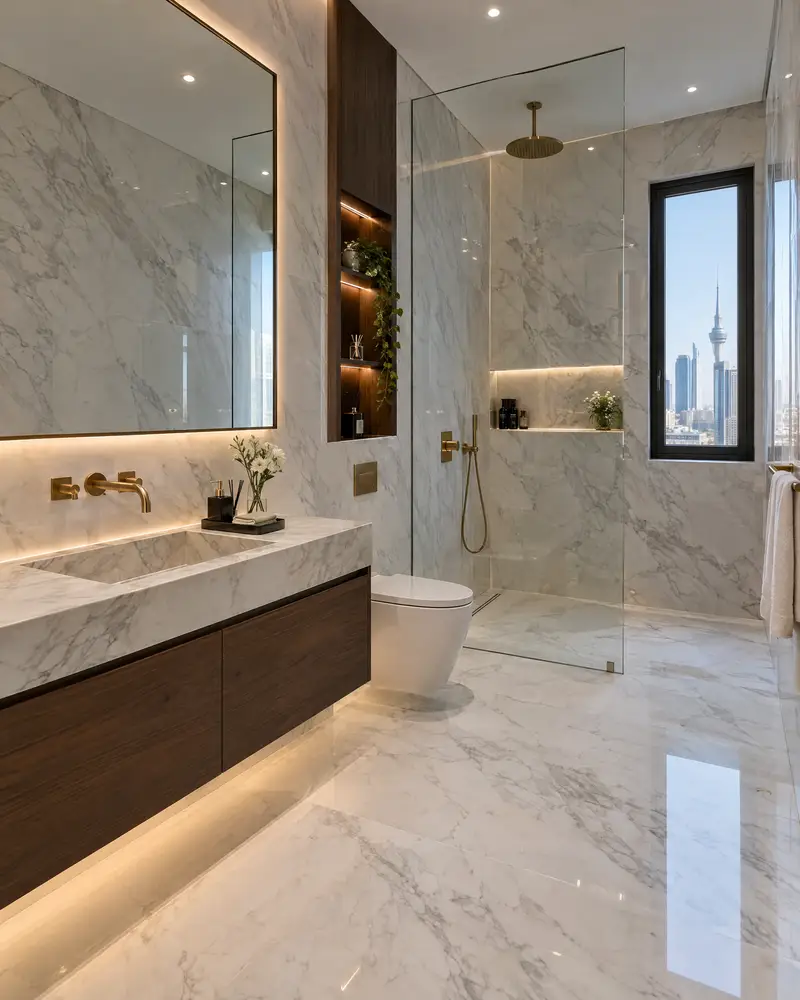
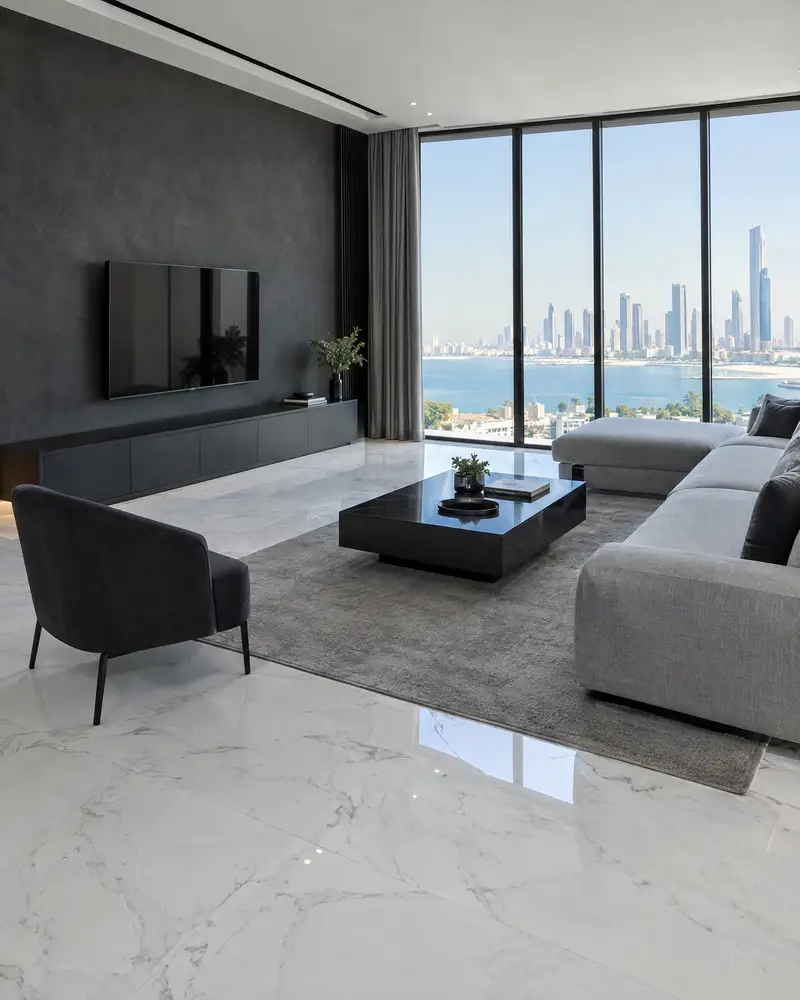
Marble, tiling, gypsum and paint from one company.
Four contractors for one finishOne company for every trade
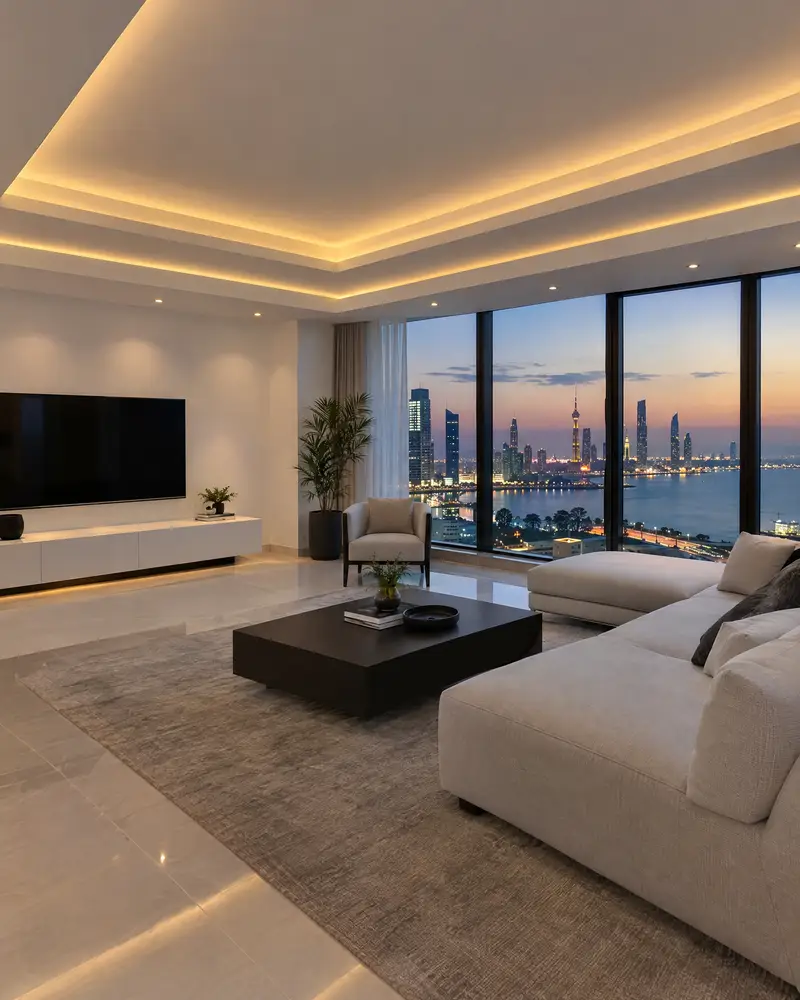
No gaps between the tiler, the gypsum crew and the painter.
After-care that never comesRegular maintenance after handover
And finishing on instalments if you need it.
How it works.
Call or whatsApp
Describe the surface, height and send photos if available.
Site visit
We measure, assess substrate strength and specify the anchor system.
Stone and anchor selection
We advise on stone grade and anchor type suited to the location.
Fixing and installation
Drill anchors, hang slabs, level panels and seal all joints.
Check and handover
Inspect every panel and joint condition before final handover.
What sets the price.
No fixed rate applies because slab weight, anchor specification, surface area and access all shift the final cost.
Get a quoteStone type and thickness
Thicker and heavier slabs need larger anchors and deeper drilling.
Total surface area
More panels mean more anchor points, more drilling and more labour time.
Anchor specification
Coastal zones need stainless anchors rated against salt air, which cost more than standard.
Removal of existing cladding
Demolishing old cladding and repairing the substrate behind adds cost and time.
Access and working height
Scaffolding or elevated platforms for high facades add directly to the project cost.
Why one contractor beats four.
Every extra contractor means another schedule and another excuse. With us, one company answers for all of it.
Turnkey
Shell and finishing with one company, from footings to keys.
Pay in instalments
Construction and finishing on instalments. Ask us for the details.
Engineering supervision
Architectural drawings and engineering supervision on site.
After handover
Maintenance contracts and a 24-hour emergency plumber.
A licensed Kuwaiti company for building construction, finishing, renovation and infrastructure works.
What our clients say.
See all reviews on GoogleExcellent
Taha Saad
Google review
Excellent
Ali Nadi
Google review
Mechanical marble fixing in Kuwait. We work across all six governorates of Kuwait: Capital, Hawalli, Farwaniya, Mubarak Al-Kabeer, Ahmadi, Jahra.
Official references: Kuwait Fire Force (safety requirements in finishing work)
Questions, answered.
Call nowWhen is mechanical fixing necessary rather than adhesive mortar alone?
It becomes necessary when slabs exceed 20 mm thickness, are fixed above head height, or face outdoor weather on a facade. Adhesive mortar alone cannot reliably carry that load long term, especially with Kuwait's thermal cycling.
What anchor type suits Kuwait's coastal areas?
Grade 316 stainless steel anchors are used where salt air and humidity are factors. Standard carbon steel corrodes quickly and leaves rust stains bleeding through the joint faces.
Can mechanical fixing be added to an existing building without demolishing the current cladding?
Anchors cannot be fixed reliably through existing cladding. The old finish must be removed first so the substrate is inspected and brackets are drilled directly into the structural backing.
How do expansion joints affect the look of a mechanically fixed marble surface?
Joints are filled with a flexible compound matched to the stone colour, producing a thin uniform line. The result looks clean and the joint stops panels from buckling under thermal expansion.
Does mechanical fixing for facade marble differ from interior wall mechanical fixing?
Yes. Facades need corrosion-resistant anchors, ventilated cavities behind the slabs and drainage provision. Interior walls face far less moisture and thermal stress, so the system is simpler and lighter.
Licensed and registered in Kuwait.
Check us before you sign. This is our licence number and what it covers.
Find us on Google Maps