
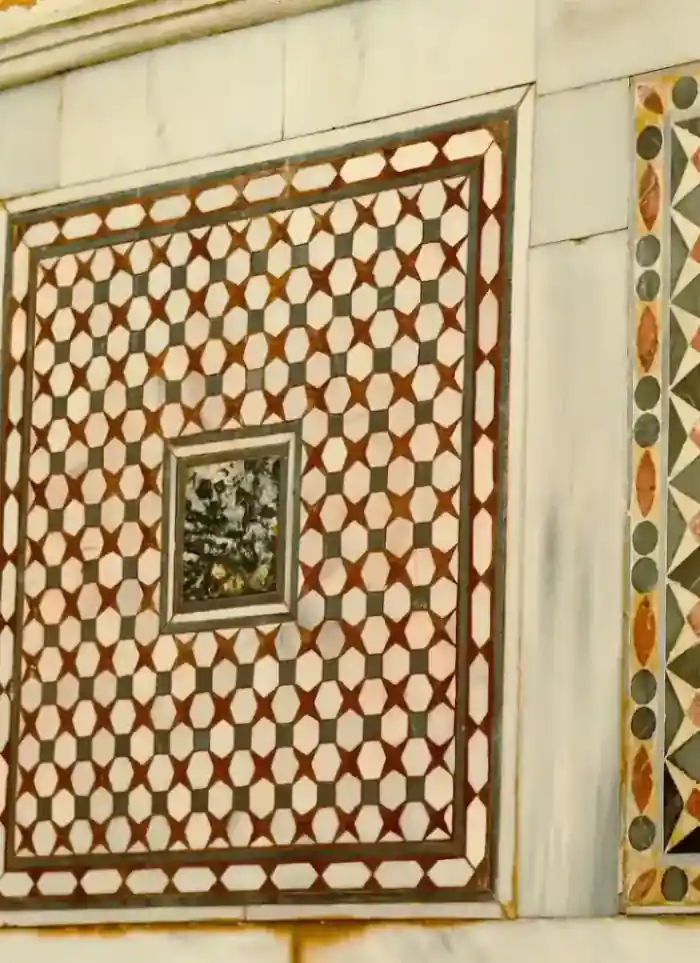
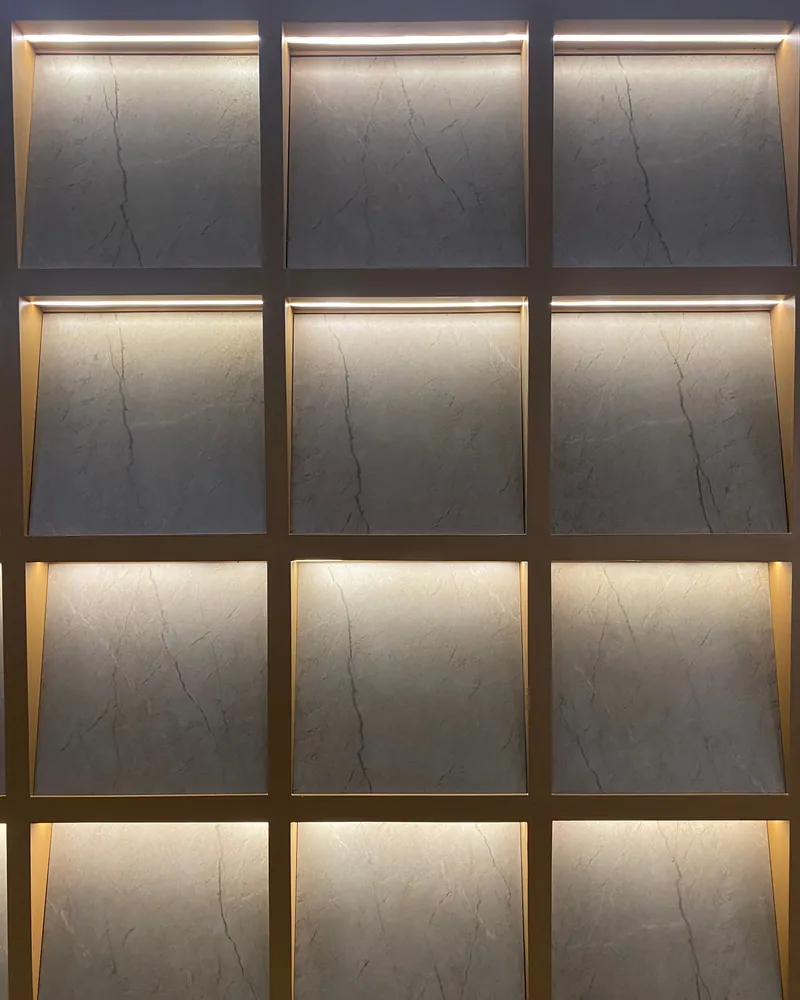
What the service covers
Wall preparation through slab fixing, joint sealing and stone impregnation to final handover.
Wall preparation
Surface cleaned, voids and cracks repaired before any slab is fixed.

Layout design
Setting-out axes and start points to keep panels plumb and aligned.

Cutting and shaping
Water-cooled diamond blade cutting and profiling around openings and corners.

Flexible-mortar fixing
Marble-grade flexible adhesive mortar applied full-coverage to every slab.
Jointing and silicone
Movement joints filled with flexible silicone at all corners and junctions.

Impregnation and handover
Penetrating impregnator seals stone pores before final inspection and handover.
Signs your walls are ready for marble cladding
Peeling or cracked paint
Wall paint peeling from heat or moisture cycles, making repeated repainting impractical.
Water-stain marks
White salt deposits or damp patches on the wall surface indicating moisture migration behind the finish.
Hollow or debonded tiles
A hollow knock when tapping existing wall tiles signals mortar failure and a risk of panels falling.
Dated finish in reception areas
An ageing plaster or tile finish in entrance halls or majlis spaces that no longer suits the interior.
Before you call: what to have ready
Measure the target area
Multiply height by width for each wall and total the square metres to get an accurate area figure.
Existing wall condition
Check for cracks, damp areas or old tile that will need removing before new marble can be fixed.
Preferred stone type
Decide between white marble, coloured stone or engineered alternatives to help assess cost and availability.
Cladding height required
Decide whether you want full floor-to-ceiling cladding or a partial height panel such as a dado level.
More in marble & granite.
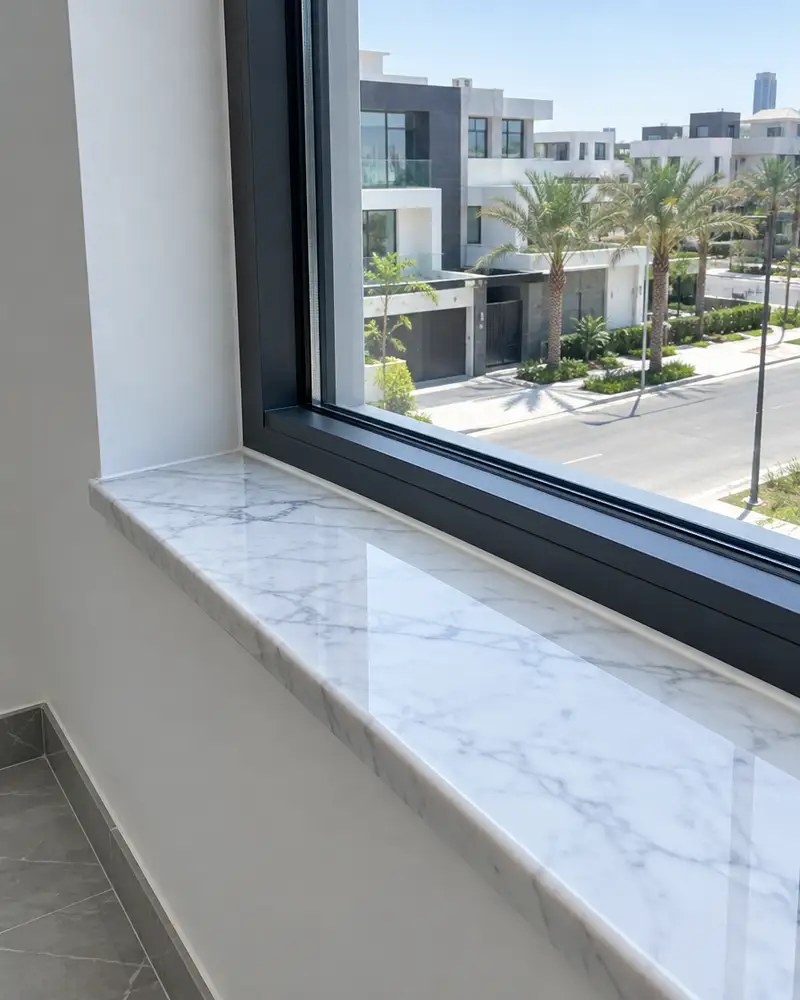
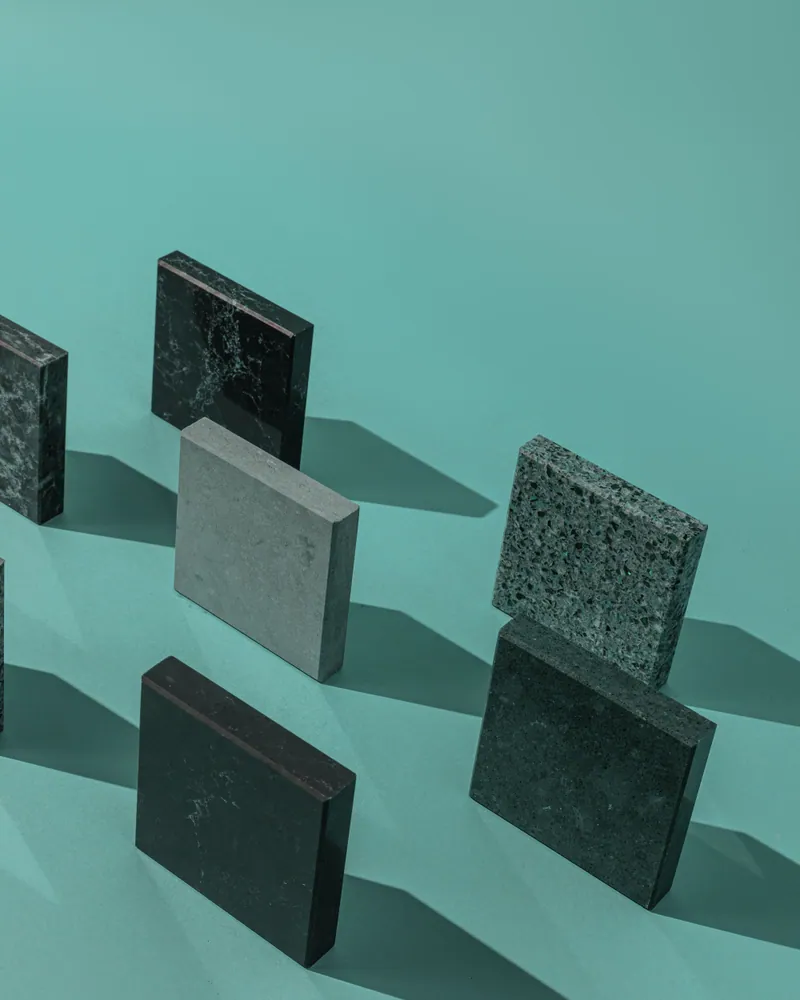
What goes wrong with most finishing.
The finish is what you see every day, and its mistakes do not hide. These three are the most common.
 01
01A rushed finish
The finish is what you live with every day. Rushing it shows in every corner.
 02
02Four contractors for one finish
Tiling, gypsum, paint and aluminium crews who never talk to each other.
 03
03After-care that never comes
Once you have the keys, it is hard to find anyone to come back and fix what shows up.
The solution?
Full finishing, and maintenance after it, from one licensed company.
A rushed finishTurnkey finishing
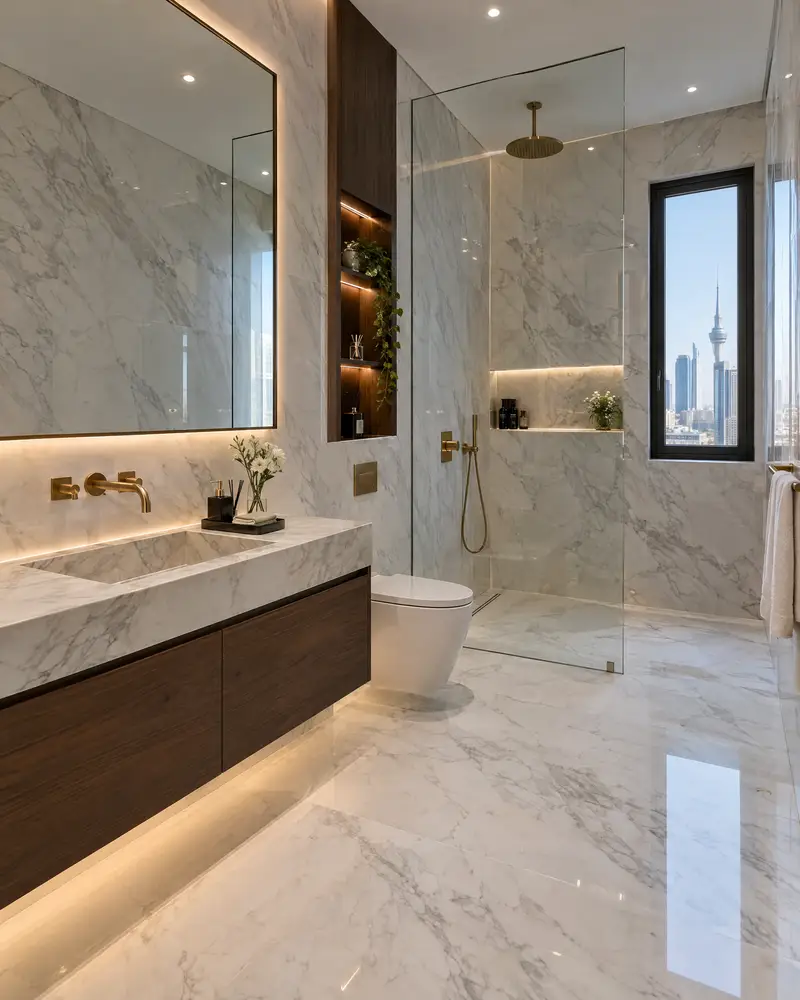
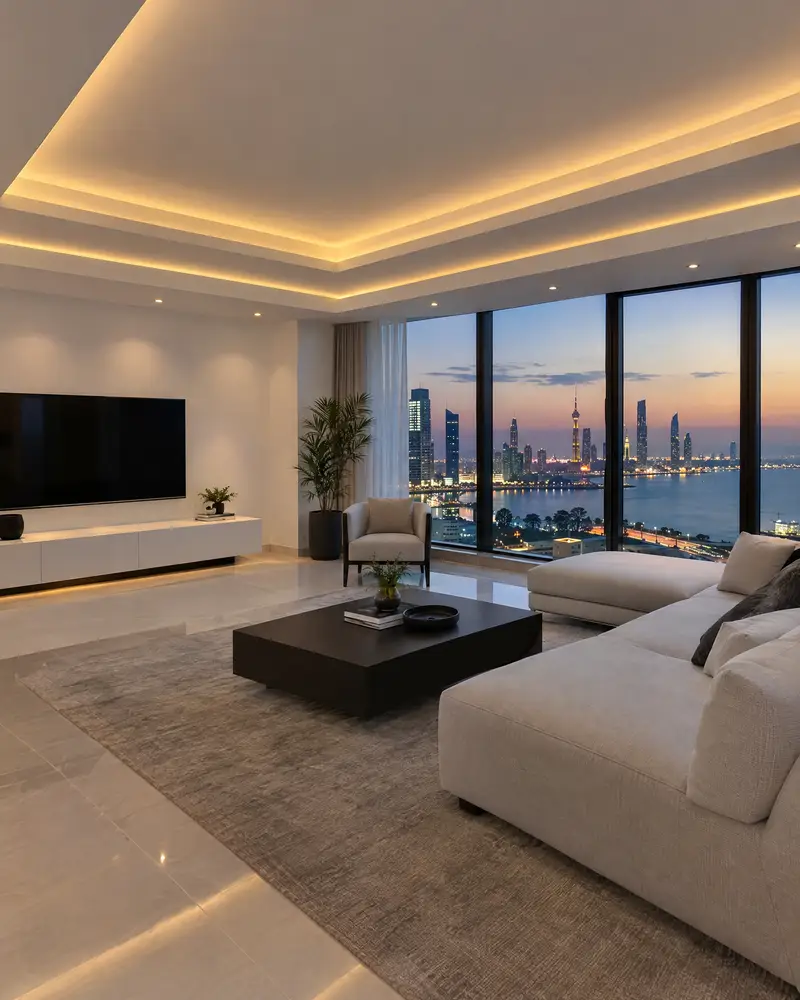
Marble, tiling, gypsum and paint from one company.
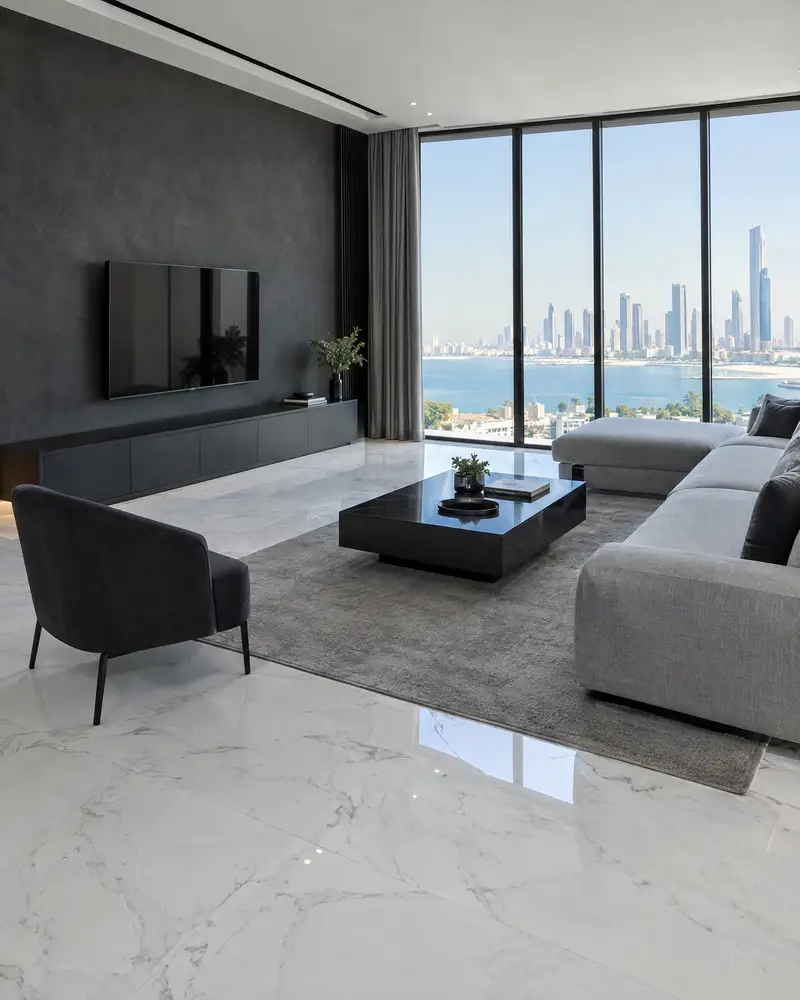
Four contractors for one finishOne company for every trade
No gaps between the tiler, the gypsum crew and the painter.
After-care that never comesRegular maintenance after handover
And finishing on instalments if you need it.
How it works.
Call or whatsApp
Contact us and describe the wall area and finish you have in mind.
Site survey
We measure walls, check the substrate and note any moisture or surface faults.
Quotation
A detailed quote covering stone, fixing, and removal of existing finish if needed.
Preparation and fixing
Substrate prepared, slabs fixed, joints grouted and silicone applied at all edges.
Sealing and handover
Impregnator applied after full cure, final inspection done and area handed over clean.
What sets the price.
No fixed rate applies; these are the factors that shape the actual quote for wall marble cladding.
Get a quoteStone type and grade
Italian marble costs more than local or Spanish stone of similar appearance.
Total wall area
Total square metres is the primary driver of both material and labour costs.
Removal of existing finish
Stripping old tile or marble adds demolition and surface-preparation costs.
Cutting and edge complexity
Internal and external corners plus profiled visible edges increase cutting time and cost.
Working height
Very tall walls require scaffolding which adds to the overall project cost.
Why one contractor beats four.
Every extra contractor means another schedule and another excuse. With us, one company answers for all of it.
Turnkey
Shell and finishing with one company, from footings to keys.
Pay in instalments
Construction and finishing on instalments. Ask us for the details.
Engineering supervision
Architectural drawings and engineering supervision on site.
After handover
Maintenance contracts and a 24-hour emergency plumber.
A licensed Kuwaiti company for building construction, finishing, renovation and infrastructure works.
What our clients say.
See all reviews on GoogleExcellent
Taha Saad
Google review
Excellent
Ali Nadi
Google review
Marble wall cladding in Kuwait. We work across all six governorates of Kuwait: Capital, Hawalli, Farwaniya, Mubarak Al-Kabeer, Ahmadi, Jahra.
Official references: Kuwait Fire Force (safety requirements in finishing work)
Questions, answered.
Call nowCan wall marble be fixed directly over existing tiles without removing them?
Usually not. Existing tile adds dead weight and may already be partly debonded, making it an unreliable base. Removing it gives a solid substrate and prevents the new marble from separating later.
What is the practical difference between flexible marble adhesive and standard mortar for wall cladding?
Flexible adhesive absorbs the repeated thermal movement common in Kuwait and keeps its bond. Standard rigid mortar loses grip through heat cycles, leading to panel separation or cracked grout lines within a few seasons.
Why do rust stains appear on interior marble wall cladding?
The most common cause is a fixing clip or metal insert behind the slab that is not stainless. Coastal moisture works through to it, and the stain bleeds through the stone pores. Using corrosion-resistant fixings and applying a penetrating impregnator prevents this.
Are movement joints necessary in interior marble wall cladding, or is that only for facades?
Yes, especially in Kuwait where AC cycling creates real temperature swings indoors. Flexible silicone movement joints at internal corners and at the floor and ceiling junctions absorb that movement and protect the slabs from cracking.
How does Kuwait's coastal humidity affect interior marble cladding near windows?
Salt-laden humidity migrates through window frame gaps or failed sealant and is absorbed by unprotected stone nearby, leaving white salt deposits or staining. A penetrating impregnator on the marble and proper silicone sealing at the frame junction reduce this significantly.

Licensed and registered in Kuwait.
Check us before you sign. This is our licence number and what it covers.
Find us on Google Maps