

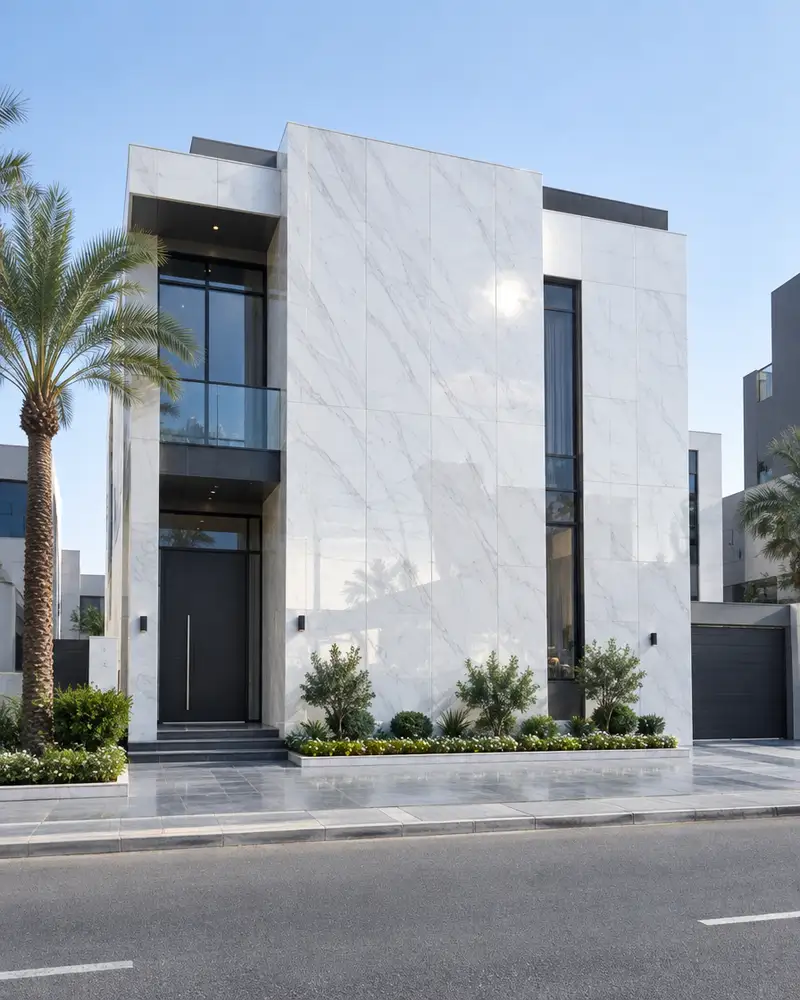
What the work covers
Measurement through panel fixing to final sealing, covering every stage of the facade cladding.
Survey and substrate prep
Inspect existing facade surface and assess substrate condition before fixing.
Layout design and cutting
Plan panel grid and specify custom cuts at corners, openings and sills.
Mechanical anchoring
Fix each panel with stainless anchors drilled and grouted into the structure.
Joint sealing
Fill expansion joints with UV and salt-resistant flexible sealant throughout.
Protective coating
Apply penetrating stain and moisture repellent over the entire marble surface.
Check and handover
Tap-test every panel and verify all joints are sealed before final handover.
Signs your facade needs attention
Hollow or shifting panels
A panel that sounds hollow when tapped has lost its bond and risks falling.
Cracked or open joints
Cracked sealant between panels lets moisture and fine dust enter and accelerate damage.
Rust stains on the stone
Brown streaks bleeding from panel edges point to iron anchors that have corroded inside.
Spalling or chipped edges
Crumbling marble edges indicate repeated thermal movement without adequate expansion joints.
Before you call, gather these details
Approximate facade area
Estimate the height and width of each face to be clad for a more accurate initial quote.
Existing cladding condition
Photograph any broken panels, open joints or rust stains already visible on the facade.
Preferred stone type
Decide if you want white, coloured or stone that matches the rest of the building exterior.
Access to the facade
Check whether the facade requires scaffolding, a crane or a mast climber to reach it.
More in marble & granite.
What goes wrong with most finishing.
The finish is what you see every day, and its mistakes do not hide. These three are the most common.
 01
01A rushed finish
The finish is what you live with every day. Rushing it shows in every corner.
 02
02Four contractors for one finish
Tiling, gypsum, paint and aluminium crews who never talk to each other.
 03
03After-care that never comes
Once you have the keys, it is hard to find anyone to come back and fix what shows up.
The solution?
Full finishing, and maintenance after it, from one licensed company.
A rushed finishTurnkey finishing
Marble, tiling, gypsum and paint from one company.
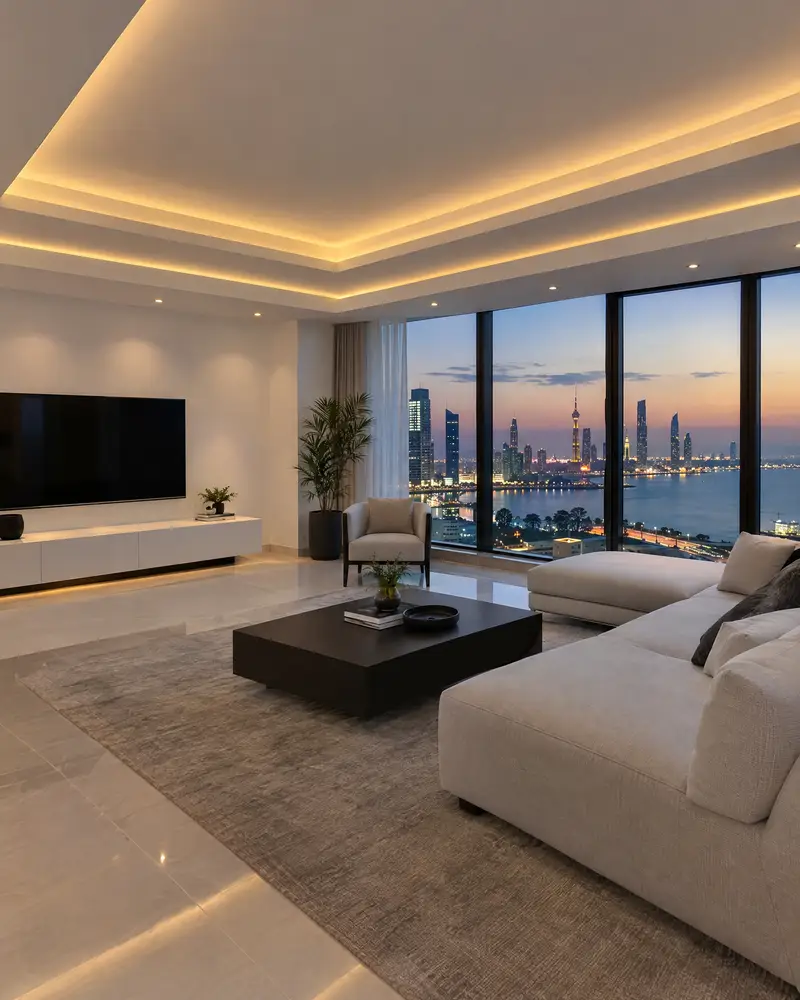
Four contractors for one finishOne company for every trade
No gaps between the tiler, the gypsum crew and the painter.
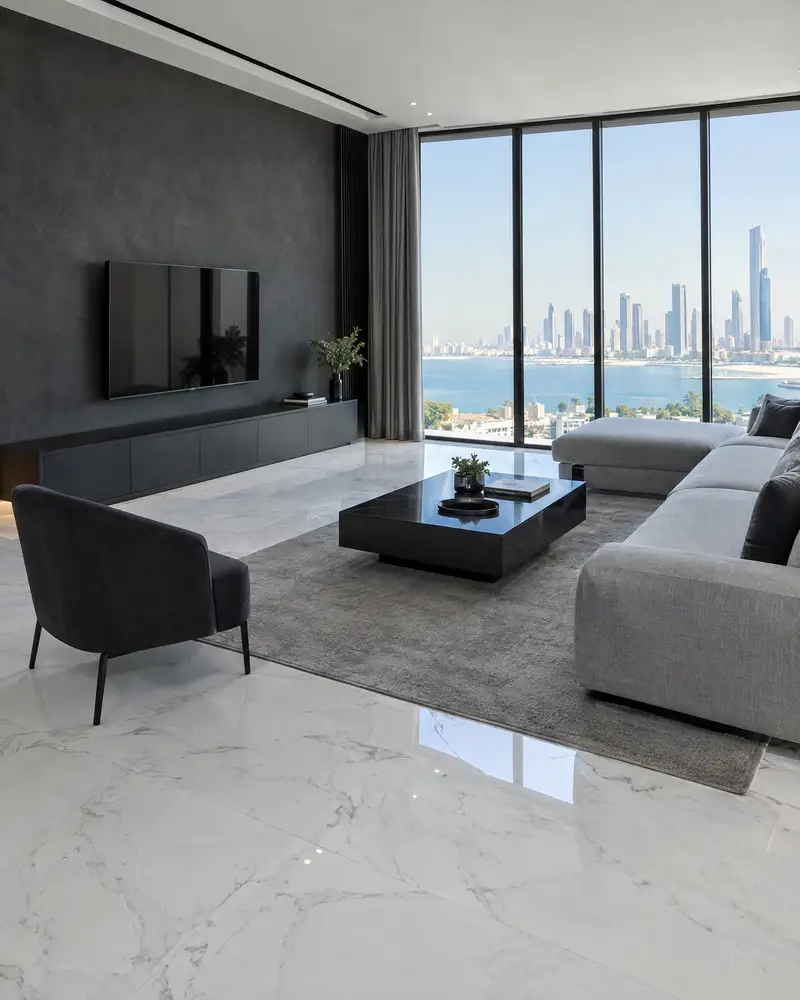
After-care that never comesRegular maintenance after handover
And finishing on instalments if you need it.
How it works.
Call or whatsApp
Describe the facade type and any visible problems to book a site visit.
Site survey
We measure the facade, assess substrate condition and specify the fixing method.
Stone selection and quote
You choose the stone and finish; we issue a detailed quote with quantities and cost.
Installation and sealing
Panels are anchored, joints sealed and protective coating applied across the facade.
Inspection and handover
Every panel is tested and all joints verified before we hand over the finished facade.
What sets the price.
No fixed rate applies because these factors together determine the final quote for each facade.
Get a quoteStone type and grade
Italian and Turkish marble differ significantly in cost and long-term performance.
Total facade area
Total area to be clad drives material quantities, anchor count and labour hours.
Removal of existing cladding
Stripping old tiles or marble adds demolition time and disposal cost before new work starts.
Anchoring system required
Large panels and tall elevations need full mechanical anchoring, costlier than adhesive alone.
Access and scaffolding
High or restricted facades raise scaffolding and lifting equipment costs considerably.
Why one contractor beats four.
Every extra contractor means another schedule and another excuse. With us, one company answers for all of it.
Turnkey
Shell and finishing with one company, from footings to keys.
Pay in instalments
Construction and finishing on instalments. Ask us for the details.
Engineering supervision
Architectural drawings and engineering supervision on site.
After handover
Maintenance contracts and a 24-hour emergency plumber.
A licensed Kuwaiti company for building construction, finishing, renovation and infrastructure works.
What our clients say.
See all reviews on GoogleExcellent
Taha Saad
Google review
Excellent
Ali Nadi
Google review
Marble facades in Kuwait. We work across all six governorates of Kuwait: Capital, Hawalli, Farwaniya, Mubarak Al-Kabeer, Ahmadi, Jahra.
Official references: Kuwait Fire Force (safety requirements in finishing work)
Questions, answered.
Call nowWhat is the difference between mechanical anchor fixing and adhesive-only fixing for marble facades?
Mechanical anchors tie each panel directly to the structure and keep it secure even if adhesive fails. Adhesive alone can work for small panels at low height, but it fails on large slabs or tall facades due to repeated thermal movement in Kuwait's heat.
Can marble facade cladding be installed on an existing building without demolishing the current finish?
It depends on the existing finish condition. If it is solid and level, marble can be anchored over it. If it is cracked or hollow, it must be removed first because new cladding will not hold reliably over an unstable base.
Which marble types are most suitable for Kuwait building facades in terms of heat and salt resistance?
Dense, low-absorption marble handles coastal humidity and salt far better than porous varieties. Light colours reflect heat more effectively than dark ones. Applying a penetrating repellent coating extends the life of any marble type under Kuwait's conditions.
How does Kuwait's intense heat affect expansion joints in marble facade cladding?
The large daily temperature swing causes marble to expand and contract every day. Joints filled with rigid material crack under this repeated stress. A flexible UV-resistant sealant in the joints absorbs the movement without breaking down.
Does marble facade cladding need periodic maintenance after installation, and what does it involve?
Yes. Periodic checks cover joint integrity and resealing any cracked sections, anchor inspection for corrosion, and surface cleaning to remove dust and salt deposits common on coastal facades. Neglecting joints allows moisture to penetrate behind the panels and loosen them over time.
Licensed and registered in Kuwait.
Check us before you sign. This is our licence number and what it covers.
Find us on Google Maps