
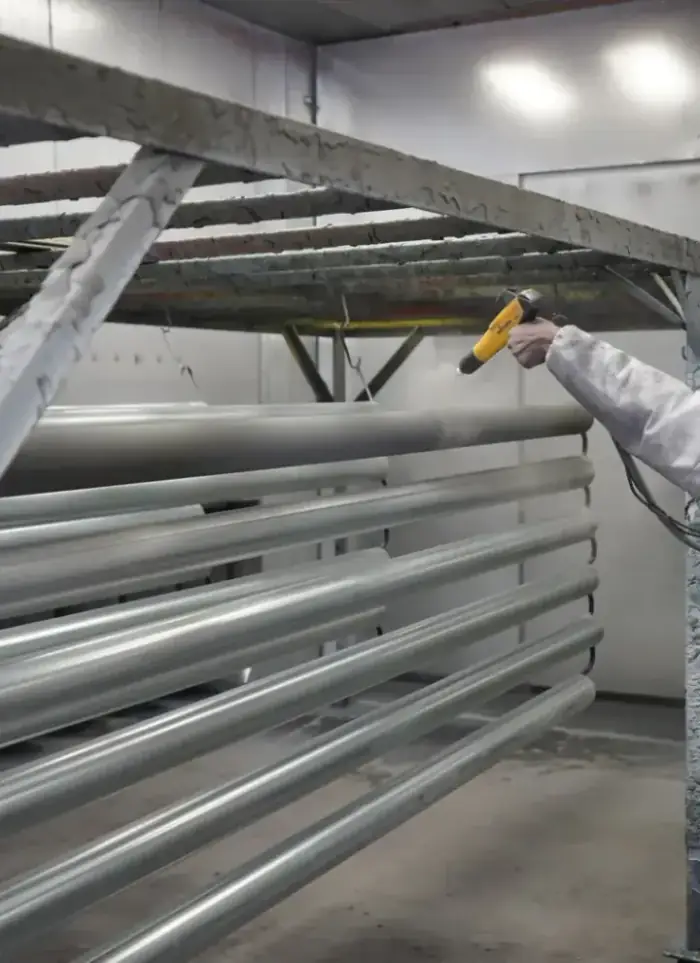
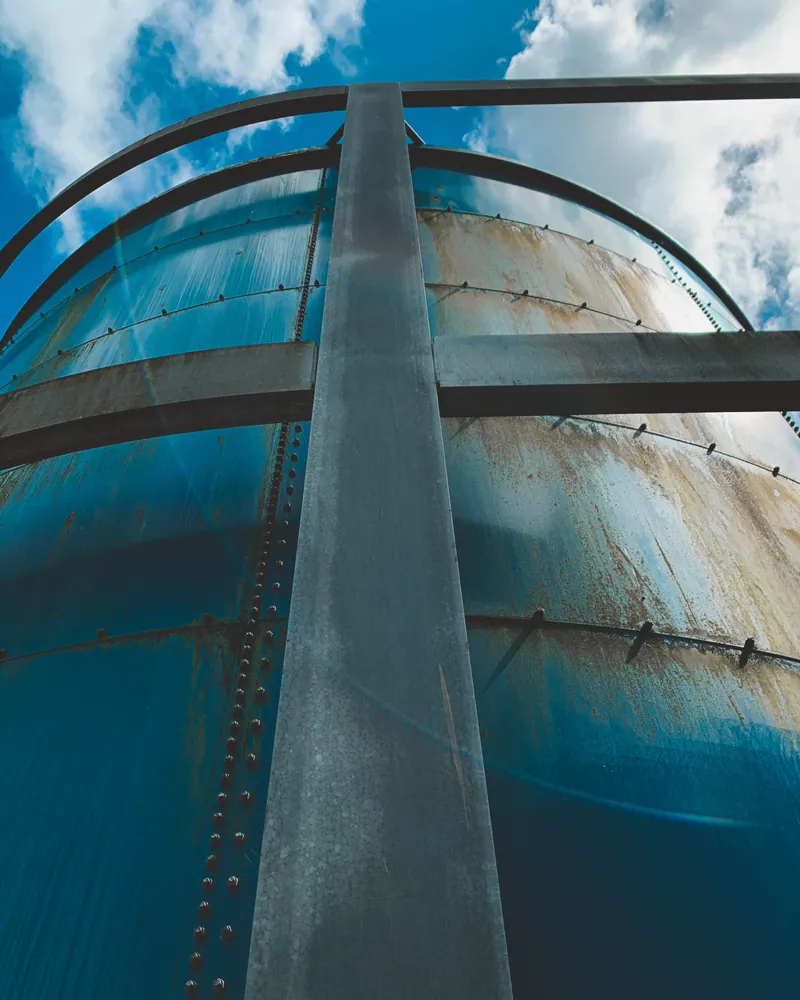
What the work covers
Work runs from full tank drainage through to a hold test before the supply is restored.

Draining and drying
Full drainage followed by forced drying until the interior is moisture-free.

Mechanical surface keying
Grinding or abrasive blasting opens concrete pores for strong epoxy bond.

Crack and void filling
Epoxy filler mortar applied to all cracks and voids before the full coat.
Food-grade epoxy coat
Minimum two coats of drinking-water-approved epoxy applied to all interior faces.
Curing period
Tank remains out of service until the coating reaches full cure before filling.
Hold and tightness test
Trial fill and visual inspection for any weeps before final pipe connections are made.
Materials and methods used
Two-part epoxy resin
Resin and hardener mixed on site to form a hard, impermeable, drinking-water-certified film.
Epoxy filler mortar
Thickened epoxy paste fills cracks and pits with flexibility compatible with the finish coat.
Grinding or abrasive blasting
Mechanical keying removes surface laitance and opens pores for direct epoxy-to-concrete adhesion.
Water-based epoxy primer
Thin penetrating primer soaks into dried concrete and improves coverage of the finish coats.
Mistakes that ruin an epoxy lining
Coating a damp surface
Residual moisture under the epoxy causes blistering and delamination within weeks.
Inaccurate mixing ratio
Wrong resin-to-hardener ratio leaves the coat soft or brittle and unable to seal the tank.
Skipping crack filling first
Coating directly over an open crack hides the defect and allows water to pass behind the coat.
Filling before full cure
Filling the tank before the epoxy cures fully softens the coat and destroys its protective properties.
More in tank waterproofing & cleaning.
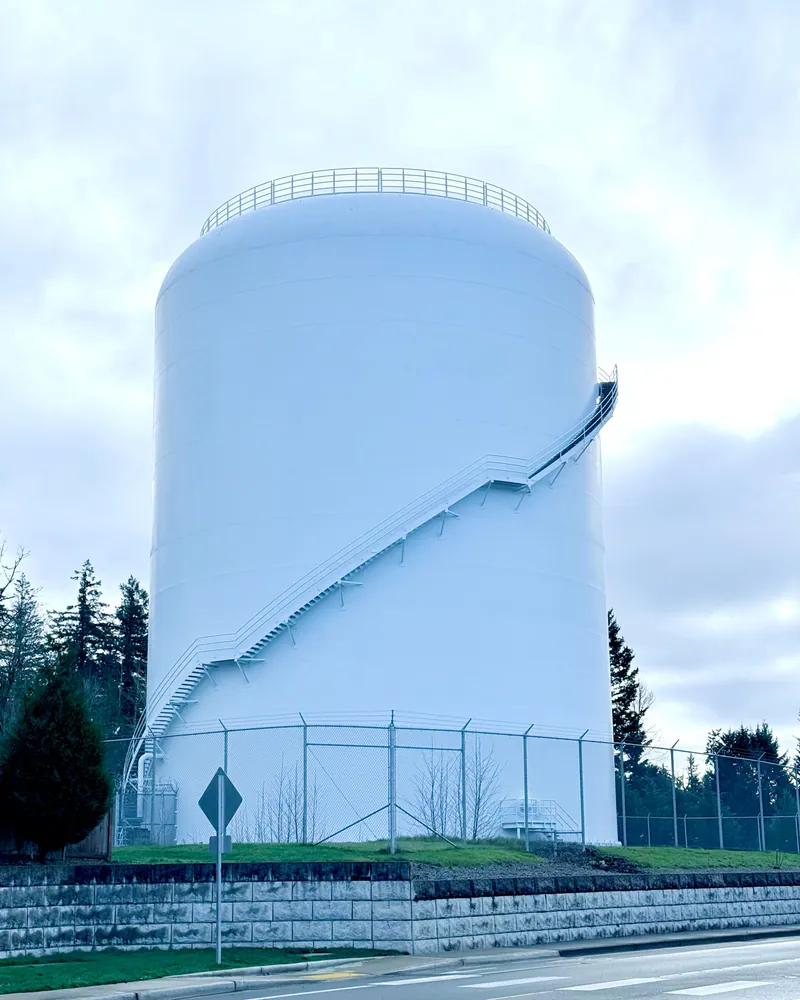
What goes wrong with most plumbing.
Plumbing problems start hidden and end with breaking tiles. These three cost the most.
 01
01Pipes laid in a rush
Pipework rushed before the walls close stays hidden until it starts to leak.
 02
02Leaks you cannot see
A slow leak behind tiles shows up as damp, stains and a higher water bill.
 03
03Nobody answers in an emergency
A burst pipe at night cannot wait for a contractor who has moved on.
The solution?
Pipework, leak detection and maintenance from one licensed company.
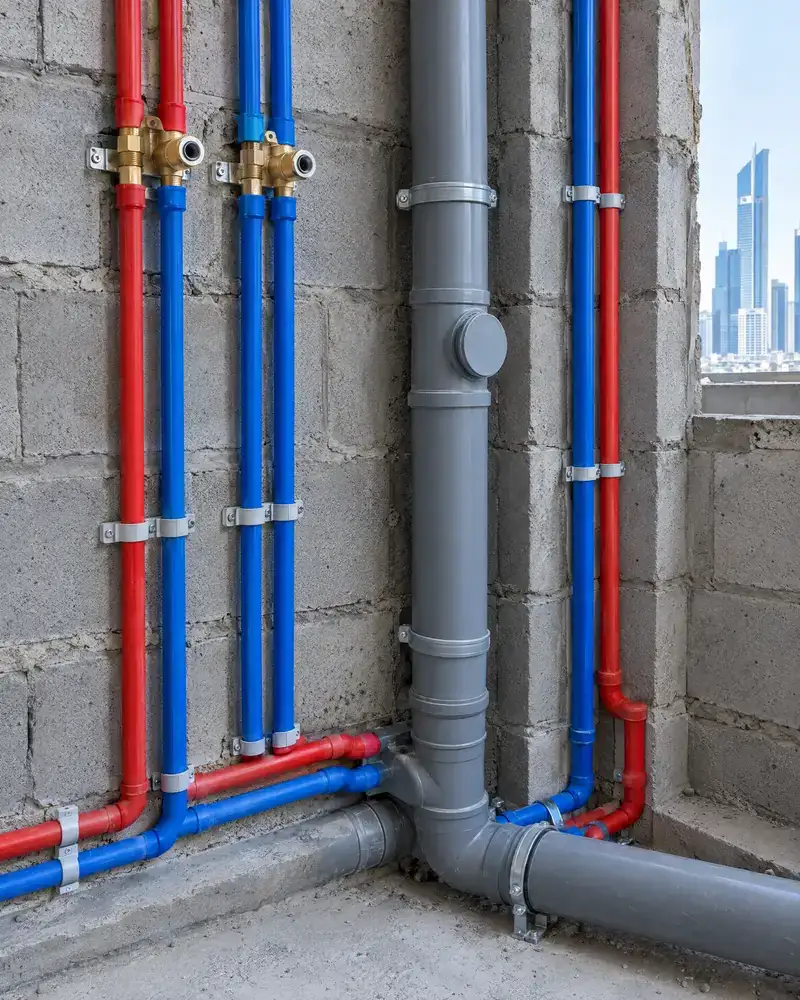
Pipes laid in a rushFirst-fix plumbing by the builder
Laid as part of the build, before the walls close.
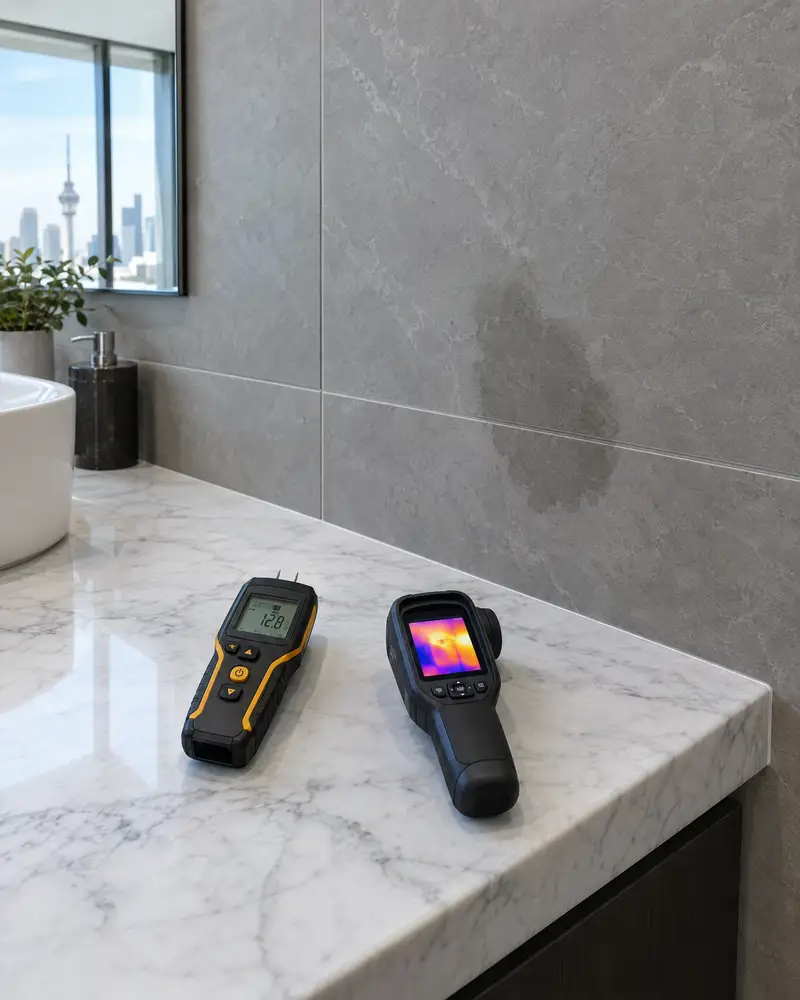
Leaks you cannot seeWater leak detection
We find the source first.
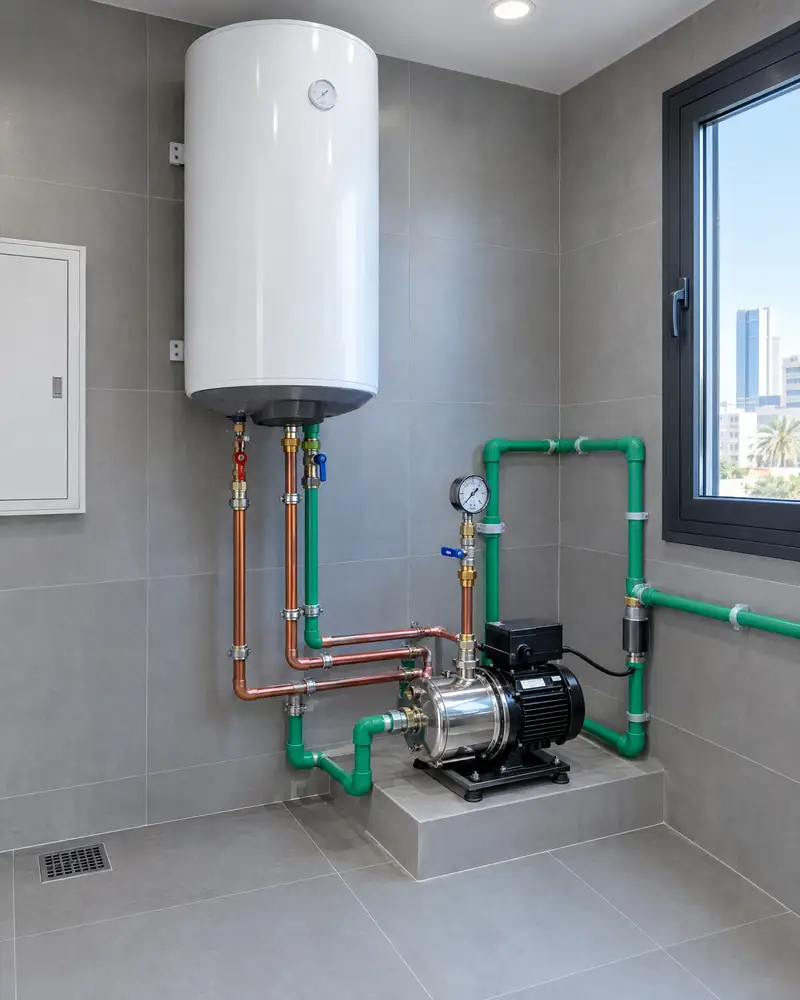
Nobody answers in an emergency24-hour emergency plumber
Plus regular maintenance contracts after handover.
How it works.
Contact and assessment
Call or WhatsApp us to describe the tank and arrange an on-site inspection visit.
Inspection and quote
We inspect the interior, measure the tank and provide a clear written quote.
Draining and prep
Tank is drained, force-dried and mechanically keyed before any coating begins.
Epoxy application
Cracks are filled, then food-grade epoxy coats are applied in the correct sequence.
Test and handover
Trial fill confirms tightness, then the tank is handed over ready for normal service.
What sets the price.
No fixed rate applies; the quote depends on the specific conditions of each tank.
Get a quoteTank capacity
Larger capacity means more surface area to coat and more material needed.
Interior surface condition
Heavy cracking, pitting or old failed coating requires more preparation time and material.
Tank type and location
An underground tank requires different access arrangements than a rooftop unit.
Number of epoxy coats
Old or porous concrete tanks may need an extra coat to achieve full impermeability.
Site access ease
A narrow access hatch or distant vehicle route adds to the labour time on site.
Why one contractor beats four.
Every extra contractor means another schedule and another excuse. With us, one company answers for all of it.
Turnkey
Shell and finishing with one company, from footings to keys.
Pay in instalments
Construction and finishing on instalments. Ask us for the details.
Engineering supervision
Architectural drawings and engineering supervision on site.
After handover
Maintenance contracts and a 24-hour emergency plumber.
A licensed Kuwaiti company for building construction, finishing, renovation and infrastructure works.
What our clients say.
See all reviews on GoogleExcellent
Taha Saad
Google review
Excellent
Ali Nadi
Google review
Epoxy tank lining in Kuwait. We work across all six governorates of Kuwait: Capital, Hawalli, Farwaniya, Mubarak Al-Kabeer, Ahmadi, Jahra.
Official references: Ministry of Electricity and Water (water and drainage connections)
Questions, answered.
Call nowIs the epoxy safe for contact with drinking water?
Yes, the epoxy used is certified specifically for drinking water contact. Once fully cured, no chemical transfer to the stored water occurs.
Can epoxy lining be applied to an old concrete tank without demolishing it?
Yes, provided the concrete shell is structurally sound. Proper surface preparation, crack filling and drying are all that is needed before the epoxy is applied.
How many coats of epoxy does a tank need?
Two coats is the standard minimum. Porous or older concrete may need a penetrating primer plus a third coat to achieve full closure of the surface.
Why does an epoxy lining blister or peel shortly after application?
The most common cause is applying epoxy over a surface that was not fully dry, or an inaccurate resin-to-hardener mix ratio. Both prevent proper adhesion and film formation.
Does Kuwait's intense heat affect the epoxy lining inside the tank?
Roof tanks reach very high temperatures in summer, so an epoxy grade with suitable heat resistance is selected. Underground tanks are far less affected due to their buried position.
Licensed and registered in Kuwait.
Check us before you sign. This is our licence number and what it covers.
Find us on Google Maps