
What the service covers
Every step from emptying the tank to refilling it with disinfected water.

Draining and extraction
Pump out remaining water and loose sediment from the tank floor.

Wall and floor scrubbing
Manual removal of algae, scale and mineral deposits from all surfaces.

High-pressure rinse
Pressure-rinse walls and floor to flush out all loosened residue.

Chlorine disinfection
Apply approved chlorine solution to all internal surfaces and allow contact time.

Lid and vent inspection
Check the access cover and vents to stop contaminants re-entering.
Pump and refill check
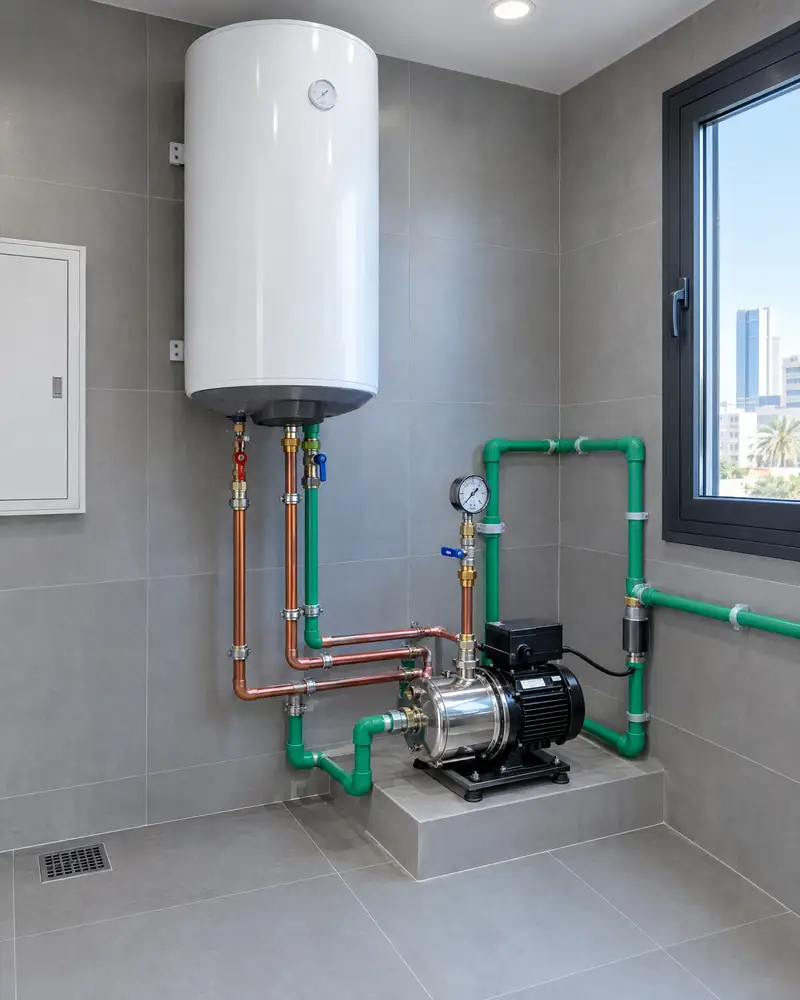
Inspect transfer pump and operating pressure before refilling the tank.
Common mistakes with underground tank cleaning
Cleaning without full drain-down
Residual water dilutes the disinfectant and leaves bacteria alive in the tank.
Leaving the lid unsealed after work
A cracked or loose cover lets insects and dust re-contaminate the water within days.
Skipping the wall condition check
Ignoring interior cracks allows groundwater to seep in and recontaminate the supply.
Not checking the pump after cleaning
Tank sediment damages pump impellers; skipping the check leads to early pump failure.
Before you call: what to check first
Tank location and access hatch
Locate the underground tank and confirm the access hatch can be opened safely.
Date of last cleaning
Knowing when the tank was last cleaned helps the technician estimate sediment volume.
Backup water source
The tank will be offline during work; arrange an alternative water supply beforehand.
Any symptoms you have noticed
Note any colour change, odd smell or gritty deposits appearing at the taps.
More in tank waterproofing & cleaning.



What goes wrong with most plumbing.
Plumbing problems start hidden and end with breaking tiles. These three cost the most.
 01
01Pipes laid in a rush
Pipework rushed before the walls close stays hidden until it starts to leak.
 02
02Leaks you cannot see
A slow leak behind tiles shows up as damp, stains and a higher water bill.
 03
03Nobody answers in an emergency
A burst pipe at night cannot wait for a contractor who has moved on.
The solution?
Pipework, leak detection and maintenance from one licensed company.
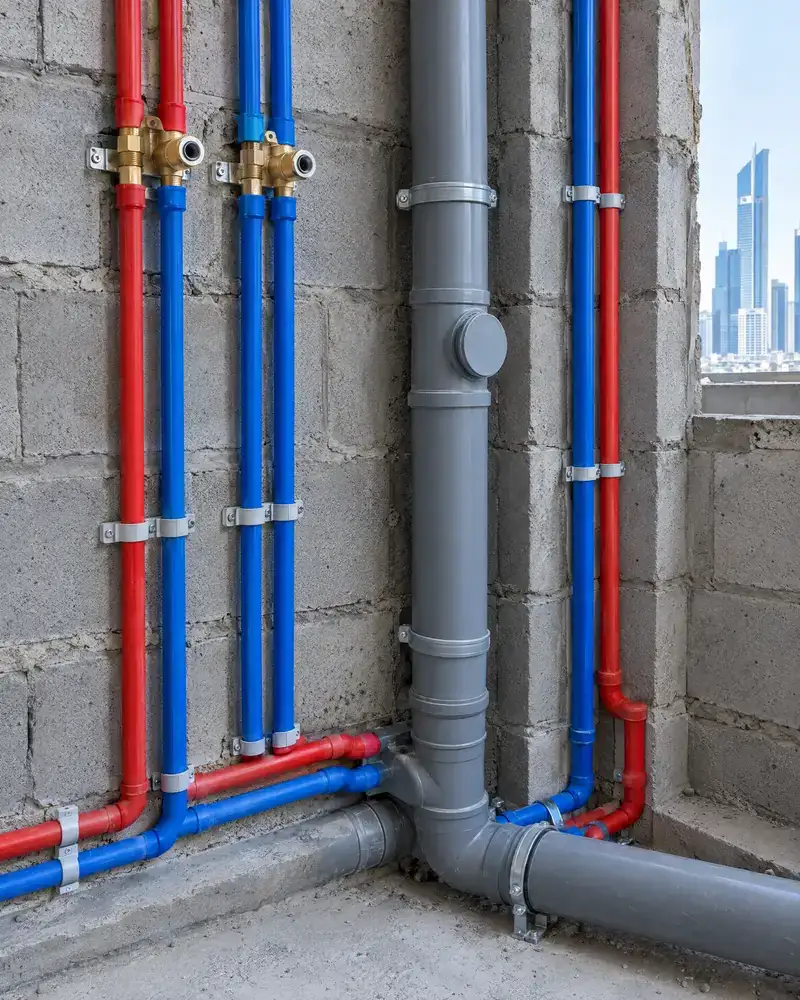
Pipes laid in a rushFirst-fix plumbing by the builder
Laid as part of the build, before the walls close.
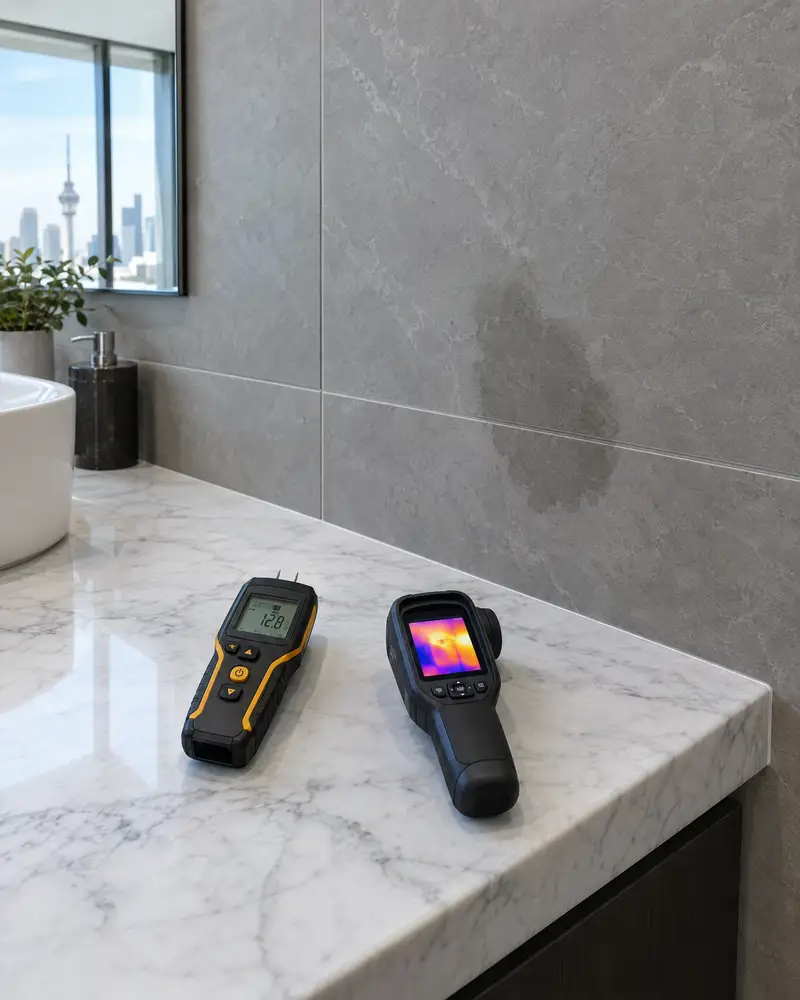
Leaks you cannot seeWater leak detection
We find the source first.
Nobody answers in an emergency24-hour emergency plumber
Plus regular maintenance contracts after handover.
How it works.
Call or whatsApp
Tell us the tank location and any water quality symptoms you have noticed.
Site assessment
Technician inspects the tank, lid, vents and pump to scope the work.
Drain and clean
Full drain-down, sediment removal and manual scrub of all surfaces.
Disinfect and rinse
Apply chlorine solution, allow contact time, then rinse the tank clean.
Check and handover
Verify pump and lid seal, refill the tank and confirm normal operation.
What sets the price.
Several site-specific factors shape the quote; a visit lets us assess them accurately.
Get a quoteTank capacity
Larger tanks need more time and a greater volume of disinfection solution.
Sediment and scale level
Heavy mineral scale and sludge increase the effort needed for manual scrubbing.
Site access
Tanks under narrow walkways or requiring excavation carry an additional access cost.
Interior surface condition
Cracks or hollow patches may need repair before the tank is returned to service.
Pump condition
If the transfer pump needs cleaning or a repair, this adds to the overall cost.
Why one contractor beats four.
Every extra contractor means another schedule and another excuse. With us, one company answers for all of it.
Turnkey
Shell and finishing with one company, from footings to keys.
Pay in instalments
Construction and finishing on instalments. Ask us for the details.
Engineering supervision
Architectural drawings and engineering supervision on site.
After handover
Maintenance contracts and a 24-hour emergency plumber.
A licensed Kuwaiti company for building construction, finishing, renovation and infrastructure works.
What our clients say.
See all reviews on GoogleExcellent
Taha Saad
Google review
Excellent
Ali Nadi
Google review
Underground tank cleaning in Kuwait. We work across all six governorates of Kuwait: Capital, Hawalli, Farwaniya, Mubarak Al-Kabeer, Ahmadi, Jahra.
Official references: Ministry of Electricity and Water (water and drainage connections)
Questions, answered.
Call nowHow often does an underground tank need cleaning in Kuwait?
At least once a year is the standard recommendation. Kuwait's hard, mineral-heavy water accelerates scale build-up, and older or heavily used tanks may need more frequent cleaning.
How is underground tank cleaning different from roof tank cleaning?
Underground tanks are typically larger and at risk of groundwater ingress from outside. Roof tanks are exposed to solar heat. Access to underground tanks is more restricted and usually requires heavier pump equipment.
Can the tank be cleaned without cutting water to the house all day?
The tank must be taken offline during cleaning. The downtime depends on tank size and condition. We recommend storing water before the appointment; the technician works to restore supply as quickly as possible.
Why does algae return quickly after cleaning?
Algae need light to grow. If the access lid is cracked or a vent is not properly sealed, light enters and algae return fast. Fixing the cover and sealing the vents breaks the cycle.
Does underground tank cleaning include checking the pressure pump?
Yes. The transfer pump and operating pressure are checked after refilling the tank. If a pump fault is found during the check, the owner is informed before any further work is carried out.

Licensed and registered in Kuwait.
Check us before you sign. This is our licence number and what it covers.
Find us on Google Maps