
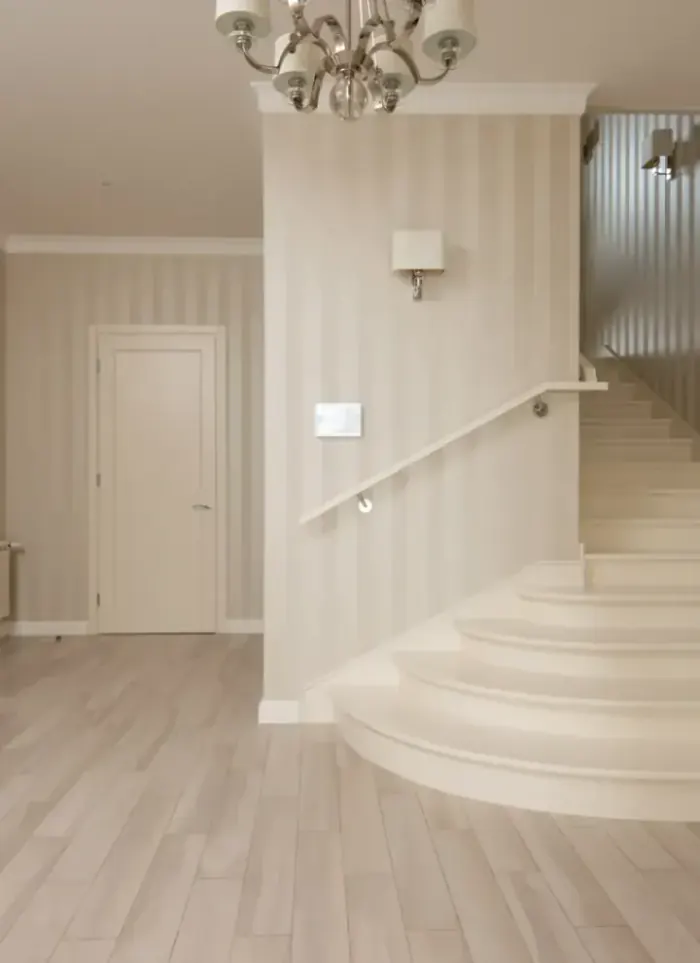
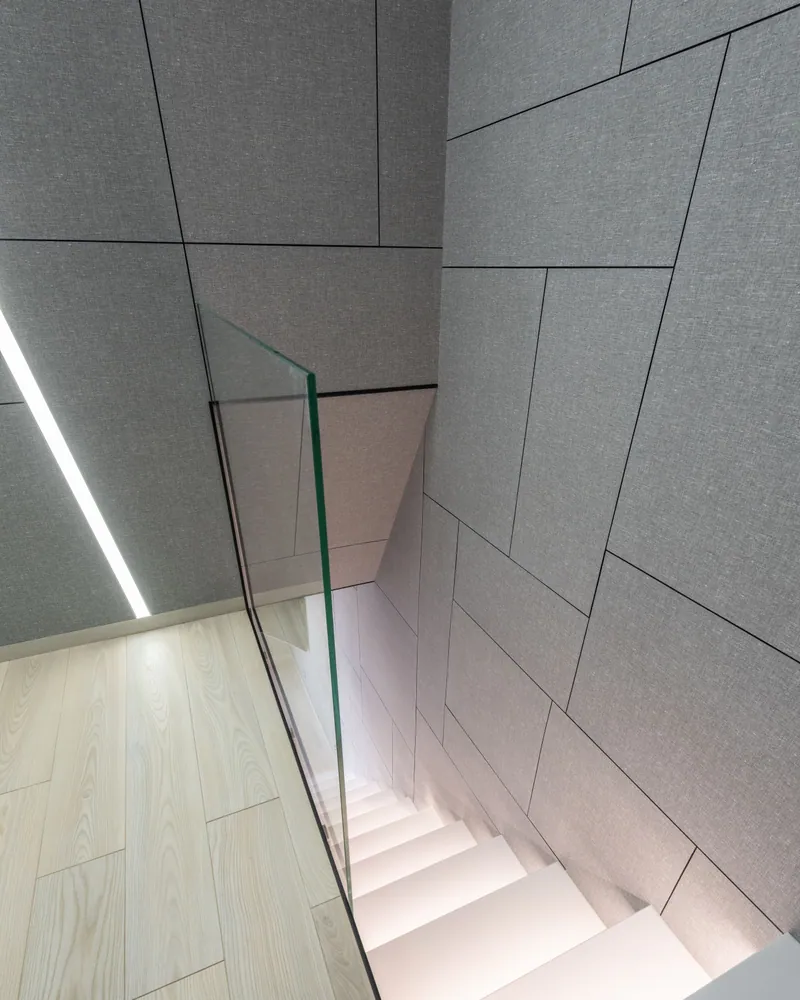
What the work covers
From levelling each tread and riser through to fitting nosings and sanding the finished surface
Tread preparation
Grinding and levelling each concrete tread before any board is laid

Accurate cutting
Cutting each board to the exact tread and riser dimension with correct angle
Adhesive bonding
Full-contact glue-down fixing rated for constant foot traffic on stairs

Stair nosings
Fitting front nosing profiles that protect the board edge and reduce slip risk
Riser boards
Covering the vertical riser face with a matching board for a clean unified look

Sanding and finish
Hand sanding followed by coating or waxing suited to the chosen wood species
Signs your stairs need parquet
Boards creak underfoot
A creak at each step means boards have partly separated from the concrete tread beneath them
Chipped or peeling nosings
A broken front edge exposes raw wood and creates a trip hazard on every step
Faded and uneven colour
Heavy yellowing from sun exposure through a glazed stairwell makes the whole staircase look neglected
Lifted or gapping boards
Visible gaps between a board and the tread surface signal that the original adhesive has fully failed
Common mistakes in stair parquet installation
Skipping tread levelling
Laying a board on an uneven concrete tread creates pressure points that crack or lift it within months
Wrong adhesive for stairs
Floor adhesive not rated for shear stress fails quickly under the sliding load of foot traffic on a slope
Nosings glued only
Glue-only nosing installation without mechanical fastening pulls free under repeated heavy foot contact
Leaving risers unfinished
Finishing only the tread and ignoring the riser face leaves a raw edge that collects dust and looks unfinished
More in parquet installation.
What goes wrong with most finishing.
The finish is what you see every day, and its mistakes do not hide. These three are the most common.
 01
01A rushed finish
The finish is what you live with every day. Rushing it shows in every corner.
 02
02Four contractors for one finish
Tiling, gypsum, paint and aluminium crews who never talk to each other.
 03
03After-care that never comes
Once you have the keys, it is hard to find anyone to come back and fix what shows up.
The solution?
Full finishing, and maintenance after it, from one licensed company.
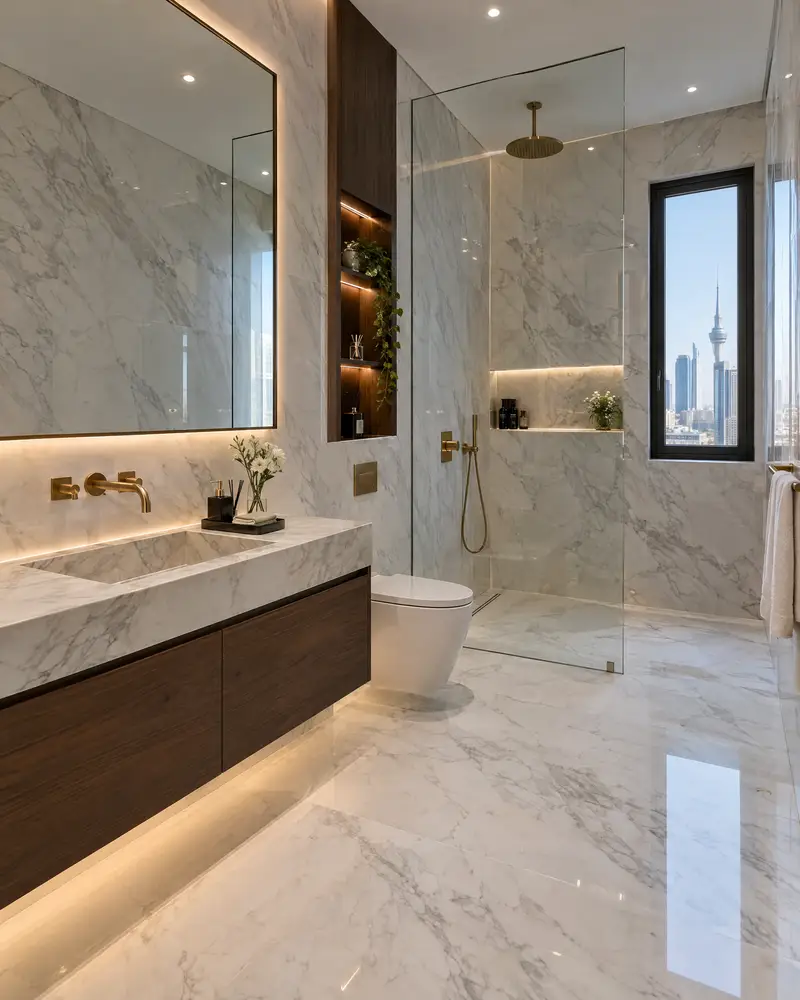
A rushed finishTurnkey finishing
Marble, tiling, gypsum and paint from one company.

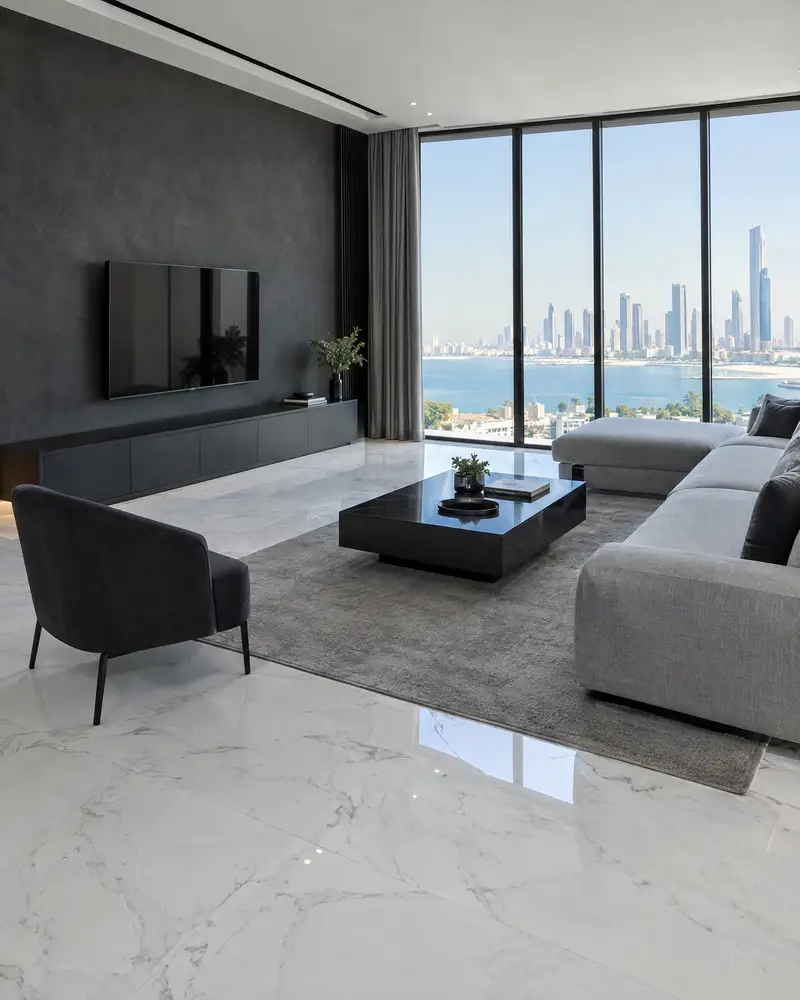
Four contractors for one finishOne company for every trade
No gaps between the tiler, the gypsum crew and the painter.
After-care that never comesRegular maintenance after handover
And finishing on instalments if you need it.
How it works.
Call or whatsApp
Tell us the stair count and type to set a site visit time
Site measure
We measure each tread, check the concrete and record the stair pitch
Material selection
You choose the wood species, nosing colour and surface finish type
Prep and install
We level each tread then fix boards, nosings and risers in sequence
Finish and handover
Hand sanding and final coat, then we check every step before handover
What sets the price.
No fixed rate applies because these factors vary on every staircase and shape the final quote
Get a quoteWood species chosen
Engineered and solid wood differ significantly in cost and durability under daily traffic
Number of stairs and height
Each extra tread requires individual cutting and fixing, adding time and labour cost
Existing concrete condition
Cracked or uneven treads need repair or levelling compound before boards can be fixed
Nosing and fastener type
Metal, wood and rubber nosing profiles vary in price and long-term performance on a stair edge
Final finish method
On-site sanding plus coating or waxing adds materials and labour to the overall project cost
Why one contractor beats four.
Every extra contractor means another schedule and another excuse. With us, one company answers for all of it.
Turnkey
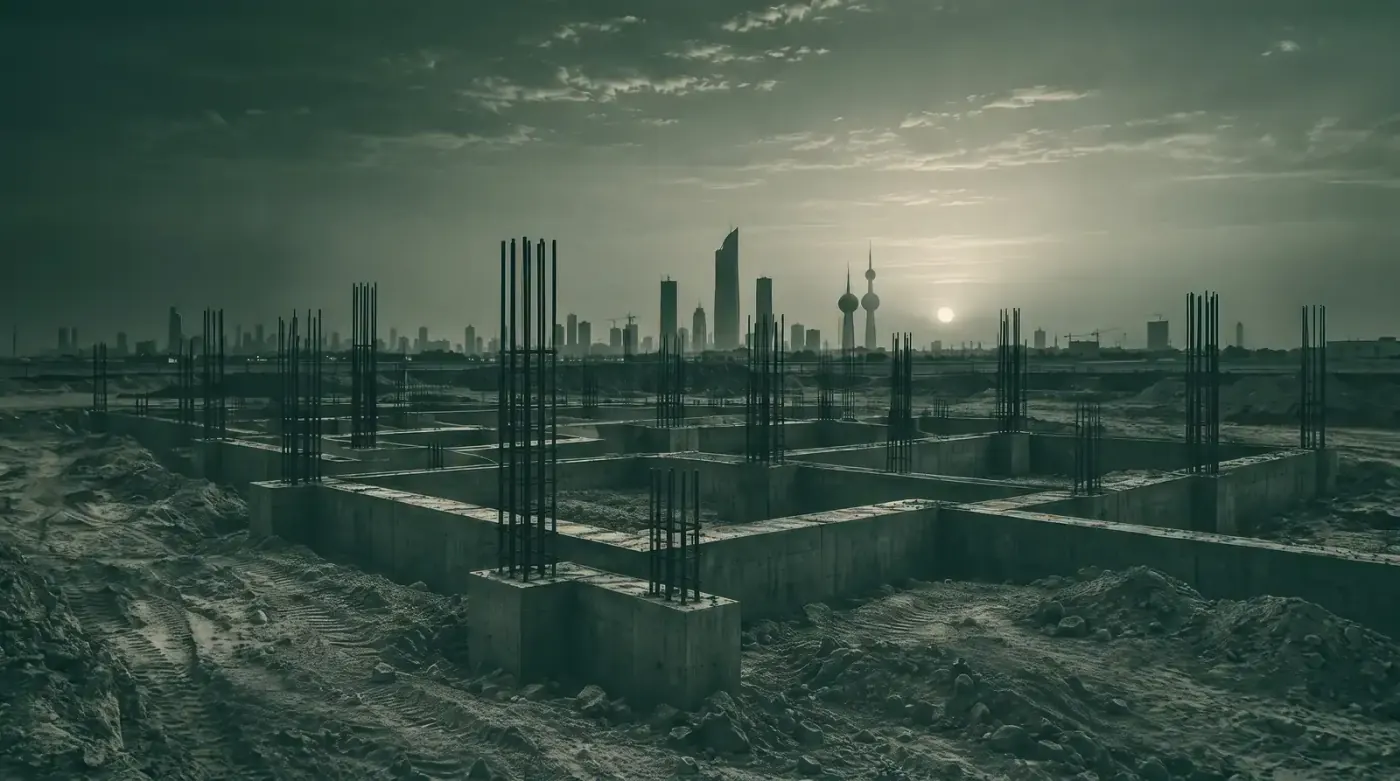
Shell and finishing with one company, from footings to keys.
Pay in instalments
Construction and finishing on instalments. Ask us for the details.
Engineering supervision
Architectural drawings and engineering supervision on site.
After handover
Maintenance contracts and a 24-hour emergency plumber.
A licensed Kuwaiti company for building construction, finishing, renovation and infrastructure works.
What our clients say.
See all reviews on GoogleExcellent
Taha Saad
Google review
Excellent
Ali Nadi
Google review
Stair parquet in Kuwait. We work across all six governorates of Kuwait: Capital, Hawalli, Farwaniya, Mubarak Al-Kabeer, Ahmadi, Jahra.
Official references: Kuwait Fire Force (safety requirements in finishing work)
Questions, answered.
Call nowCan parquet be fitted on a staircase with a steep pitch?
Yes, but a steep pitch requires more precise angle cuts and often shorter board lengths to prevent bowing. Nosing profiles become especially important for slip resistance on a sharply angled tread.
Is parquet suitable for a staircase exposed to direct sunlight in Kuwait?
Solid wood fades and shrinks under intense direct sun. For a staircase near large windows or a glazed atrium, engineered wood with a UV-resistant coating holds colour far better than untreated natural timber.
Can stair parquet be laid directly over existing tiles?
If existing tiles are fully bonded and the surface is flat, boards can be glued over them after surface preparation. Any loose or cracked tile must be removed first because parquet will not bond properly over a shifting base.
How should stair parquet be cleaned after installation?
Wipe treads with a near-dry cloth and a wood-specific cleaner. Avoid excess water near nosing joints as it seeps under the board. Fine dust, common in Kuwait, is best removed with a soft brush or vacuum.
Does stair parquet need sanding and recoating after some years of use?
Solid wood treads can be sanded and recoated multiple times to fully restore their appearance. Engineered wood accepts light sanding once or twice depending on the thickness of its top veneer layer.
Licensed and registered in Kuwait.
Check us before you sign. This is our licence number and what it covers.
Find us on Google Maps