
Waterproofing services we cover
Full range of waterproofing systems for flat roofs, pools, tiled surfaces and metal roofs

Water and heat insulation
Combined layer that blocks both moisture ingress and radiant heat transfer

Foam roof insulation
Sprayed polyurethane foam that fills cracks and levels uneven roof surfaces

Waterproof coating
Flexible liquid coating applied directly to concrete or existing surfaces

Pool waterproofing
Internal pool lining system that stops water leaking through walls and base
Over-tile waterproofing
Waterproof layer applied beneath new tiles without removing the old surface
Membrane roof waterproofing
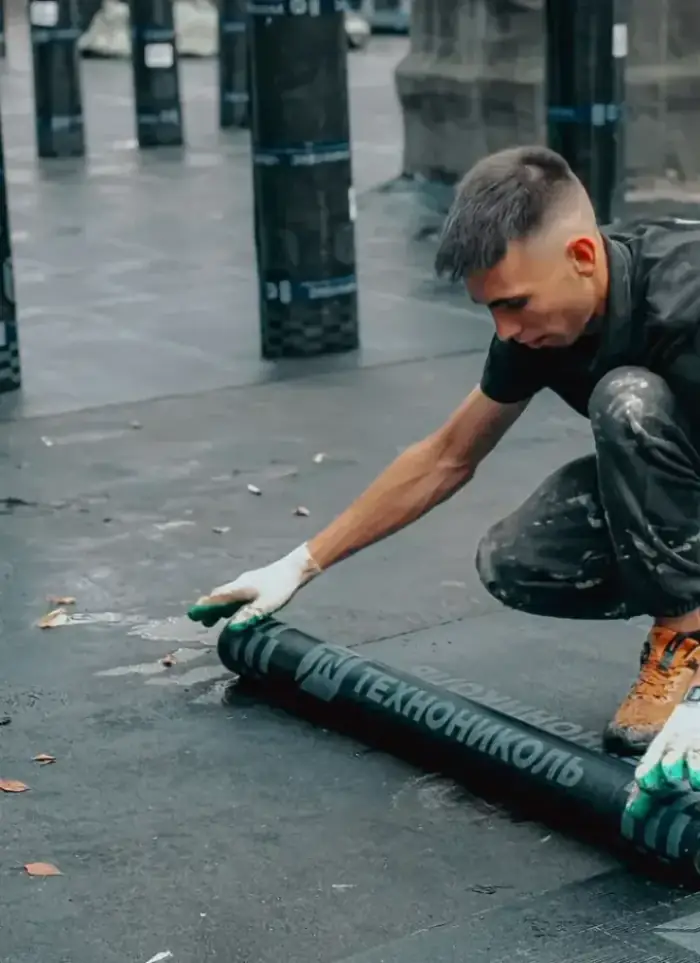
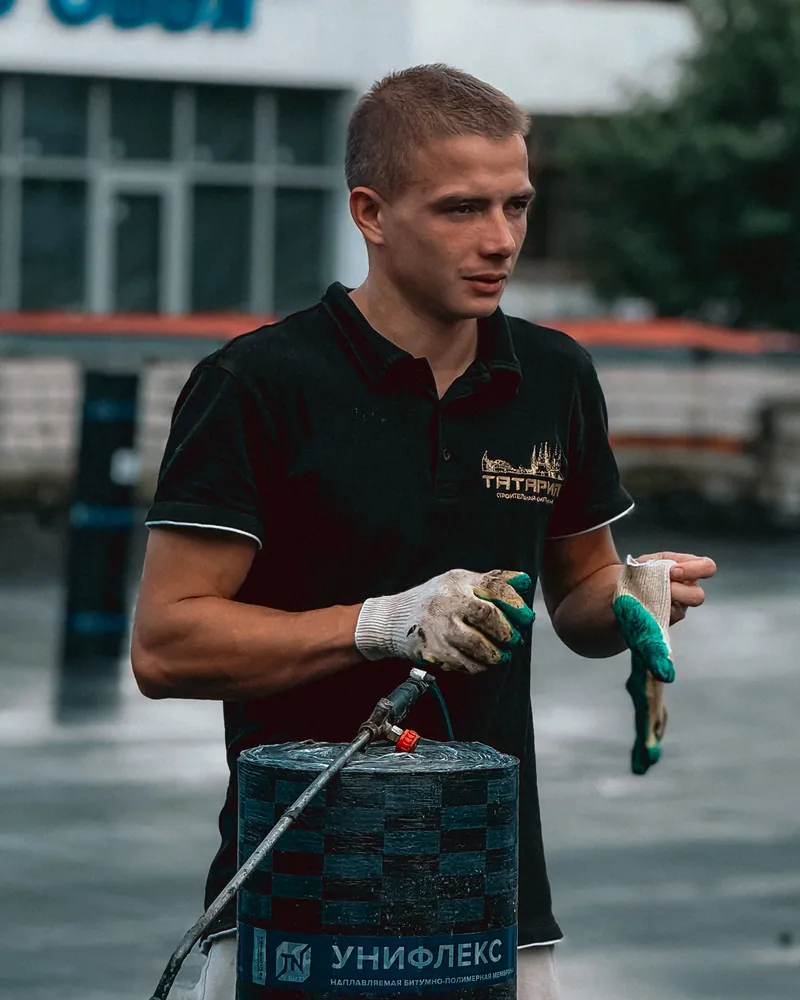
Bituminous or polymer sheets fixed by torch or adhesive to the roof deck
Signs your roof needs waterproofing
Damp stains on ceilings
Yellow or dark patches appear on interior ceilings after rain or humidity builds up
Paint peeling from below the slab
Paint bubbling and peeling off the underside of the top-floor slab signals moisture saturating the concrete
Cracks at the parapet or edge
Cracks forming at the parapet base or around drain openings let water channel straight into the slab
Rust streaks on soffits or columns
Rust running down columns or soffits means moisture has already reached the reinforcing steel inside
Common mistakes in roof waterproofing
Ignoring standing water points
Waterproofing a flat roof that has no fall leaves water pooling until it forces through the membrane
Leaving drain collars unsealed
Applying membrane across the field but leaving drain collar edges unbonded creates the most common leak point
Applying too thin a coat
Diluting or under-applying liquid coatings removes flexibility and causes cracking after the first heat wave
Waterproofing over a dirty substrate
Bonding membrane or coating to a dusty or cracked deck stops proper adhesion and lifts the layer prematurely
Inside roof waterproofing.
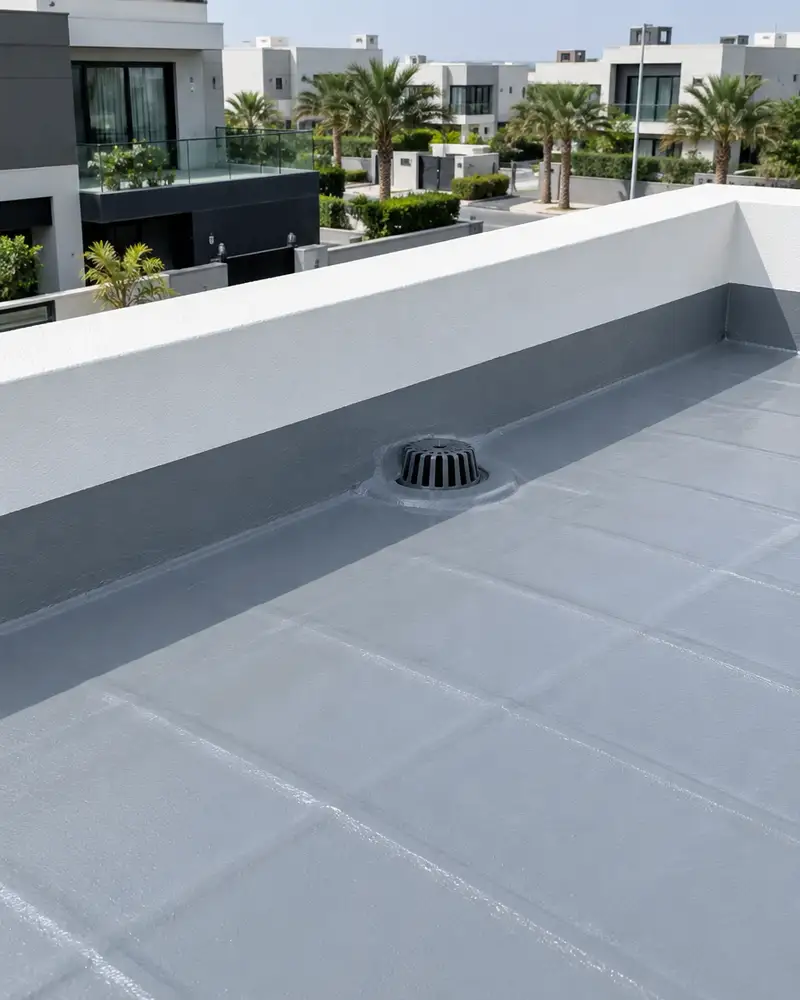
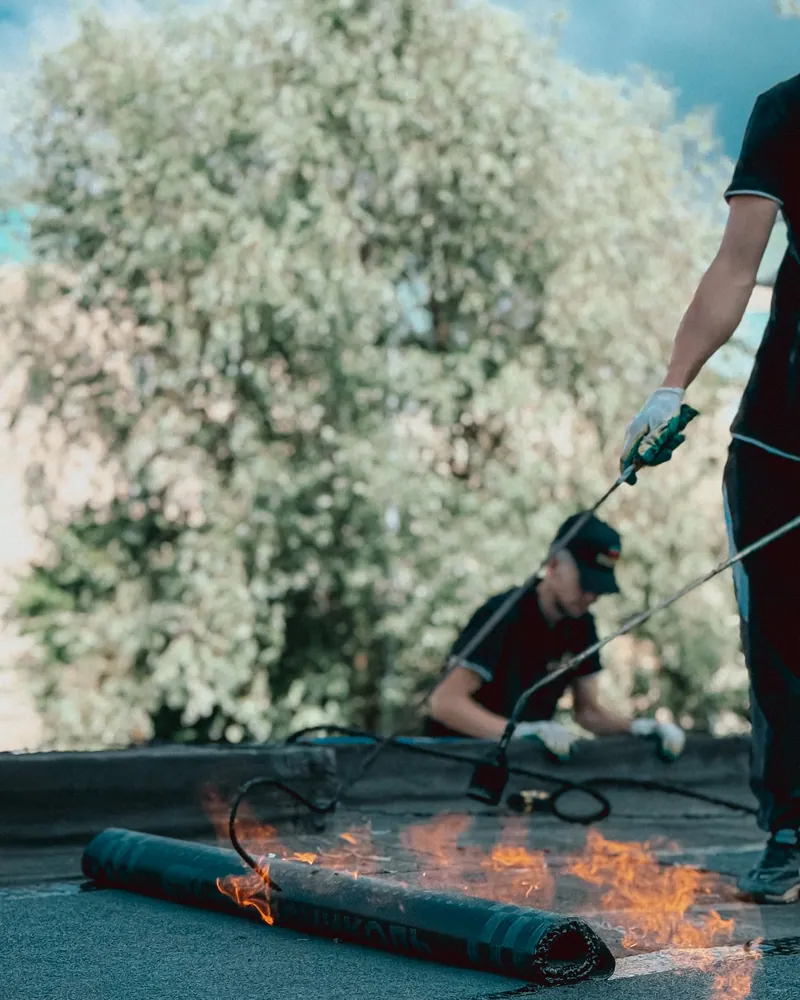
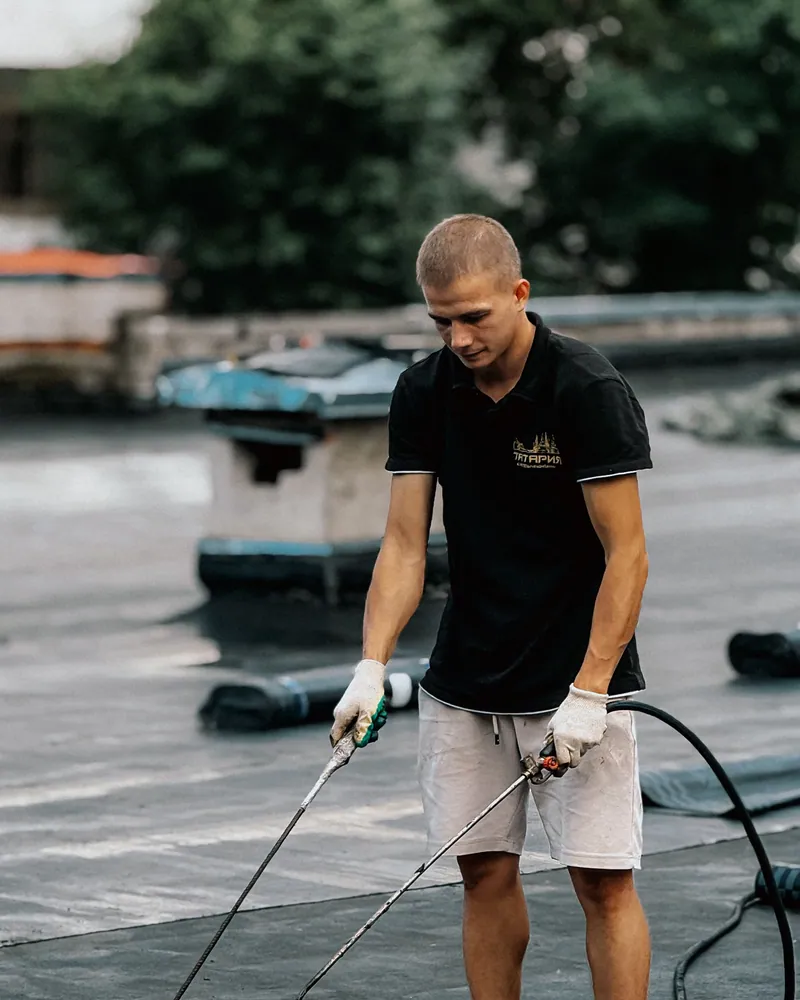
How proper roof waterproofing is carried out
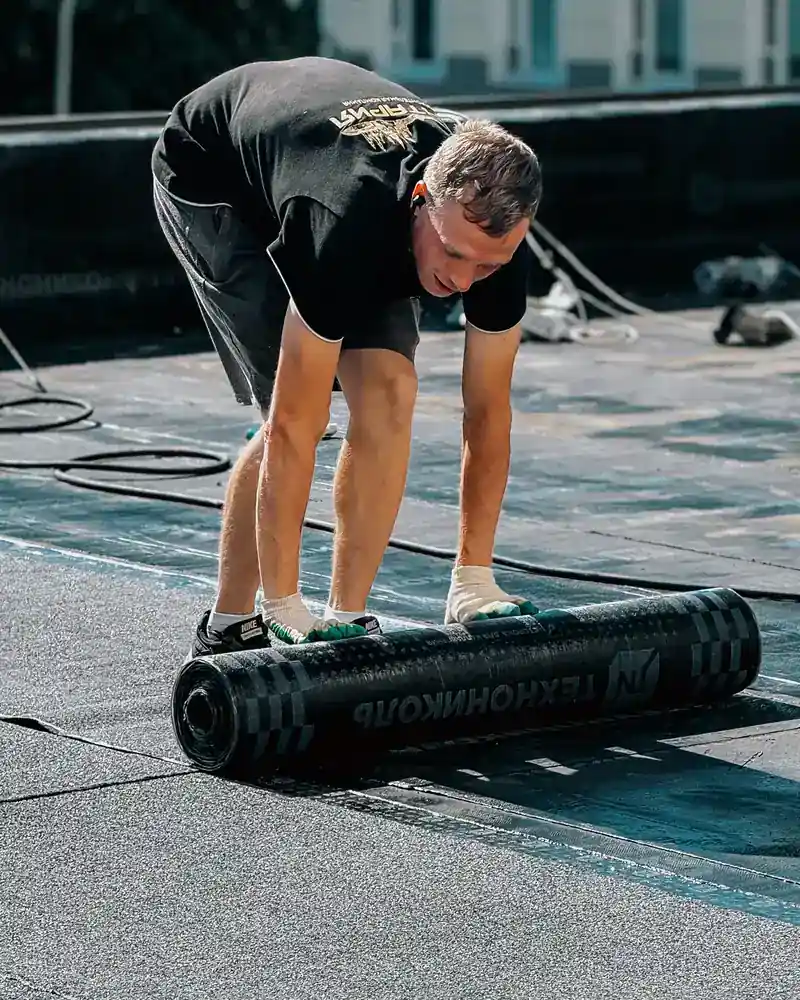
Work begins with a thorough inspection of the existing surface: locating cracks, measuring falls toward drainage outlets, and checking whether the concrete substrate is sound or whether an earlier waterproofing layer has de-bonded. Cracks are filled, hollow sections removed and the deck cleaned of all dust and loose material before anything is applied, because a waterproofing system applied over a compromised substrate will fail at those same weak points.
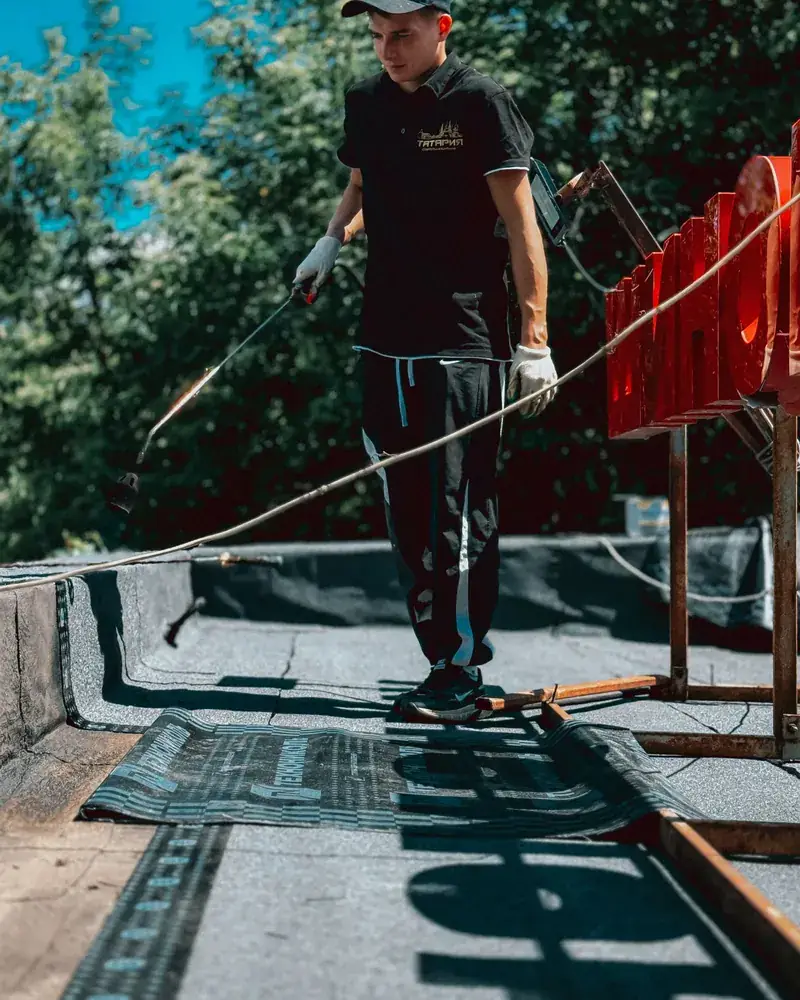
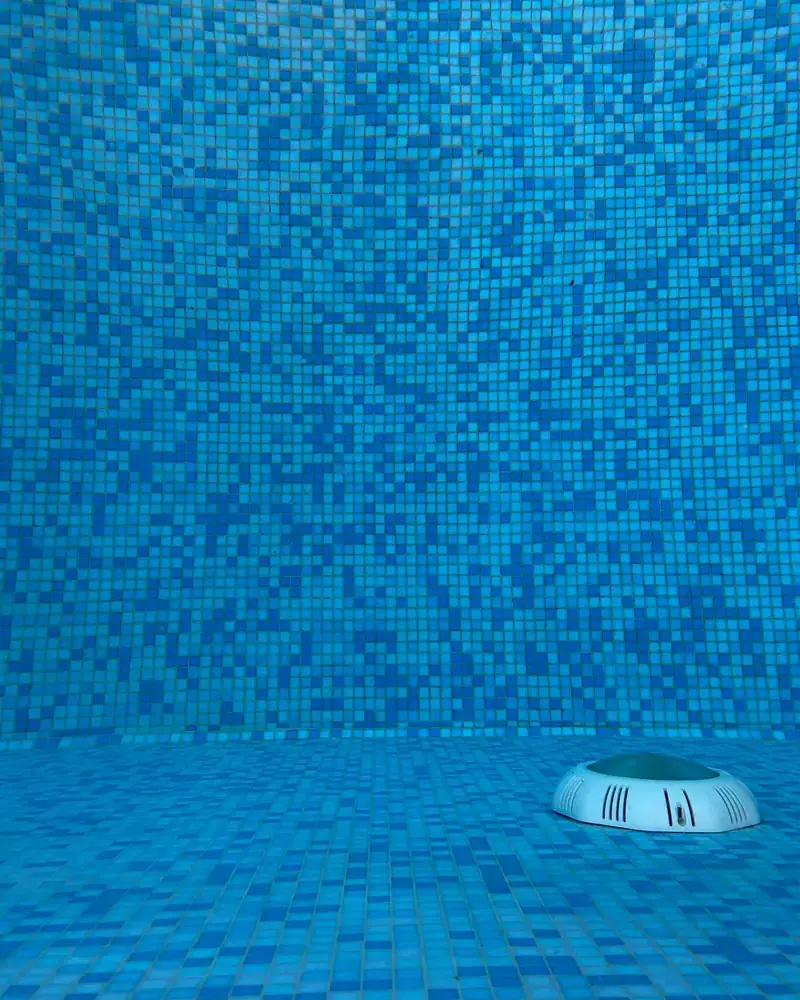
The choice of system depends on how the roof will be used after waterproofing. An exposed untrafficked roof suits a torch-applied bituminous membrane or sprayed foam that bridges irregular falls. A surface that will be tiled needs a flexible liquid membrane or sheet laid directly beneath the tiles so movement does not crack the bond. Pool shells require a system rated for two-way hydrostatic pressure, which differs from a standard roof membrane in composition and application thickness.
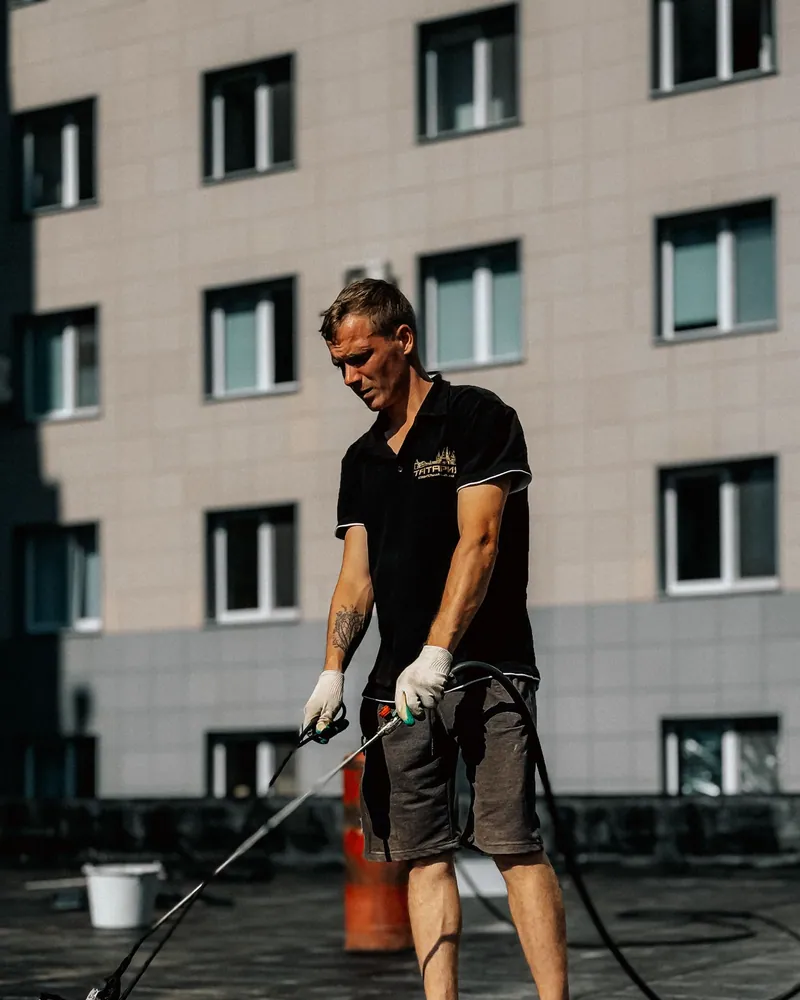
Once the system is applied, a flood test confirms there are no weak points before the surface is closed with tiles or a protective finish coat. Edges, internal corners, parapet bases and the zones immediately around drain collars all receive a reinforcing strip or extra pass because those junctions bear the greatest stress from Kuwait's extreme temperature swings, which cause concrete and membrane to expand and contract repeatedly across every seasonal cycle.
What goes wrong with most finishing.
The finish is what you see every day, and its mistakes do not hide. These three are the most common.
 01
01A rushed finish
The finish is what you live with every day. Rushing it shows in every corner.
 02
02Four contractors for one finish
Tiling, gypsum, paint and aluminium crews who never talk to each other.
 03
03After-care that never comes
Once you have the keys, it is hard to find anyone to come back and fix what shows up.
The solution?
Full finishing, and maintenance after it, from one licensed company.
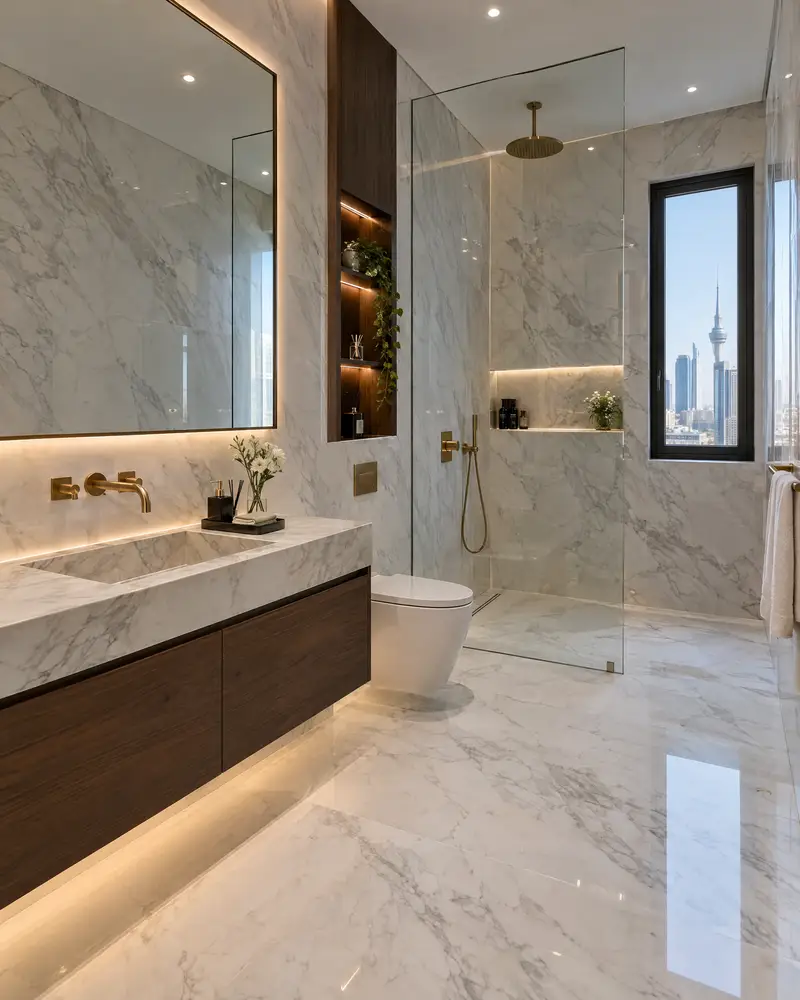
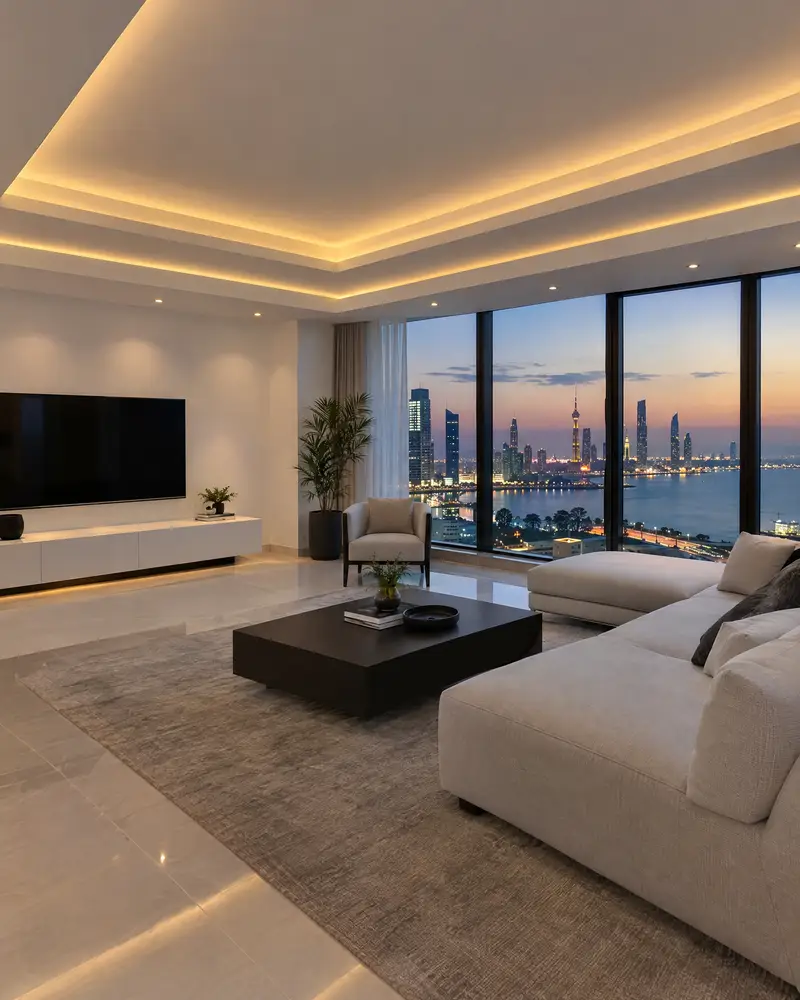
A rushed finishTurnkey finishing
Marble, tiling, gypsum and paint from one company.
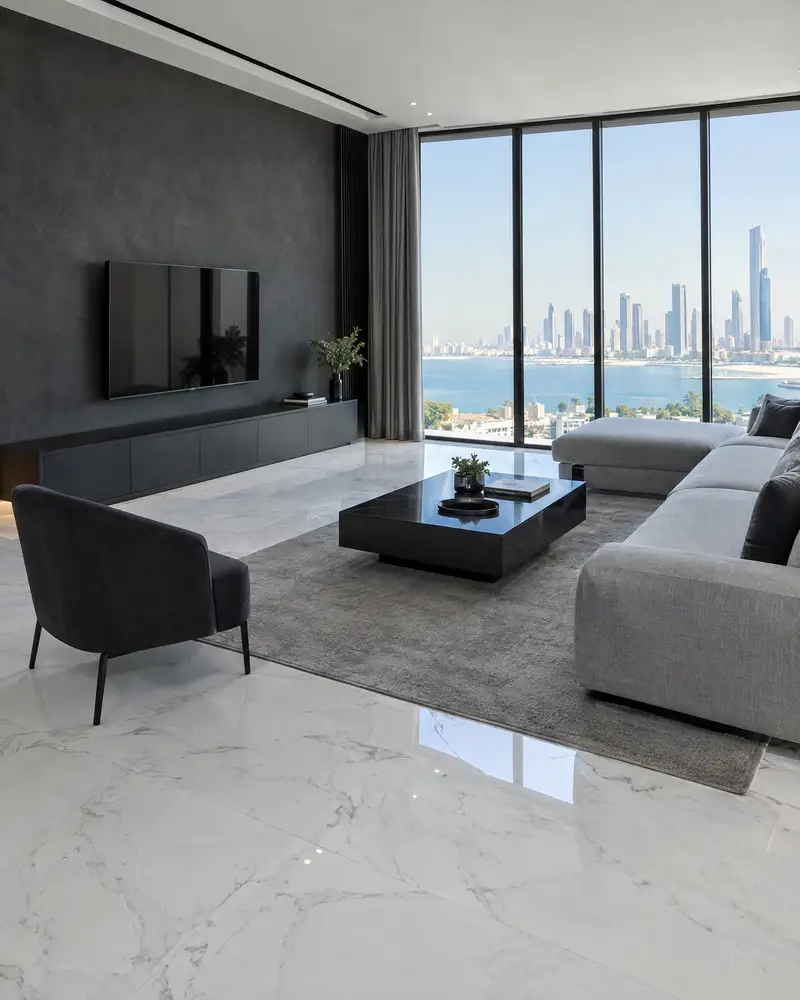
Four contractors for one finishOne company for every trade
No gaps between the tiler, the gypsum crew and the painter.
After-care that never comesRegular maintenance after handover
And finishing on instalments if you need it.
How it works.
First contact
Call or WhatsApp us to describe the issue and fix a visit
Site inspection
We visit, measure the area and assess the existing surface condition
Quotation
We provide a detailed quote covering system type, materials and total cost
Waterproofing works
Surface prep, system application and reinforcing critical edge details
Test and handover
Flood test confirms no leaks before formal handover to the client
What sets the price.
Several factors specific to your roof determine what the job will cost
Get a quoteRoof area
Total surface area to be waterproofed is the primary cost driver
Waterproofing system type
Membrane, foam and liquid coating differ in material cost and application method
Existing surface condition
Removing old membrane or repairing deep cracks adds cost before new work begins
Detail complexity
Multiple drains, parapets and penetrations increase labour time and material needed
Access to the roof
High roofs requiring scaffolding or special access raise the overall job cost
Why one contractor beats four.
Every extra contractor means another schedule and another excuse. With us, one company answers for all of it.
Turnkey
Shell and finishing with one company, from footings to keys.
Pay in instalments
Construction and finishing on instalments. Ask us for the details.
Engineering supervision
Architectural drawings and engineering supervision on site.
After handover
Maintenance contracts and a 24-hour emergency plumber.
A licensed Kuwaiti company for building construction, finishing, renovation and infrastructure works.
What our clients say.
See all reviews on GoogleExcellent
Taha Saad
Google review
Excellent
Ali Nadi
Google review
Roof waterproofing in Kuwait. We work across all six governorates of Kuwait: Capital, Hawalli, Farwaniya, Mubarak Al-Kabeer, Ahmadi, Jahra.
Official references: Kuwait Fire Force (safety requirements in finishing work)
Questions, answered.
Call nowCan the roof be waterproofed without removing the existing tiles?
If the old tiles are firmly bonded with no hollow sections, a liquid waterproofing layer can be applied directly over them. Where tiles are cracked or de-bonded, removal is recommended so the new system bonds properly to a sound substrate.
How can I tell whether the membrane was applied at the right thickness?
Liquid coating thickness is checked with a wet-film gauge during application and a dry-film gauge after curing. For sheet membranes, weight per square metre is confirmed against the product specification. Asking for a material conformity certificate is a practical check for any building owner.
Does roof waterproofing also reduce heat inside the top floor?
A waterproofing layer on its own provides limited heat resistance. A combined system that pairs the moisture barrier with a rigid thermal insulation board or spray foam is what meaningfully reduces heat transfer into the top floor and lowers the load on air conditioning.
What is the practical difference between a bituminous membrane and sprayed polyurethane foam?
A bituminous membrane comes as sheets that are torch-bonded and easy to inspect for gaps. Sprayed polyurethane foam is applied as a liquid that expands to fill irregular surfaces and delivers thermal insulation in the same pass, but it needs a UV-protective topcoat to hold up under Kuwait's intense sun.
Is pool waterproofing different from standard roof waterproofing?
Pool shells face continuous two-way hydrostatic pressure and exposure to pool chemicals that attack standard waterproofing materials. Systems used in pools are specifically rated for that pressure and chemical resistance and cannot be substituted with the membrane or coating products used on external roofs.
How long should waterproofing cure before tiles are laid on top?
Cure time varies by product type, temperature and humidity. The key check is confirming full film build and completing a flood test before any tile work begins, because once tiles are laid over the membrane any leak point becomes very difficult to locate and repair.
Licensed and registered in Kuwait.
Check us before you sign. This is our licence number and what it covers.
Find us on Google Maps