
What the service covers
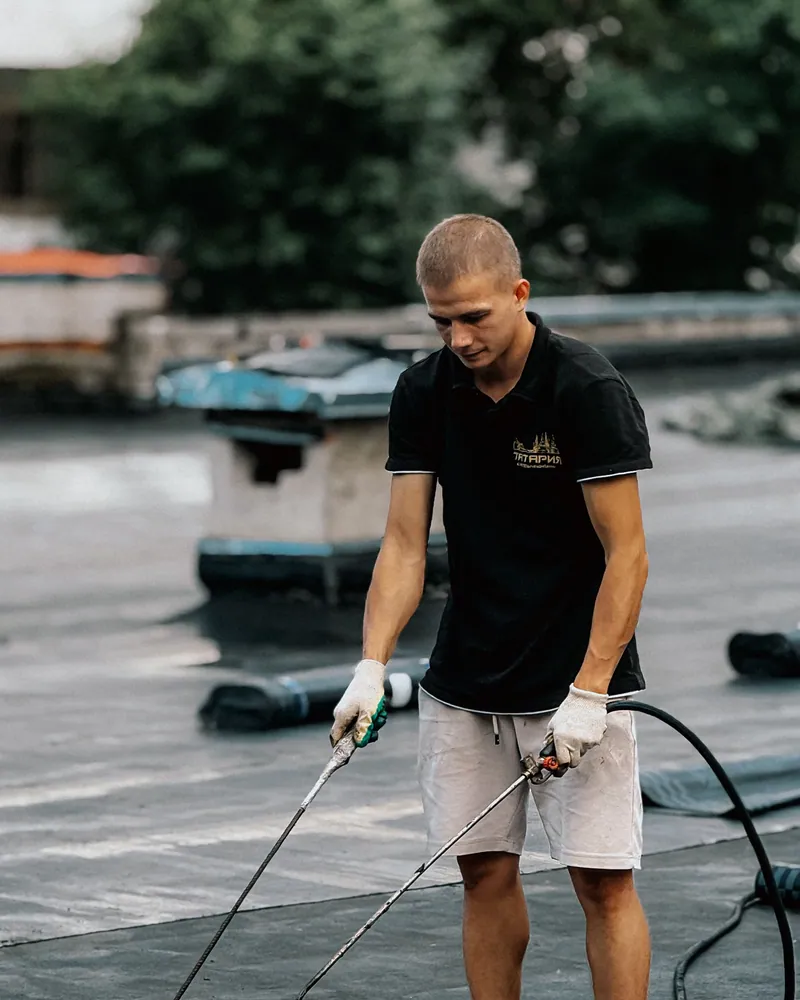
Inspection, surface prep and clear waterproofing applied to concrete, stone and tile substrates.
Surface survey
Locate cracked, porous or salt-affected zones before any product is applied.
Cleaning and degreasing
Remove oils, dust and salt deposits so the sealant penetrates fully into pores.
Hairline crack filling
Fill fine cracks with a flexible clear filler before the main waterproofing coat.

Clear sealant application
Apply one or two coats of clear waterproofer by brush or sprayer.

Joints and drain zones
Treat expansion joints and drain-collar edges with a flexible clear compound.
Final check and handover
Water-test treated areas and confirm even coverage before handing over the surface.
Materials and methods used
Penetrating silane-siloxane sealant
Soaks into concrete and stone pores, forming an invisible water-repellent barrier without a surface film.
Clear acrylic resin coat
Forms a thin flexible clear film that resists Kuwait's intense UV radiation without yellowing.
Clear polyurethane elastomeric coat
Preferred where thermal movement is high; bridges hairline cracks and stays flexible under heat cycling.
Clear epoxy crack injection
Injected under pressure into narrow structural cracks to bond them without marking the surface.
Before you call us
Identify the target substrate
Is it concrete, natural stone or ceramic tile? The substrate type determines which sealant suits it.
Document the leak signs
Photograph damp patches, cracks and any areas showing efflorescence or salt staining.
Check the surface finish history
Any prior paint or coating may block penetration and must be removed before treatment.
Estimate the affected area
A rough square-metre estimate helps gauge how much product and how many coats are needed.
More in roof waterproofing.
What goes wrong with most finishing.
The finish is what you see every day, and its mistakes do not hide. These three are the most common.
 01
01A rushed finish
The finish is what you live with every day. Rushing it shows in every corner.
 02
02Four contractors for one finish
Tiling, gypsum, paint and aluminium crews who never talk to each other.
 03
03After-care that never comes
Once you have the keys, it is hard to find anyone to come back and fix what shows up.
The solution?
Full finishing, and maintenance after it, from one licensed company.
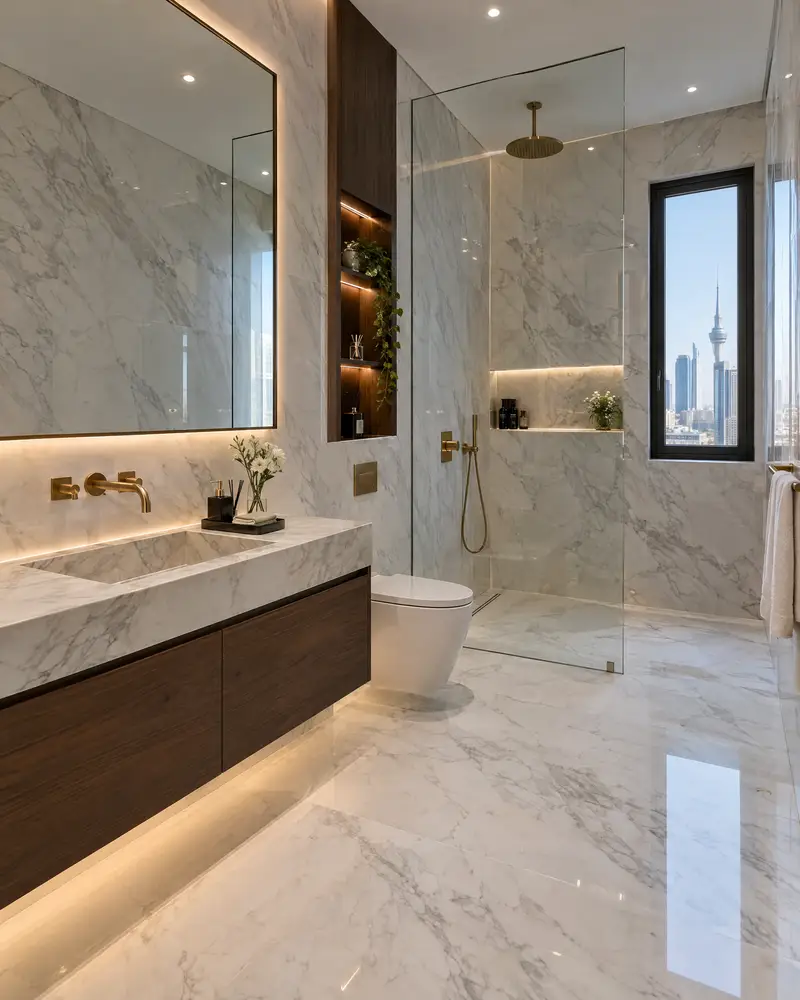
A rushed finishTurnkey finishing
Marble, tiling, gypsum and paint from one company.
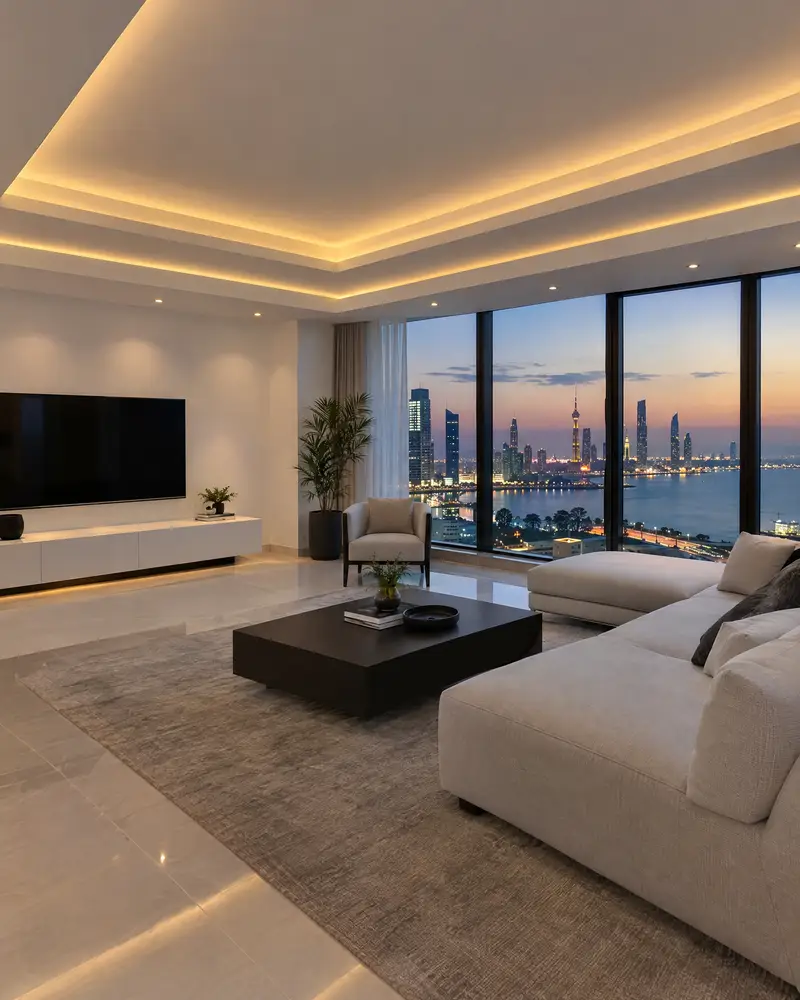
Four contractors for one finishOne company for every trade
No gaps between the tiler, the gypsum crew and the painter.
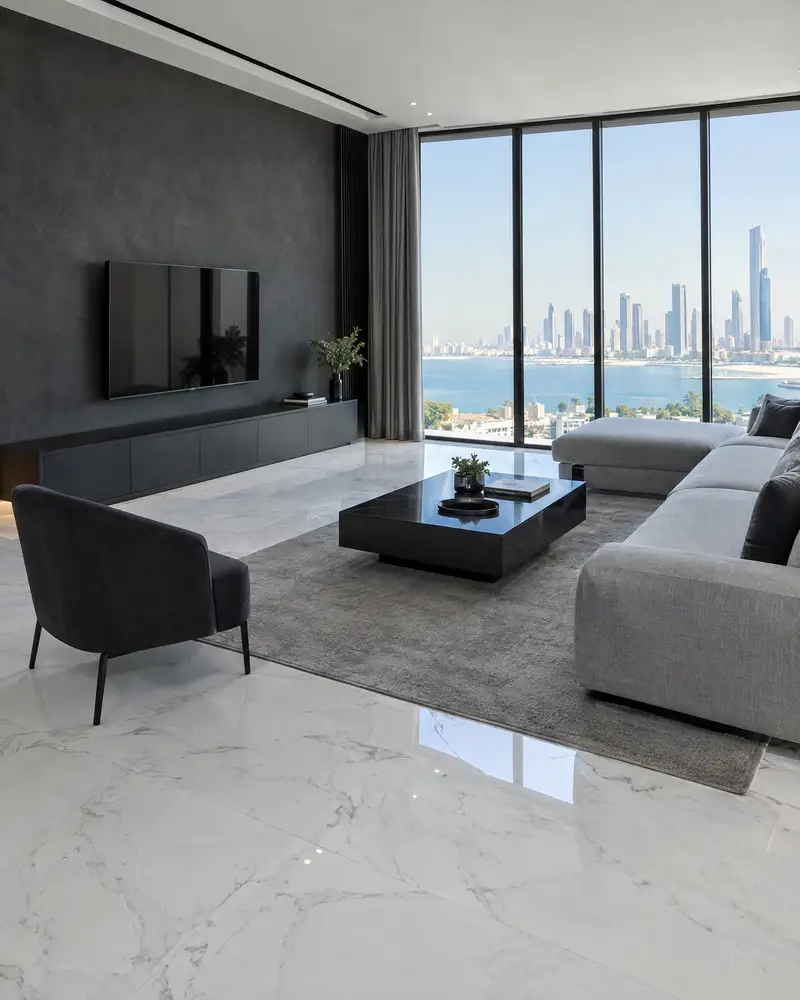
After-care that never comesRegular maintenance after handover
And finishing on instalments if you need it.
How it works.
First contact
Call or WhatsApp us describing the surface type and leak signs.
Site inspection
We visit to assess the substrate and choose the correct sealant system.
Quotation
We send a detailed quote covering materials, coats and surface area.
Prep and application
Clean, fill cracks, then apply the clear sealant in the specified coats.
Test and handover
Water-test treated zones then hand over with care instructions.
What sets the price.
No fixed rate applies; these factors shape the final quote for each project.
Get a quoteSubstrate type and area
Porous concrete absorbs more product than dense stone or glazed tile.
Existing surface condition
Cracks, spalling and salt deposits require extra prep work before sealing.
Number of sealant coats
Exposed or highly porous surfaces may need two or more coats for full protection.
Joint and edge complexity
Many expansion joints, drain edges or window reveals add time and material.
Site access difficulty
High roofs or facades needing scaffolding raise the overall execution cost.
Why one contractor beats four.
Every extra contractor means another schedule and another excuse. With us, one company answers for all of it.
Turnkey
Shell and finishing with one company, from footings to keys.
Pay in instalments
Construction and finishing on instalments. Ask us for the details.
Engineering supervision
Architectural drawings and engineering supervision on site.
After handover
Maintenance contracts and a 24-hour emergency plumber.
A licensed Kuwaiti company for building construction, finishing, renovation and infrastructure works.
What our clients say.
See all reviews on GoogleExcellent
Taha Saad
Google review
Excellent
Ali Nadi
Google review
Clear waterproofing in Kuwait. We work across all six governorates of Kuwait: Capital, Hawalli, Farwaniya, Mubarak Al-Kabeer, Ahmadi, Jahra.
Official references: Kuwait Fire Force (safety requirements in finishing work)
Questions, answered.
Call nowDoes clear waterproofing change the colour of natural stone or concrete?
Penetrating silane-siloxane sealants typically leave no colour change, while some clear resin coats add a slight sheen. We confirm the expected appearance after inspecting the surface and agreeing on the finish you want.
Can clear waterproofing be applied over already-laid tiles?
Yes, glazed ceramic or stone tile surfaces can be treated with a suitable clear sealant that penetrates grout joints and surface pores. The grout lines must be clean and free of deep cracks first.
How do I know when the clear sealant has started to fail?
The clearest sign is that water no longer beads and rolls off but wets and darkens the surface instead. White efflorescence or damp staining reappearing on concrete or stone confirms the sealant layer has broken down.
Is clear waterproofing suitable for exterior facades exposed to direct sun?
Yes, but the product must be UV-stable, as non-stabilised formulations yellow or peel under Kuwait's direct sun. Silane-siloxane or UV-stable polyurethane types are the right choice for exposed facades.
Does the old clear sealant need to be removed before reapplication?
If the old coat is still bonded and unpeeled, reapplication over it may be possible after thorough cleaning. If it is cracking or flaking, removal is essential so the new sealant can penetrate and bond properly.
Licensed and registered in Kuwait.
Check us before you sign. This is our licence number and what it covers.
Find us on Google Maps