
What the work covers
Surface preparation through final reflective coat on roofs, parapets and exterior walls.

Surface inspection
Assess slab or tile condition before any coating is applied.
Cleaning and priming
Remove dust, grease and loose material, then apply the correct primer.

Roof reflective coat
Multi-layer reflective coating over the full horizontal roof deck.

Facade treatment
Reflective coat on sun-exposed exterior walls and parapets.
Joints and edge sealing
Seal roof perimeter joints and penetration collars before coating.
Final inspection
Check for uniform coverage with no bubbles, pinholes or missed spots.
Materials and methods used
Acrylic reflective coating
Reflects UV and solar heat; stays flexible enough to resist surface cracking in Kuwait's thermal cycles.
Penetrating primer
Penetrates concrete or tile to bond the reflective coat and close surface pores before application.
Crack and joint filler
Flexible sealant fills hairline cracks before coating, preventing moisture from migrating under the reflective layer.
Roller or airless spray
Roller gives controlled thickness on tight areas; airless spray covers large flat decks quickly and evenly.
Common mistakes with reflective coating
Coating over a dirty surface
Dust and grease prevent bonding; the reflective layer peels within the first summer.
Over-thinning the coating
Adding excess water to save material drops the reflectance index and eliminates the thermal benefit.
Skipping the primer coat
Direct application without primer fails in porous concrete, causing bubbles after heat exposure.
Single coat only
One coat does not reach the thickness needed for effective solar reflectance in Kuwait's heat levels.
More in thermal insulation.
What goes wrong with most finishing.
The finish is what you see every day, and its mistakes do not hide. These three are the most common.
 01
01A rushed finish
The finish is what you live with every day. Rushing it shows in every corner.
 02
02Four contractors for one finish
Tiling, gypsum, paint and aluminium crews who never talk to each other.
 03
03After-care that never comes
Once you have the keys, it is hard to find anyone to come back and fix what shows up.
The solution?
Full finishing, and maintenance after it, from one licensed company.
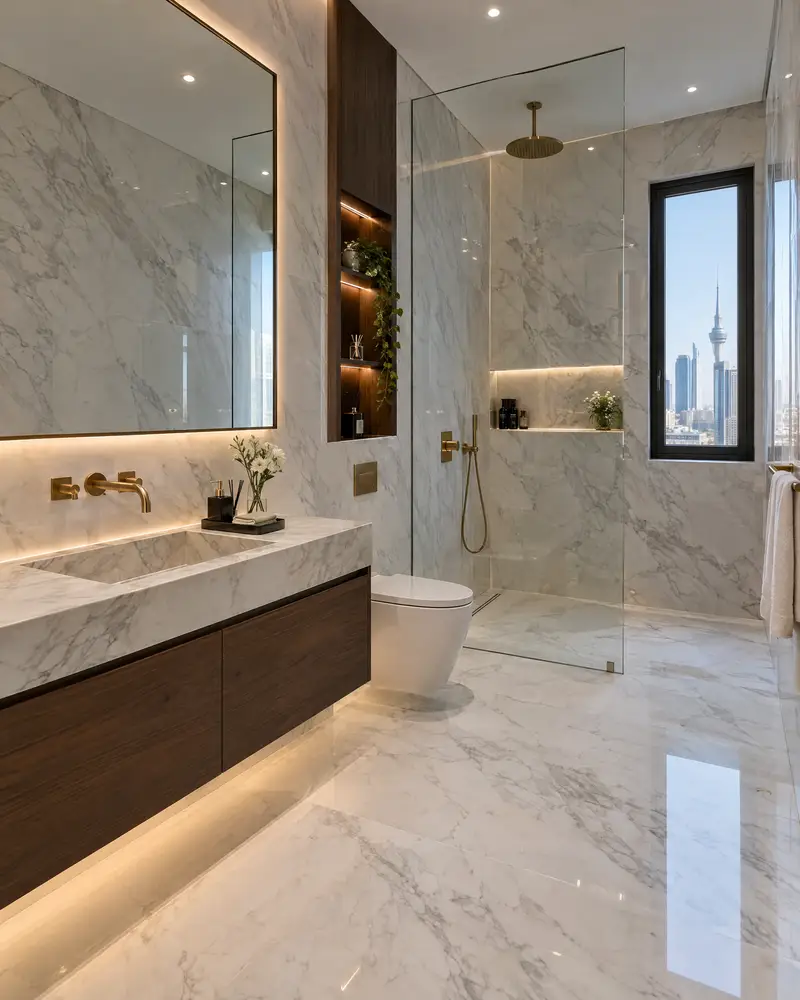
A rushed finishTurnkey finishing
Marble, tiling, gypsum and paint from one company.
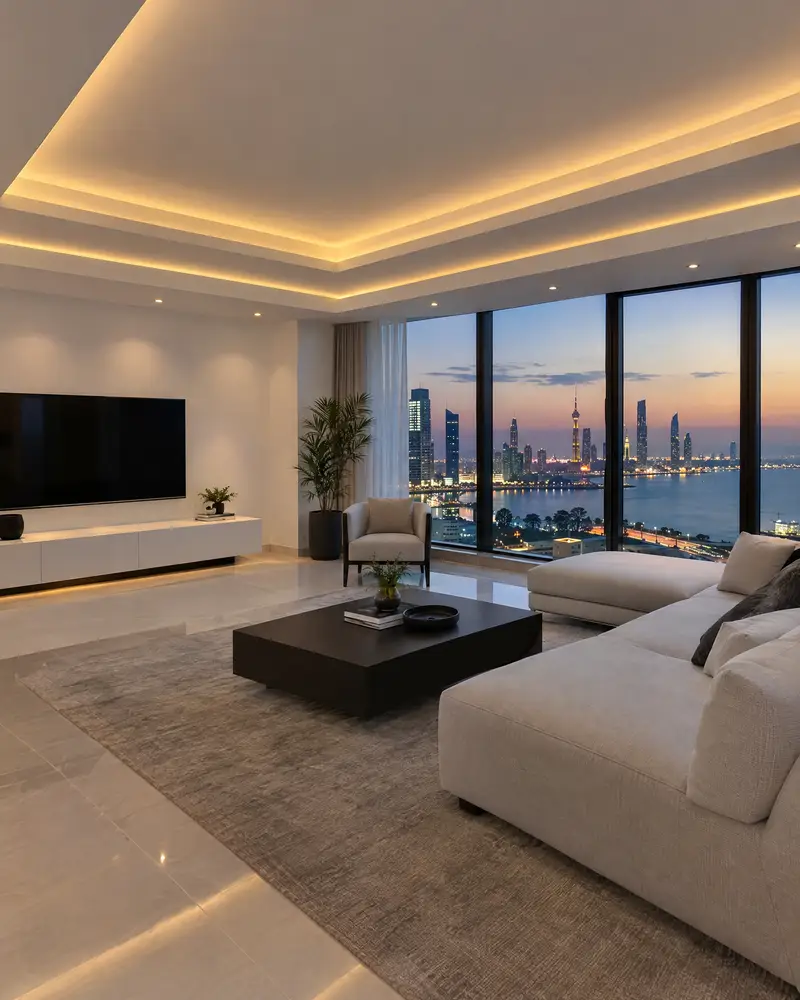
Four contractors for one finishOne company for every trade
No gaps between the tiler, the gypsum crew and the painter.
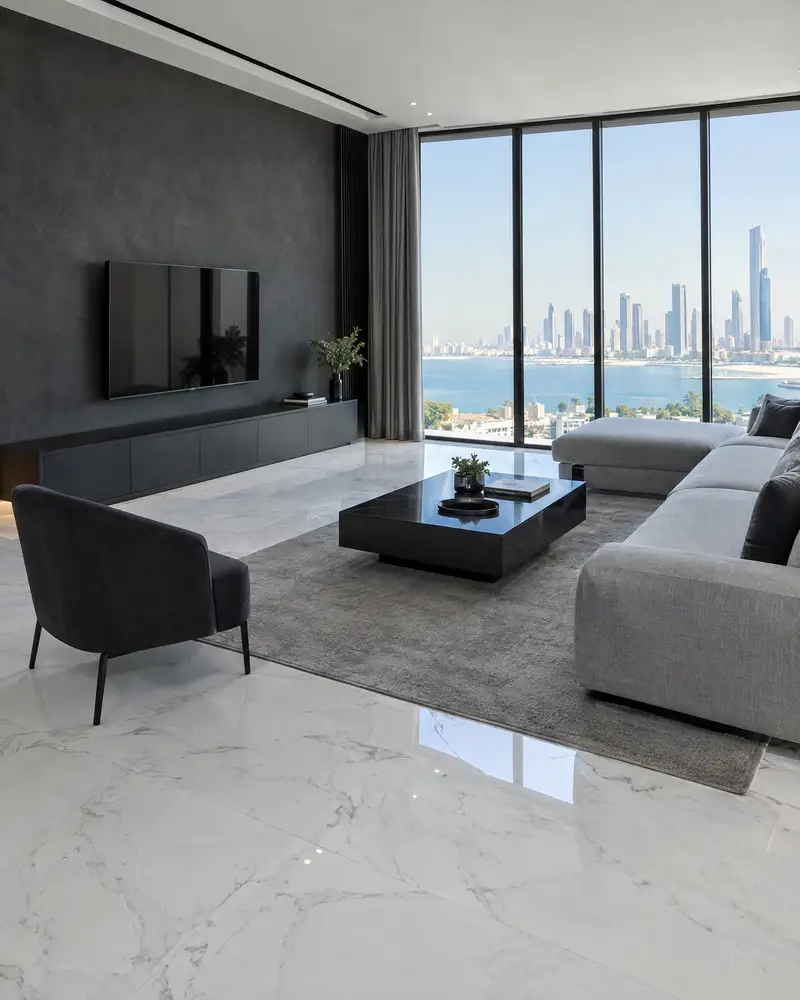
After-care that never comesRegular maintenance after handover
And finishing on instalments if you need it.
How it works.
Get in touch
Call or WhatsApp us to describe the surface and arrange a visit.
Site inspection
We assess surface condition, cracks, access needs and coating requirements.
Quotation
We submit a detailed quote covering materials, coats and total area.
Preparation and application
Clean, prime, then apply reflective coats to the specified thickness.
Handover check
We verify full coverage and no defects before signing off.
What sets the price.
No fixed price list applies; the quote depends on five main factors specific to each job.
Get a quoteTotal surface area
Roof deck and facade area to be coated drives material and labour quantities.
Existing surface condition
Cracked or flaking surfaces require more preparation work before coating.
Number of coats required
Absorbent or porous substrates call for extra coats to achieve target thickness.
Access difficulty
High rooftops or facades requiring scaffolding raise the execution cost.
Prior joint repairs
Wide cracks or failed joints need repair work before the reflective coat is applied.
Why one contractor beats four.
Every extra contractor means another schedule and another excuse. With us, one company answers for all of it.
Turnkey
Shell and finishing with one company, from footings to keys.
Pay in instalments
Construction and finishing on instalments. Ask us for the details.
Engineering supervision
Architectural drawings and engineering supervision on site.
After handover
Maintenance contracts and a 24-hour emergency plumber.
A licensed Kuwaiti company for building construction, finishing, renovation and infrastructure works.
What our clients say.
See all reviews on GoogleExcellent
Taha Saad
Google review
Excellent
Ali Nadi
Google review
Heat-reflective coating in Kuwait. We work across all six governorates of Kuwait: Capital, Hawalli, Farwaniya, Mubarak Al-Kabeer, Ahmadi, Jahra.
Official references: Kuwait Fire Force (safety requirements in finishing work)
Questions, answered.
Call nowCan reflective coating be applied over existing roof tiles without removing them?
Yes, if the tiles are firmly bonded and can be cleaned properly, primer and reflective coating go directly on top. Loose or cracked tiles are repaired or removed first.
How many coats of reflective coating are enough for a Kuwaiti roof?
Typically one primer coat and at least two reflective coats. Rough or absorbent surfaces may need a third coat to reach an effective dry film thickness.
Does reflective coating replace waterproofing under the tiles?
No. Reflective coating reduces solar heat absorption; it is not a waterproofing membrane. A roof that needs water protection requires a separate waterproofing treatment first.
Does reflective coating hold up to regular foot traffic on the roof?
Standard reflective coating tolerates occasional light foot traffic. Roofs with frequent pedestrian use need a heavy-duty formulation designed for traffic-bearing surfaces.
Do only light colours reflect heat effectively?
Light colours give the highest reflectance, but advanced formulations in darker shades use infrared-reflective pigments that still perform well while offering a different visual result.
Licensed and registered in Kuwait.
Check us before you sign. This is our licence number and what it covers.
Find us on Google Maps