

What the service covers
Sound insulation applied to every building element that lets noise through

Door soundproofing
Sealing door perimeters with acoustic gaskets and drop seals

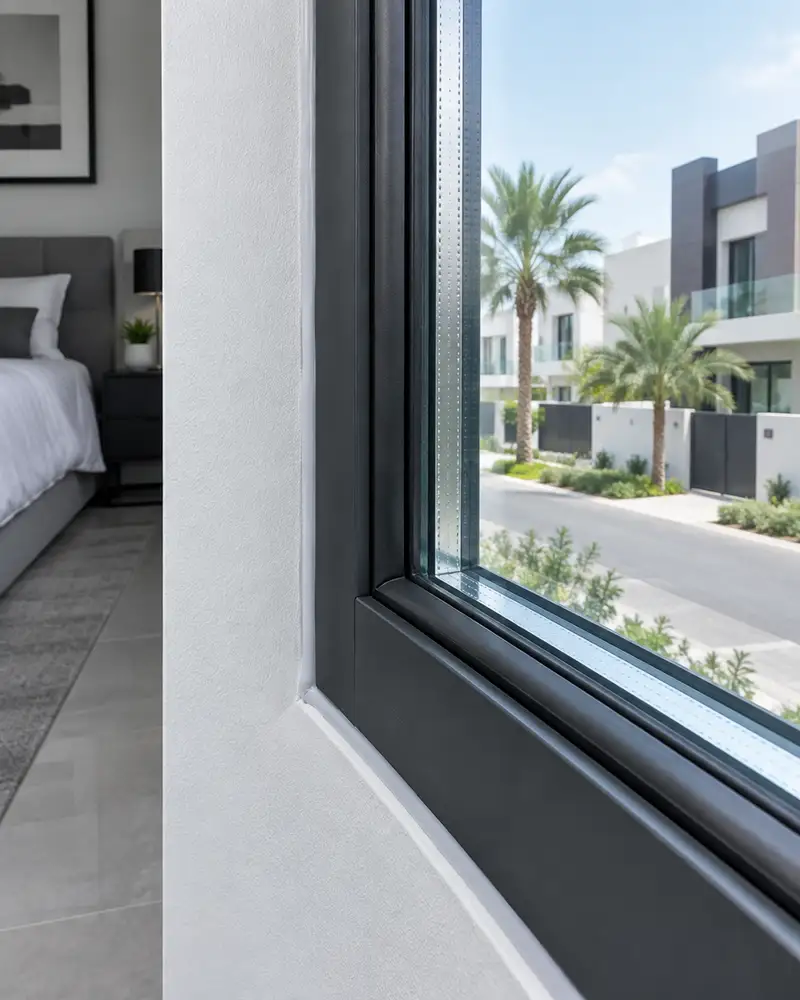
Window soundproofing
Frames with acoustic seals and double-glazed units blocking outdoor noise

Room soundproofing
Full treatment of walls, ceiling and floor within a single room

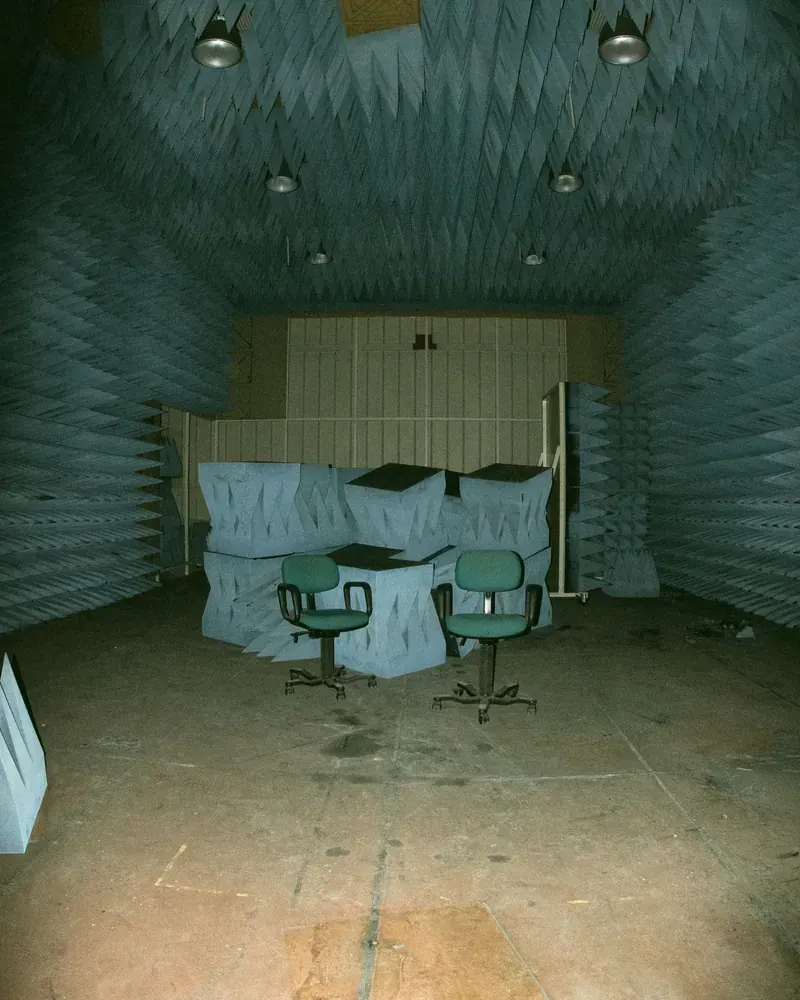
Studio soundproofing
Room-within-room build achieving maximum isolation for recording or practice

Wall soundproofing
Adding mass or mechanical decoupling to reduce vibration transfer through walls

Ceiling and floor-to-floor insulation
Airborne and impact noise solutions between floors and inside suspended ceilings
Materials and methods used
High-density gypsum board
Greater mass intercepts sound waves far more effectively than standard board
Resilient channel framing
Decouples the lining from the structure to stop vibration travelling through the frame
Acoustic mineral wool
Fills cavities and absorbs sound energy before it crosses to the other face
Acoustic door seals and drop seals
Close the gap under and around the door frame, the primary path for sound leakage
Common mistakes that ruin the result
Leaving weak paths open
Treating the wall but leaving the door or electrical box unsealed cancels all the work
Rigid fixing to the structure
Screwing studs directly to the wall transfers vibration straight through the assembly
Choosing lightweight board
Thin standard board lacks the mass needed to block low-frequency sound effectively
Gaps in the infill layer
Empty voids in the mineral wool create channels where sound travels freely through
Inside sound insulation.




How sound insulation is done right in Kuwait
Effective sound insulation rests on three principles working together: mass to intercept waves, decoupling to stop vibration travelling through the structure, and absorption to dissipate energy inside the cavity. Relying on only one of these weakens the result. In Kuwaiti buildings where ducted central AC runs inside suspended ceilings, the insulation design must be coordinated with the duct layout to avoid creating new sound paths through the ceiling void.
Before any lining is fitted, the noise type is identified: is it airborne such as voices and TV, or impact such as footsteps from the floor above? Each type needs a different solution. Impact noise requires mechanical decoupling and a resilient mat under the floor finish, while airborne noise needs mass and absorption. In older villas and apartments it is usually possible to add insulation layers without demolishing the original walls, keeping disruption low.
The details determine whether the work succeeds. Every electrical socket, pipe penetration and vent opening in the treated wall is a potential sound path that must be sealed with suitable material. Doors and windows need perimeter gaskets and drop seals, otherwise the effort spent on the walls is wasted. Once complete, the quality is checked by listening in adjacent spaces to confirm the insulation is working across the full sound range, not only the high frequencies.
What goes wrong with most finishing.
The finish is what you see every day, and its mistakes do not hide. These three are the most common.
 01
01A rushed finish
The finish is what you live with every day. Rushing it shows in every corner.
 02
02Four contractors for one finish
Tiling, gypsum, paint and aluminium crews who never talk to each other.
 03
03After-care that never comes
Once you have the keys, it is hard to find anyone to come back and fix what shows up.
The solution?
Full finishing, and maintenance after it, from one licensed company.

A rushed finishTurnkey finishing
Marble, tiling, gypsum and paint from one company.

Four contractors for one finishOne company for every trade
No gaps between the tiler, the gypsum crew and the painter.

After-care that never comesRegular maintenance after handover
And finishing on instalments if you need it.
How it works.
First contact
Call or WhatsApp us to describe the noise problem you are facing
Site assessment
Visit to identify noise source and measure all spaces to be treated
Quotation
Detailed proposal listing materials and layers for each element
Installation
Fitting layers in correct order and sealing all penetrations and openings
Check and handover
Listening check in adjacent spaces before final handover
What sets the price.
Each quote is shaped by factors assessed at the site visit, with no fixed rate list
Get a quoteTotal surface area
Area of walls, ceilings and floors requiring treatment drives material quantity
Required isolation level
A studio demands deeper multi-layer treatment than a standard bedroom
Noise type
Impact noise requires different materials and methods from airborne noise
Doors and openings condition
Replacing doors or adding acoustic seals affects cost significantly
Demolition required
Stripping existing finishes before fitting insulation layers adds to labour time
Why one contractor beats four.
Every extra contractor means another schedule and another excuse. With us, one company answers for all of it.
Turnkey
Shell and finishing with one company, from footings to keys.
Pay in instalments
Construction and finishing on instalments. Ask us for the details.
Engineering supervision
Architectural drawings and engineering supervision on site.
After handover
Maintenance contracts and a 24-hour emergency plumber.
A licensed Kuwaiti company for building construction, finishing, renovation and infrastructure works.
What our clients say.
See all reviews on GoogleExcellent
Taha Saad
Google review
Excellent
Ali Nadi
Google review
Sound insulation in Kuwait. We work across all six governorates of Kuwait: Capital, Hawalli, Farwaniya, Mubarak Al-Kabeer, Ahmadi, Jahra.
Official references: Kuwait Fire Force (safety requirements in finishing work)
Questions, answered.
Call nowCan a single room be soundproofed without affecting the rest of the house?
Yes, a single room can be treated by adding layers inside its walls, ceiling and floor and fitting acoustic seals to its door. The result depends on how carefully every sound entry point is addressed, since even a small gap under a door can undo the wall treatment.
Is sound insulation the same as thermal insulation?
No, they are different. Thermal insulation resists heat transfer while sound insulation resists acoustic wave transmission. Some materials like mineral wool contribute to both, but the specification, thickness and installation method for each purpose differ and should not be confused.
Can footstep noise from the floor above be reduced without accessing the flat above?
It can be reduced from below by adding a suspended ceiling with resilient channels and mineral wool infill. However, treating the floor above with an impact-absorbing mat gives better results. Both approaches together achieve the greatest reduction in footstep noise.
What is the difference between soundproofing a regular room and a recording studio?
A studio typically requires a room-within-room build where an inner shell is structurally decoupled from the outer walls, floor and ceiling. This isolates low-frequency bass, which standard gypsum and wool layers alone cannot block effectively enough for recording use.
Are double-glazed windows enough to block street noise?
Double-glazed windows reduce street noise noticeably, but their effectiveness depends on the frame quality and perimeter seal. A double-glazed unit in a poorly sealed frame loses most of its acoustic benefit, so the seal and gasket are just as important as the glass specification.
How can I tell whether the sound insulation work was done correctly?
The simplest check is a listening test after completion. You can also verify that every pipe penetration, socket box and vent in the treated wall has been sealed, and that the door closes firmly with no visible light gap around the frame, since light and air gaps are also sound gaps.

Licensed and registered in Kuwait.
Check us before you sign. This is our licence number and what it covers.
Find us on Google Maps