
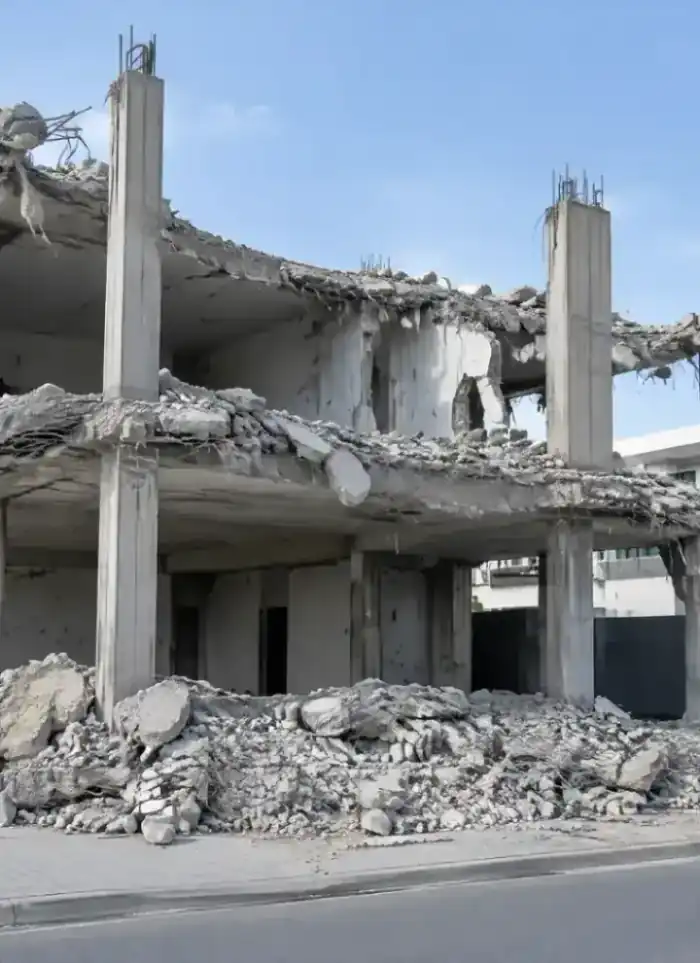
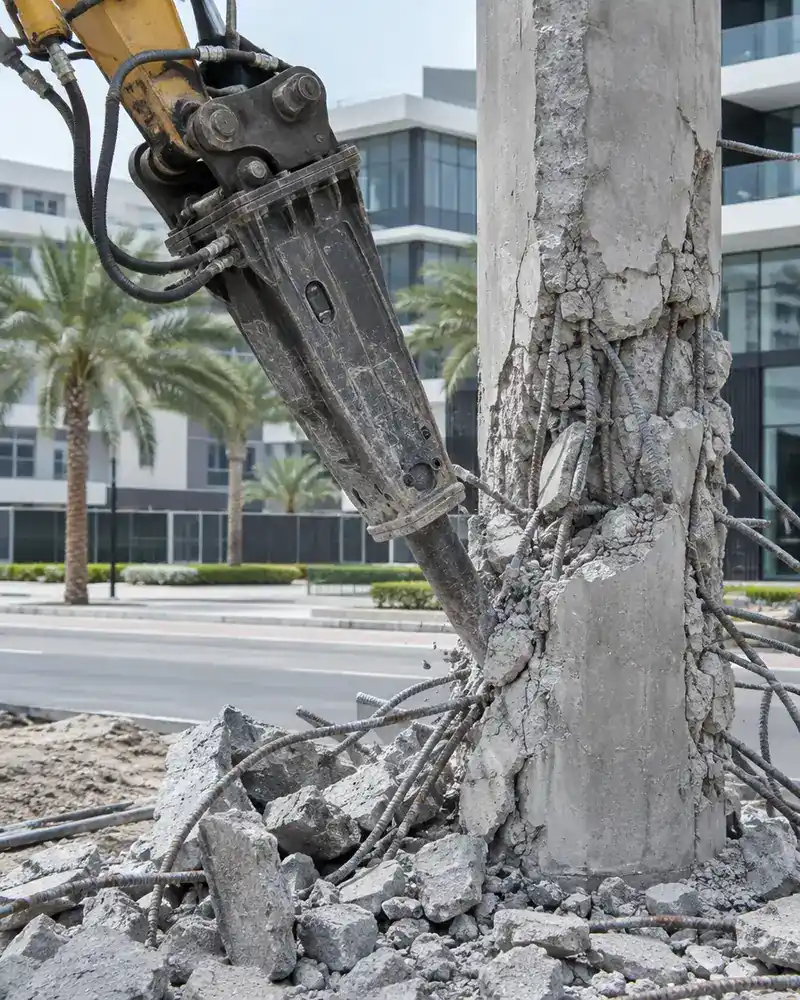
What we demolish
Every structure type, from single villas to multi-storey buildings, cleared to the slab.
Building demolition
Full structural takedown of commercial or mixed-use buildings, rubble removed.
Apartment building demolition
Multi-storey residential frame broken down floor by floor, site cleared.

Old house demolition
Villa or older house torn down including interior slabs and columns.
Partial demolition
Removing a specific wing, floor or wall while the rest stands.

Underground tank removal
Breaking out and removing old septic tanks, water tanks and pits.
Rubble clearance and leveling
Sorting, loading and disposing of concrete debris, then grading the plot.
Mistakes that delay or cost more
Starting without a permit
A stop-work order shuts the site and the permit process still must be completed.
Live utilities during demolition
Active electricity, gas or water lines during breaking work cause fires and flooding.
No shoring of shared walls
Removing a party wall without propping it first cracks the neighbor's structure immediately.
Dumping rubble on site
Burying broken concrete instead of removing it creates unstable fill under new foundations.
What to have ready first
Title deed and plot number
Confirm the registered owner matches the person authorizing demolition before any work.
Utility disconnection status
Know whether electricity, water and gas have been formally cut at the meter.
Scope decision made
Decide whether to demolish fully or keep foundations, a wall or the fence.
Neighbor access and notice
Alert adjoining owners to the start date; disputes mid-demolition cause costly delays.
Inside demolition & rebuild.
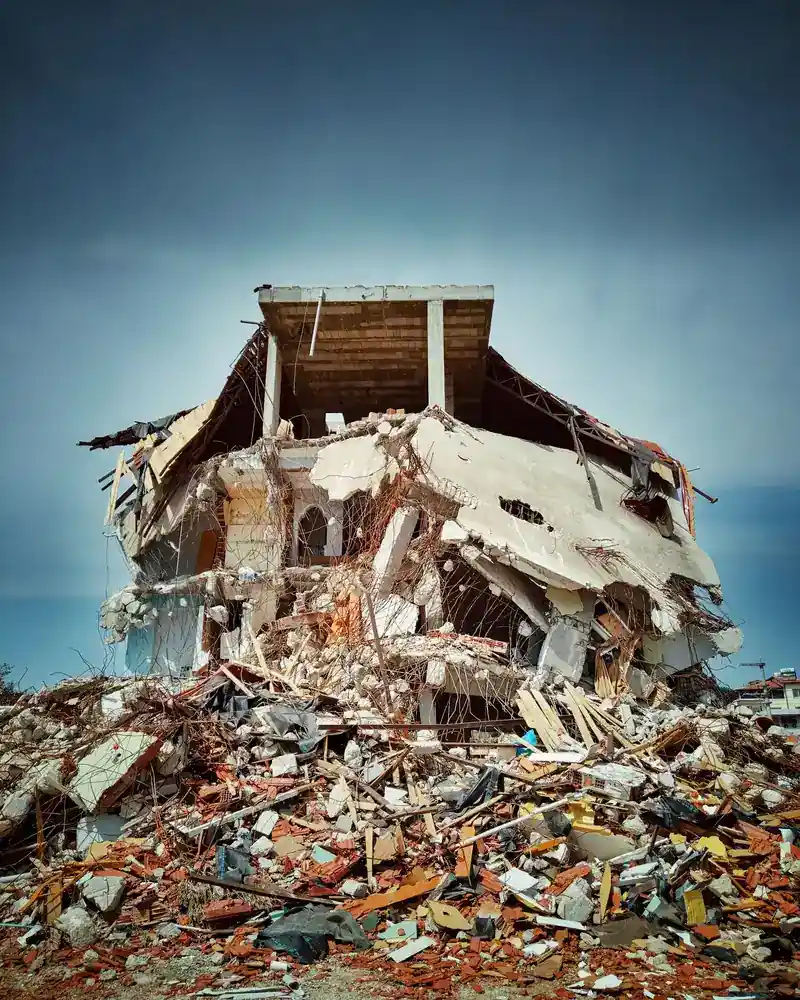
How demolition is done right in Kuwait
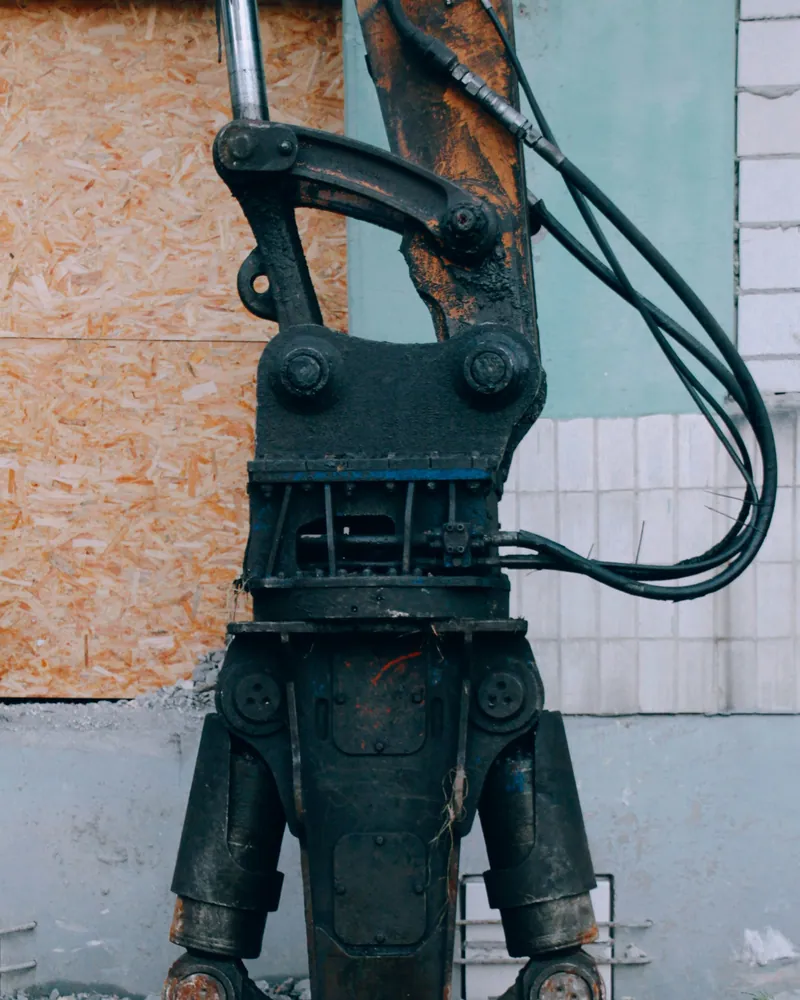
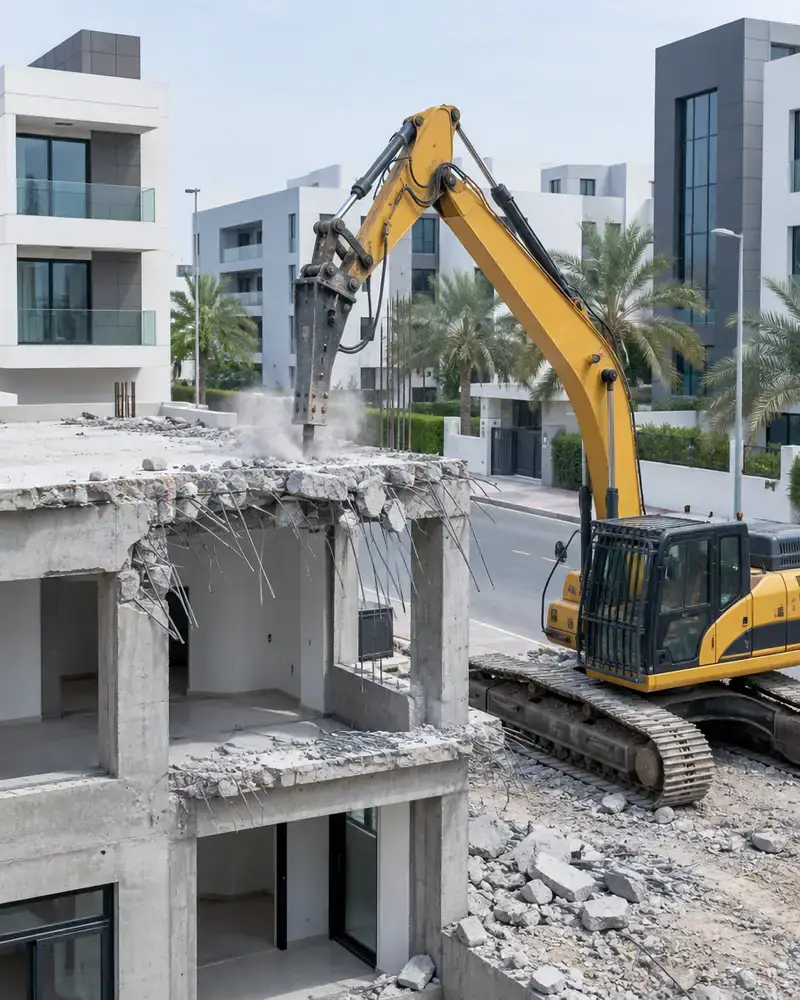
Old villas and apartment buildings in Kuwait often contain thick reinforced concrete frames, buried water tanks, septic pits and sometimes old fuel storage. Mapping these hidden features before the excavator arrives decides the sequence and the plant size needed. The standard order is roof slab first, upper floors next, then ground floor, and foundations last. Working top-down keeps debris falling inward rather than outward, which protects adjacent plots and street surfaces.
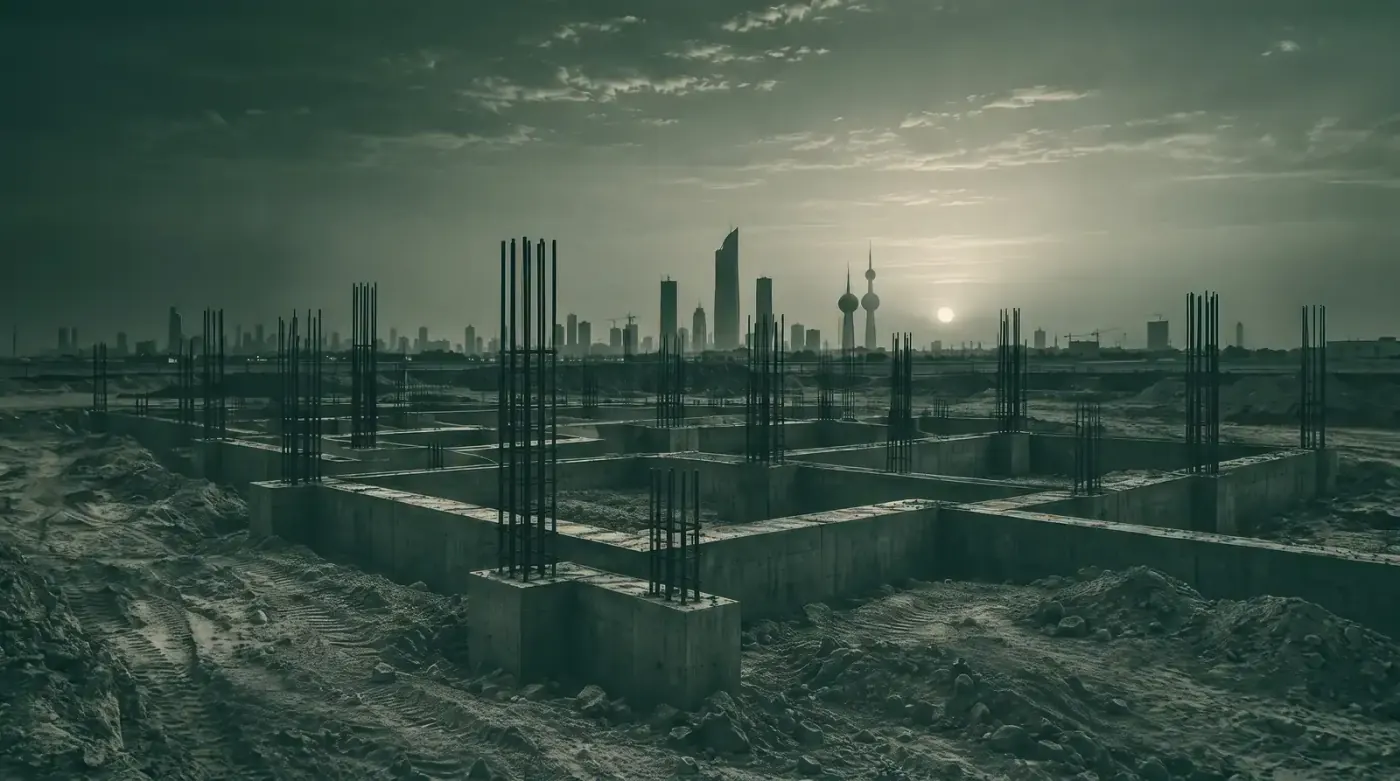
Once the frame is down, the cleared site reveals what the old structure concealed. Coastal and near-coastal plots in Kuwait frequently show rebar already weakened by chloride-laden soil and salty groundwater; if that old reinforcement or a crumbling footing is left in the ground and used as a reference, the new build starts on a compromised base. Running a soil probe after demolition and before pouring any new concrete confirms bearing capacity and catches voids or contaminated fill.
Apartment buildings call for extra coordination because the frame is taller, loads are higher and service stacks serve multiple units. The contractor must cap drainage lines cleanly, coordinate the order of utility disconnections with the relevant authorities, and prop any party wall before touching the structure beside it. Dust suppression by water spray is applied through each shift because dry crushed concrete in Kuwait's often-windy conditions produces fine powder that drifts across neighboring buildings and into street traffic.
What goes wrong on most builds.
Most problems are built in early and found late. These three cost the most to fix.
 01
01Shortcuts under the finish
Concrete and steel disappear under the finish, so a shortcut there stays hidden until it cracks.
 02
02Mistakes behind the wall
A water or drain mistake found after the finish means breaking new tile.
 03
03A rushed finish
The finish is what you live with every day. Rushing it shows in every corner.
The solution?
One licensed company for the structure, the pipes and the finish.
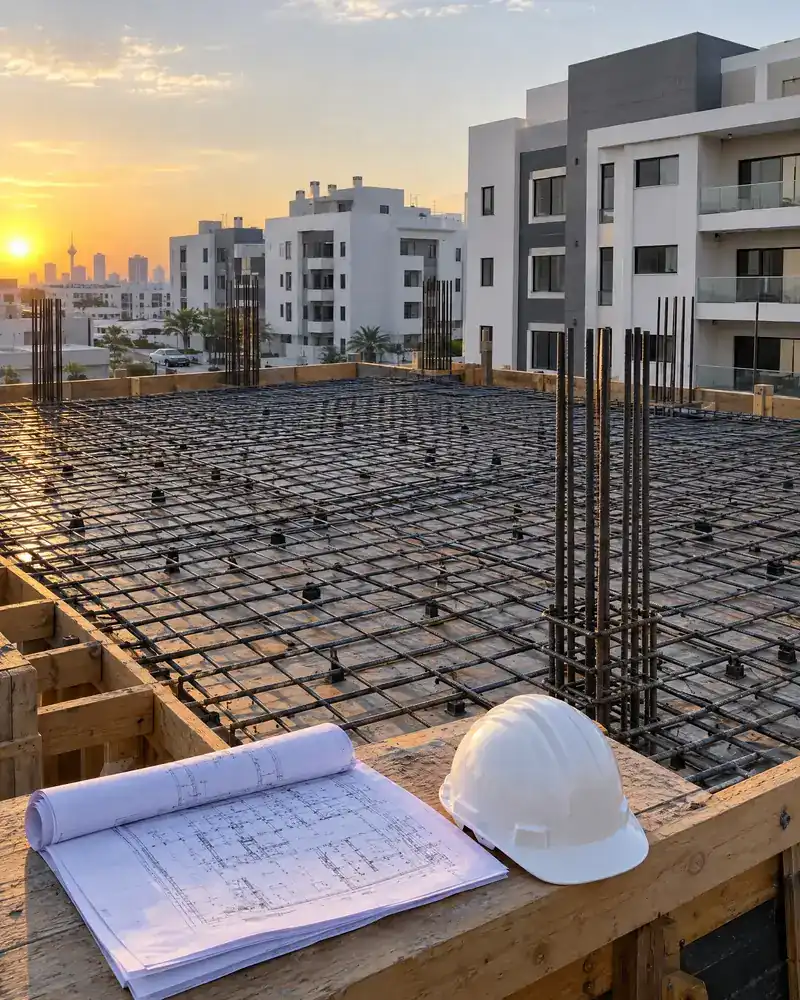
Shortcuts under the finishEngineering supervision on site
The structure is followed before it is covered.
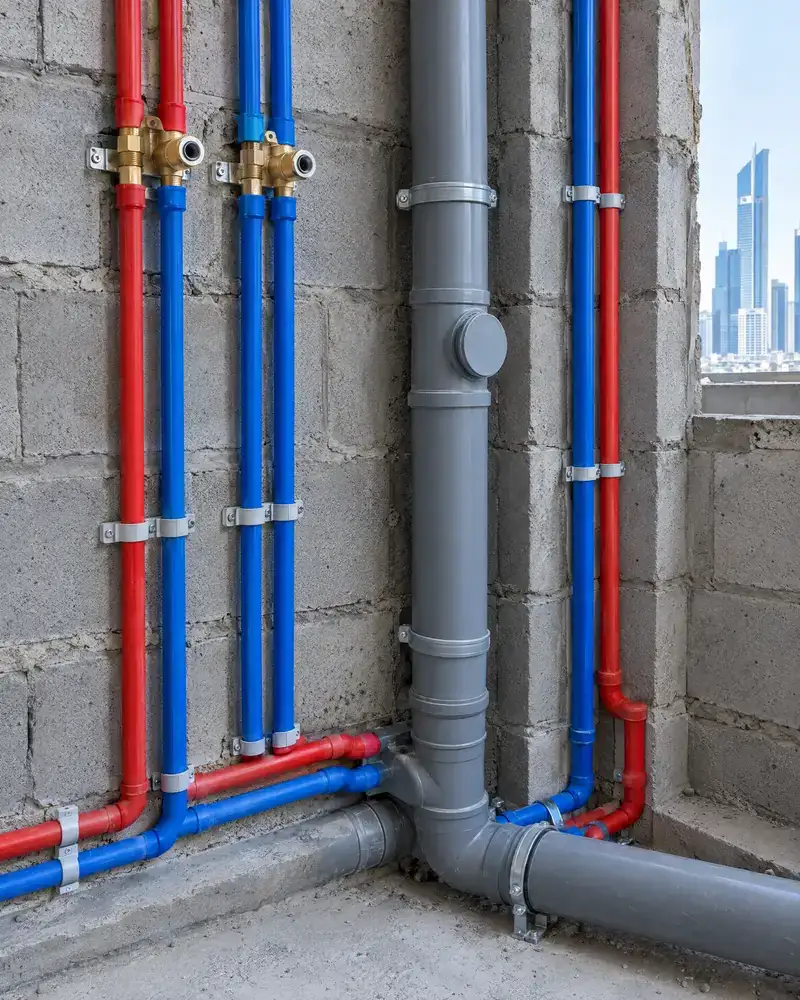
Mistakes behind the wallPlumbing by the same company
Laid before the walls close.

A rushed finishFinishing, and maintenance after
The same company finishes and maintains.
How it works.
Call or whatsApp
Describe the structure type, location, and planned start date.
Site inspection
Engineer visits to map the structure, utilities, and access constraints.
Permit and disconnections
Owner secures demolition permit; utilities formally cut before work starts.
Demolition works
Structure broken top-down, rubble sorted, loaded and removed daily.
Site handover
Cleared, leveled plot handed over with underground elements fully removed.
Structure size and height
Larger footprints and more floors increase plant hours and rubble volume.
Frame construction type
Thick reinforced concrete frames take more breaking time than lightweight masonry.
Underground elements
Buried tanks, pits and old footings add excavation and extra disposal loads.
Site access width
Narrow street frontage limits plant size and raises manual labor needs.
Rubble disposal distance
Distance to the licensed disposal site directly affects haulage cost.
Why one contractor beats four.
Every extra contractor means another schedule and another excuse. With us, one company answers for all of it.
Turnkey
Shell and finishing with one company, from footings to keys.
Pay in instalments
Construction and finishing on instalments. Ask us for the details.
Engineering supervision
Architectural drawings and engineering supervision on site.
After handover
Maintenance contracts and a 24-hour emergency plumber.
A licensed Kuwaiti company for building construction, finishing, renovation and infrastructure works.
What our clients say.
See all reviews on GoogleExcellent
Taha Saad
Google review
Excellent
Ali Nadi
Google review
Demolition & rebuild in Kuwait. We work across all six governorates of Kuwait: Capital, Hawalli, Farwaniya, Mubarak Al-Kabeer, Ahmadi, Jahra.
Official references: Kuwait Municipality (building permits and plans)
Questions, answered.
Call nowDo I need a demolition permit before you can start?
Yes, a demolition permit from the municipality is required before any breaking work begins. The owner applies for the permit; the contractor can guide on what documents are needed but the permit is issued to the plot owner.
Can you demolish only part of a building and leave the rest standing?
Partial demolition is possible when the section being removed is structurally independent or can be safely cut from the remainder. A site inspection is needed first to confirm the remaining structure will be stable and that shared walls are properly supported.
Does the price include removing and disposing of all the rubble?
Rubble removal and disposal should always be specified in the contract. Some contracts price demolition and disposal separately; confirm both are included and ask where the rubble will be tipped to avoid debris left on site.
How do you protect the neighboring house during demolition?
Shared and adjacent walls are propped before the connecting structure is removed. Work proceeds in planned sections rather than all at once. Any cracking found on arrival is photographed and noted before work begins.
Can I contract the demolition and the new build together as one job?
Yes. Combining demolition and construction in a single contract lets the same team move directly from clearing the site to pouring new foundations without a handover gap. It also avoids disputes about site condition between a demolition subcontractor and a separate builder.
My old house has a septic tank and an underground water cistern. how are those handled?
Underground tanks must be pumped out, cleaned and then broken and removed. Leaving them in place under new fill creates voids that can collapse under load. Their location is mapped during the site visit so they are included in the demolition scope and priced accordingly.
Licensed and registered in Kuwait.
Check us before you sign. This is our licence number and what it covers.
Find us on Google Maps