
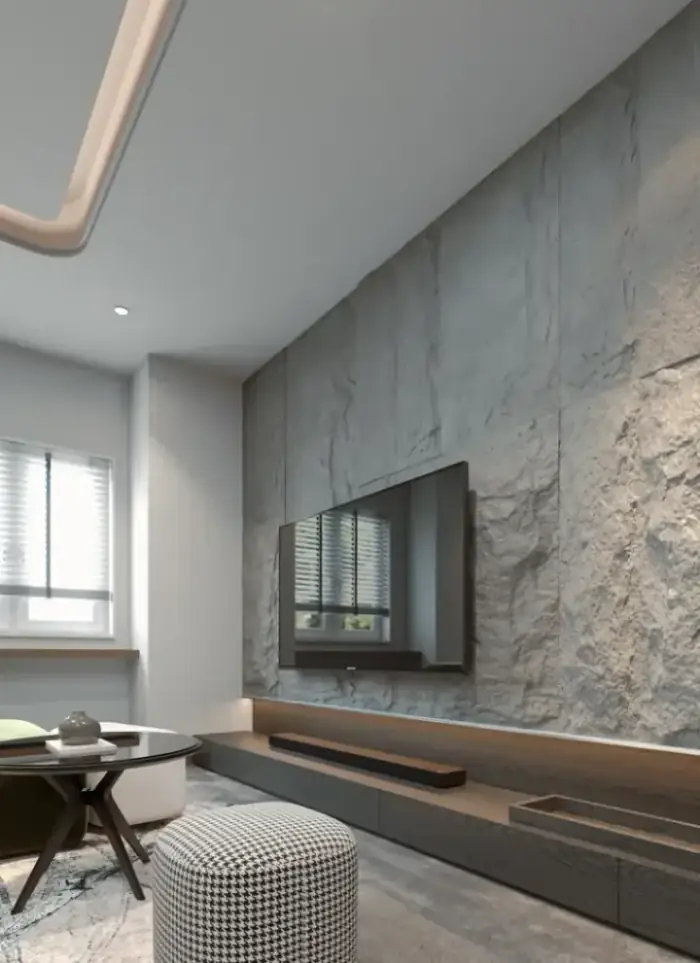
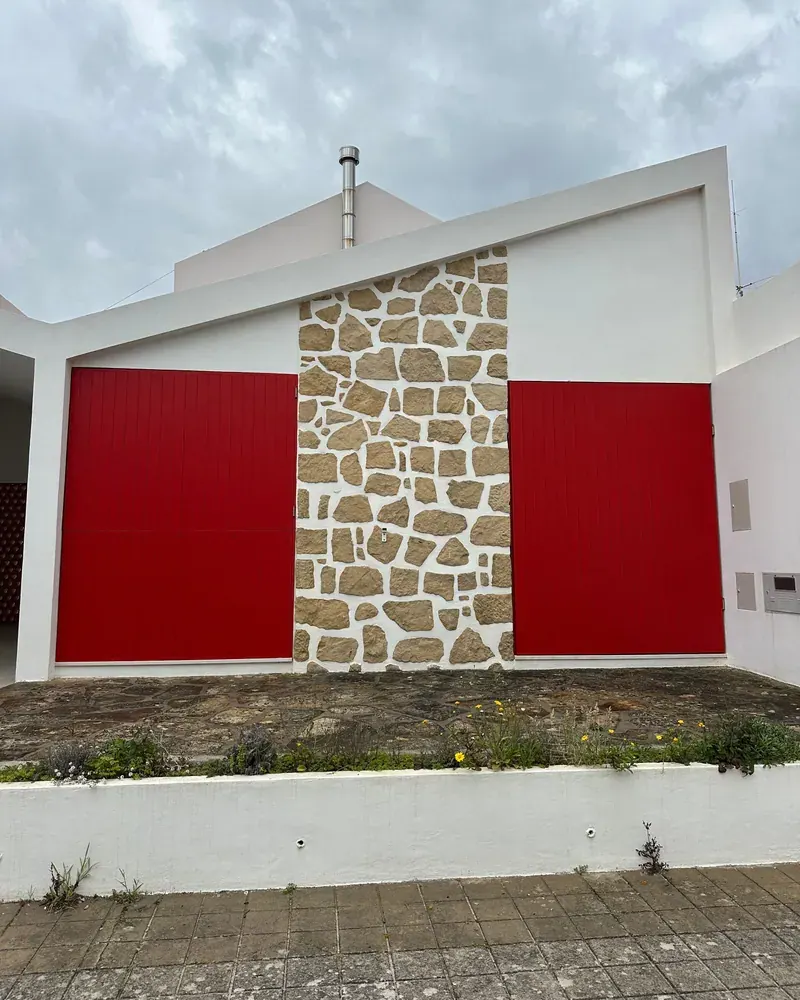
What the installation covers
Wall substrate through panel bedding, joint sealing and final facade handover.
Wall survey and prep
Assess surface condition and remove any loose or failing existing layers.

Bonding and levelling coat
Apply bonding slurry to ensure adhesion for lightweight panel weight.
Panel cutting and bedding
Cut panels to size and bed them in chemically compatible mortar.
Expansion joint placement
Set expansion joints at correct intervals to absorb Kuwait's thermal movement.

Pointing and joint sealing
Fill joints with salt-resistant compound to block fine dust infiltration.
Surface treatment and handover
Apply a clear protective coat and inspect the full facade before handover.
Materials and methods used
Polymer-modified mortar
Flexes with thermal movement so panels do not debond in peak summer heat.
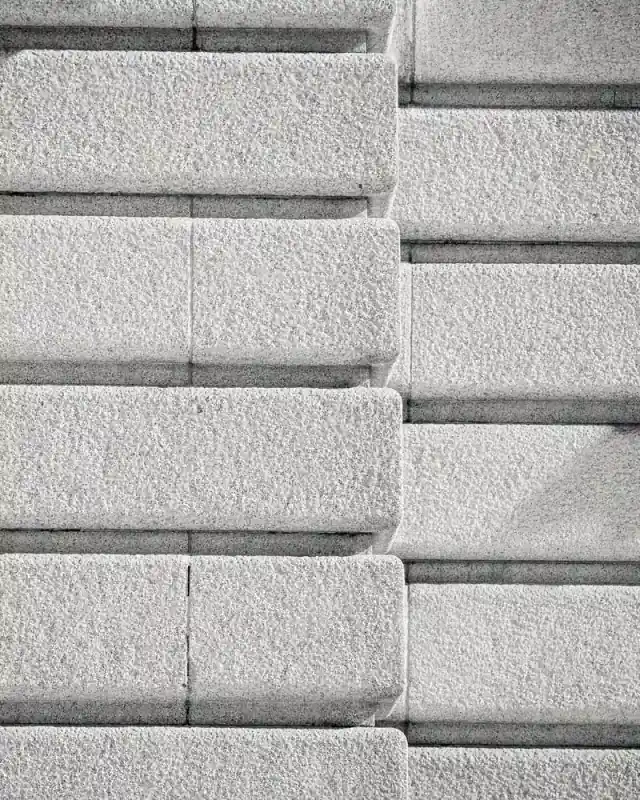
Compressed cast stone panels
Lighter than natural stone yet salt-resistant, reducing load on the wall substrate.
UV-stable flexible joint filler
Stays intact and colour-stable under prolonged direct sun exposure on facades.
Penetrating clear sealer
Penetrates the panel surface to block salt migration and white stain formation.
Before you call us
Area to be clad
Measure height and width of each facade section to be clad.
Existing surface condition
Check whether old render or paint is cracked or hollow before any new work.
Panel style and colour tone
Decide whether you want a rough-split or smooth-face stone appearance.
Access to the facade
Confirm whether scaffolding or a hoist is needed to reach the full height.
More in stone & facades.
What goes wrong with most finishing.
The finish is what you see every day, and its mistakes do not hide. These three are the most common.
 01
01A rushed finish
The finish is what you live with every day. Rushing it shows in every corner.
 02
02Four contractors for one finish
Tiling, gypsum, paint and aluminium crews who never talk to each other.
 03
03After-care that never comes
Once you have the keys, it is hard to find anyone to come back and fix what shows up.
The solution?
Full finishing, and maintenance after it, from one licensed company.
A rushed finishTurnkey finishing
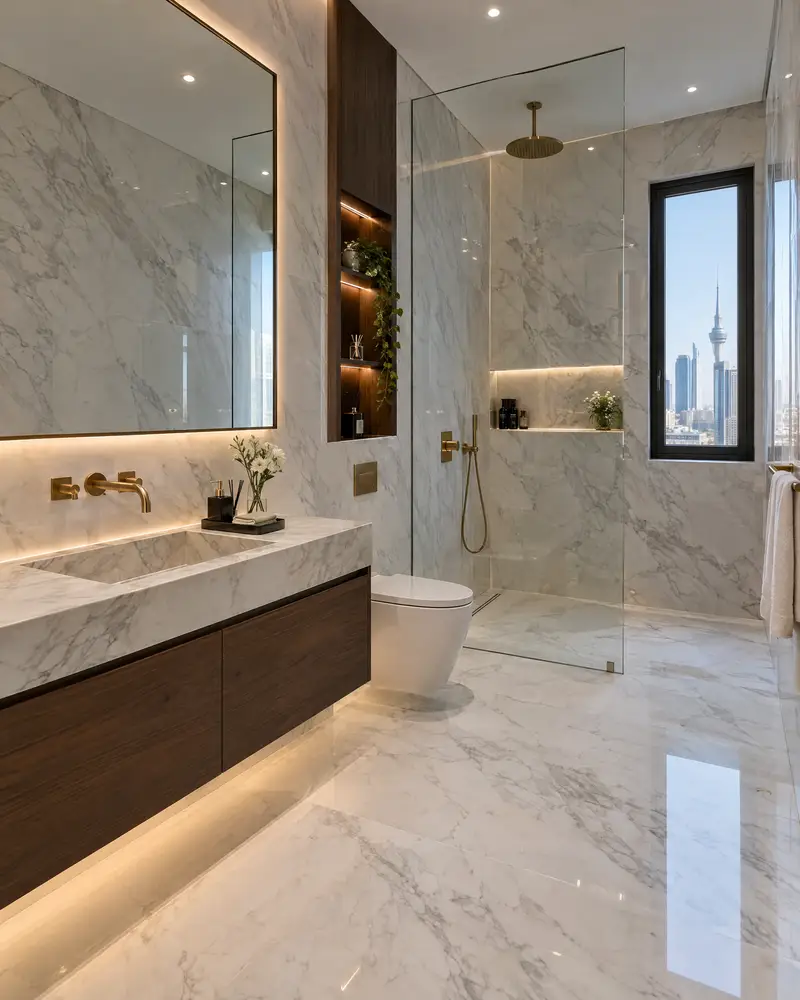
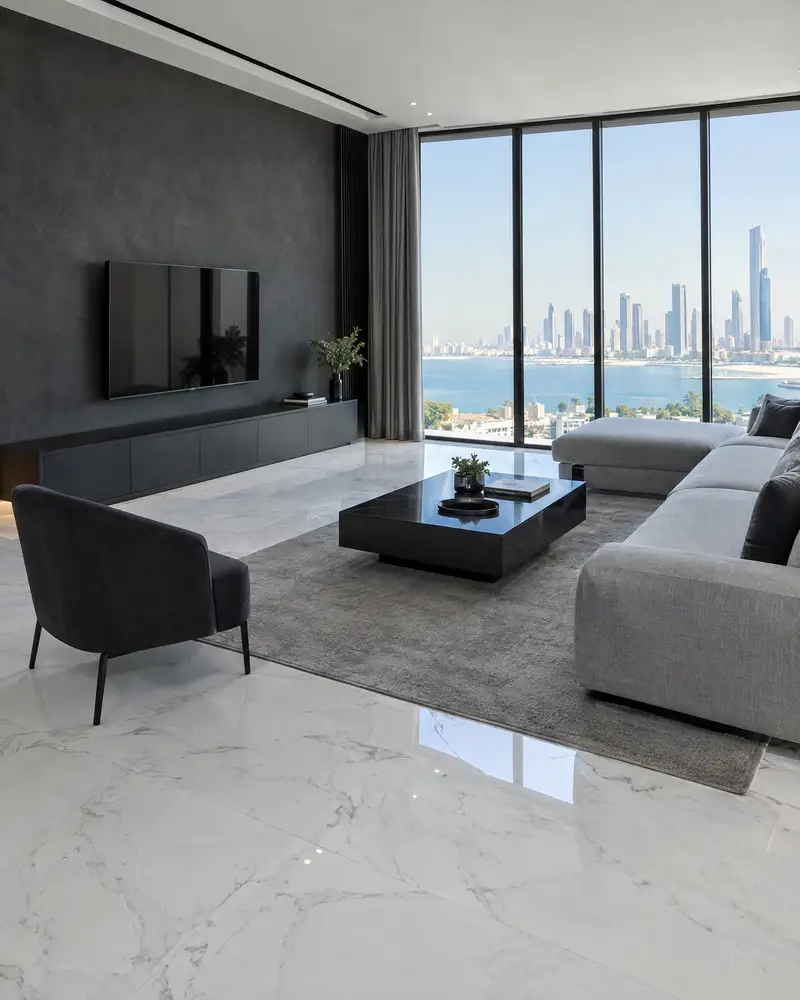
Marble, tiling, gypsum and paint from one company.
Four contractors for one finishOne company for every trade
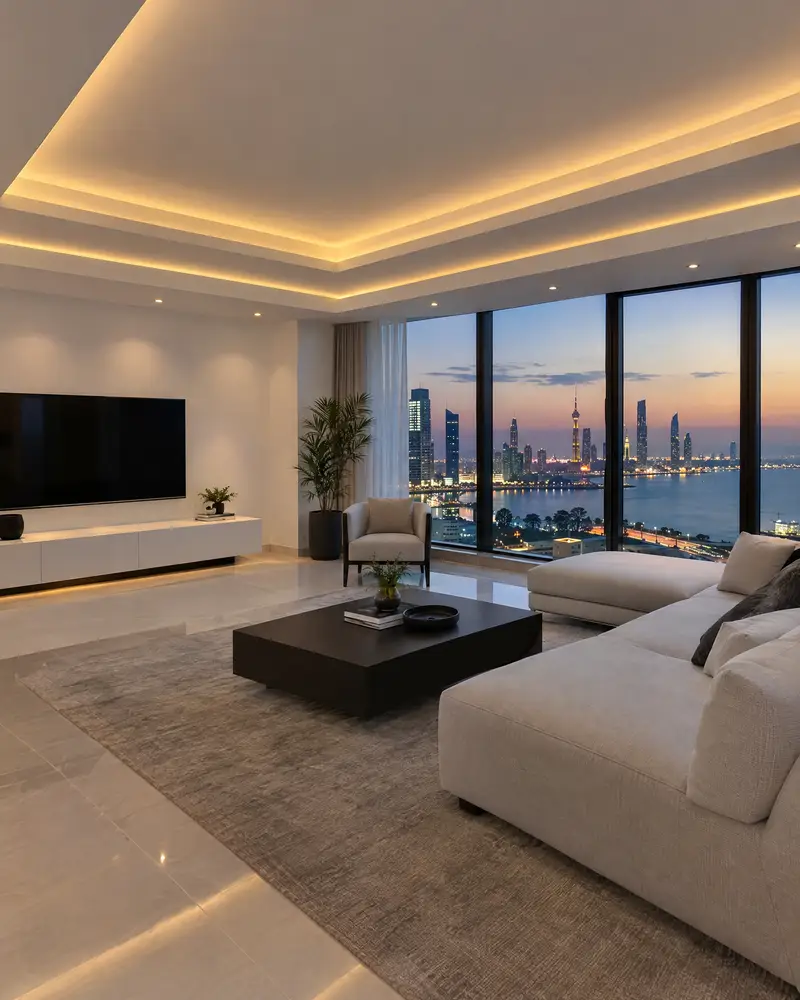
No gaps between the tiler, the gypsum crew and the painter.
After-care that never comesRegular maintenance after handover
And finishing on instalments if you need it.
How it works.
First contact
Call or WhatsApp to describe the facade and arrange a site visit.
Site survey
Team measures the facade and checks wall condition and access requirements.
Quote and material selection
A detailed quote is issued alongside panel style and colour options.
Preparation and installation
Surface prep followed by panel bedding, joint filling and sealing.
Inspection and handover
Full facade check confirming sealer coat is complete before handover.
What sets the price.
No fixed rate applies; these factors combine to shape the final quote after a site visit.
Get a quoteTotal facade area
The primary driver of both material quantity and labour cost.
Panel grade and finish
Denser panels with factory-applied coatings cost more than standard grades.
Old cladding removal
Stripping existing layers adds preparation time and disposal cost.
Height and access method
High facades require scaffolding or lifting equipment that adds to the quote.
Corner and opening complexity
Curved corners and detailed window reveals require extra cutting and fitting time.
Why one contractor beats four.
Every extra contractor means another schedule and another excuse. With us, one company answers for all of it.
Turnkey
Shell and finishing with one company, from footings to keys.
Pay in instalments
Construction and finishing on instalments. Ask us for the details.
Engineering supervision
Architectural drawings and engineering supervision on site.
After handover
Maintenance contracts and a 24-hour emergency plumber.
A licensed Kuwaiti company for building construction, finishing, renovation and infrastructure works.
What our clients say.
See all reviews on GoogleExcellent
Taha Saad
Google review
Excellent
Ali Nadi
Google review
Artificial stone cladding in Kuwait. We work across all six governorates of Kuwait: Capital, Hawalli, Farwaniya, Mubarak Al-Kabeer, Ahmadi, Jahra.
Official references: Kuwait Fire Force (safety requirements in finishing work)
Questions, answered.
Call nowCan artificial stone be used on all parts of a facade or are there areas where it should not be applied?
Artificial stone suits most facade surfaces, but should not be applied over flexible substrates or areas with active water ingress until waterproofing is addressed first. Zones immediately around window frames need careful detailing to prevent rainwater tracking behind the panels.
What is the practical difference between artificial stone and natural stone in terms of weight and fixing method?
Artificial stone is considerably lighter, so polymer-modified mortar bedding is usually sufficient without mechanical anchors. Heavy natural stone panels often require additional bracket fixing, especially on tall facades where mortar alone may not carry the load safely.
Why does white staining appear on artificial stone panels after the first rainy season?
Water carries soluble salts from the mortar bed through the panel pores, then they crystallise on the surface as it dries. Low-alkali mortar combined with a penetrating clear sealer applied before the rainy season significantly reduces this type of staining.
How does Kuwait's fine airborne dust affect artificial stone joints over time?
Fine dust packs into open joints and forms a layer that retains moisture, accelerating the breakdown of standard pointing compounds. Sealing joints with a UV-stable flexible filler prevents dust accumulation and extends the service life of the joint.
Can artificial stone be installed on a newly built additional floor to visually match the cladding on the original lower floors?
Yes, and this is one of the practical advantages of artificial stone as the pattern and colour can be specified to closely match existing cladding. Physical samples should always be compared against the original facade in natural daylight before committing to a full order.
Licensed and registered in Kuwait.
Check us before you sign. This is our licence number and what it covers.
Find us on Google Maps