
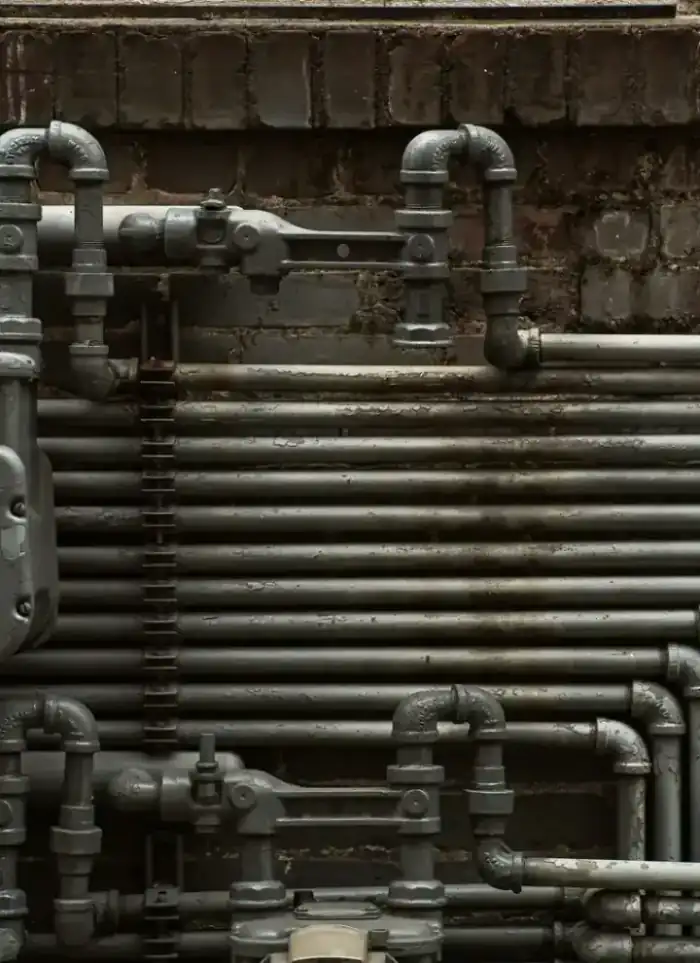
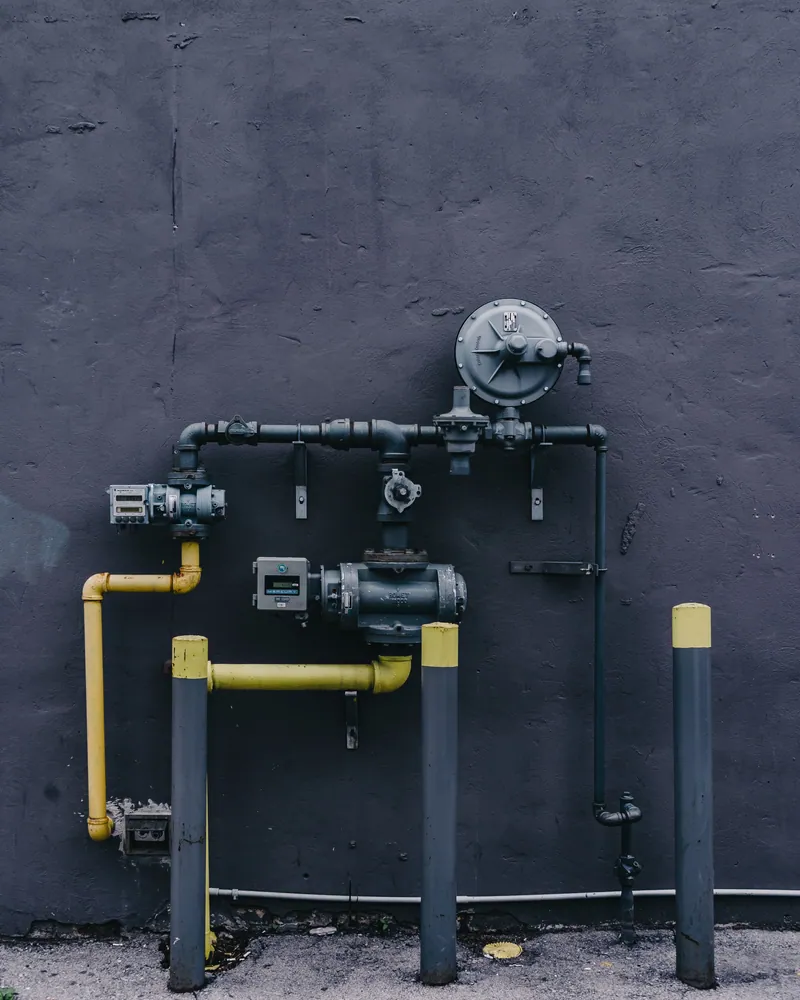
What the first-fix covers
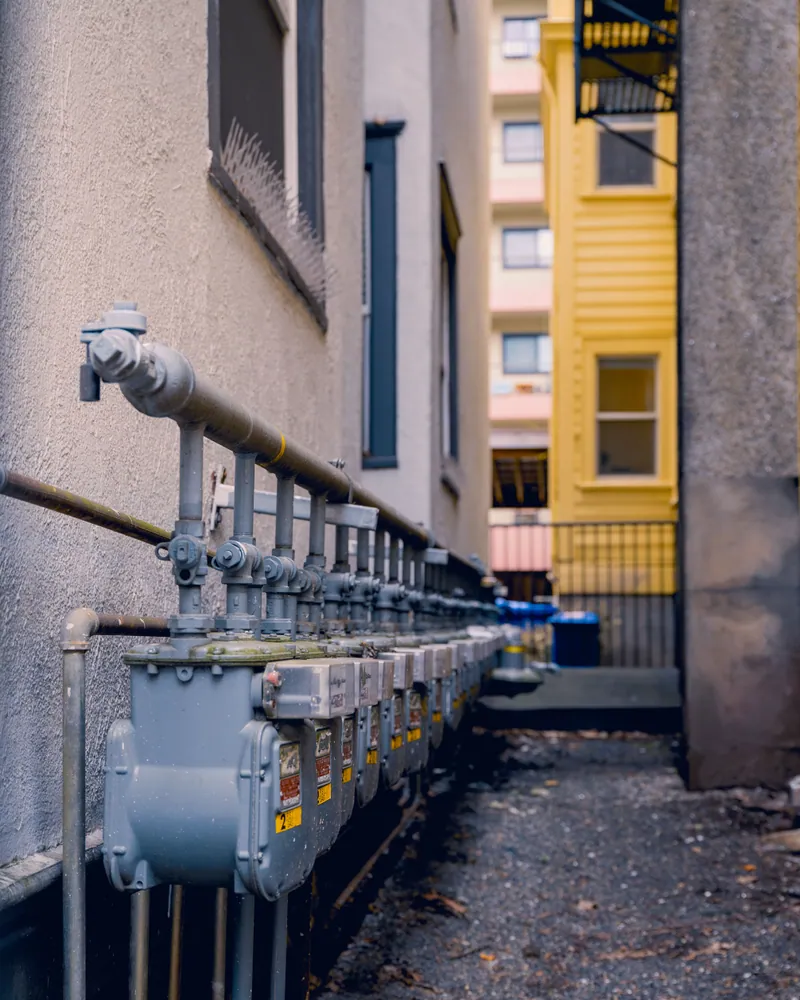
We lay the complete gas network infrastructure before finishing works begin
Network survey and layout
Pipe routes and network sizing confirmed before any chase cutting

Copper pipe installation
Pipes run in wall chases and secured with silver-alloy brazed joints
Isolation valves
One isolation valve per outlet point for independent shut-off
Air pressure test
Compressed air held under gauge before any appliance connection

Appliance outlet points
Each stub-out positioned at the exact height each appliance requires
As-built route drawings
Every buried route dimensioned and handed to the owner at completion
Signs this first-fix is needed now
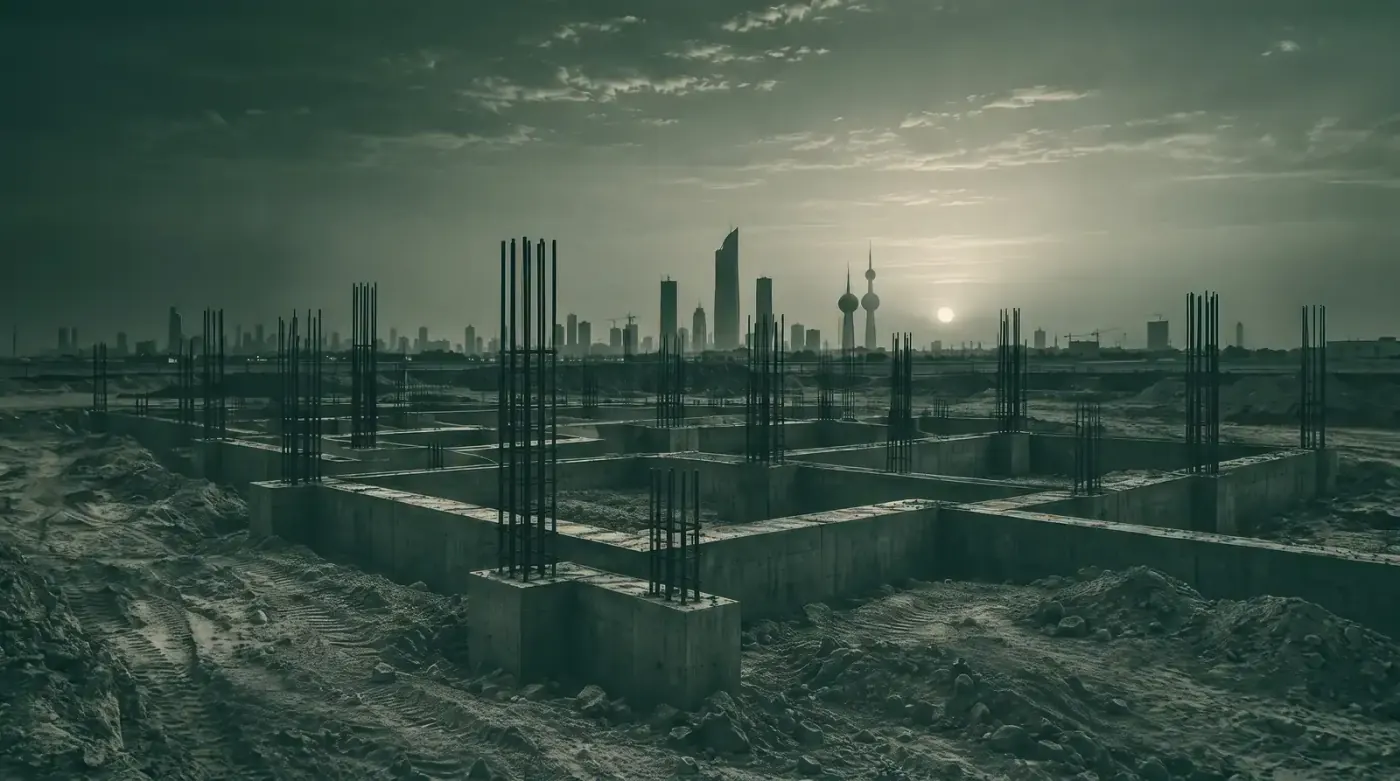
New build with no gas rough-in
Structure is up but no gas chases or pipes have been planned or started yet
Finishing stage approaching fast
Tiling and plastering crews are about to start and gas lines are still missing
New kitchen or room added
An annex or extra floor needs gas outlets before its new walls are plastered
Existing network has no drawings
Pipes are buried and no record exists of where they run inside the walls
Mistakes that cost owners later
Leaving gas runs to finishing stage
Running pipes after tiling means breaking finished surfaces and doubling the cost
Brazing without silver-alloy rod
Cheap non-silver filler produces brittle joints that develop leaks over time
Undersized pipe diameter
A narrow main run starves the furthest outlet of adequate gas pressure
Skipping as-built drawings
Without route records any future repair or extension means guesswork and needless demolition
More in central gas lines.
What goes wrong with most plumbing.
Plumbing problems start hidden and end with breaking tiles. These three cost the most.
 01
01Pipes laid in a rush
Pipework rushed before the walls close stays hidden until it starts to leak.
 02
02Leaks you cannot see
A slow leak behind tiles shows up as damp, stains and a higher water bill.
 03
03Nobody answers in an emergency
A burst pipe at night cannot wait for a contractor who has moved on.
The solution?
Pipework, leak detection and maintenance from one licensed company.
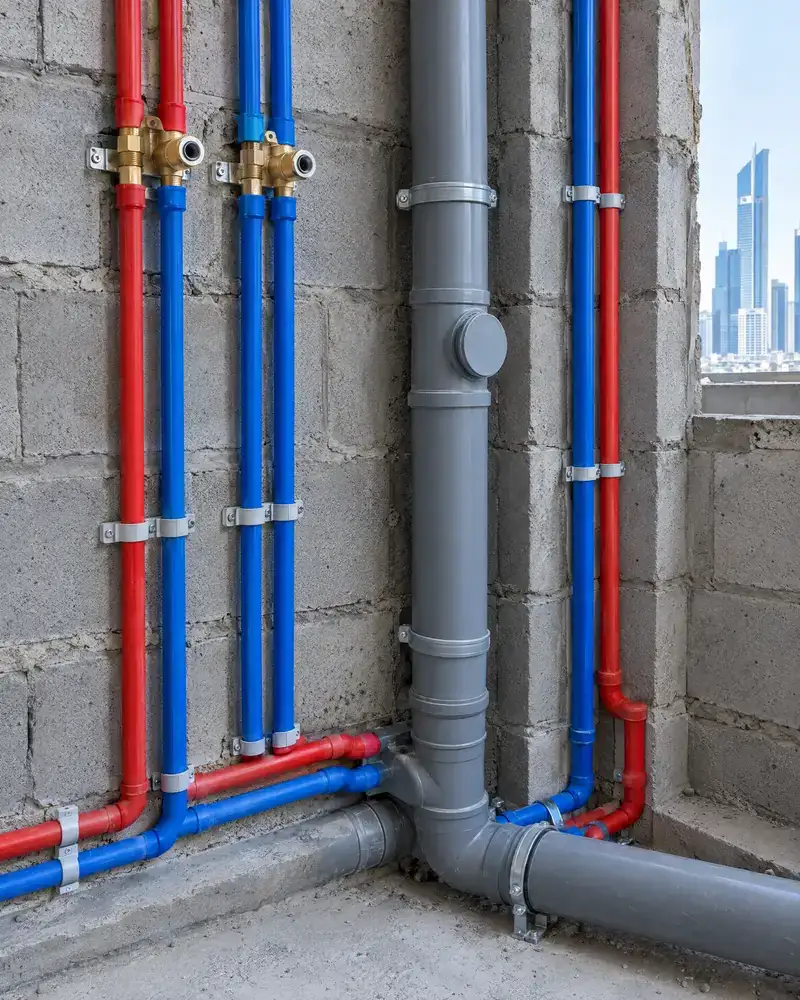
Pipes laid in a rushFirst-fix plumbing by the builder
Laid as part of the build, before the walls close.
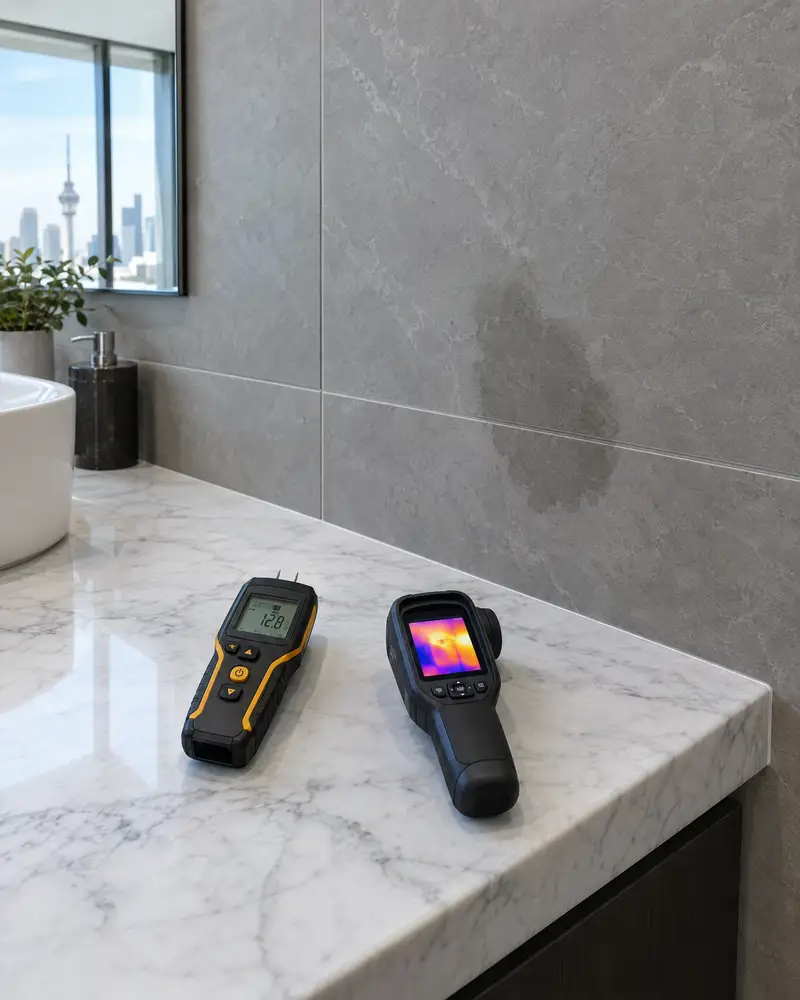
Leaks you cannot seeWater leak detection
We find the source first.
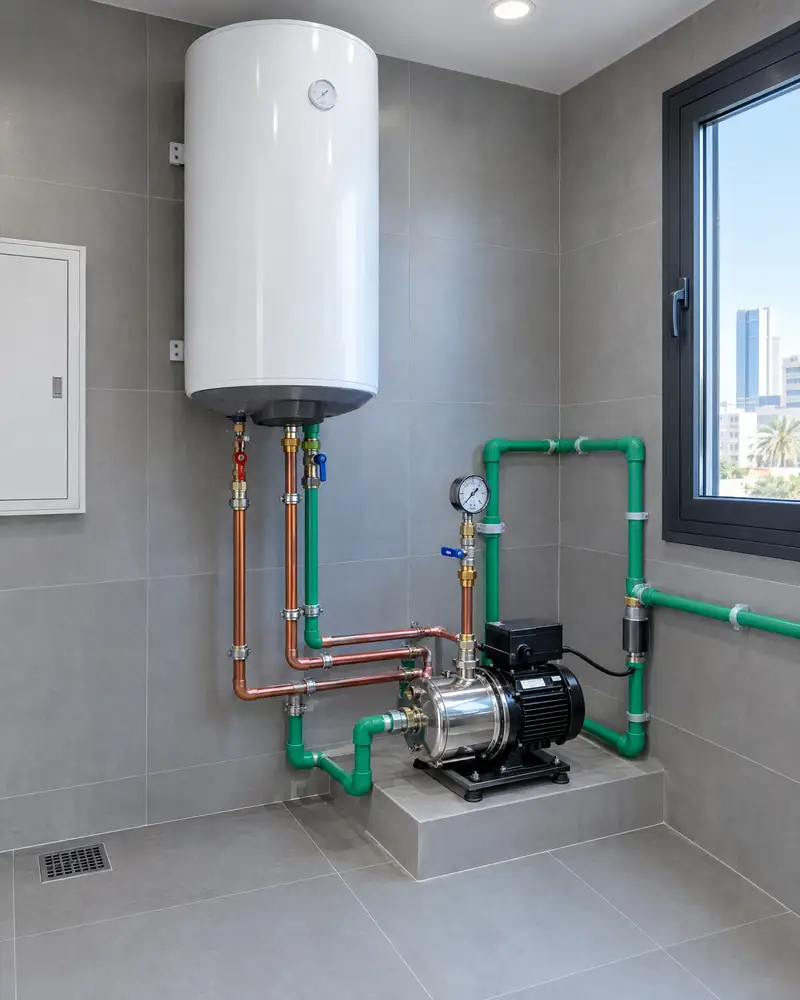
Nobody answers in an emergency24-hour emergency plumber
Plus regular maintenance contracts after handover.
How it works.
Call or whatsApp
Describe the project and book a site visit by call or WhatsApp
Site visit
Engineer visits, maps routes and counts all outlet points needed
Quote and approval
A priced quote with a draft network layout is submitted for approval
Installation and testing
Copper runs are installed and air-pressure tested before walls are closed
Handover and drawings
Owner receives as-built route drawings and the pressure test result record
What sets the price.
Several site-specific factors shape the final figure; a visit confirms the exact quote
Get a quoteNumber of outlet points
Each added outlet increases pipe length and the valve count needed
Main run length
Distance from meter to the furthest point affects pipe sizing and material cost
Concealed or surface routing
Hidden runs need chasing and reinstatement, adding labour and material cost
Building type and size
A multi-floor villa differs from a single apartment in routing complexity and testing
Reinstatement works
Patching plaster and tiles after chasing adds to the overall job value
Why one contractor beats four.
Every extra contractor means another schedule and another excuse. With us, one company answers for all of it.
Turnkey
Shell and finishing with one company, from footings to keys.
Pay in instalments
Construction and finishing on instalments. Ask us for the details.
Engineering supervision
Architectural drawings and engineering supervision on site.
After handover
Maintenance contracts and a 24-hour emergency plumber.
A licensed Kuwaiti company for building construction, finishing, renovation and infrastructure works.
What our clients say.
See all reviews on GoogleExcellent
Taha Saad
Google review
Excellent
Ali Nadi
Google review
Central gas first-fix in Kuwait. We work across all six governorates of Kuwait: Capital, Hawalli, Farwaniya, Mubarak Al-Kabeer, Ahmadi, Jahra.
Official references: Ministry of Electricity and Water (water and drainage connections)
Questions, answered.
Call nowWhat is the difference between first-fix gas work in a new build and adding a line to a finished house?
In a new build, pipes go into open chases before any finishing, so routes are chosen freely. In a finished house, tiled walls and floors must be cut, then reinstated, which adds significant labour time and cost to the job.
Can the main gas supply pipe be buried directly in a wall without any protective sleeve?
Copper pipe buried in a wall generally needs protection from direct contact with alkaline building materials such as plaster and mortar, which can corrode the surface over time. The right protection method depends on the route and surrounding materials, confirmed during the site visit.
How many outlet points does a typical Kuwaiti home need in a gas first-fix?
The count depends on the home's layout and the appliances planned: cooker, water heater, space heater if present, and any other gas appliance. The engineer fixes the exact number after reviewing the floor plan and the appliance list, not before.
What happens if the air pressure test shows a pressure drop on the new network?
Work stops and the leak point is found using detection solution before any chase is closed. The faulty joint is remade and the test repeated until the gauge holds steady. Walls are never closed until the line passes a clean pressure test.
Does the first-fix service include connecting the appliances or does it end at the stub-out points?
The first-fix ends with each stub-out positioned at the correct location and height, capped and valved. Connecting the actual appliances is a separate step done after the appliances are installed, and can be arranged with the same team at that stage.
Licensed and registered in Kuwait.
Check us before you sign. This is our licence number and what it covers.
Find us on Google Maps