
What the installation covers
Main and branch duct runs, supply and return grilles, balancing and commissioning

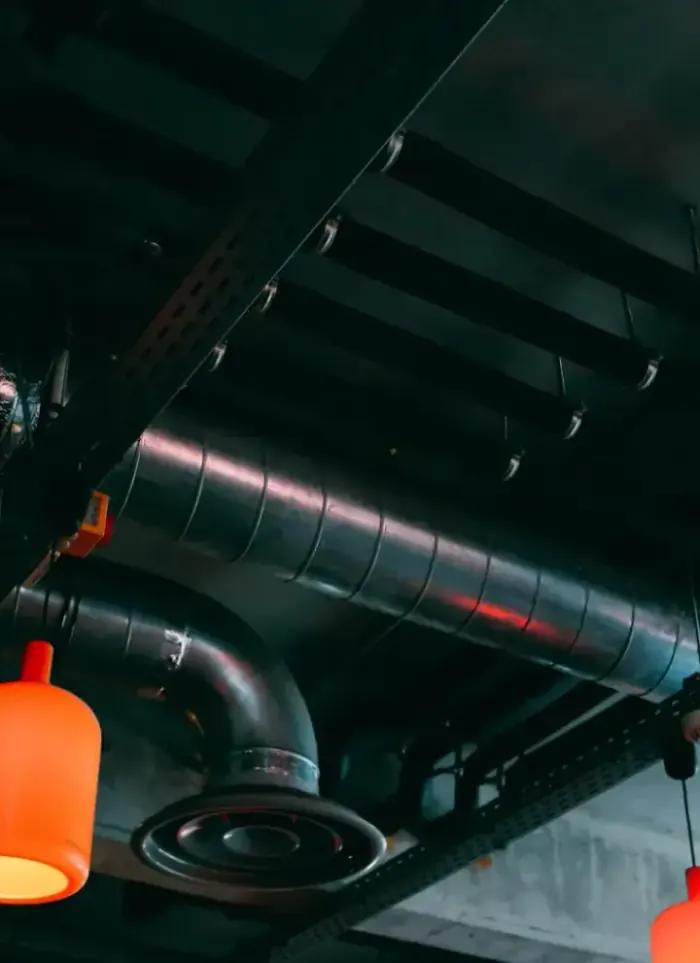
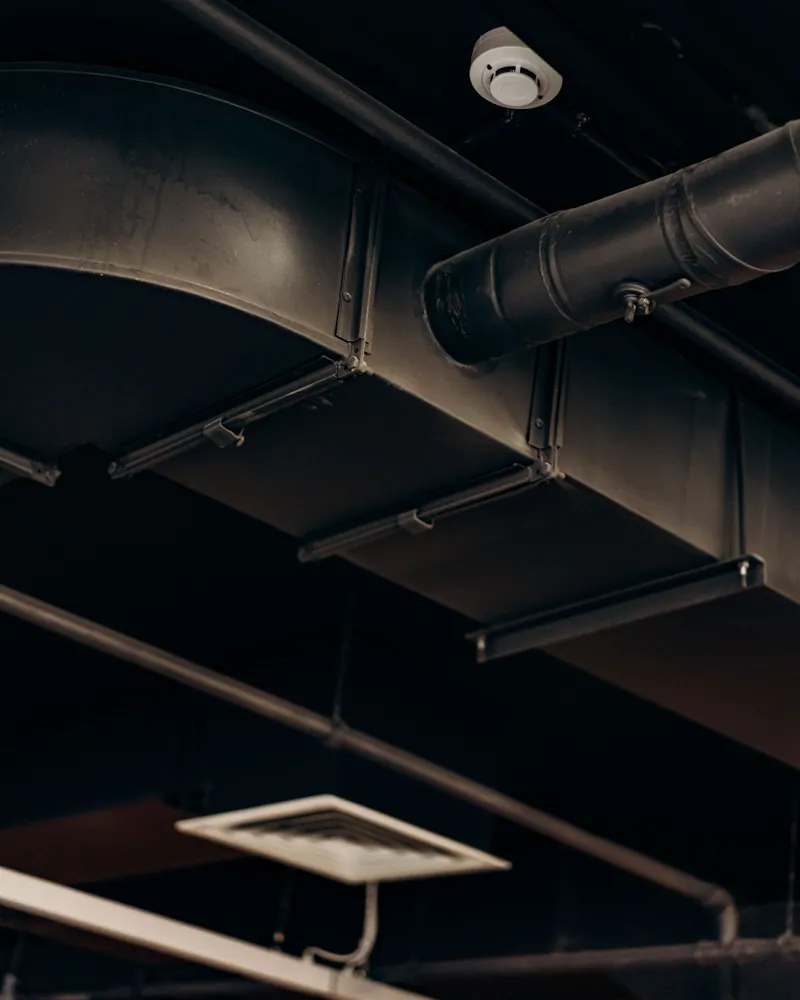
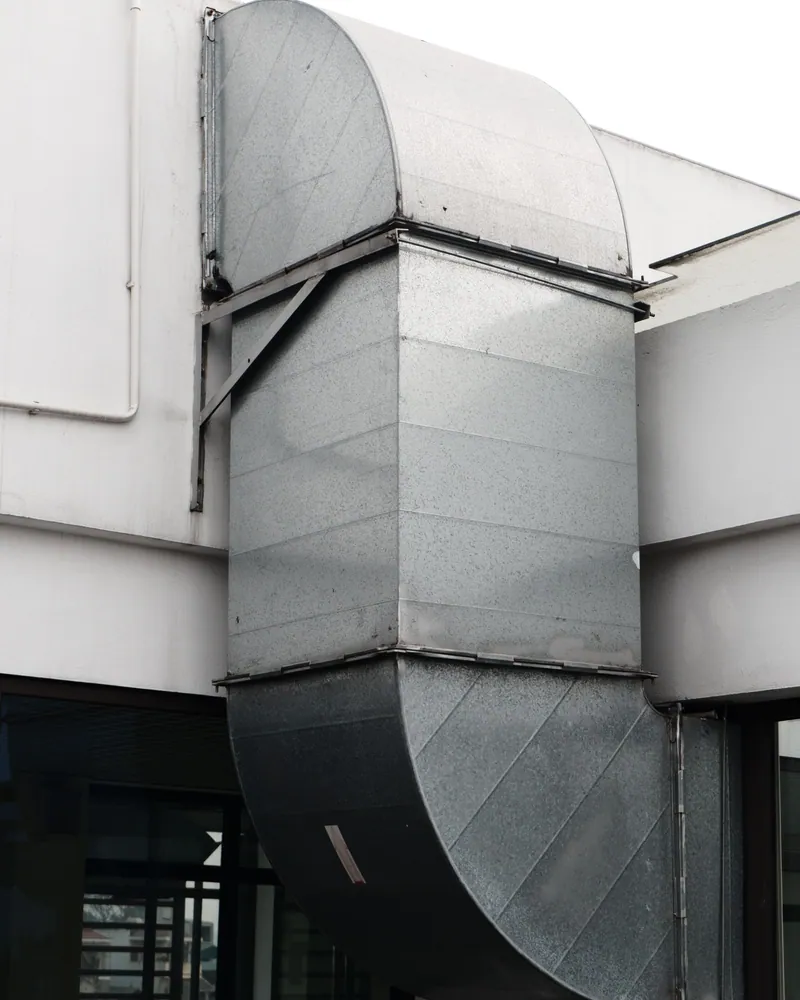
Main duct runs
Sized plenum boxes and trunk ducts matched to the cooling design

Flexible branch ducts
Flex duct routed at correct angles to each supply grille

Supply and return grilles
Grilles fitted flush into gypsum ceilings and adjusted for airflow direction

Airflow balancing
Measuring flow at each grille and setting branch dampers to balance the system

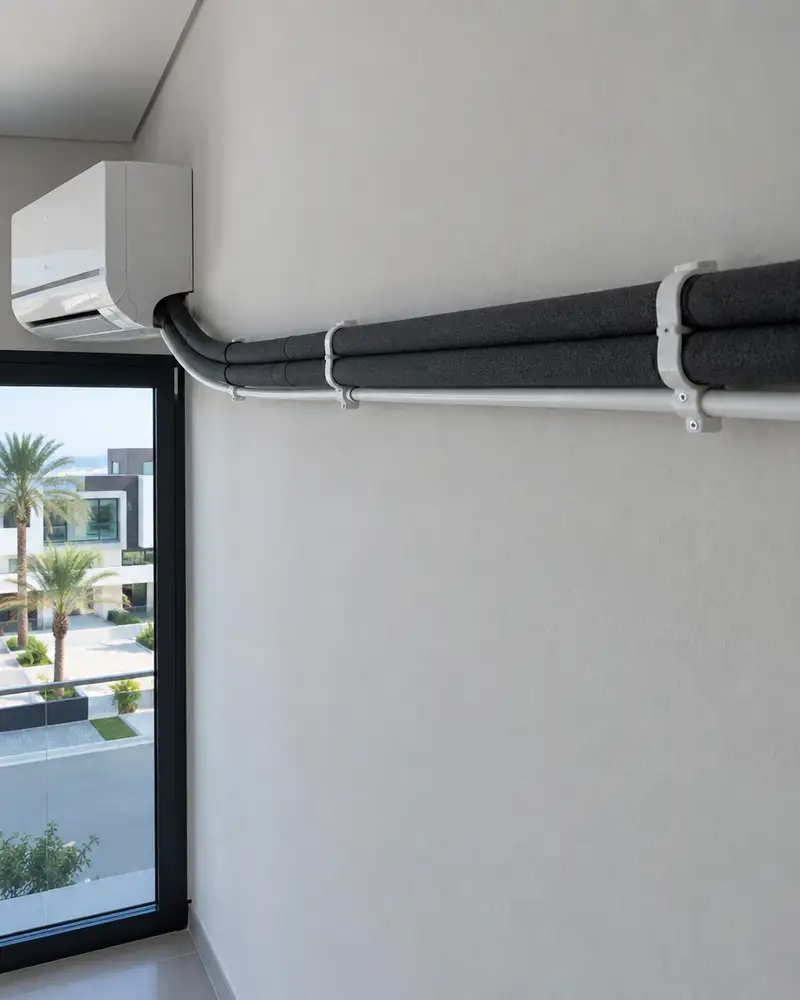
Duct insulation wrap
Wrapping all ducts with insulation to prevent condensation in the ceiling void
Commissioning and handover
Running the full system, checking each room, and handing over with maintenance notes
Signs your duct installation needs attention
Rooms far from the unit stay warm
Distant rooms never cool down properly, pointing to undersized ducts or a hidden leak in a branch run
Wet patches above supply grilles
Moisture stains or drips around ceiling grilles mean the duct insulation is incomplete or was installed incorrectly
Hissing or rushing air noise
Loud airflow noise inside a room indicates the duct is too small for the required flow rate
Grilles vibrating at the ceiling
Grilles that rattle or vibrate point to unsecured duct connections or loose suspension hangers above the ceiling
Common duct installation mistakes to avoid
Oversized flexible branch runs
Running flex duct too long or bending it sharply restricts airflow and kills cooling efficiency in that room
Skipping damper balancing
Installing ducts without setting the balancing dampers sends most of the air to the nearest room and starves the rest
Duct sized by guesswork
Choosing duct diameter without a proper calculation causes low static pressure at far grilles and higher electricity bills
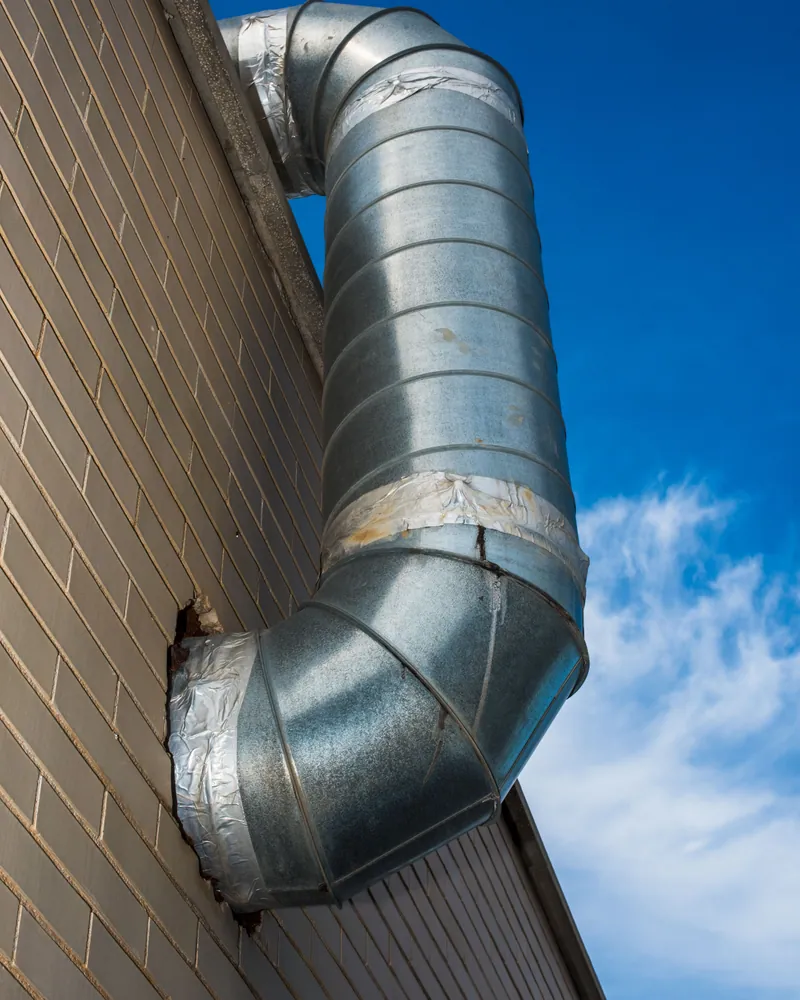
Unsealed duct joints in the ceiling void
Leaving duct joints without mastic or foil tape leaks conditioned air into the ceiling void rather than into the room
More in central AC installation.
What goes wrong with most finishing.
The finish is what you see every day, and its mistakes do not hide. These three are the most common.
 01
01A rushed finish
The finish is what you live with every day. Rushing it shows in every corner.
 02
02Four contractors for one finish
Tiling, gypsum, paint and aluminium crews who never talk to each other.
 03
03After-care that never comes
Once you have the keys, it is hard to find anyone to come back and fix what shows up.
The solution?
Full finishing, and maintenance after it, from one licensed company.

A rushed finishTurnkey finishing
Marble, tiling, gypsum and paint from one company.

Four contractors for one finishOne company for every trade
No gaps between the tiler, the gypsum crew and the painter.

After-care that never comesRegular maintenance after handover
And finishing on instalments if you need it.
How it works.
Initial contact
Call or WhatsApp us to describe the project and fix a site visit time
Site survey
We measure rooms, check ceiling voids, and review any existing AC drawings
Duct layout design
We calculate each branch size and draw the full duct routing with grille positions
Installation and insulation
Main ducts, branches, insulation wrap, and ceiling grilles are all installed and sealed
Balancing and handover
We run the system, measure airflow at every grille, and hand over with maintenance notes
What sets the price.
No fixed rate applies because several site-specific factors shape the final quote
Get a quoteTotal area to be cooled
Building size sets the total duct length and number of supply and return grilles needed
Ceiling void height
A tight void makes routing harder, raises labour time, and limits duct sizing options
Duct type selected
Sheet-metal rectangular duct, spiral duct, and fibreglass duct board each carry different material costs
Room count and routing complexity
More rooms and more bends mean more fittings, hangers, and installation hours
Gypsum ceiling condition
Opening an existing finished ceiling and reinstating it adds cost versus installing in an open ceiling
Why one contractor beats four.
Every extra contractor means another schedule and another excuse. With us, one company answers for all of it.
Turnkey
Shell and finishing with one company, from footings to keys.
Pay in instalments
Construction and finishing on instalments. Ask us for the details.
Engineering supervision
Architectural drawings and engineering supervision on site.
After handover
Maintenance contracts and a 24-hour emergency plumber.
A licensed Kuwaiti company for building construction, finishing, renovation and infrastructure works.
What our clients say.
See all reviews on GoogleExcellent
Taha Saad
Google review
Excellent
Ali Nadi
Google review
AC duct installation in Kuwait. We work across all six governorates of Kuwait: Capital, Hawalli, Farwaniya, Mubarak Al-Kabeer, Ahmadi, Jahra.
Official references: Kuwait Fire Force (safety requirements in finishing work)
Questions, answered.
Call nowCan AC ducts be installed after the gypsum ceiling is already finished?
Yes, but sections of the finished gypsum ceiling must be opened to access the void, then reinstated and repainted. The work is practical but costs and time are higher than installing during first-fix.
Why does one floor feel colder than another even on the same AC system?
The most common cause is that branch dampers were never balanced between floors, or the duct run to the upper floor is longer than the design accounted for. Measuring flow at each grille and adjusting the dampers usually resolves it.
What is the practical difference between rectangular sheet-metal duct and spiral duct?
Rectangular duct fits low ceiling voids because it can be flattened to the required height. Spiral duct has fewer joint leaks but needs more vertical clearance. The choice depends on the void dimensions at your site.
Does closing supply grilles in unused rooms damage the duct system?
Closing several grilles at once raises static pressure inside the ducts and strains the blower motor, which can shorten its life and increase noise. Reducing airflow with a damper is better than fully blocking the grille.
How does Kuwait's summer heat affect the duct installation itself?
Extreme heat raises the ceiling void temperature sharply, increasing the thermal difference across the duct and accelerating condensation if insulation is incomplete. A proper vapour-barrier insulation wrap is essential to prevent water forming inside the ceiling void.
Licensed and registered in Kuwait.
Check us before you sign. This is our licence number and what it covers.
Find us on Google Maps