
What the installation covers
Pump survey through commissioning, covering every fitting the roof tank circuit needs.

Tank and pump survey
Measuring tank volume, static head and required flow rate before selecting pump.

Pump selection
Matching pump type and capacity to tank size and building height.

PPR pipework
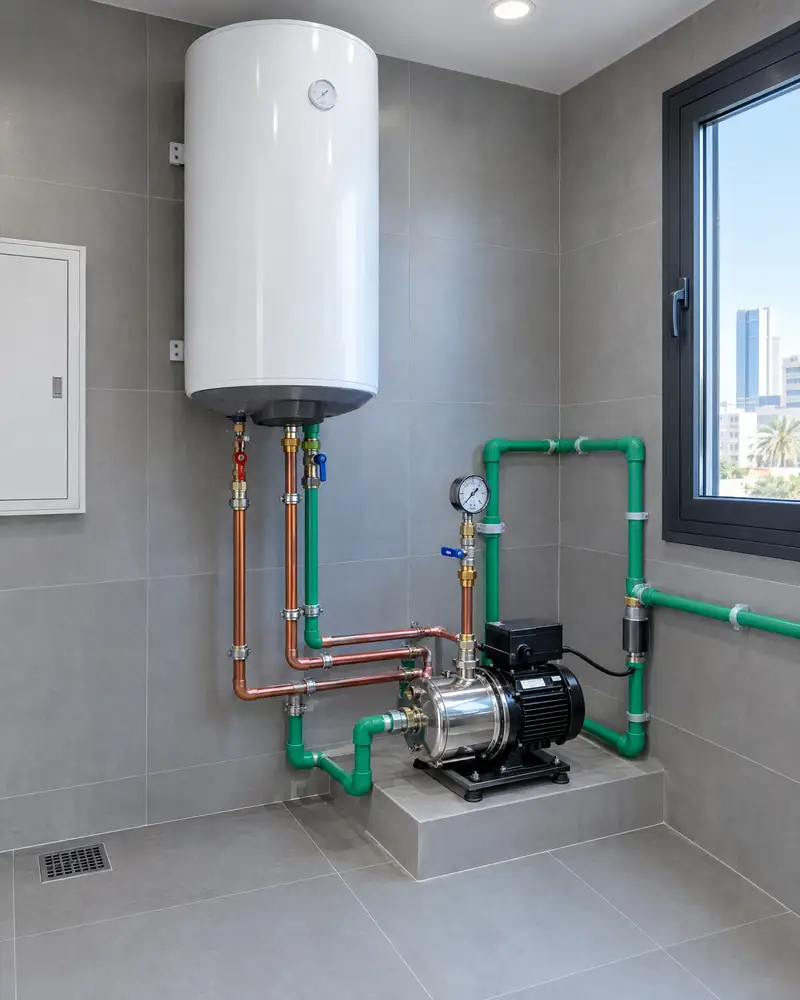
Running supply and return PPR lines with isolation valves at each junction.
Pressure vessel fitting
Installing a matched pressure vessel to stabilise line pressure and reduce pump starts.
Electrical connection
Wiring pump to control panel with thermal overload protection and proper earthing.
Commissioning and test
Setting pressure switch cut-in and cut-out, then testing flow at every outlet.
Signs you need a new pump
Weak flow upstairs
Upper-floor taps deliver only a trickle while ground-floor pressure seems normal.
Knocking or vibration from roof
Intermittent knocking or noticeable pipe vibration near the roof tank signals pump wear.
Tank stays low after use
Roof tank remains empty despite mains supply being available, indicating transfer pump failure.
Pump runs without stopping
A pump that runs continuously even after the tank is full has a faulty level switch or float.
Before you call us
Tank size and height
Know your tank capacity in litres and the approximate roof height above ground level.
Electrical panel location
Identify the nearest electrical panel to the roof so wiring length and breaker size can be assessed.
Existing pipe material
Knowing whether existing pipes are PPR or galvanised iron speeds up the connection assessment.
Current fault details
Note when pressure drops and whether any burning smell or unusual noise comes from the pump area.
More in water pump install & service.
What goes wrong with most plumbing.
Plumbing problems start hidden and end with breaking tiles. These three cost the most.
 01
01Pipes laid in a rush
Pipework rushed before the walls close stays hidden until it starts to leak.
 02
02Leaks you cannot see
A slow leak behind tiles shows up as damp, stains and a higher water bill.
 03
03Nobody answers in an emergency
A burst pipe at night cannot wait for a contractor who has moved on.
The solution?
Pipework, leak detection and maintenance from one licensed company.
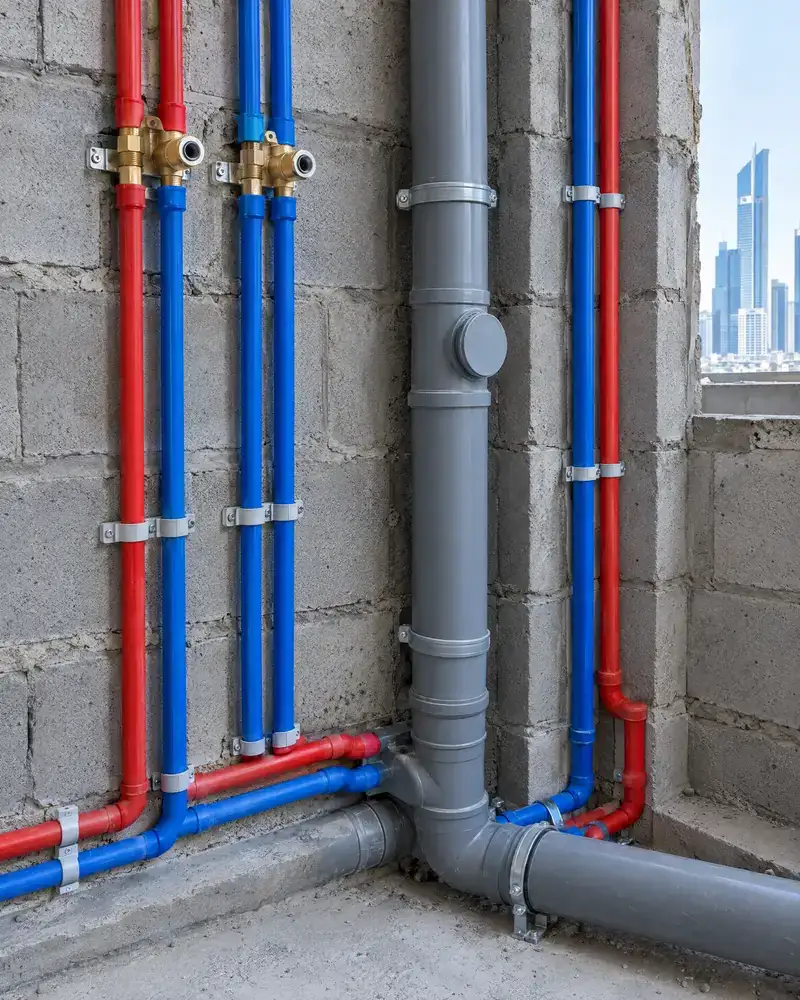
Pipes laid in a rushFirst-fix plumbing by the builder
Laid as part of the build, before the walls close.
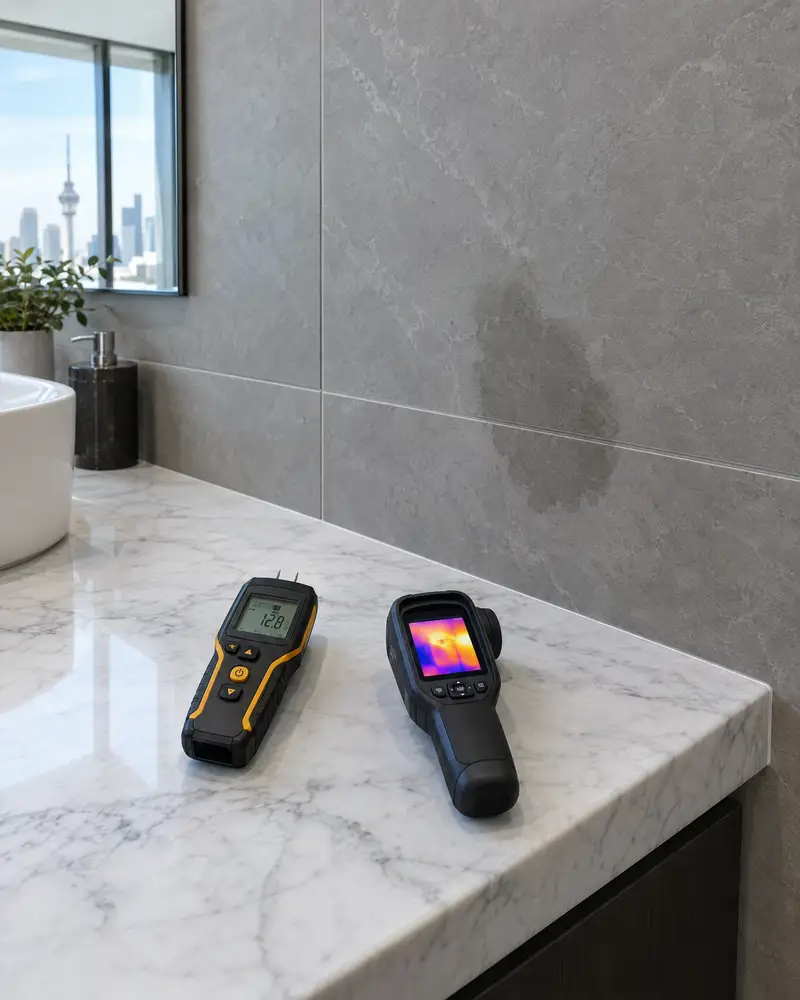
Leaks you cannot seeWater leak detection
We find the source first.
Nobody answers in an emergency24-hour emergency plumber
Plus regular maintenance contracts after handover.
How it works.
Call or whatsApp
Describe the pump fault, your location and tank size if known.
Roof survey
We visit to measure static head, inlet and outlet pipes and existing pipework condition.
Quotation
Detailed quote covering pump, pressure vessel, pipework and electrical connection.
Installation
Pump mounted on anti-vibration pads, PPR lines connected, electrical control wired.
Commissioning and handover
Pressure switch set, start and stop cycle tested, maintenance notes handed over.
What sets the price.
No fixed rate applies; the quote depends on these key factors specific to your roof tank setup.
Get a quotePump capacity and type
Centrifugal and multistage pump models differ significantly in unit cost.
Roof height and access
A high roof or restricted access hatch increases labour time and installation effort.
Pressure vessel and fittings
Pressure vessel size, isolation valves and check valve add to the overall material cost.
Pipework run length
A longer run between ground tank and roof means more PPR pipe and fittings required.
Control and protection wiring
Adding a dedicated control panel or separate thermal protection affects the total price.
Why one contractor beats four.
Every extra contractor means another schedule and another excuse. With us, one company answers for all of it.
Turnkey
Shell and finishing with one company, from footings to keys.
Pay in instalments
Construction and finishing on instalments. Ask us for the details.
Engineering supervision
Architectural drawings and engineering supervision on site.
After handover
Maintenance contracts and a 24-hour emergency plumber.
A licensed Kuwaiti company for building construction, finishing, renovation and infrastructure works.
What our clients say.
See all reviews on GoogleExcellent
Taha Saad
Google review
Excellent
Ali Nadi
Google review
Roof-tank pump installation in Kuwait. We work across all six governorates of Kuwait: Capital, Hawalli, Farwaniya, Mubarak Al-Kabeer, Ahmadi, Jahra.
Official references: Ministry of Electricity and Water (water and drainage connections)
Questions, answered.
Call nowCan the pump be mounted directly on the roof or does it need to be in a pump room?
Rooftop mounting is possible if the pump is shaded and protected from direct sun, since Kuwait's heat degrades seals and motor windings when left exposed. A pump room or weatherproof enclosure gives better protection and reduces noise.
Why does my roof-tank pump cut out more often in summer than in winter?
High ambient temperatures cause the motor's thermal overload to trip when the pump runs long cycles without adequate ventilation. Summer water demand also rises, so the pump runs harder and heats up faster.
Does Kuwait's hard water cause any specific problems for roof-tank pumps?
Yes. Mineral scale builds inside the pump casing and impeller, gradually reducing flow and increasing energy draw. Periodic filter cleaning and a scale check during servicing prevent deposits from causing permanent damage.
Is a check valve necessary with a roof-tank transfer pump?
A check valve is essential. Without it, water drains back to the ground tank when the pump stops, causing the pump to restart against a slack line and risking dry-run damage on the next start cycle.
Can two pumps be connected to the same roof tank?
Yes. A duty-standby arrangement is common in larger buildings, with one pump active and the other on standby. Alternating-duty control panels share run hours evenly. Each pump requires its own isolation valves and check valve on the discharge.

Licensed and registered in Kuwait.
Check us before you sign. This is our licence number and what it covers.
Find us on Google Maps