

What the service covers
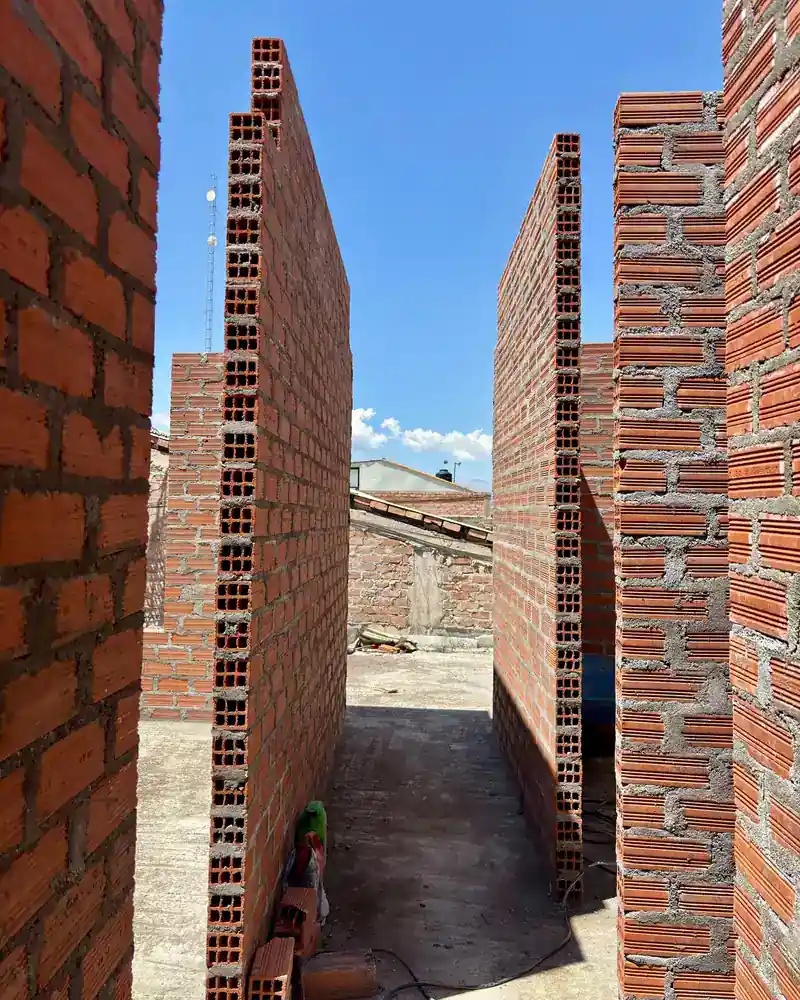
Full block fence execution from footing excavation through to finished render
Footing excavation
Excavate and pour a reinforced concrete strip footing sized to soil conditions
Block laying
Lay block courses in uniform mortar with plumb and level lines throughout
Reinforcing columns
Cast reinforced concrete columns at regular intervals to stiffen the fence
Gate openings
Form gate openings with precast concrete lintels set at the correct bearing
Salt and moisture protection
Apply a damp-proof course at base level to block ground salt migration
Render and finish
Apply weather-resistant render to both faces for a clean, durable finish
Materials and methods
200 mm hollow concrete block
200 mm thickness gives the fence enough rigidity and accepts vertical reinforcing bars in its cores
Bed-joint reinforcement mesh
Metal mesh laid in horizontal mortar joints resists cracking caused by Kuwait's thermal expansion cycles
DPC membrane at footing
A damp-proof membrane installed above the footing slab stops ground salts wicking up into block courses
Sulphate-tolerant mortar
Mortar mixed with sulphate-resistant cement protects joints in Kuwait's coastal and saline soil zones
Before you call
Confirm the plot boundary
Obtain a boundary extract from the municipality to mark the exact fence line before any digging starts
Decide the fence height
Settle on the required height early as it directly affects column spacing and footing depth
Number and positions of gates
Decide vehicle and pedestrian gate positions before work starts as they are designed into the foundation
Check for buried services
Verify the fence line is clear of buried water, drainage or electrical lines before excavation begins
More in block walls.


What goes wrong on most builds.
Most problems are built in early and found late. These three cost the most to fix.
 01
01Shortcuts under the finish
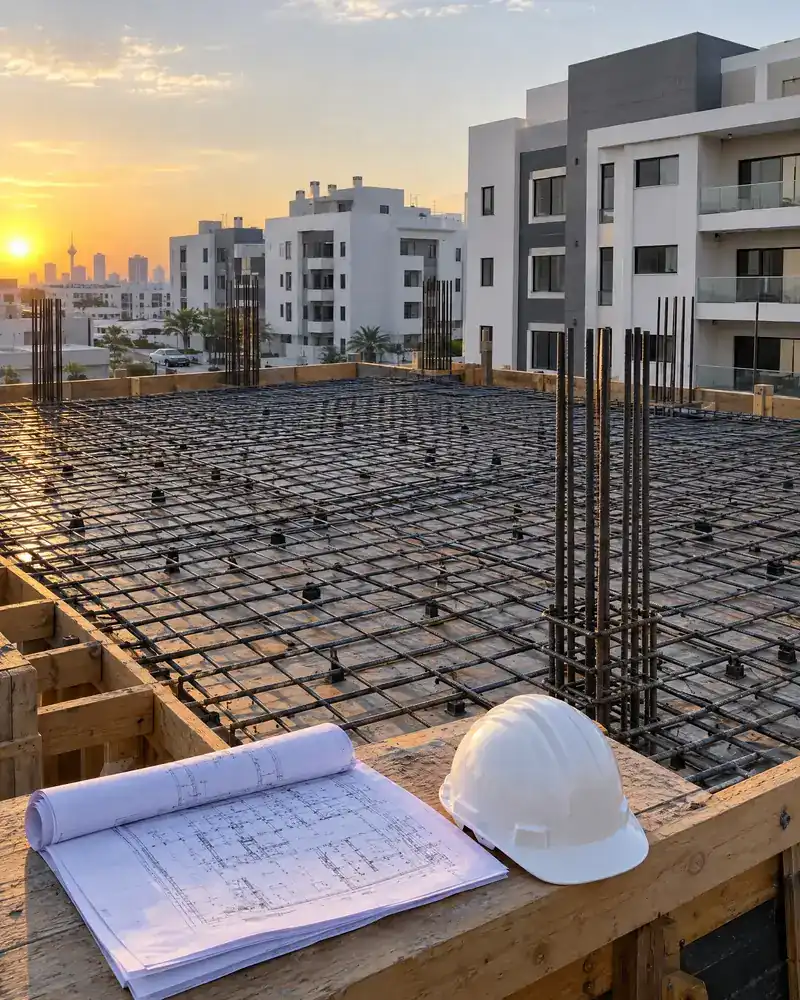
Concrete and steel disappear under the finish, so a shortcut there stays hidden until it cracks.
 02
02Mistakes behind the wall
A water or drain mistake found after the finish means breaking new tile.
 03
03A rushed finish
The finish is what you live with every day. Rushing it shows in every corner.
The solution?
One licensed company for the structure, the pipes and the finish.
Shortcuts under the finishEngineering supervision on site
The structure is followed before it is covered.
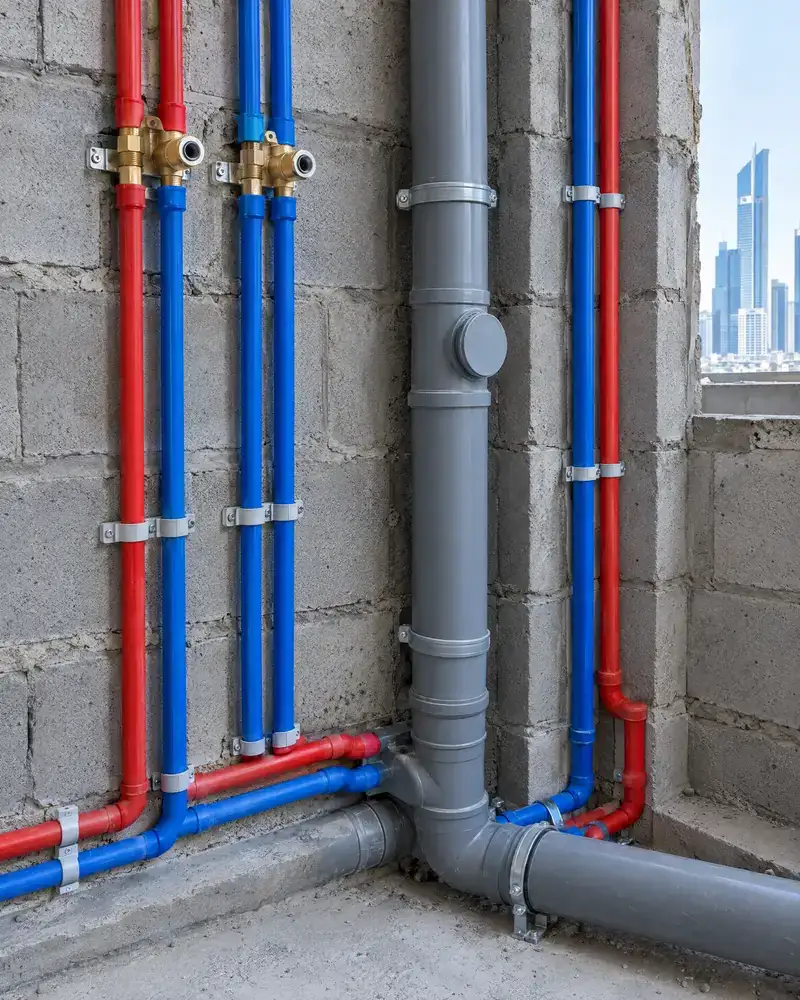
Mistakes behind the wallPlumbing by the same company
Laid before the walls close.

A rushed finishFinishing, and maintenance after
The same company finishes and maintains.
How it works.
First contact
Call or WhatsApp us to describe the plot and request a site visit
Site assessment
We visit to measure the perimeter, check soil type and confirm the fence line
Quotation
A detailed quote covering footing, block work and render is submitted for approval
Construction
Excavate footings, pour concrete, lay block courses, then render both faces
Handover
We check plumb, level and finish quality before handing over a clean site
What sets the price.
quote figures vary by site and several specific factors must be assessed before a price is given
Get a quoteTotal fence length
Total perimeter length is the single biggest driver of material and labour cost
Fence height
Greater height increases block volume, footing depth and the number of columns needed
Soil conditions
Sandy, saline or high-water-table soil requires deeper footings and extra waterproofing treatment
Number of gate openings
Each gate opening needs a lintel and side reinforcement that adds to the partial cost
Finish type
Plain render costs less than decorative cladding or precast feature panels on the face
Why one contractor beats four.
Every extra contractor means another schedule and another excuse. With us, one company answers for all of it.
Turnkey
Shell and finishing with one company, from footings to keys.
Pay in instalments
Construction and finishing on instalments. Ask us for the details.
Engineering supervision
Architectural drawings and engineering supervision on site.
After handover
Maintenance contracts and a 24-hour emergency plumber.
A licensed Kuwaiti company for building construction, finishing, renovation and infrastructure works.
What our clients say.
See all reviews on GoogleExcellent
Taha Saad
Google review
Excellent
Ali Nadi
Google review
Block fence in Kuwait. We work across all six governorates of Kuwait: Capital, Hawalli, Farwaniya, Mubarak Al-Kabeer, Ahmadi, Jahra.
Official references: Kuwait Municipality (building permits and plans)
Questions, answered.
Call nowDoes a block fence along a residential plot require a municipality approval?
Requirements vary by zone and height. In most Kuwaiti residential areas an approved site plan showing the boundary and fence height is needed before work begins. Check with your local municipality office to confirm what approvals apply to your plot.
Why do older block fences crack and spall at the base?
In Kuwait the most common cause is ground salts wicking up through the footing into the lower block courses. Salt crystals expand inside the pores and cause spalling. A proper damp-proof course at footing level combined with sulphate-tolerant mortar prevents this from the start.
Can an existing block fence be raised higher without demolishing it?
It is sometimes possible to build additional courses on an existing fence if its footing is deep enough and its columns can carry the extra load. The footing and existing structure must be inspected first to rule out overturning or cracking risk.
What is the difference between a block fence and a block boundary wall?
A block fence is the enclosure around the full plot perimeter facing streets or neighbours, designed for privacy and security. A boundary wall typically refers to a shared or dividing wall between two properties and may have different height and footing requirements. Both need reinforced footings suited to local soil.
How far apart should the reinforced concrete columns be spaced in a block fence?
Spacing depends on fence height and soil type. Columns are typically cast every few metres and at every change of direction. A tall fence or one on loose ground needs closer column spacing to resist overturning forces from wind loading.
Licensed and registered in Kuwait.
Check us before you sign. This is our licence number and what it covers.
Find us on Google Maps