
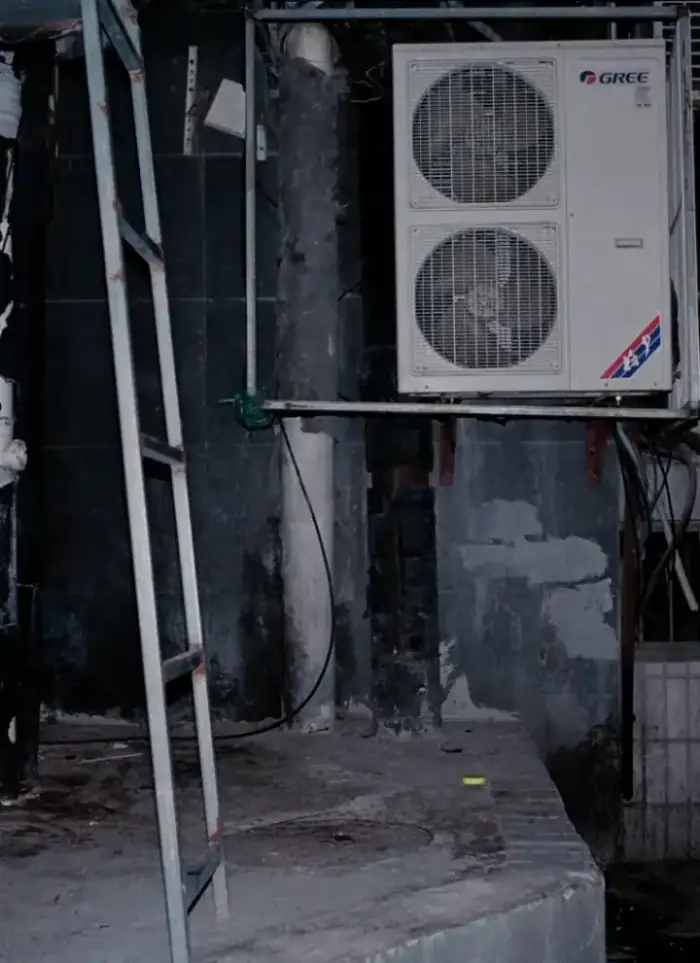
Insulation that keeps your pipes protected year-round
Closed-cell foam insulation on hot and cold supply lines stops condensation, cuts heat gain from Kuwait's summer, and protects pipes hidden inside walls and roof spaces.
- Licensed company
- Turnkey builds
- Pay in instalments
- All 6 governorates
What the service covers
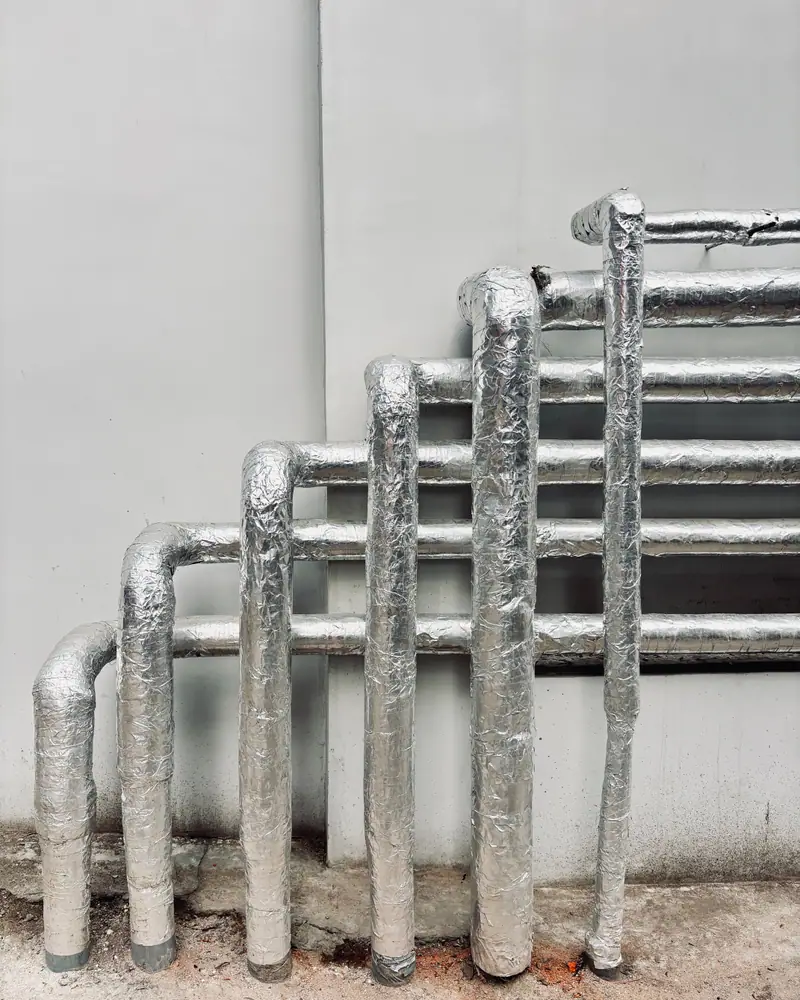
Full insulation of hot and cold supply runs, roof lines, wall-buried pipes and pump connections.

Hot-water line insulation
Wrapping hot-supply pipes to reduce heat loss between heater and outlet points.

Cold-water line insulation
Insulating cold pipes to prevent condensation drips that wet walls and cause staining.

Rooftop pipe runs
UV-resistant insulation on exposed roof pipes that face direct summer sun in Kuwait.

Pump connection insulation
Insulating transfer and pressure pump connections to cut heat gain and protect flexible joints.

Re-insulation of existing pipes
Stripping cracked or degraded old insulation and fitting a fresh sealed layer in its place.
Reinstatement works
Closing wall chases and restoring finishes after insulation is fitted and tested.
Signs your pipes need insulation
Condensation on cold pipes
Water droplets forming on cold-supply pipes in summer that wet nearby walls or ceiling surfaces.
Scalding water at the tap
Cold taps running hot because uninsulated roof pipes have absorbed intense summer heat.
Damp patches with no visible leak
Damp stains on ceilings or walls caused by condensation dripping from bare cold pipes above.
Cracked or peeling old insulation
Existing foam wrapping visibly cracked, shrunk or falling away, leaving sections of pipe exposed.
Materials and methods used
Closed-cell foam tube
Pre-formed foam tubes that fit tightly around the pipe and resist moisture absorption on both faces.
Reflective aluminium wrap
Foil-faced wrap fitted over foam on exposed roof runs to reflect radiant heat in Kuwait's summer.
Rigid PVC casing
Hard PVC outer casing over insulation on external pipes to protect against UV and physical impact.
Heat-resistant sealing tape
High-temperature tape sealing every joint in the insulation to prevent opening under pipe expansion.
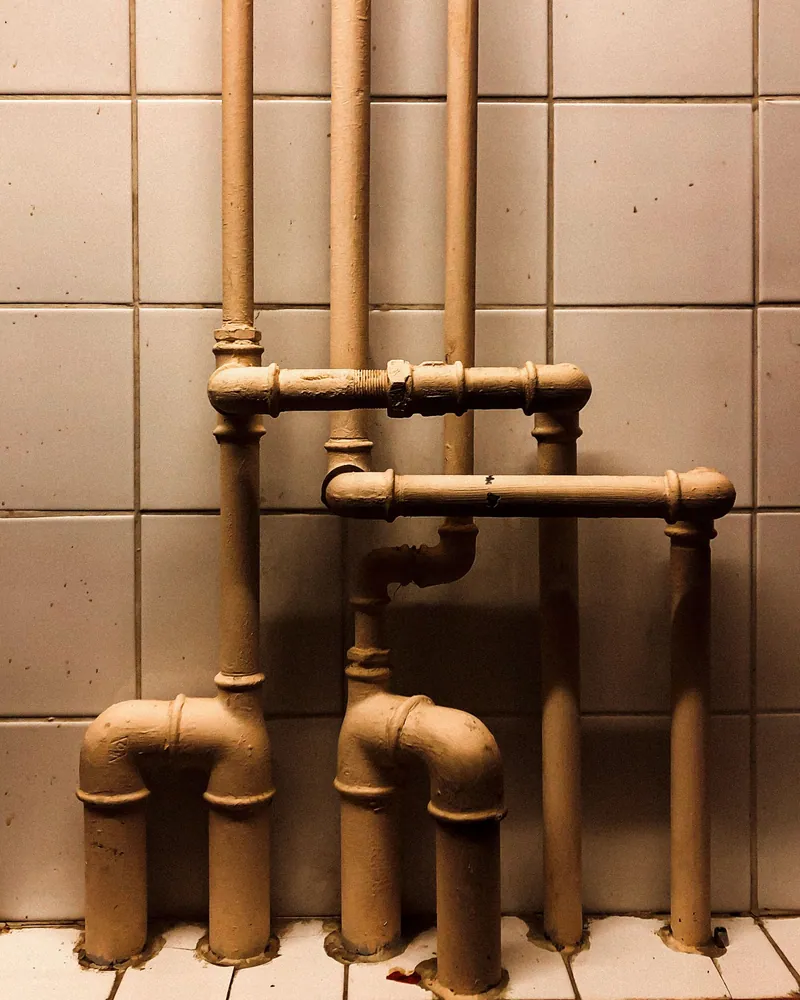
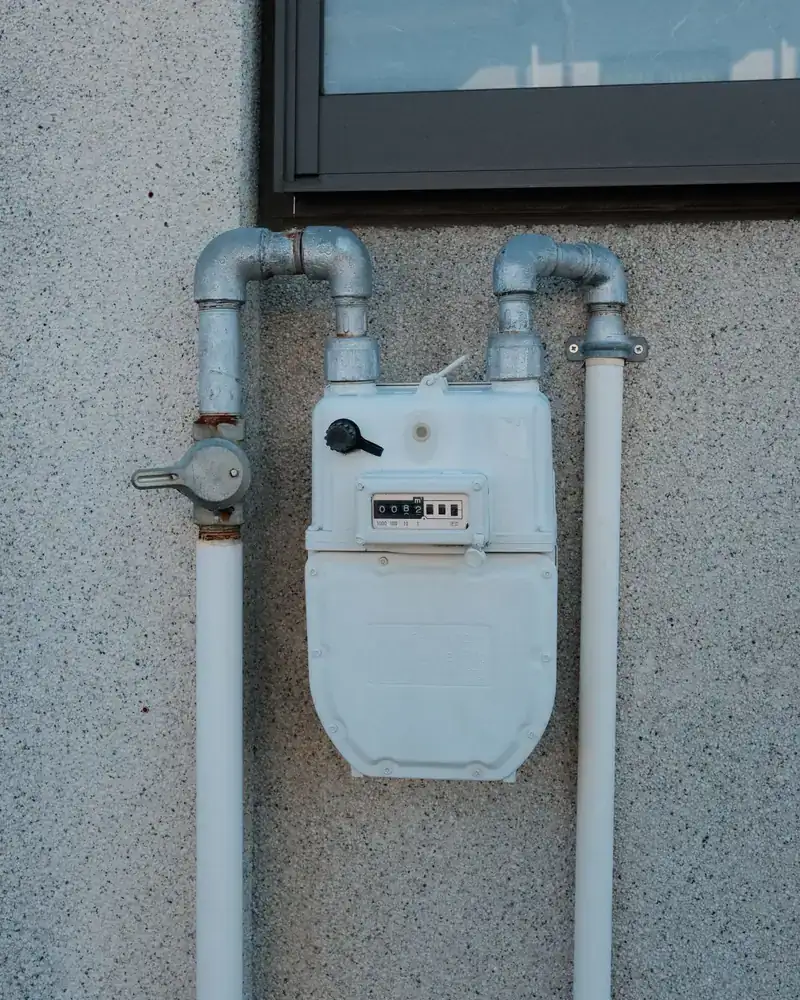
More in water pipe runs.
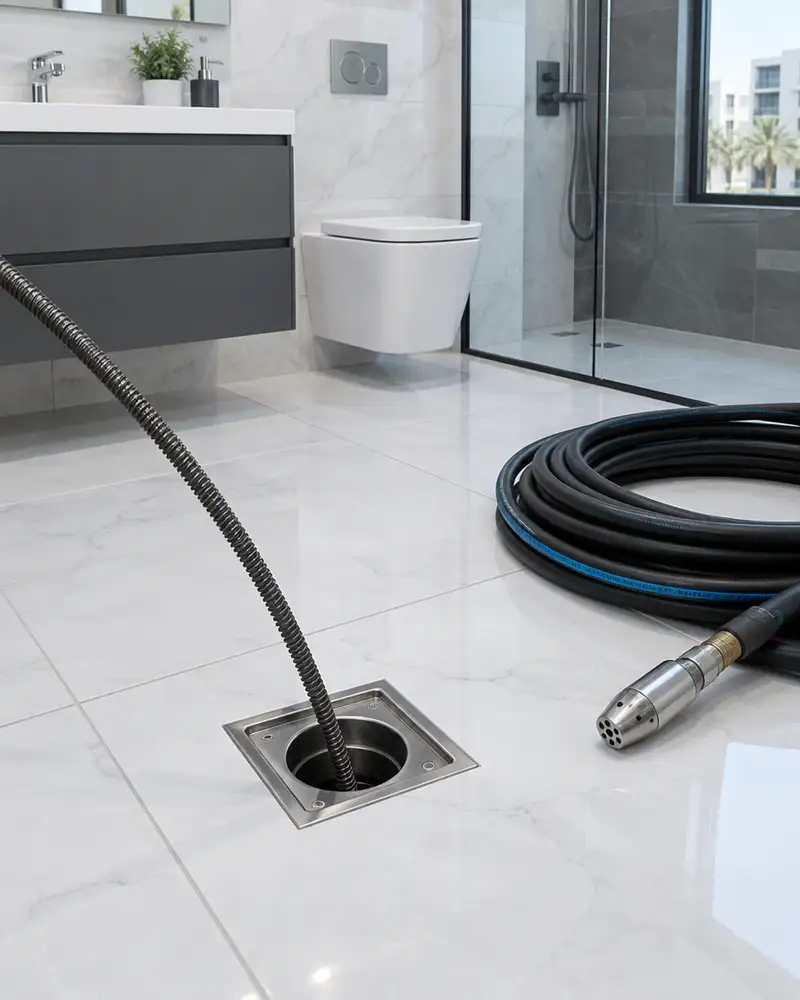
What goes wrong with most plumbing.
Plumbing problems start hidden and end with breaking tiles. These three cost the most.
 01
01Pipes laid in a rush
Pipework rushed before the walls close stays hidden until it starts to leak.
 02
02Leaks you cannot see
A slow leak behind tiles shows up as damp, stains and a higher water bill.
 03
03Nobody answers in an emergency
A burst pipe at night cannot wait for a contractor who has moved on.
The solution?
Pipework, leak detection and maintenance from one licensed company.
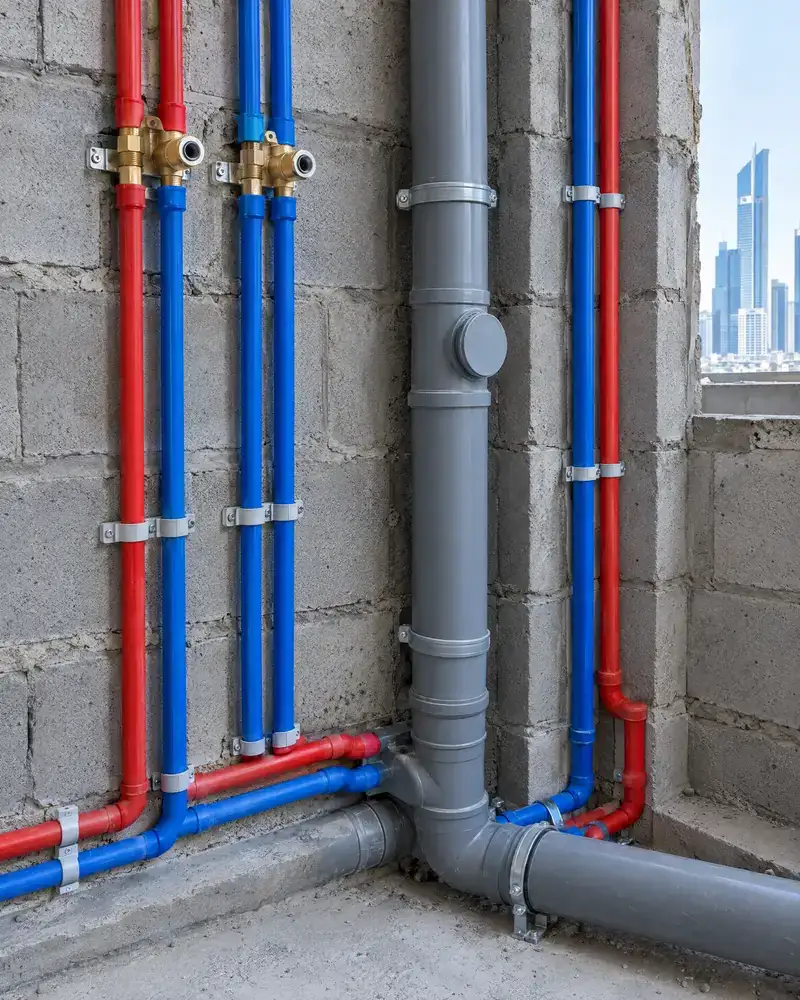
Pipes laid in a rushFirst-fix plumbing by the builder
Laid as part of the build, before the walls close.
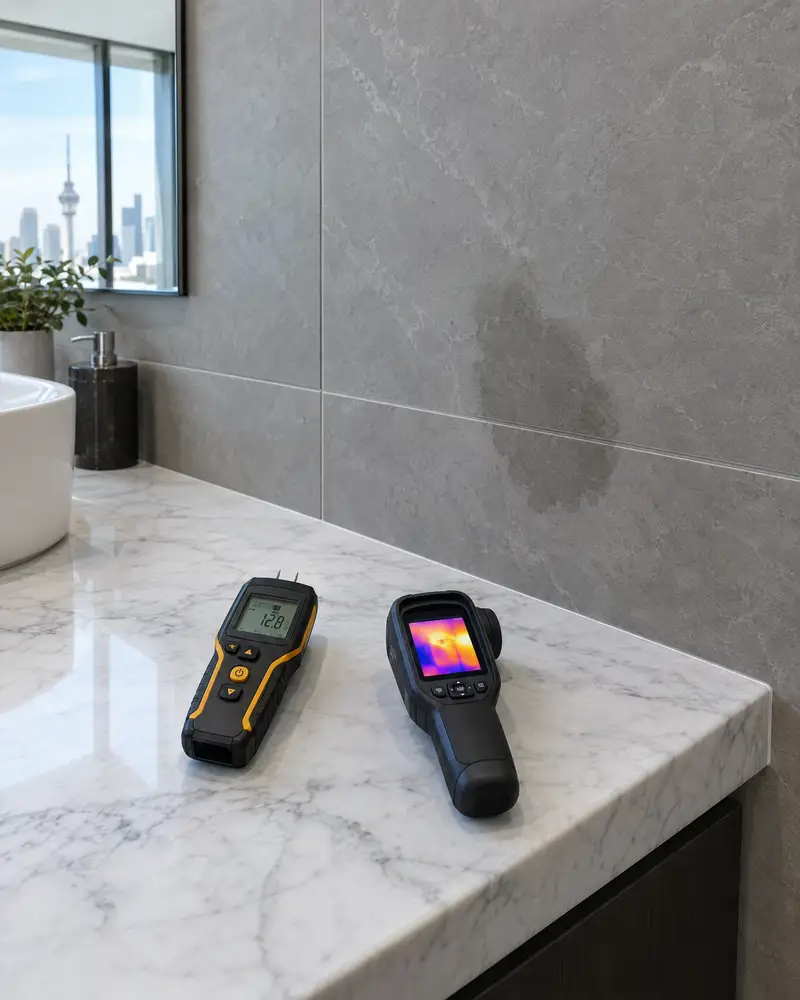
Leaks you cannot seeWater leak detection
We find the source first.
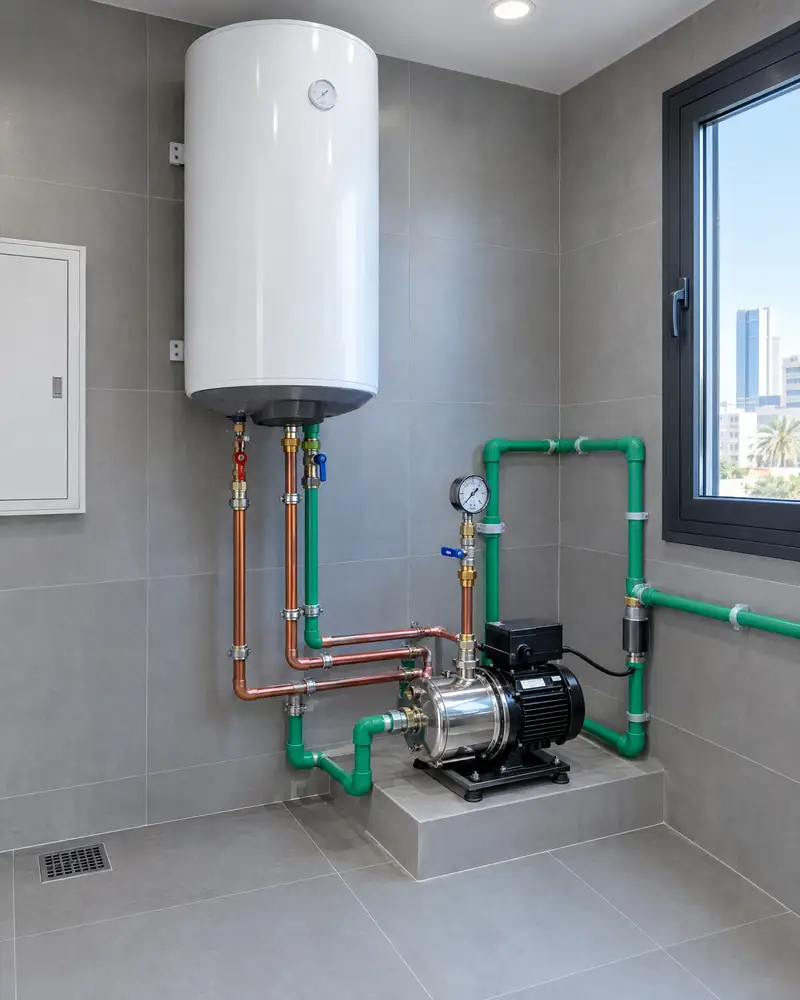
Nobody answers in an emergency24-hour emergency plumber
Plus regular maintenance contracts after handover.
How it works.
First contact
Call or WhatsApp us to describe which pipe runs need insulation.
Site survey
A technician visits to measure runs and identify the right insulation grade.
Quotation
A detailed quote is sent covering materials, labour and any reinstatement works.
Insulation fitting
Foam sleeves and protective casings fitted, with every joint sealed with heat-rated tape.
Inspection and handover
Full visual check of all joints and surfaces before the job is signed off.
What sets the price.
Five site-specific factors determine the quote; no standard rate applies across all jobs.
Get a quoteTotal pipe length
Longer runs require more material and more labour time to fit and seal correctly.
Pipe type and diameter
Larger diameter pipes need wider insulation sleeves that cost more per linear metre.
Pipe location
Roof and exposed pipes are easier to access than pipes buried inside finished wall chases.
Insulation grade chosen
UV-rated outdoor-grade materials cost more than standard indoor foam sleeves.
Reinstatement needed
Cutting wall chases and restoring plaster or tiling after work adds to the final cost.
Why one contractor beats four.
Every extra contractor means another schedule and another excuse. With us, one company answers for all of it.
Turnkey
Shell and finishing with one company, from footings to keys.
Pay in instalments
Construction and finishing on instalments. Ask us for the details.
Engineering supervision
Architectural drawings and engineering supervision on site.
After handover
Maintenance contracts and a 24-hour emergency plumber.
A licensed Kuwaiti company for building construction, finishing, renovation and infrastructure works.
What our clients say.
See all reviews on GoogleExcellent
Taha Saad
Google review
Excellent
Ali Nadi
Google review
Pipe insulation in Kuwait. We work across all six governorates of Kuwait: Capital, Hawalli, Farwaniya, Mubarak Al-Kabeer, Ahmadi, Jahra.
Official references: Ministry of Electricity and Water (water and drainage connections)
Questions, answered.
Call nowDoes Kuwait's summer heat affect cold-water pipes?
Yes. Uninsulated pipes on the roof or in hot ceiling voids absorb heat quickly, so cold water runs warm or even hot at the tap. Proper insulation keeps the water temperature lower and stops condensation forming on the pipe surface.
Can pipes buried inside walls be insulated?
Pipes inside wall chases can be insulated by opening the chase, fitting the sleeve and replastering. Pipes already cast under tiles are best insulated during first-fix; retrofitting them usually means tile removal.
What is the difference between pipe insulation and wall insulation?
Pipe insulation wraps directly around the pipe to control water temperature and prevent surface condensation. Wall insulation treats the building envelope. The two address different problems and use different materials.
How often does pipe insulation need replacing?
Outdoor insulation exposed to UV and heat cycles degrades faster than indoor insulation. A visual check during any rooftop maintenance visit is enough; replace any section showing cracks, gaps or separation immediately.
Is insulation necessary on new PPR pipes too?
Yes. PPR resists scale and corrosion well but offers little thermal insulation on its own. PPR pipes on a Kuwaiti rooftop still need an external insulation layer to prevent heat gain and condensation, just like any other pipe material.
Licensed and registered in Kuwait.
Check us before you sign. This is our licence number and what it covers.
Find us on Google Maps