
What the detection covers
Tracing leaks by instrument from the surface, walls and floors stay intact throughout

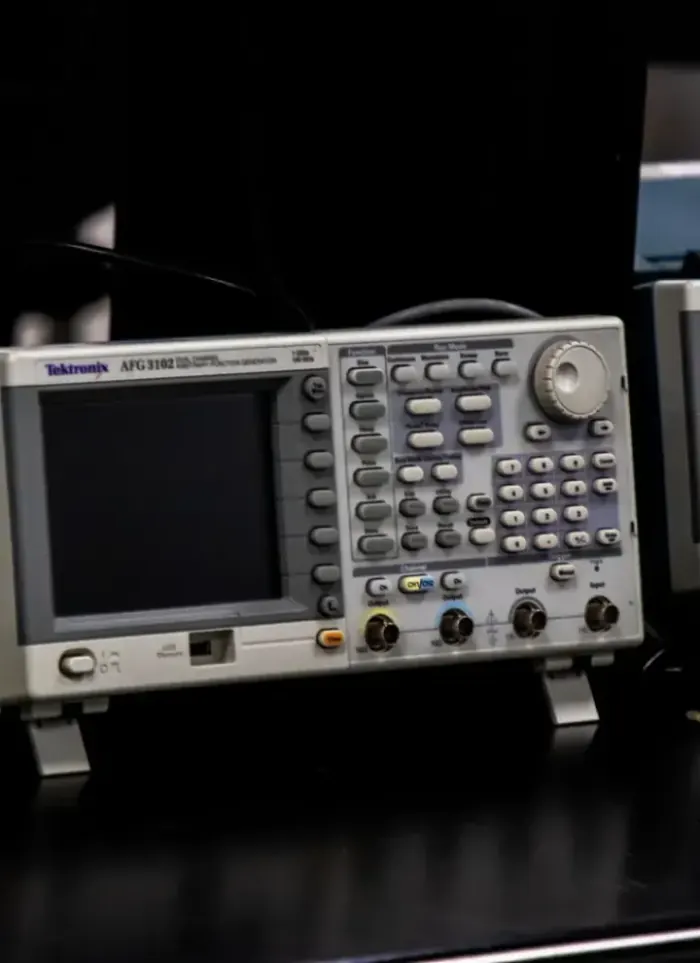
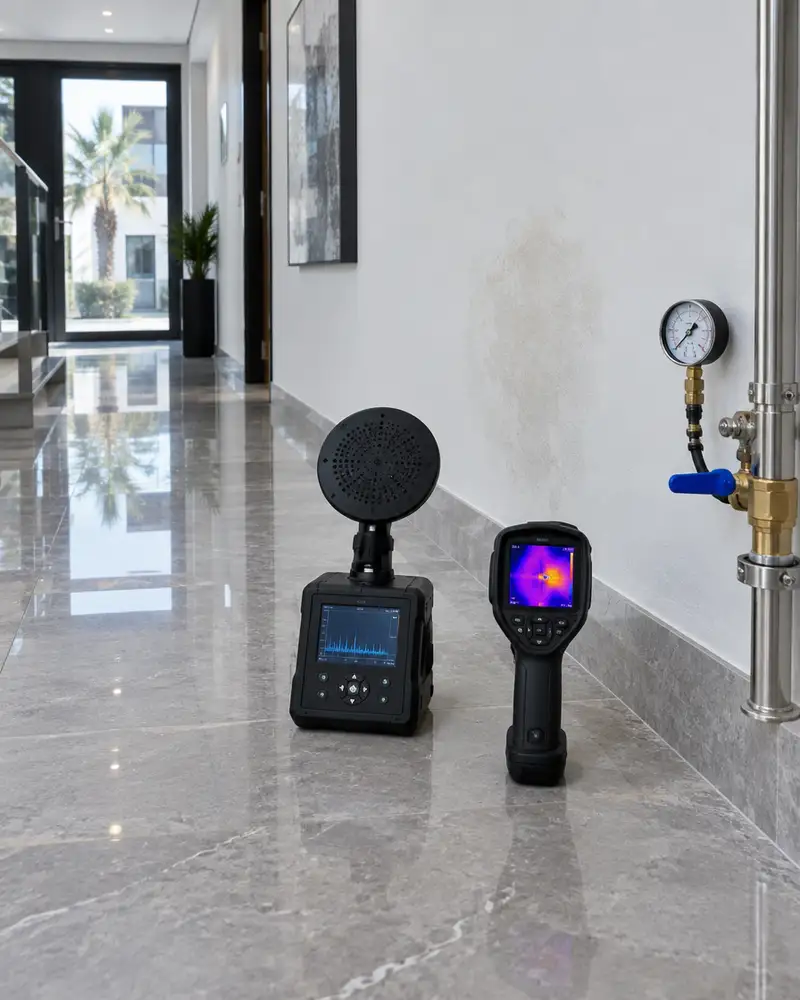
Acoustic floor scan
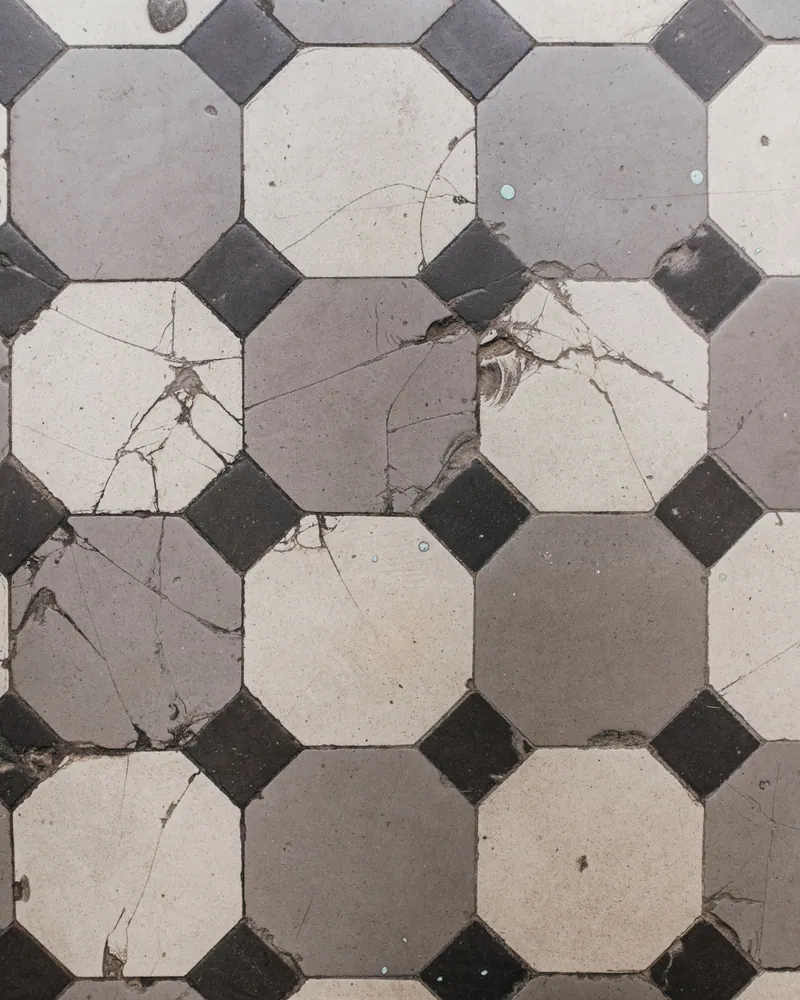
Electronic listening distinguishes leak noise beneath tiles or marble
Thermal wall imaging
Thermal camera reveals hidden cool or damp zones behind finished surfaces

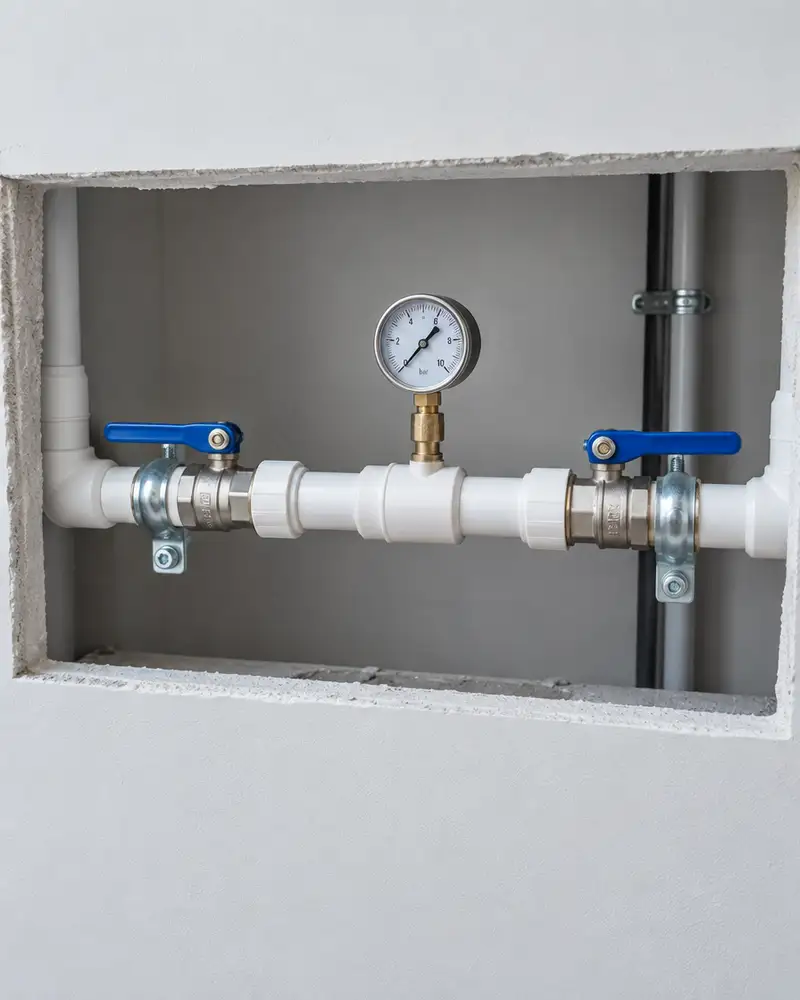
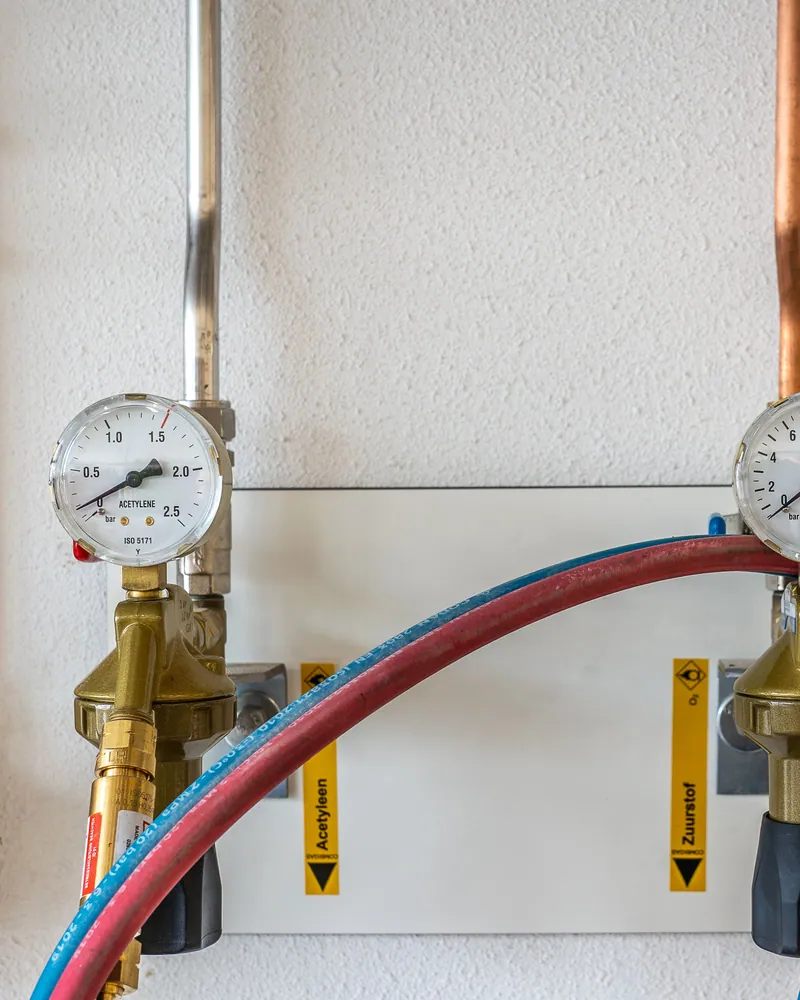
Line pressure test
Controlled pressure injection confirms the leak and isolates its pipe section

Tracer dye tracing
Water-safe dye follows the leak path to its exit point

Break-point marking
Surface marking limits any future opening to the smallest possible area
Detection report
Records leak location, depth and pipe type ready for the repair stage
Signs this detection is needed
Water bill rising with no visible cause
The meter records higher use than usual with no change in habits and no obvious drip anywhere
Damp patch with no clear source
A dark stain or surface crack on an interior wall not near any bathroom or kitchen fixture
Sudden pressure drop at taps
Pressure falls suddenly in one bathroom while remaining normal elsewhere in the building
Water sound behind a dry wall
A faint trickling sound audible behind a visually dry wall points to an active internal leak
Mistakes that make the damage worse
Breaking before detecting
Opening floors or walls by guesswork widens damage and may still miss the actual leak point
Shutting the meter and waiting
Cutting the supply without detection hides symptoms but leaves the broken pipe unrepaired
Painting over the damp area
Coating the stain hides it briefly while the leak quietly damages insulation and concrete behind
Ignoring the meter during testing
Not reading the meter before and after closing the main valve discards the clearest sign of an active leak
More in water leak detection.
What goes wrong with most plumbing.
Plumbing problems start hidden and end with breaking tiles. These three cost the most.
 01
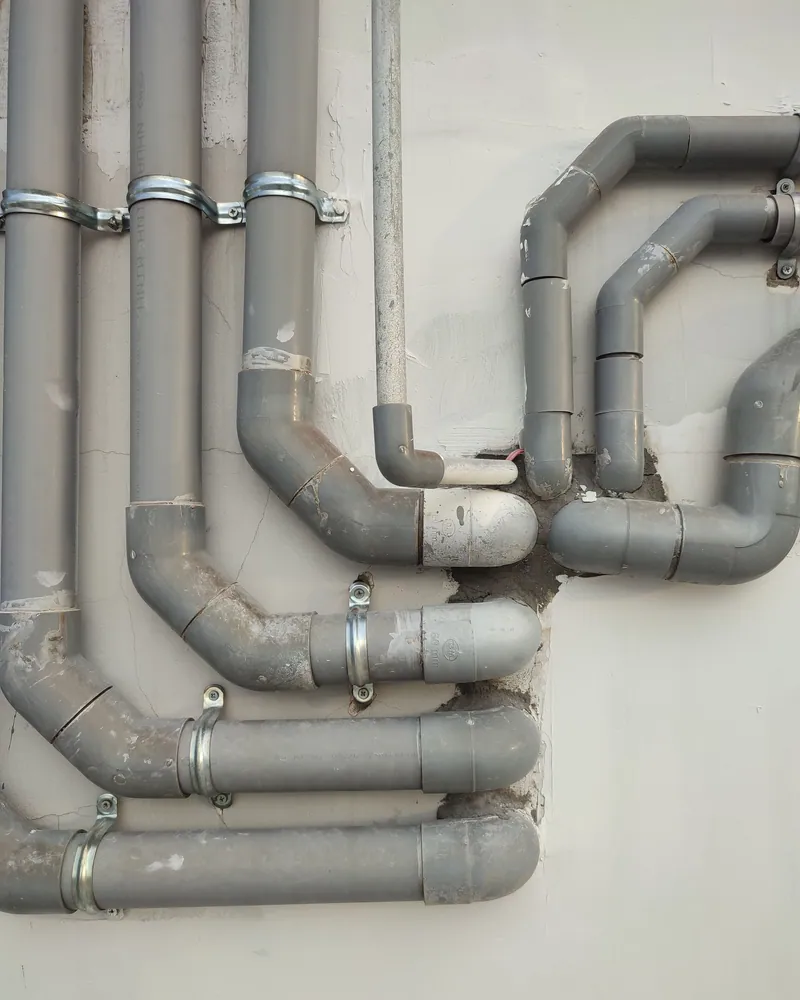
01Pipes laid in a rush
Pipework rushed before the walls close stays hidden until it starts to leak.
 02
02Leaks you cannot see
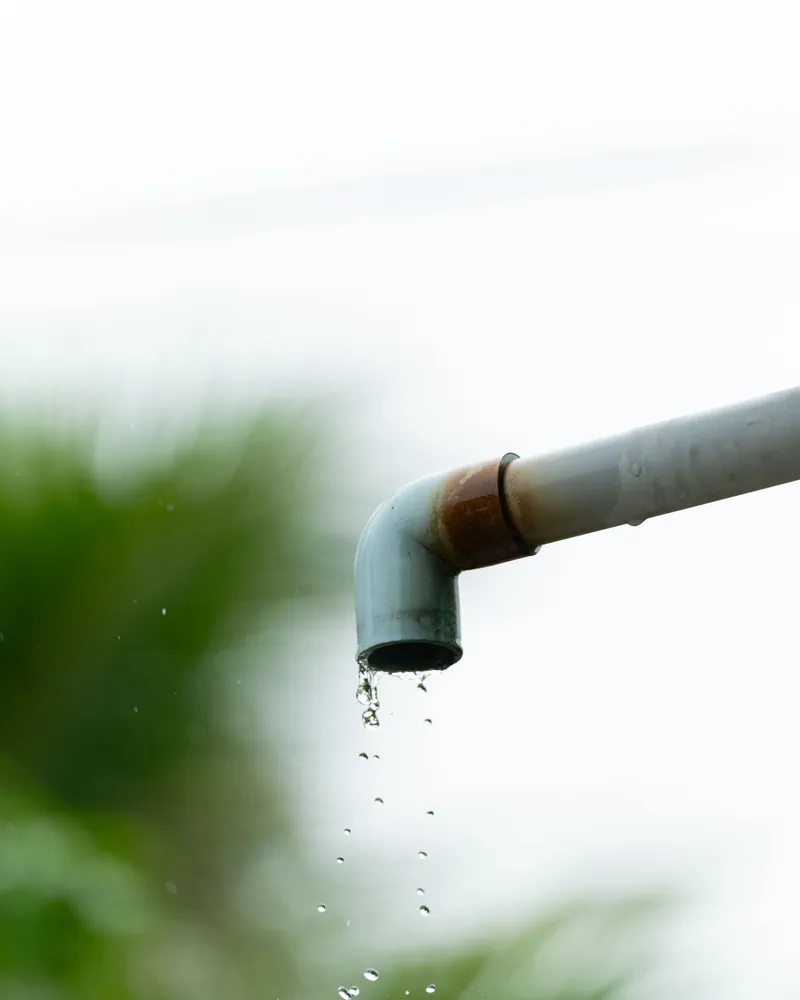
A slow leak behind tiles shows up as damp, stains and a higher water bill.
 03
03Nobody answers in an emergency
A burst pipe at night cannot wait for a contractor who has moved on.
The solution?
Pipework, leak detection and maintenance from one licensed company.
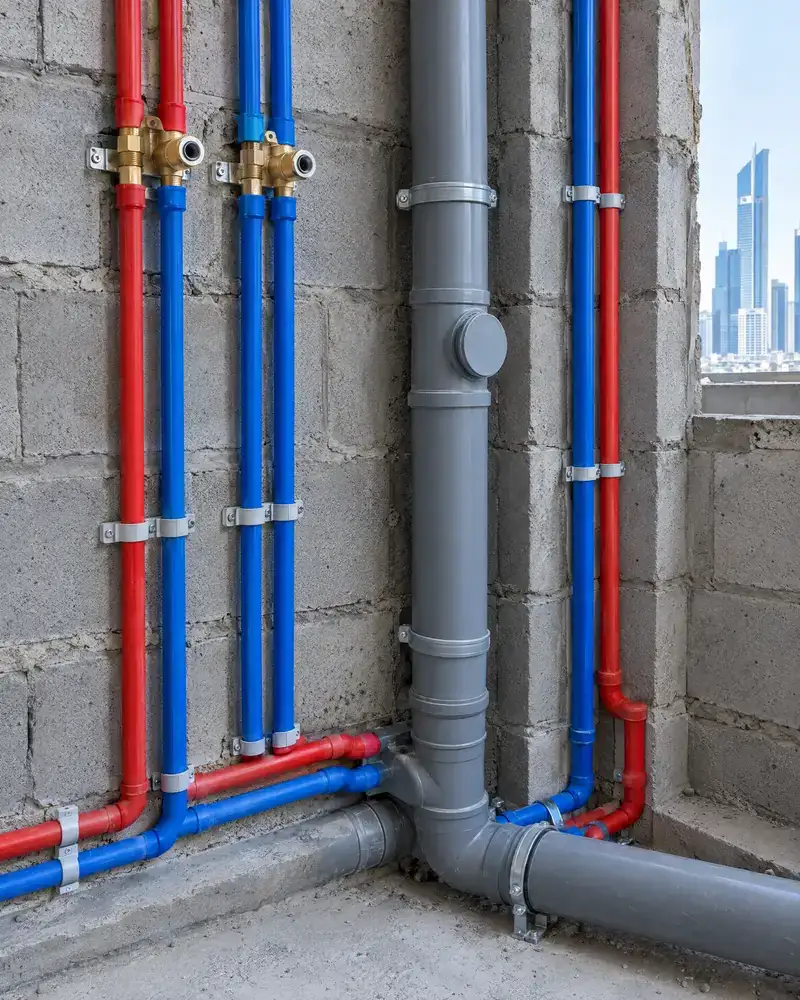
Pipes laid in a rushFirst-fix plumbing by the builder
Laid as part of the build, before the walls close.
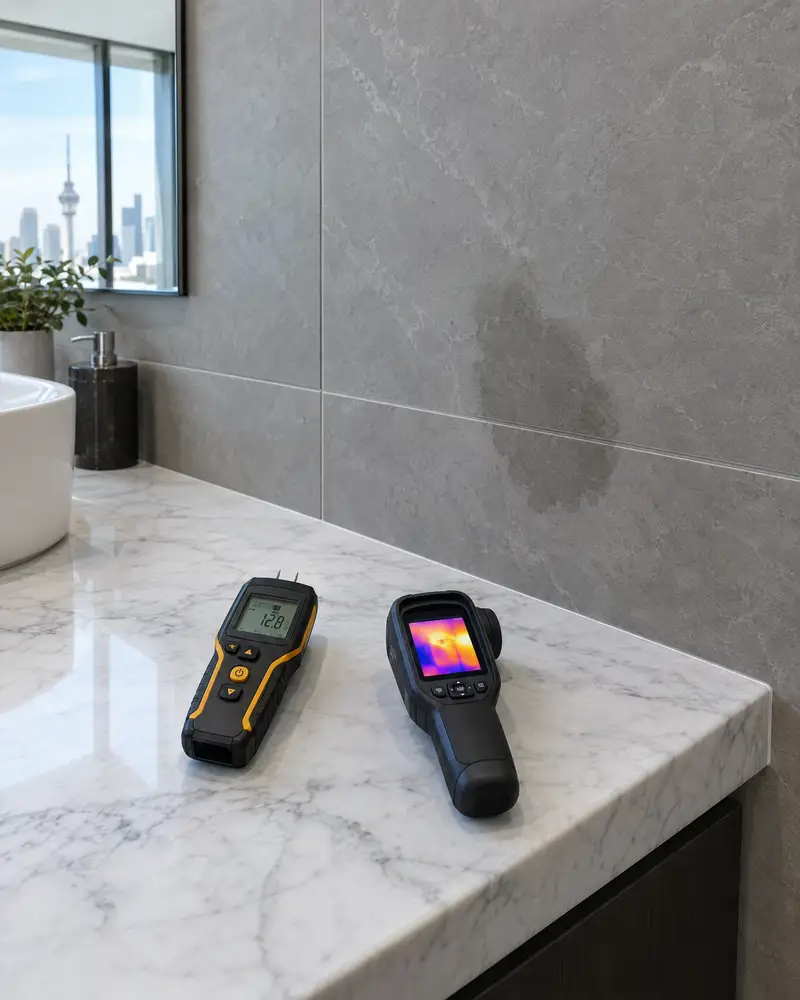
Leaks you cannot seeWater leak detection
We find the source first.
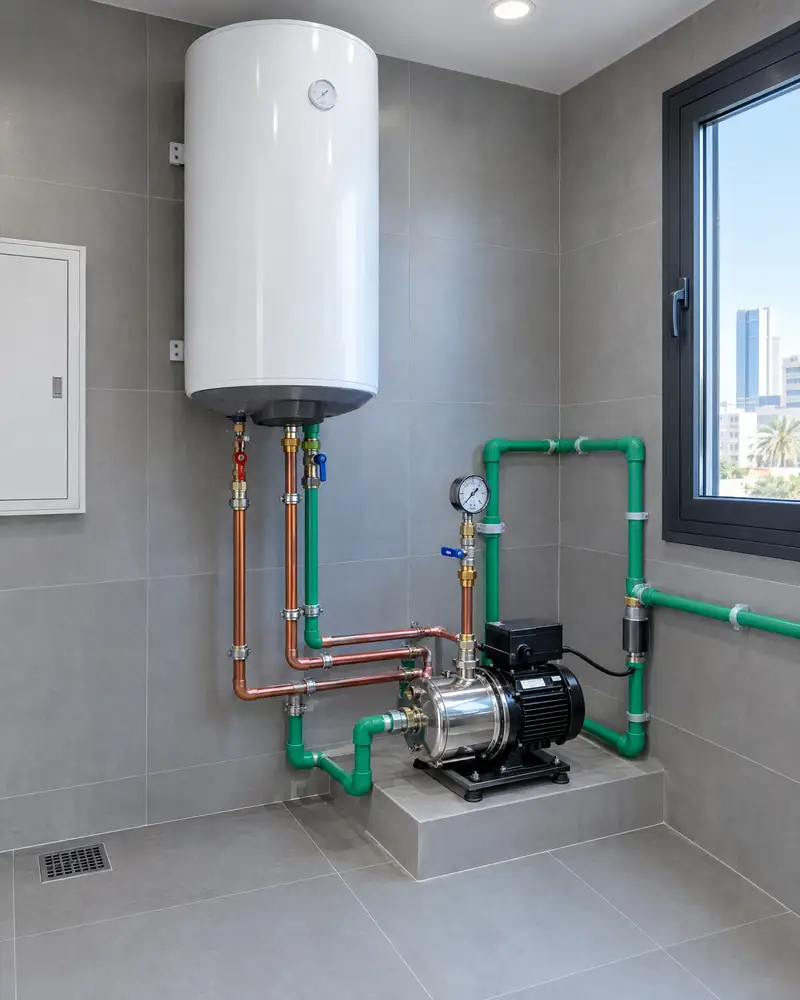
Nobody answers in an emergency24-hour emergency plumber
Plus regular maintenance contracts after handover.
How it works.
First contact
Call or WhatsApp describing symptoms and the building location
Problem assessment
Team determines suitable instruments and required test points before attending
On-site detection
Acoustic, thermal and pressure scan on suspect lines without any breaking
Leak marking
Precise surface marking of the leak point with depth and pipe type noted
Report handover
Written detection report handed to the owner for direct use in repair
What sets the price.
Quote values vary according to several site-specific factors that differ between each case
Get a quoteArea to be scanned
Larger suspect areas require more scanning time and more test points
Pipe burial depth
Pipes buried deep in the slab need finer instrument calibration and extend the session
Pipe material
PPR, uPVC and galvanised iron each respond differently to acoustic detection instruments
Number of floors
A multi-floor building requires scanning each level separately to isolate the source floor
Visit timing
Emergency calls outside regular hours are priced differently from standard appointments
Why one contractor beats four.
Every extra contractor means another schedule and another excuse. With us, one company answers for all of it.
Turnkey
Shell and finishing with one company, from footings to keys.
Pay in instalments
Construction and finishing on instalments. Ask us for the details.
Engineering supervision
Architectural drawings and engineering supervision on site.
After handover
Maintenance contracts and a 24-hour emergency plumber.
A licensed Kuwaiti company for building construction, finishing, renovation and infrastructure works.
What our clients say.
See all reviews on GoogleExcellent
Taha Saad
Google review
Excellent
Ali Nadi
Google review
Non-destructive leak detection in Kuwait. We work across all six governorates of Kuwait: Capital, Hawalli, Farwaniya, Mubarak Al-Kabeer, Ahmadi, Jahra.
Official references: Ministry of Electricity and Water (water and drainage connections)
Questions, answered.
Call nowIs non-destructive detection accurate enough to pinpoint a single spot?
Combining acoustic sensing, thermal imaging and pressure testing narrows the location to a very small area. Centimetre-perfect accuracy cannot always be guaranteed, but the resulting marking reduces any later opening to the minimum possible.
Does Kuwait's summer heat affect thermal camera accuracy?
High ambient temperatures raise the wall's thermal baseline, making imaging more effective during cooler night or early morning hours. This is factored in when scheduling the visit.
Can a leak in a pipe under the concrete slab be found without digging?
Yes, acoustic listening captures vibrations from the leak through the slab. Pressure testing confirms the break is in the suspect section. Digging starts only after the spot is marked.
Does the detection visit include the repair as well?
Non-destructive detection is a standalone diagnostic service that ends with a report and marked location. Repair is arranged as a separate visit after reviewing the report findings.
Does Kuwait's hard, mineral-heavy water interfere with acoustic detection?
Scale deposits inside the pipe alter the flow sound slightly but do not block detection. The instrument distinguishes between scale noise and an actual leak during careful analysis.
Licensed and registered in Kuwait.
Check us before you sign. This is our licence number and what it covers.
Find us on Google Maps