Bathroom renovation: what is worth changing
A bathroom renovation is an easy project to get wrong by only replacing what is visible. Tiles, a vanity and a new mirror will make the room look new for a while, but they do nothing about the plumbing or waterproofing hidden behind the old finish. A short list of what is actually worth changing helps you spend attention where it matters.
Start with what is actually wrong, not what looks old
Before choosing a single tile, work out why the bathroom needs attention. A room that looks dated but has sound plumbing and no damp problems is a very different project from one with a slow leak, a failing drain, or water marks that keep returning. Mixing the two up leads to spending on finishes while the actual cause of the problem stays untouched behind the new tile.
Once the old tiling comes off, take the chance to actually look at what is behind it. This is one of the few points in a renovation where the walls and floor are open without extra cost, so it is worth using properly. A quick look at the pipework, the drain and the condition of the floor underneath tells you far more than any surface inspection ever could.
Waterproofing comes before anything visual
A bathroom renovation is one of the few times waterproofing can be redone without breaking anything that was just finished. If the old membrane was thin, damaged, or was never installed properly the first time, this is the moment to fix it, before any new tile goes down. Once the tiling is back in place, checking or replacing the membrane again means undoing work that was just paid for.
Skipping this step to save time is the single most common reason renovated bathrooms show the same problems again soon after. A bathroom that looks completely new on the surface can still leak into the floor below if the layer nobody sees was never actually addressed.
Plumbing worth redoing while the walls are open
Old pipework hidden behind the previous finish is usually far behind what is fitted in a new build, in material and condition alike. With the walls open, it makes sense to check the condition of the supply and drain lines, not just swap the visible fittings for new ones. A tap that was replaced without ever checking what feeds it only solves half the problem.
This is also the point to move a fixture if the layout never worked, since relocating a drain or supply line later, after the room is finished again, is a far bigger job. Deciding this early, before any new tiling goes down, is what keeps a renovation from turning into two separate projects.
Layout changes that make the biggest difference
None of the following require a bigger bathroom, just a decision made early, before the plumbing is closed up again for good.
- Moving the shower or bath to make the walking space around it usable
- Adding or repositioning storage so the sink area is not the only flat surface
- Improving ventilation so the room actually dries out between uses
- Reconsidering door swing, or a sliding door where space is tight
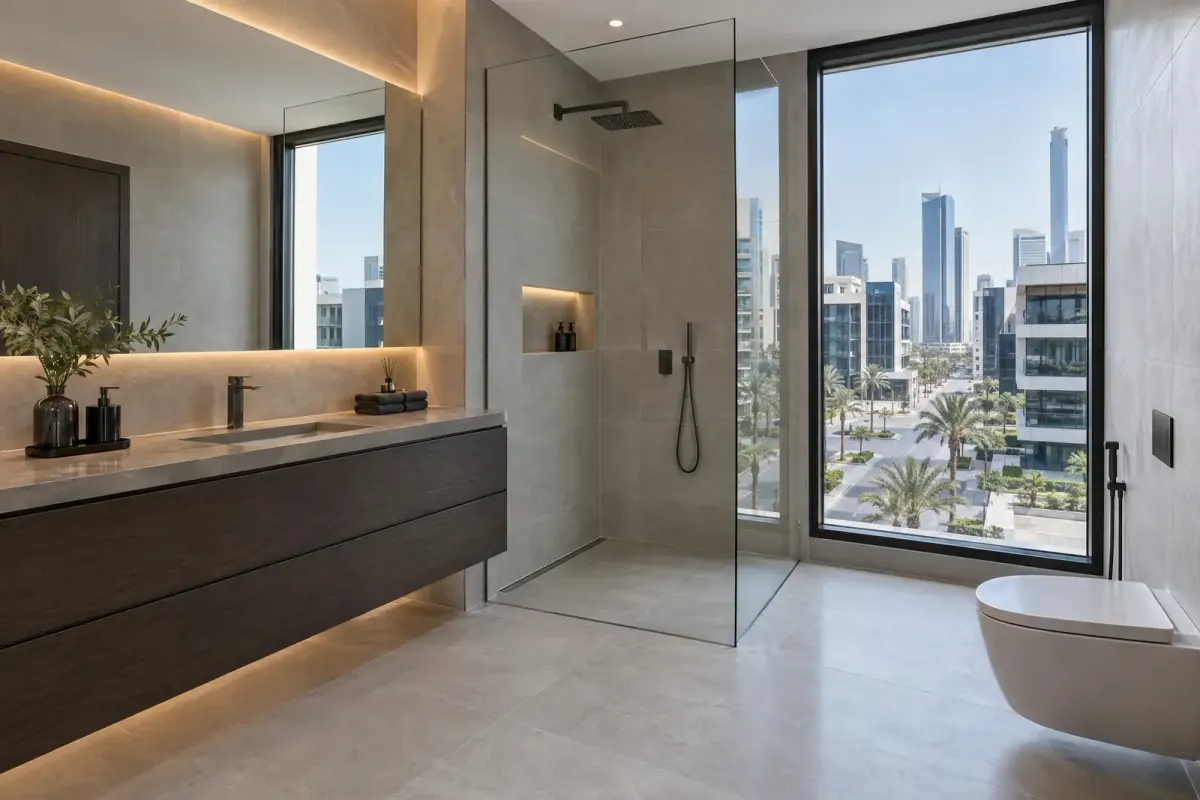
- Separating the shower from the rest of the room with a proper screen
Small layout changes decided early are far cheaper than the same changes decided after the room is finished.
Finishes: where to spend the attention
Marble and tiling choices get most of the attention because they are the most visible, and they are worth getting right, from the flooring to how tiles meet corners and fixtures. Aluminium and glass shower screens are worth choosing carefully too, since a well fitted screen keeps water contained far better than a curtain or a poorly sealed one. Small details, like how a screen closes or how a floor slopes toward the drain, matter more day to day than the exact shade of a tile.
A gypsum ceiling can hide ventilation ductwork and lighting cleanly, and it is a reasonable point to also address ceiling condition if there has been any water damage from above. Fittings and hardware are worth choosing with the same care, since these get handled daily and are the first things to show wear if they were never suited to the room in the first place.
Getting it right the first time
A bathroom renovation is worth doing properly rather than quickly, because the plumbing and waterproofing decisions get sealed behind the finish for a long stretch once the tiling is back down. Fix what is actually wrong first, then plan the layout, then choose finishes, in that order, and resist the urge to reverse it just because tiles and fittings are more enjoyable to pick out.
If you are planning a renovation, renovation and finishing work and plumbing and installations both matter here, and either is a reasonable place to start the conversation. You can also read how to check a contractor before you sign if you have not chosen who will do the work yet.