
What the service covers
Thorough maintenance of older homes covering finishes, structure and hidden faults.

Building inspection
Systematic walkthrough identifying wear and damage before planning any repair.

Crack repair
Filling surface and deeper cracks in walls and ceilings with the right repair system.

Finish repairs
Restoring damaged plaster, paint, tiling and worn floor finishes throughout the home.

Facade upkeep
Fixing peeling render, repointing and sealing open aluminium frame joints on facades.

Leak tracing
Locating the source of water ingress in walls, ceilings and wet areas.

Periodic maintenance
Scheduled visits to monitor the building and act early before faults worsen.
Signs your home needs maintenance now
Cracks in walls or ceilings
Cracks appearing suddenly or widening gradually point to movement or water behind the surface.
Peeling paint or plaster
Peeling starting at corners or near windows usually signals trapped moisture underneath.
Hollow sound under tiles
Tiles that ring hollow mean the adhesive bed has failed and breakage is likely soon.
Rust on window frames or columns
Rust stains mean coastal salt and moisture are attacking metal or the concrete beneath.
Materials and methods used in home maintenance
Crack injection resin
Injected resin fills hairline and wider cracks fully without requiring demolition of the wall.
Sulphate-resistant repair mortar
Repair mortar formulated to resist Kuwait soil conditions and coastal humidity exposure.
UV-resistant silicone sealant
Applied to aluminium frame joints and window perimeters to block dust ingress and moisture.
Waterproof barrier coating
Protective layer applied to water-affected surfaces before any new finish is put over.
Inside home maintenance.
How old-house maintenance is done right in Kuwait
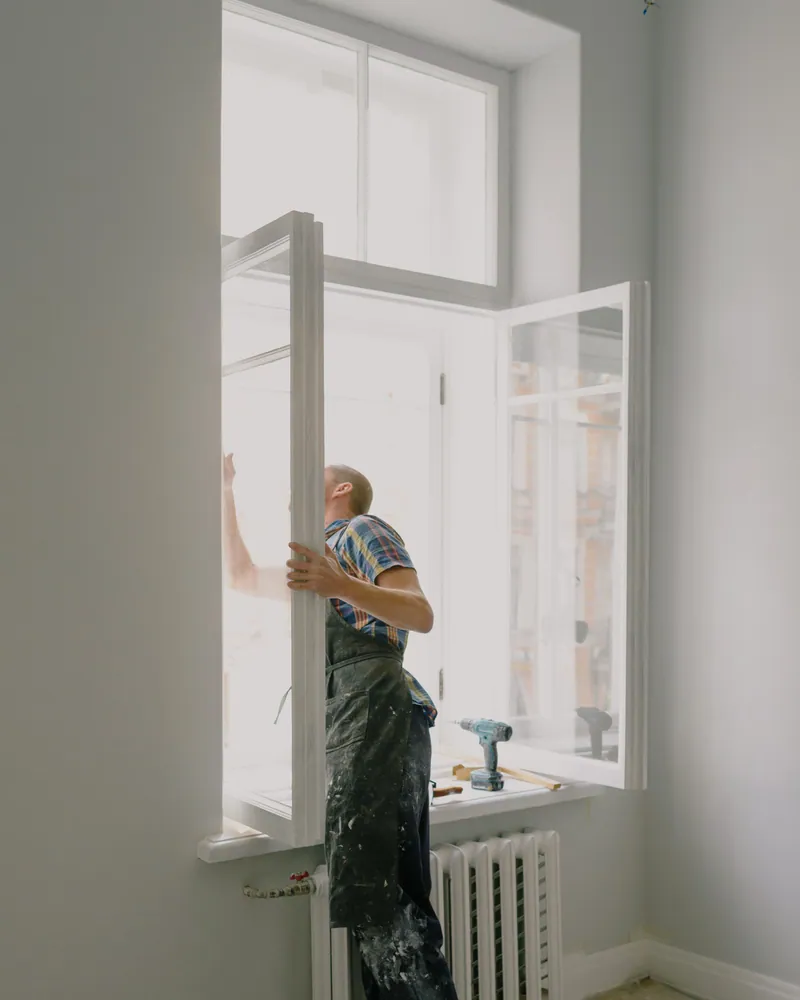
Proper old-house maintenance starts with a thorough inspection, not with immediate repair. A systematic check of cracks, water stains, tile condition and frame joints identifies the real problem rather than just its symptoms. In Kuwait, the extreme summer heat causes materials to expand and contract repeatedly, opening joints and cracks, while coastal salt air accelerates corrosion of metal fixings and degrades painted surfaces faster than in inland areas.
After identifying all faults, the owner chooses between spot repairs and a planned maintenance programme. Spot repairs suit isolated problems, but when faults appear across the facade, ceilings and floors together, a coordinated programme saves more money and delivers a lasting result. Fixing any water source before repainting or relaying tiles is not optional: applying a new finish over an active leak means the damage returns within a short time and the repair cost is doubled.
Key checks during the work include tapping tiles to find any that have lost their bond, probing wall bases for persistent dampness and inspecting outer roof edges where water pools after rain. At completion, verify that every aluminium frame joint is sealed with a continuous bead of sealant with no gaps, that repaired plaster matches the surrounding surface in texture, and that any waterproof coating was applied to the specified minimum thickness before the decorative finish went on top.
What goes wrong with most finishing.
The finish is what you see every day, and its mistakes do not hide. These three are the most common.
 01
01A rushed finish
The finish is what you live with every day. Rushing it shows in every corner.
 02
02Four contractors for one finish
Tiling, gypsum, paint and aluminium crews who never talk to each other.
 03
03After-care that never comes
Once you have the keys, it is hard to find anyone to come back and fix what shows up.
The solution?
Full finishing, and maintenance after it, from one licensed company.
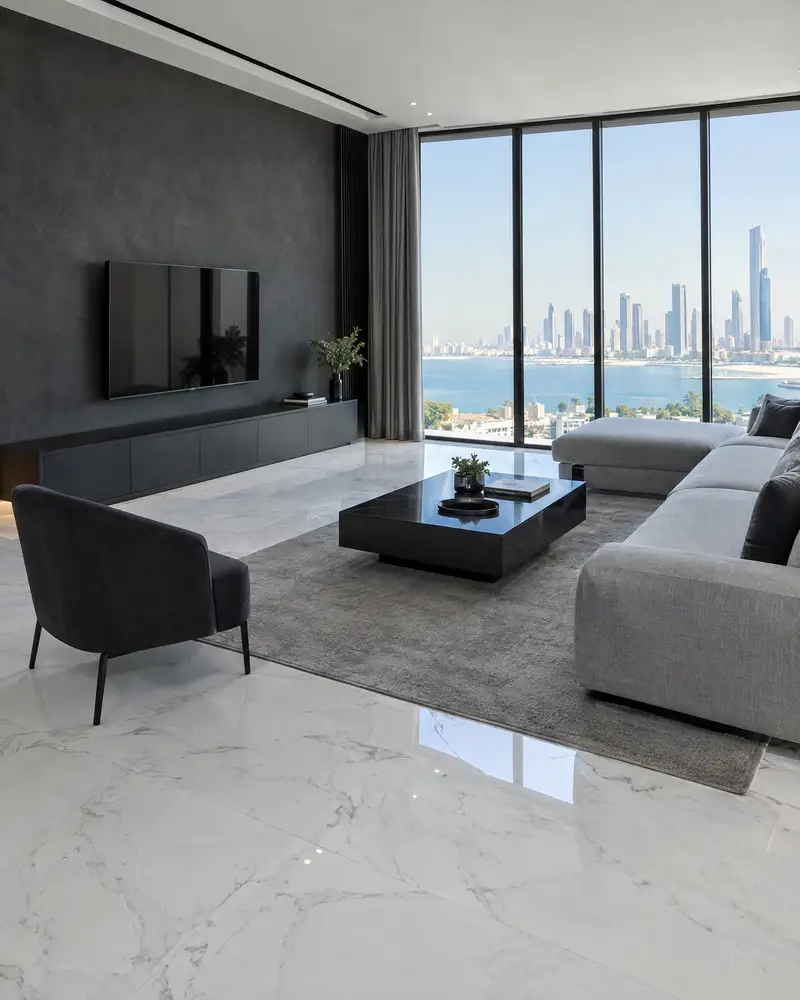
A rushed finishTurnkey finishing
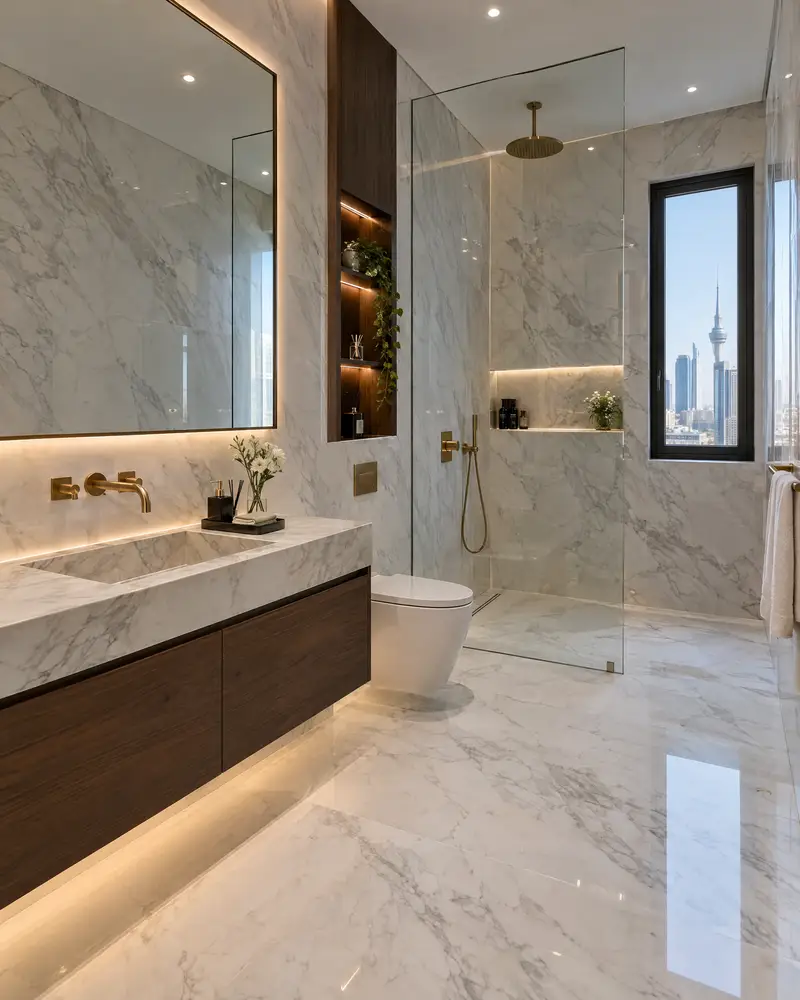
Marble, tiling, gypsum and paint from one company.

Four contractors for one finishOne company for every trade
No gaps between the tiler, the gypsum crew and the painter.
After-care that never comesRegular maintenance after handover
And finishing on instalments if you need it.
How it works.
Contact us
Call or WhatsApp us to describe the condition and book a site visit.
Site inspection
We visit and document all faults and areas of damage systematically.
Detailed quote
We submit a clear quote listing works, materials and cost per item.
Works execution
Work starts with structural and leak repairs before surface finishes.
Handover and review
We walk through the completed work with the owner and explain upkeep.
What sets the price.
The quote is set after a site visit and depends on factors that vary with each building.
Get a quoteScope of works
Single spot repair costs very differently from a full building maintenance programme.
Building condition
More advanced deterioration in walls and finishes means a higher repair cost overall.
Finish grade required
Repair materials, paint grade and the level of finish all affect the total cost.
Site access
Upper floors or confined areas need extra equipment and labour effort.
Hidden works found
Hidden faults discovered during work, such as concealed leaks or corroded rebar, add to cost.
Why one contractor beats four.
Every extra contractor means another schedule and another excuse. With us, one company answers for all of it.
Turnkey
Shell and finishing with one company, from footings to keys.
Pay in instalments
Construction and finishing on instalments. Ask us for the details.
Engineering supervision
Architectural drawings and engineering supervision on site.
After handover
Maintenance contracts and a 24-hour emergency plumber.
A licensed Kuwaiti company for building construction, finishing, renovation and infrastructure works.
What our clients say.
See all reviews on GoogleExcellent
Taha Saad
Google review
Excellent
Ali Nadi
Google review
Home maintenance in Kuwait. We work across all six governorates of Kuwait: Capital, Hawalli, Farwaniya, Mubarak Al-Kabeer, Ahmadi, Jahra.
Official references: Kuwait Fire Force (safety requirements in finishing work)
Questions, answered.
Call nowCan the home be maintained while it is still occupied?
In most cases maintenance can be done in phases without fully vacating the house. The work area is isolated from the rest of the home to reduce dust and disruption during each phase.
What is the difference between a spot repair and a periodic maintenance programme?
A spot repair addresses one identified fault. A periodic programme includes scheduled inspections and early intervention so small issues are caught before they become costly structural problems.
How do I know if the cracks in my walls are structural or just surface-level?
Diagonal cracks at window or door corners, or cracks that widen over time, need an engineering check. Thin straight cracks in the plaster layer are usually caused by material drying or thermal movement and are less serious.
Does facade maintenance always require repainting the entire building?
Not always. Repairing cracks, sealing joints and repainting only the affected areas is often sufficient. However, colour variation may show where the existing paint has faded under the Kuwait sun, which sometimes makes full repainting a practical choice.
Can a water leak be repaired without opening the walls?
It depends on the source. Some leaks can be stopped by sealing external joints or applying a barrier coating without opening any wall. Pipe leaks inside the wall require opening the surface to reach and repair the fault directly.
What should be checked in an older home before moving in?
Check wall and ceiling surfaces for cracks and damp staining, inspect window frames for gaps and corrosion, verify bathroom and kitchen waterproofing integrity, and have the plumbing installations assessed so faults are found before moving in rather than after.
Licensed and registered in Kuwait.
Check us before you sign. This is our licence number and what it covers.
Find us on Google Maps