
Plumbing mistakes that show up after the finish
A finished bathroom or kitchen can hide plumbing problems until long after the contractor has left. By the time a stain appears on a ceiling or a tap starts hissing, the real mistake was usually made before the tiles ever went in. Knowing where these problems start makes it easier to catch them early, or avoid them altogether.
Where the trouble usually starts
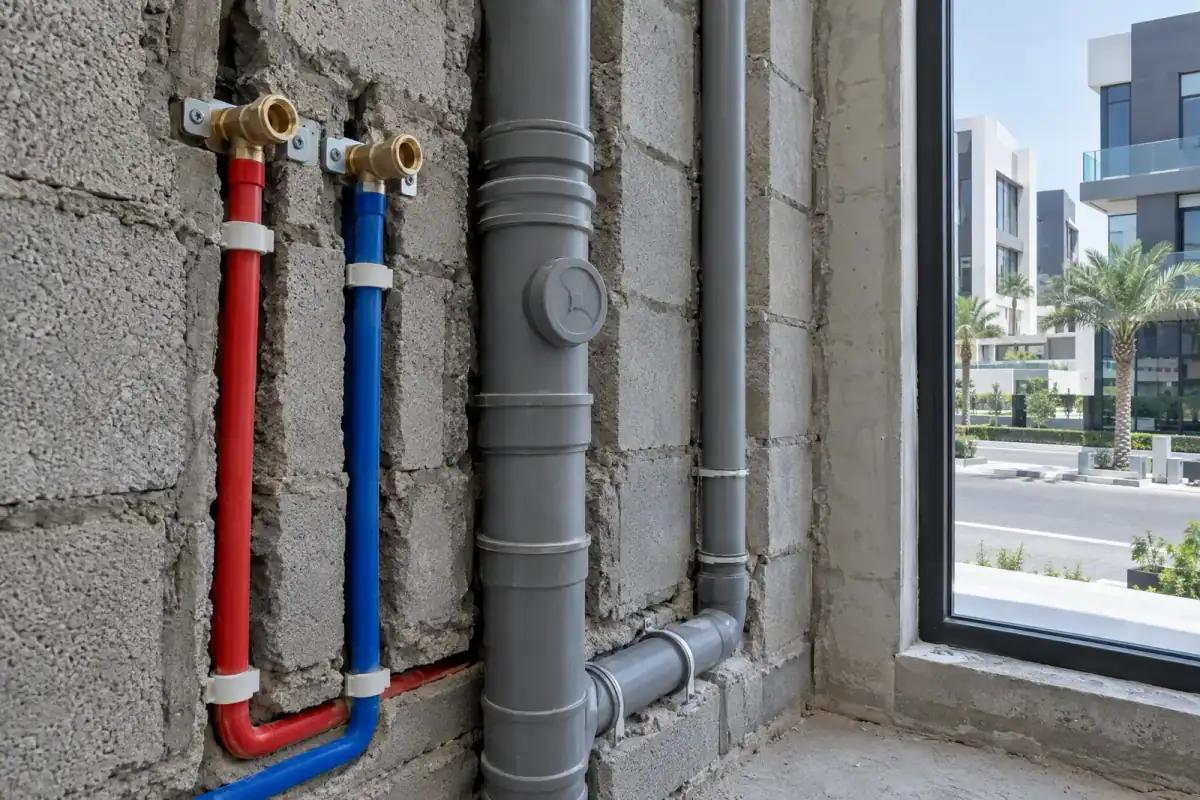
Every plumbing system is built in two stages. First-fix plumbing lays the pipe runs, drains and rough connections inside the walls, floors and ceilings before any tiling, plastering or painting begins. Second-fix work, the taps, mixers and visible fittings, comes right at the end, once the surfaces are already finished. This split exists because pipework has to be routed for how the building is actually laid out, not adjusted later around finishes that are already in place.
Most plumbing mistakes happen during first-fix, not second-fix. Once the walls are closed and the floor is tiled, a badly routed pipe, a missed connection, or a joint that was never properly tested is sealed away and forgotten until it fails. Correcting it at that point almost always means opening a wall or a floor that was already finished, which is a far bigger job than getting it right the first time.
Signs that point to a plumbing mistake
Not every plumbing fault announces itself right away. Some show up gradually, and knowing what to look for helps you catch a problem before it spreads.
- A damp patch on a ceiling or wall that dries and then comes back
- A musty smell near a bathroom or kitchen with no clear source
- Water pressure that drops noticeably when two taps run at once
- A drain that gurgles or empties slower than it used to
- Floor tiles that feel slightly hollow or uneven close to a drain point
- A meter that keeps ticking over when every tap in the house is closed
Any one of these on its own might be minor. Two or three together, especially in a newly finished space, are worth a proper look. Writing down when a sign first appeared also helps whoever inspects it later.
Mistakes that surface as stains and smells
Most staining and odour problems trace back to sealing and slope. A pipe joint that was not sealed correctly will leak slowly rather than burst, which is why it can take a while to notice. A drain pipe laid without the correct fall lets water sit instead of flowing away, and standing water is what causes the smell. In both cases the damage is not the leak itself but the time it spends unnoticed, soaking into a floor slab or a wall cavity.
Waterproofing is the other common gap. If the membrane under bathroom or kitchen tiling is skipped, rushed, or damaged after it was laid, water works its way into the floor slab or the wall behind it. That moisture eventually finds a way out, usually as a stain on the ceiling of the room below, or as a smell that never seems to go away no matter how often the room is cleaned.
Mistakes that surface as pressure and noise
Pressure and noise problems point to pipe sizing and support rather than leaks. Pipes that are too narrow for the number of fixtures they serve cause pressure to drop whenever more than one is used at the same time. Pipework that is not properly clipped or supported moves when water flows through it, and that movement is what produces knocking or banging inside the walls.
Air trapped in the system after installation, or a valve left partly closed, can also mimic a bigger problem. These are usually simple to diagnose once someone looks at the whole system rather than a single tap. A plumber checking the layout as a whole, instead of chasing one noisy pipe, will usually find the actual cause faster than trial and error.
What to do when you notice a problem
Small signs are worth acting on quickly, before they turn into repairs that involve breaking tiles or ceilings. Water leak detection can trace a hidden leak without guessing which wall or floor to open, which keeps the repair itself much smaller. A drain that is slow or blocked usually needs proper unclogging rather than repeated attempts to clear it at home, since a blockage that is only pushed further down the line tends to come back.
For anything that cannot wait, a 24-hour emergency plumber service exists for exactly this reason. Keeping a maintenance contract in place also means small issues get caught during routine visits instead of turning into an emergency, since someone familiar with the property is already checking on it regularly. You can read more about plumbing services or get in touch directly.
Building it right from the start
The cheapest way to deal with a plumbing mistake is to prevent it during first-fix, with proper drawings, engineering supervision and testing before the walls close. If you are renovating an existing bathroom or kitchen, the same care applies: check what is behind the old tiling before new finishes go on top, rather than assuming the old pipework is fine simply because it has not failed yet.
Choosing a contractor who treats supervision and testing seriously from the start also matters, see how to check a contractor before you sign. Good plumbing is invisible when it is done properly, which is exactly the goal: a house or a renovated room where nobody ever has to think about what is running through the walls.